
Loading, please wait...
_900x900.jpg "Egyptian Faience Shabti for Hor-sa-Iset")
_200x200.jpg "Egyptian Faience Shabti for Hor-sa-Iset")
.jpg "Egyptian Faience Shabti for Hor-sa-Iset")
LOT 0002
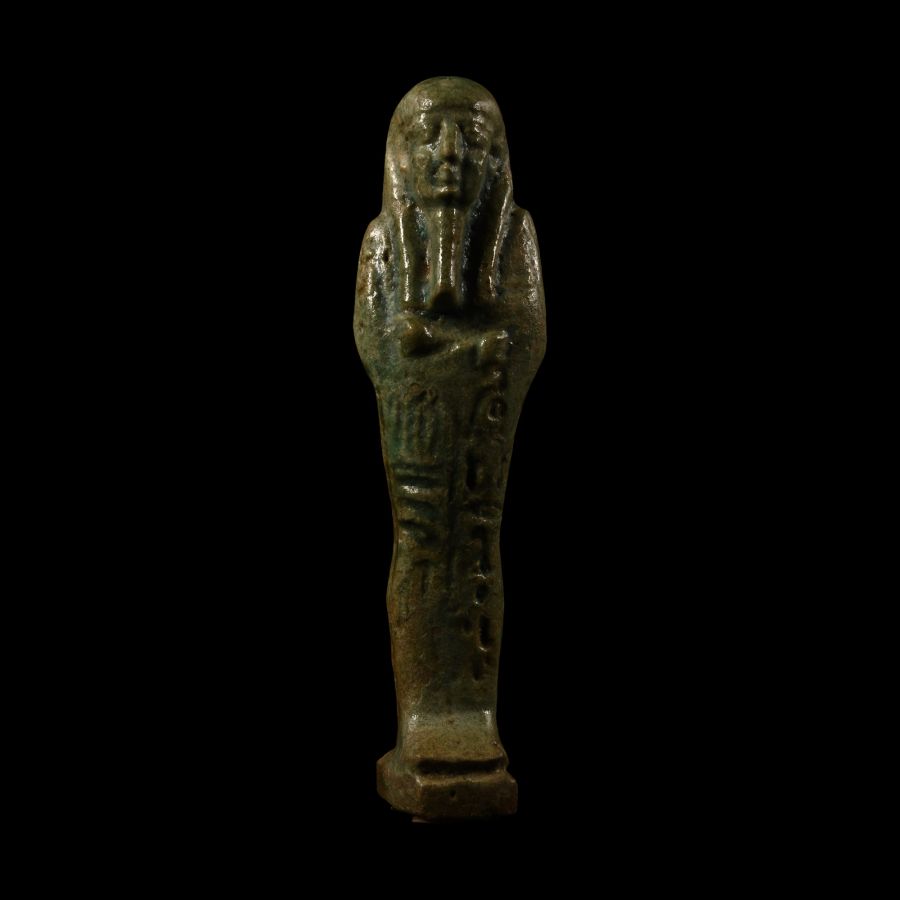
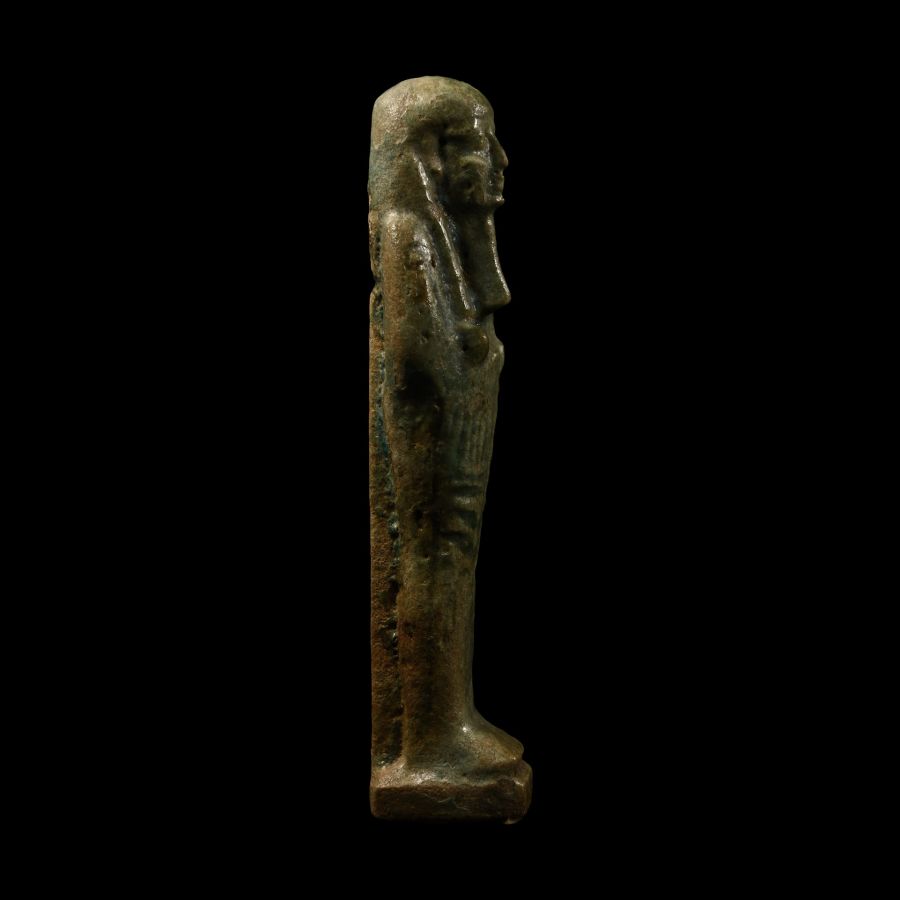
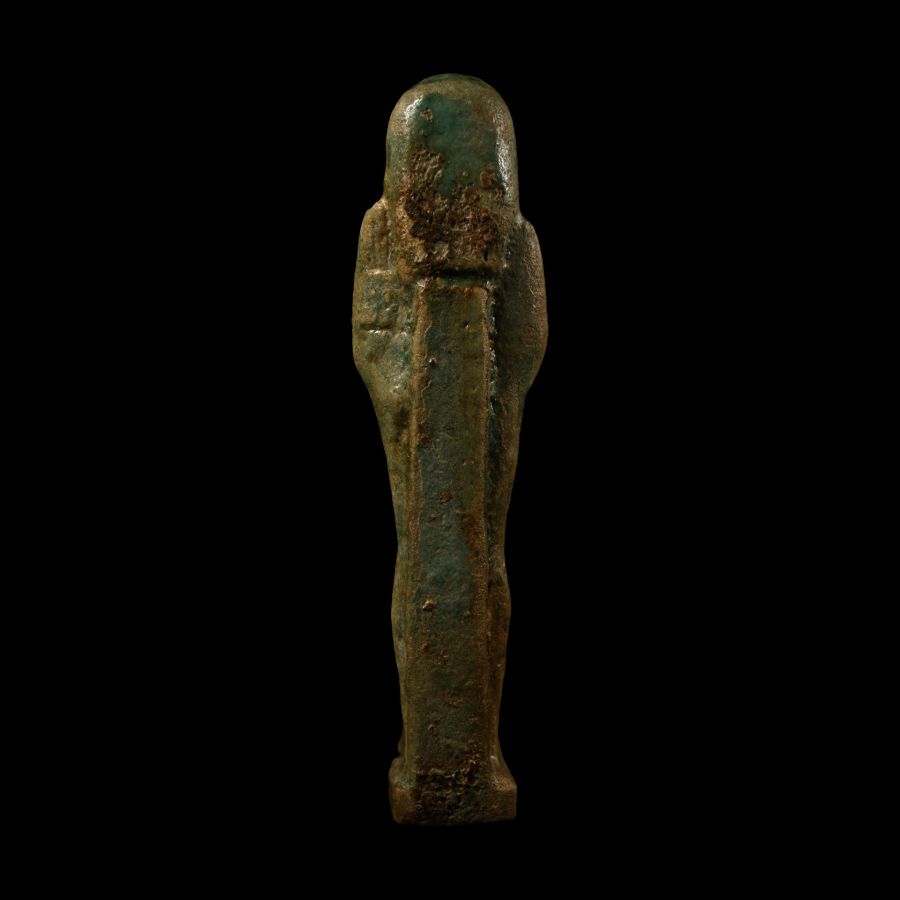
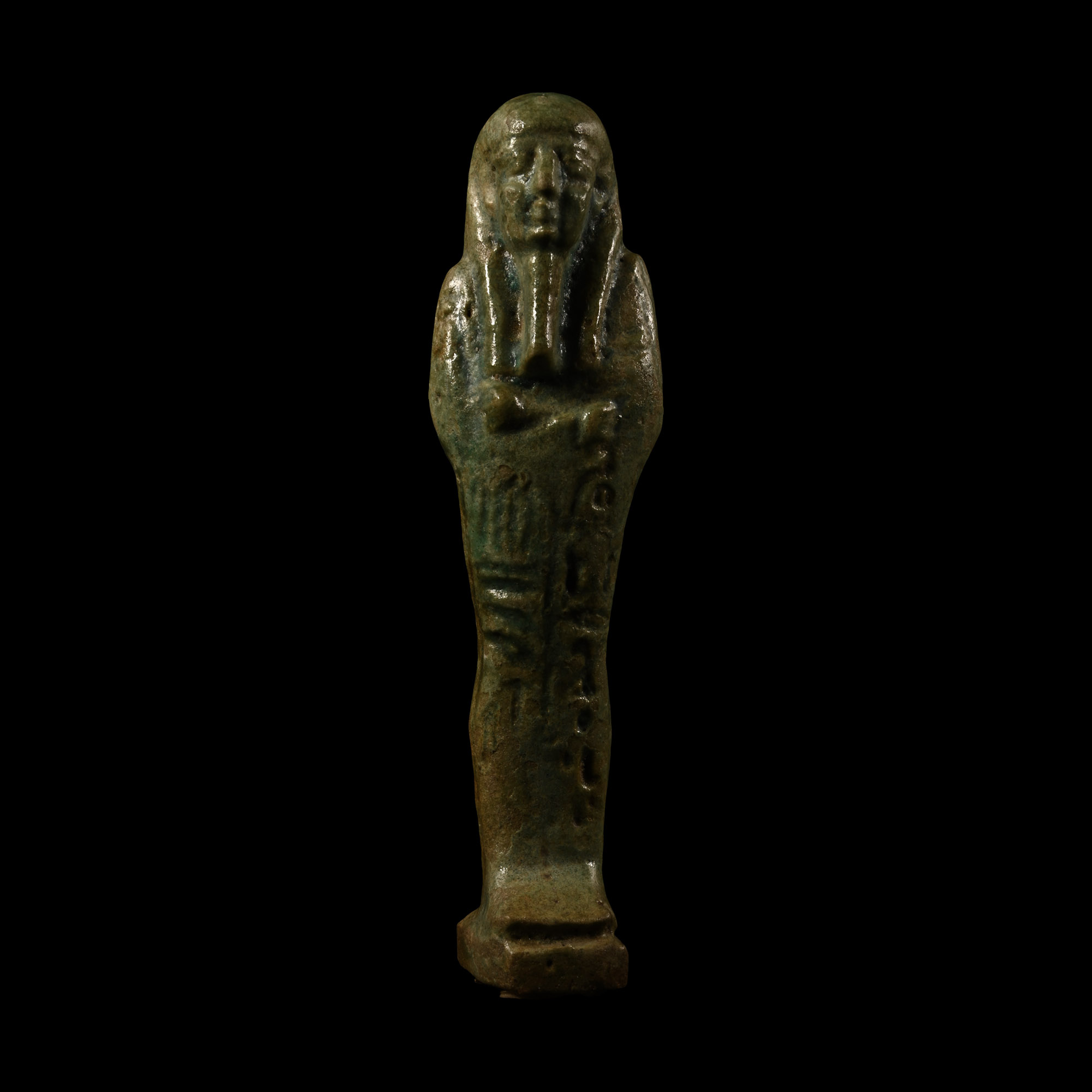
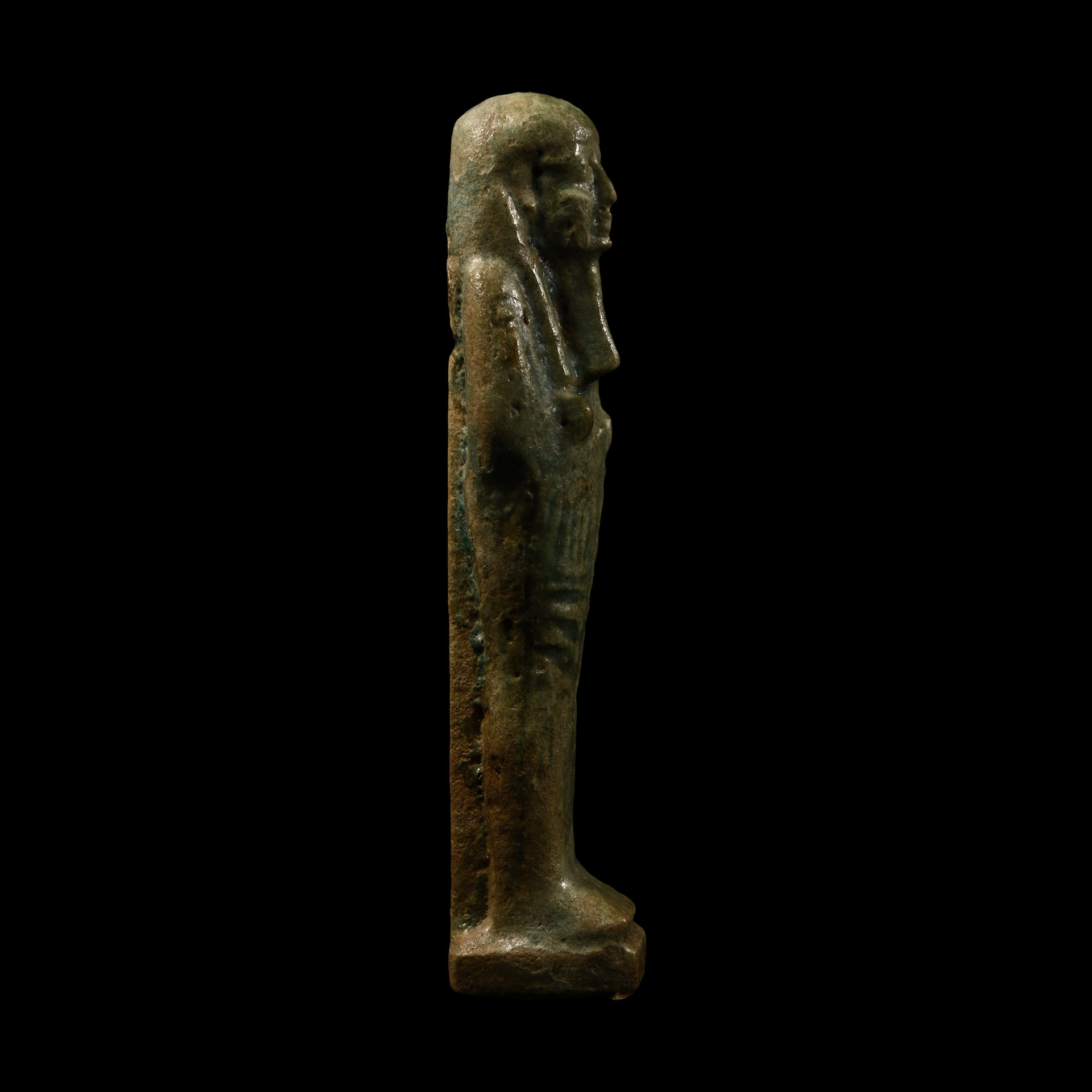
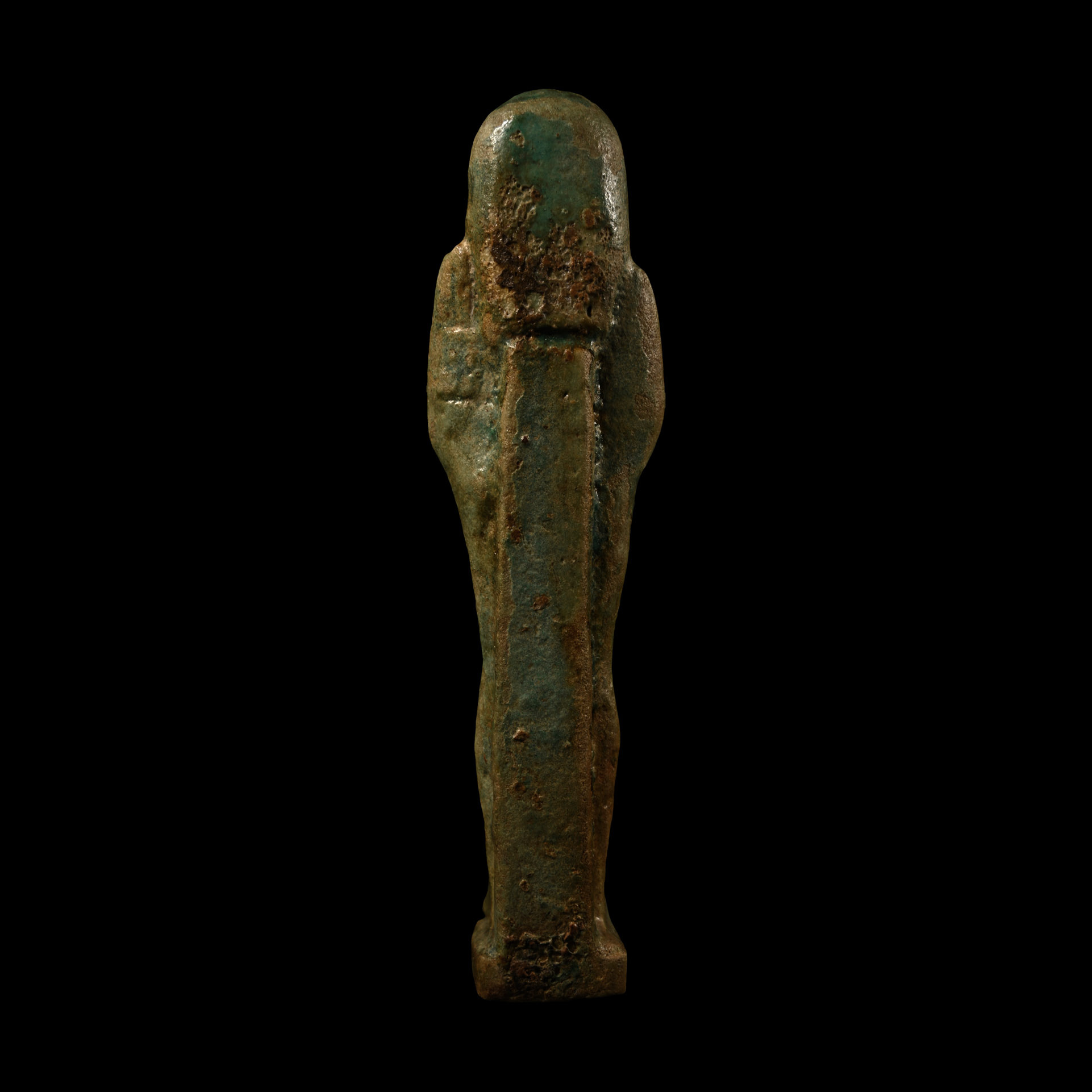
Egyptian Faience Shabti for Hor-sa-Iset
LATE PERIOD, CIRCA 4TH CENTURY B.C.
6 in. (124 grams, 15.2 cm).
Of mummiform type, wearing a tripartite wig and long plaited divine beard; holding a pick in the left hand, a hoe in the right, and the cord of a seed bag hanging over his left shoulder; standing on an integral plinth, a plain back pillar terminating at the base of the wig; two vertical panels of hieroglyphic inscription to the front, including dedication: sḥḏ wsỉr ḥr sꜢ Ꜣst, ‘The illuminated, the Osiris, Hor-sa-Iset’; mounted on a custom-made display stand.
ProvenanceJacques René Fiechter, Switzerland (1920-1950).
with Auction Martin, Egyptian collection of André Bircher, 1949.
with Cahn Auktionen AG, Basel, 5 November 2011, no.20.
Private collection, Europe.
Accompanied by copies of the relevant Cahn catalogue pages.
This lot is accompanied by an illustrated lot declaration signed by the Head of the Antiquities Department, Dr Raffaele D'Amato.
Cf. Janes, G., Shabtis: A Private View, Paris, 2002, pp.175-176, no. 91, for a shabti of similar style.
CONDITIONTimeLine Auctions follows a vetting process to ensure the authenticity and legality of all items, reinforcing our commitment to integrity and responsible trading. Each antiquity, antique, and coin lot undergoes thorough examination by a vetting committee of at least ten external specialists, professional trade association members, scientists, and archaeologists: Our Vetting Process
AUCTIONS:
TimeLine is a leading auction house specialising in antiquities, ancient art, collectables, natural history, coins, medals, and books. Our auctions offer museums, collectors, historians, and enthusiasts the opportunity to acquire unique and historically significant pieces.
-
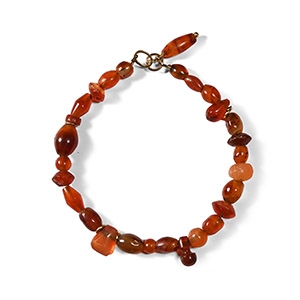
Egyptian Carnelian Bead Bracelet
Late Period, 664-332 B.C. or laterSold for (Inc. bp): £286
Composed mainly of biconical, oblate, and other beads with three larger pendants; with modern gold attachment. 16.4 grams total, 21 cm long
From the private collection of the late Mrs Belinda Ellison, a long time member of the Egyptian Exploration Society, c.1940-2020. This lot is accompanied by an illustrated lot declaration signed by the Head of the Antiquities Department, Dr Raffaele D'Amato. -
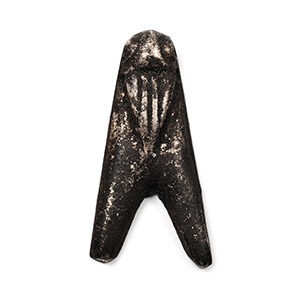
Egyptian Silver Fly Amulet
Late-Ptolemaic Period, 664-30 B.C.Sold for (Inc. bp): £78
With linear detailing to the body, raised eyes, pierced through the head for suspension. 0.82 grams, 17 mm
From an early 20th century collection. This lot is accompanied by an illustrated lot declaration signed by the Head of the Antiquities Department, Dr Raffaele D'Amato.
Egyptian artists often depicted fly whisks with pharaohs and officials, suggesting flies were just nuisances. In reality, Egyptians valued flies for their speed and persistence. Small fly amulets appeared around 3200 B.C. in Naqada II burials, gaining popularity and varying materials during the New Kingdom, including gold, silver, lapis lazuli, carnelian, amethyst, faience, and gemstones. These amulets were thought to protect against insect bites and troublesome creatures via apotropaic magic and possibly symbolised fecundity. Pharaohs awarded gold fly-shaped pendants to honour soldiers' bravery in battle. -
.jpg)
Egyptian Limestone Relief
Late Period, 664-332 B.C.Sold for (Inc. bp): £2,080
A fragment featuring a low-relief depiction of a male head in profile with a shoulder-length duplex wig, the upper part intricately detailed with herringbone stripes and a fringed edge, transitioning into heavy curls at the lower part, sporting a short beard and a boldly carved ear with an indented lobe, drilled for a mounting peg. 1.95 kg, 26.5 cm
Acquired in the mid 1980s-1990s. Private collection, Switzerland, thence by descent. Private collection, since the late 1990s. This lot has been checked against the Interpol Database of stolen works of art and is accompanied by a search certificate number no.12626-234637. This lot has been cleared against the Art Loss Register database, and is accompanied by an illustrated lot declaration signed by the Head of the Antiquities Department, Dr Raffaele D'Amato.
