
Loading, please wait...
LOT 0442
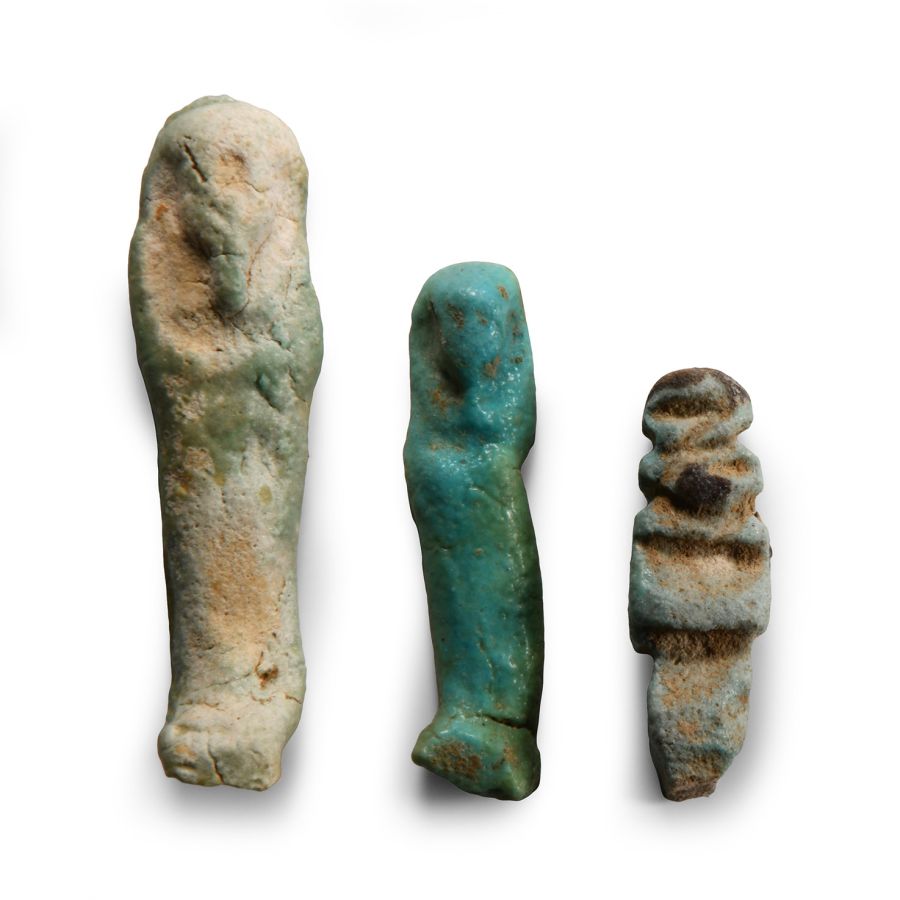
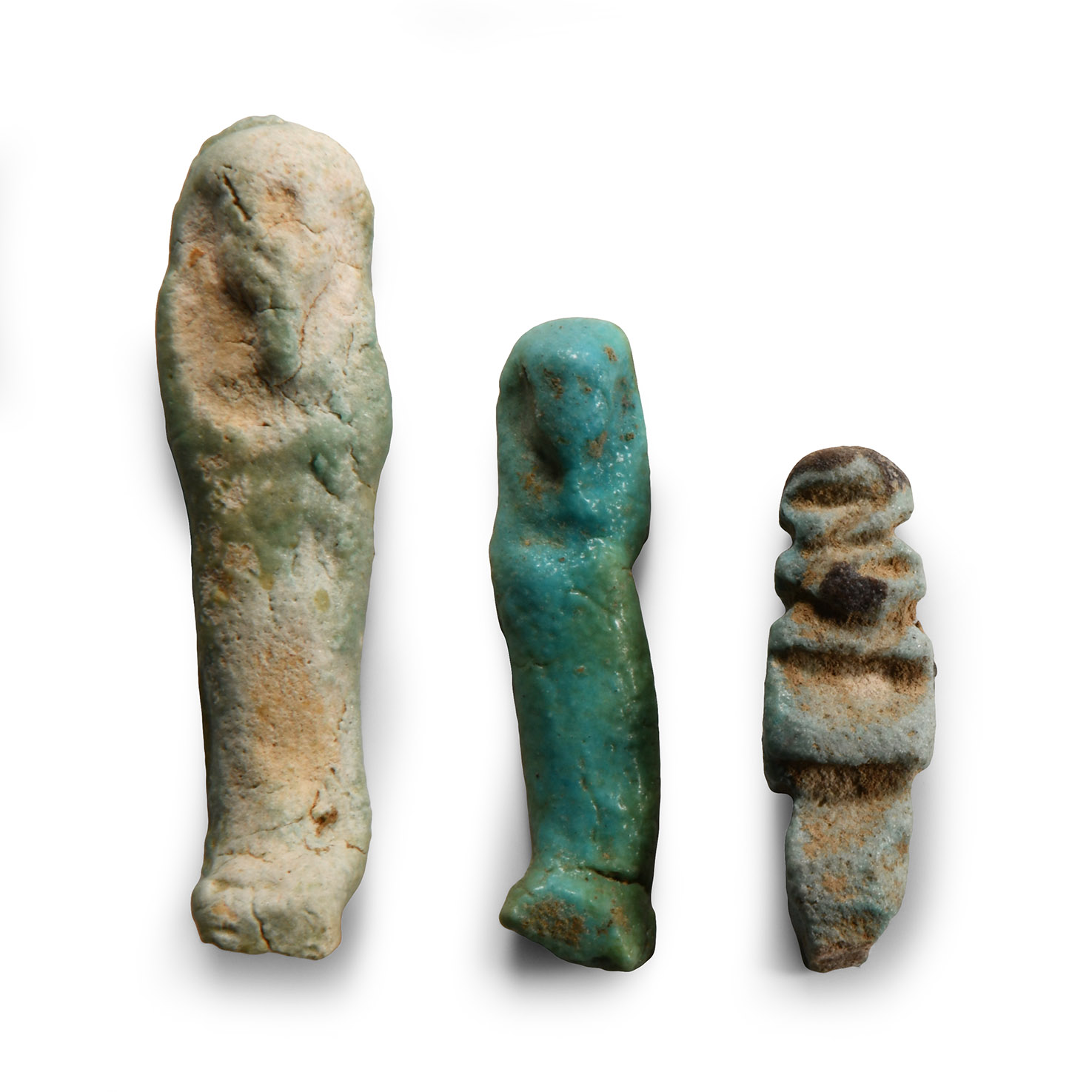
Egyptian Faience Shabti and Amulet Group
LATE PERIOD-PTOLEMAIC PERIOD, 664-30 B.C.
1 5/8 - 2 1/2 in. (20 grams total, 41-65 mm).
Two mummiform shabti figurines, one faded pale green and the other bright turquoise; one amuletic figurine, possibly of a ram or baboon-headed deity with sun disk headdress, applied black pigment detailing. [3, No Reserve]
ProvenanceFrom the H.N. collection, Milton Keynes, Berkshire, UK, 1990s.
FootnotesShabti figures were created to carry out heavy manual tasks on behalf of a person in the afterlife. From the Third Intermediate Period into the Late Period burials were often provided with several hundred shabtis.
CONDITIONTimeLine Auctions follows a vetting process to ensure the authenticity and legality of all items, reinforcing our commitment to integrity and responsible trading. Each antiquity, antique, and coin lot undergoes thorough examination by a vetting committee of at least ten external specialists, professional trade association members, scientists, and archaeologists: Our Vetting Process
AUCTIONS:
TimeLine is a leading auction house specialising in antiquities, ancient art, collectables, natural history, coins, medals, and books. Our auctions offer museums, collectors, historians, and enthusiasts the opportunity to acquire unique and historically significant pieces.
-
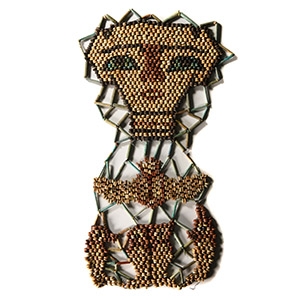
Large Egyptian Faience Beaded Mummy Mask with Sons of Horus
Ptolemaic Period, 332-30 B.C.Sold for (Inc. bp): £351
Restrung netted beadwork panel of annular and tubular glazed composition beads in blues, greens, black, cream and red-brown colours, depicting a mummy face mask with false beard, a scarab with extended wings below, the 'Four Sons of Horus’ beneath the scarab, joined together with areas of open netting of tubular beads; restrung with some later beads. 123 grams, 30 cm
Ex Mariaud de Serres, Paris, France, 1980-1990s. From a London, UK, collection.
The Four Sons of Horus were deities responsible for protecting the internal organs of the deceased. The human-headed Imsety protected the liver, the baboon-headed Hapy protected the lungs, the jackal-headed Duamutef protected the stomach, and the falcon-headed Qebehsenuef protected the intestines. -
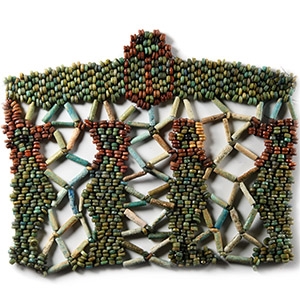
Large Egyptian Bead Panel with Four Sons of Horus and Winged Scarab
Ptolemaic Period, 332-30 B.C.Sold for (Inc. bp): £117
Restrung as an openwork panel with a winged scarab above and the Four Sons of Horus below as two opposing pairs; restrung with some later beads. 33 grams, 14 cm
Ex Mariaud de Serres, Paris, France, 1980-1990s. From a London, UK, collection.
The Four Sons of Horus were deities responsible for protecting the internal organs of the deceased. The human-headed Imsety protected the liver, the baboon-headed Hapy protected the lungs, the jackal-headed Duamutef protected the stomach, and the falcon-headed Qebehsenuef protected the intestines. -
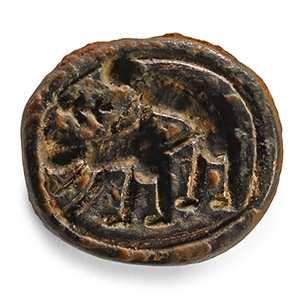
Phoenician Bronze Scaraboid Stamp Seal with Erotic Scene
1st millennium B.C.Sold for (Inc. bp): £780
Plano-convex stamp with scarab detailing, incuse scene to the underside. 5.9 grams, 13 mm
From the collection of a gentleman, acquired on the London art market in the 1990s.
