
Loading, please wait...
LOT 0512
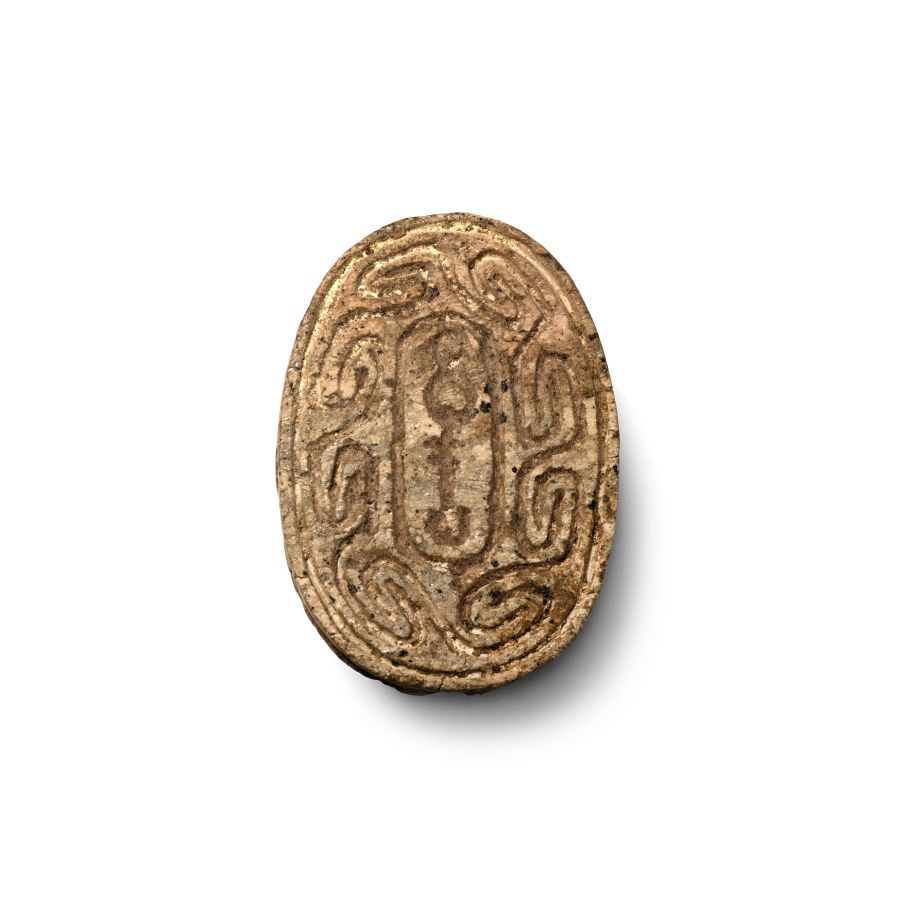
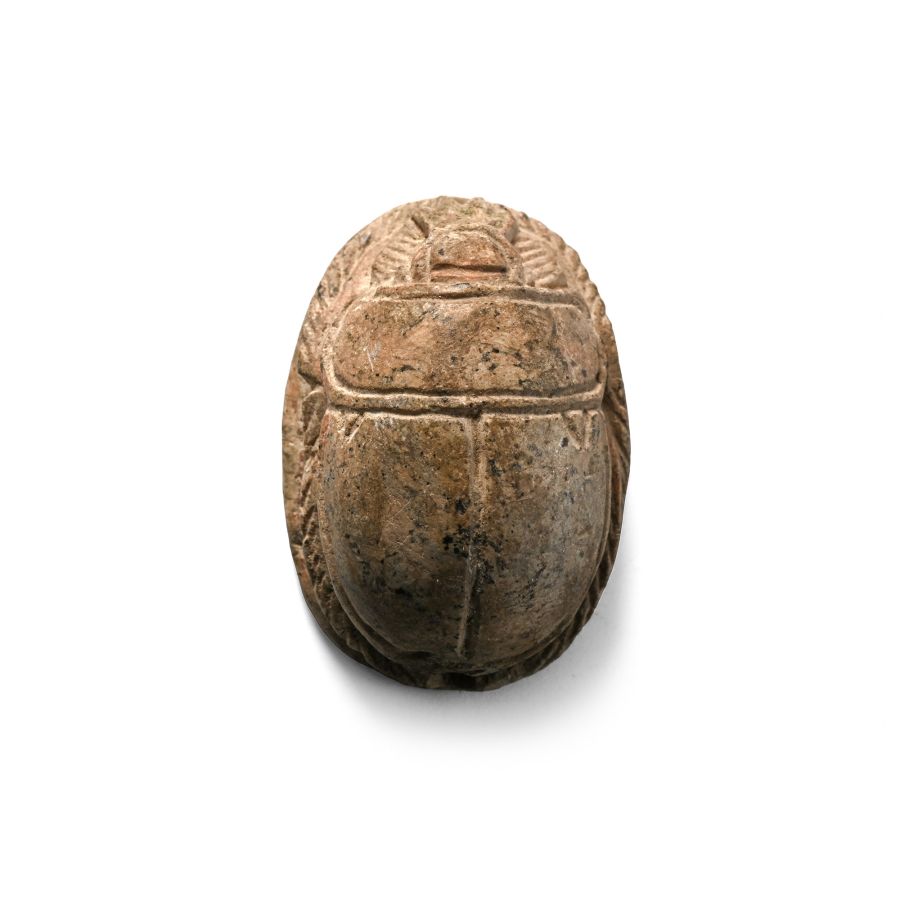
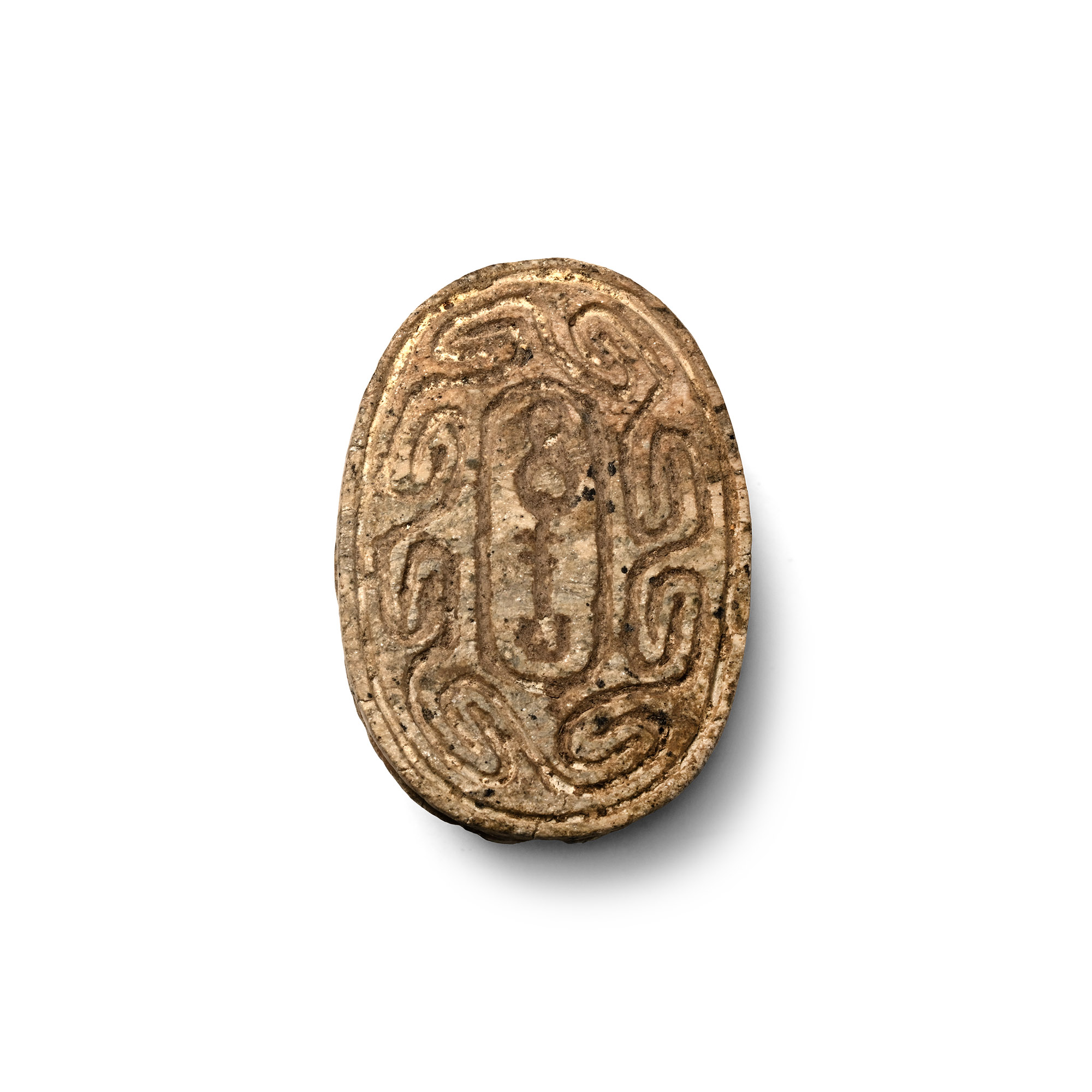
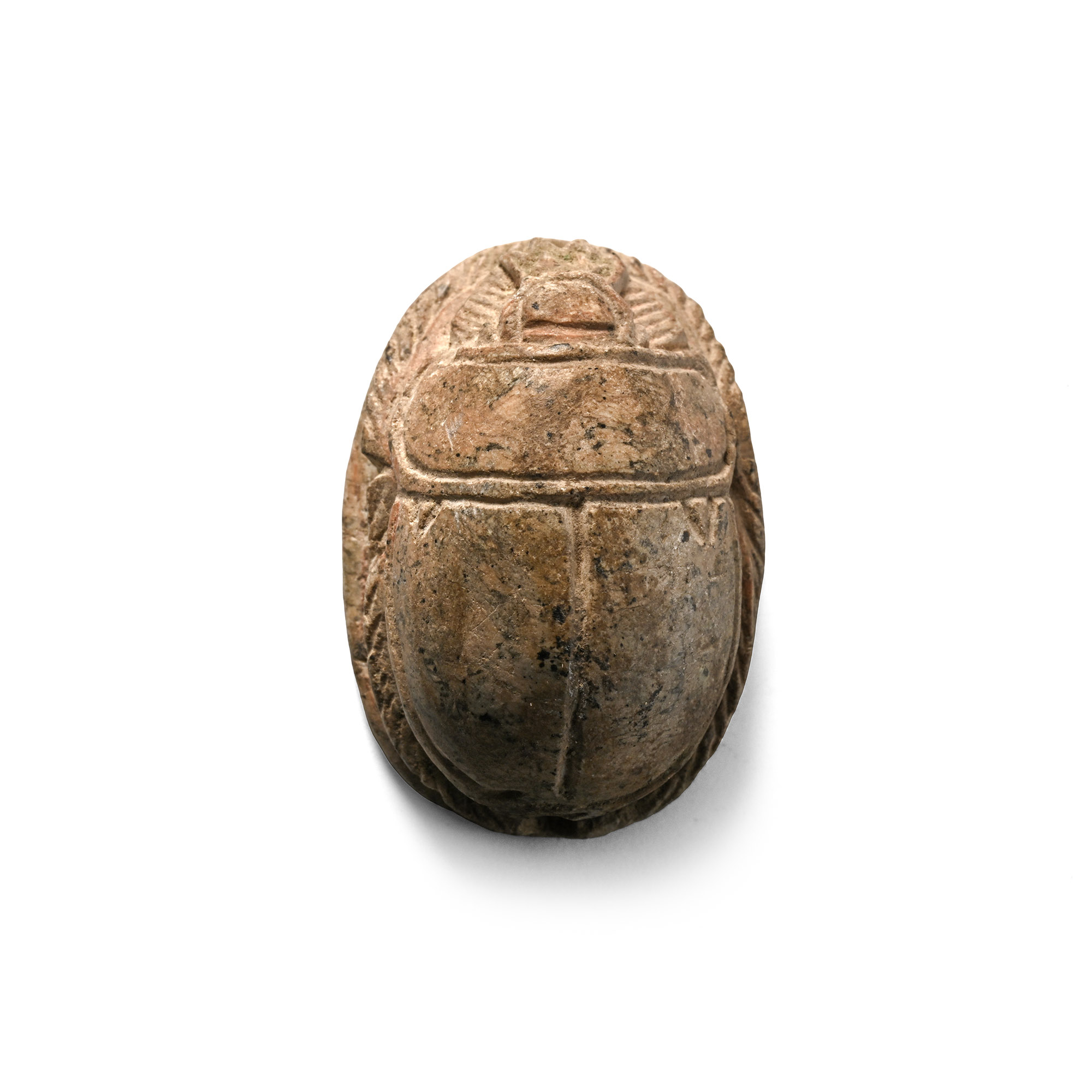
Egyptian Faience Scarab
LATE-PTOLEMAIC PERIOD, CIRCA 664-30 B.C.
1 1/4 in. (11.14 grams, 31 mm).
Anatomical detailing on the carapace and head, underside with a sinuous line surrounding a hieroglyph; pierced longitudinally.
ProvenanceFrom the collection of a gentleman, acquired on the London art market in the 1990s.
CONDITIONTimeLine Auctions follows a vetting process to ensure the authenticity and legality of all items, reinforcing our commitment to integrity and responsible trading. Each antiquity, antique, and coin lot undergoes thorough examination by a vetting committee of at least ten external specialists, professional trade association members, scientists, and archaeologists: Our Vetting Process
AUCTIONS:
TimeLine is a leading auction house specialising in antiquities, ancient art, collectables, natural history, coins, medals, and books. Our auctions offer museums, collectors, historians, and enthusiasts the opportunity to acquire unique and historically significant pieces.
-
Egyptian Blue Faience Bead Necklace with Taweret
Ptolemaic Period, 332-30 B.C.Estimate: £600 - 800 (+bp*)
Opening Bid: £300
A restrung designer necklace composed of cylindrical and annular beads, central feature composed of polychrome annular beads flanking a Taweret amulet; modern clasp. 21.2 grams, 27.6 cm
Private collection, UK.
The ancient Egyptian goddess Taweret is mainly associated with fertility, childbirth, motherhood, and the protection of women during pregnancy and labour. She is depicted as a composite creature, combining various animal features, and is one of the more unique and striking deities in the Egyptian pantheon. Taweret’s name comes from the Egyptian word for "great" or "large" (tꜣwꜣrt), reflecting her formidable and protective nature. -
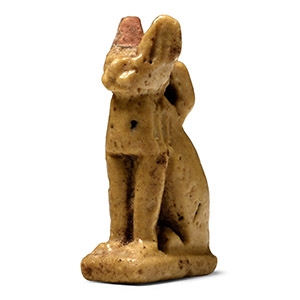
Egyptian Yellow Faience Bastet Cat Amulet
New Kingdom, circa 1550-1070 B.C.Sold for (Inc. bp): £715
Figure of Bastet as a cat with pointed ears, seated on a rectangular base with a rounded end; suspension loop on the back, ear repaired. 2.51 grams, 26 mm
Ex London gallery and Belinda Elliston, a member of the Egyptian Exploration Society, 1940s onwards.
In ancient Egypt, the cat was venerated as the sacred animal of the goddess Bastet, whose principal cult centre was Bubastis in the Nile Delta. Although cats were once part of folk practice, their veneration as part of formal cults spread across Egypt during the Late Period. Bastet was closely linked to lion-headed goddesses like Sekhmet, Tefnut, and Pakhet, and the cat itself became associated with solar imagery: the Book of the Dead portrays the sun god as a Great Cat vanquishing Apophis beneath the sacred Ished Tree. The cat could also embody the Eye of the Sun or, more often in Bastet’s case, the Eye of the Moon. Mummified cats were frequently dedicated as votive offerings, and some of their feline-shaped coffins were adorned with finely crafted bronze heads to enhance their divine likeness. -
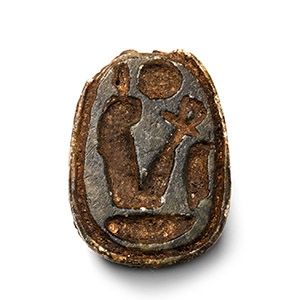
Egyptian Faience Scarab of Amenhotep III
Late-Ptolemaic Period, circa 664-30 B.C.Sold for (Inc. bp): £169
Detailed body and legs, underside with a cartouche of Amenhotep III containing his throne name Nebmaatre. 6.4 grams, 22 mm
From the collection of a gentleman, acquired on the London art market in the 1990s.
