
Loading, please wait...
LOT 0597
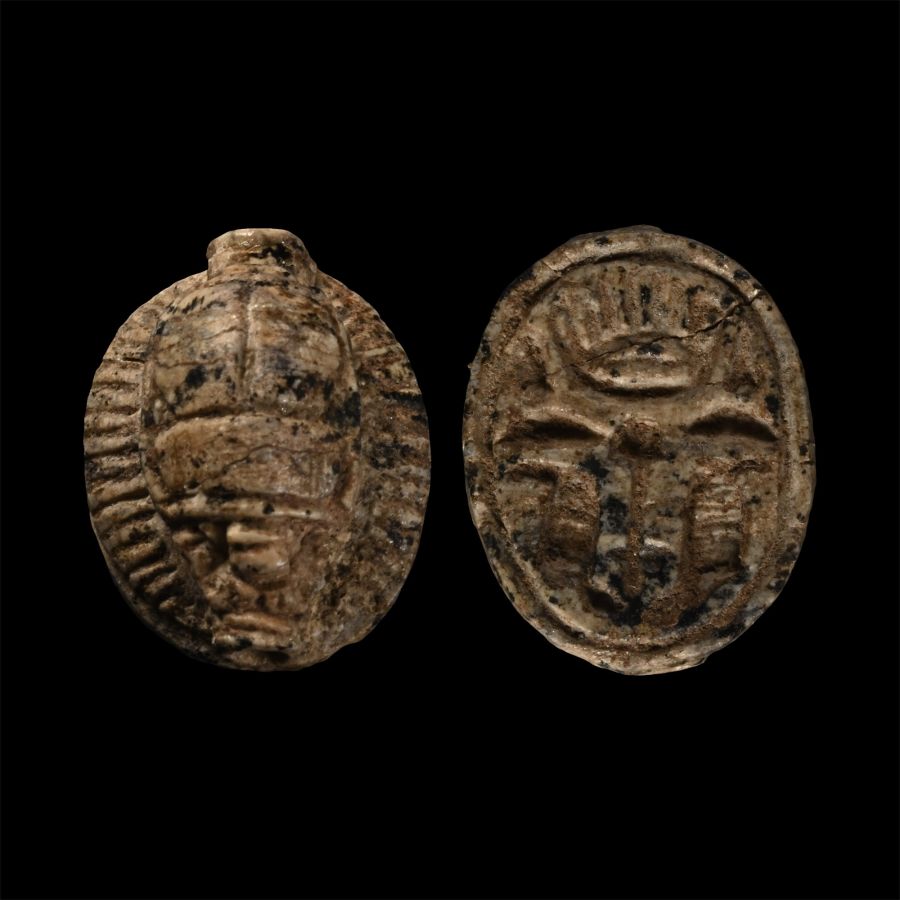
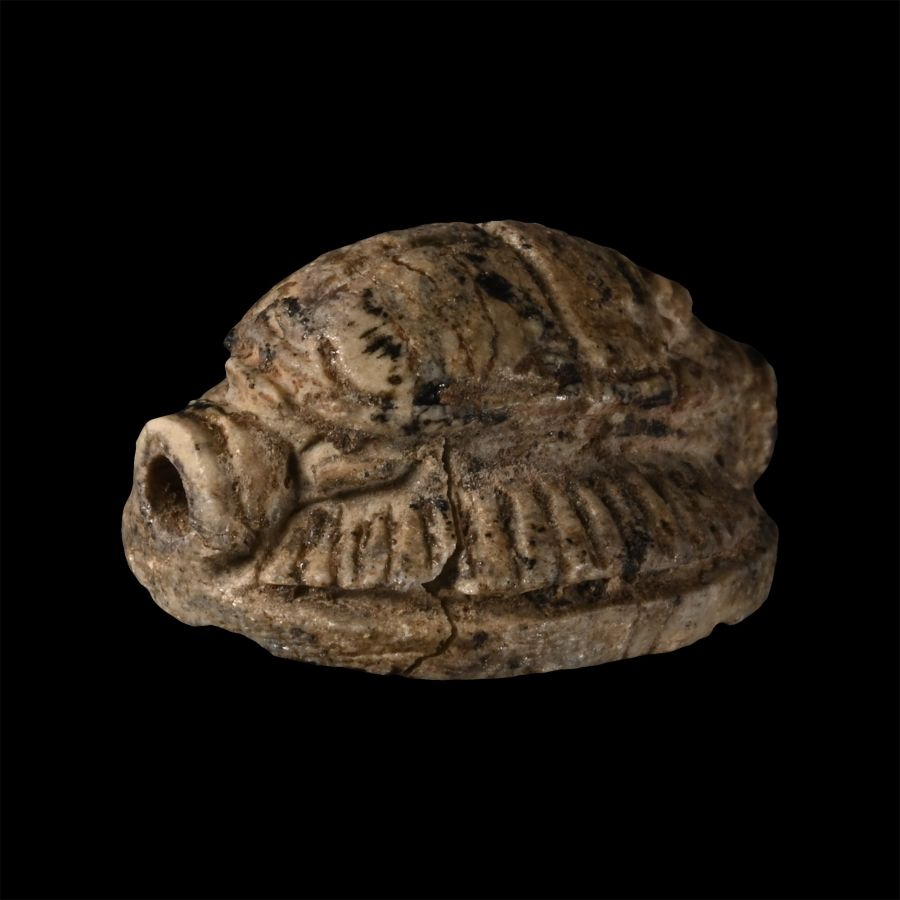
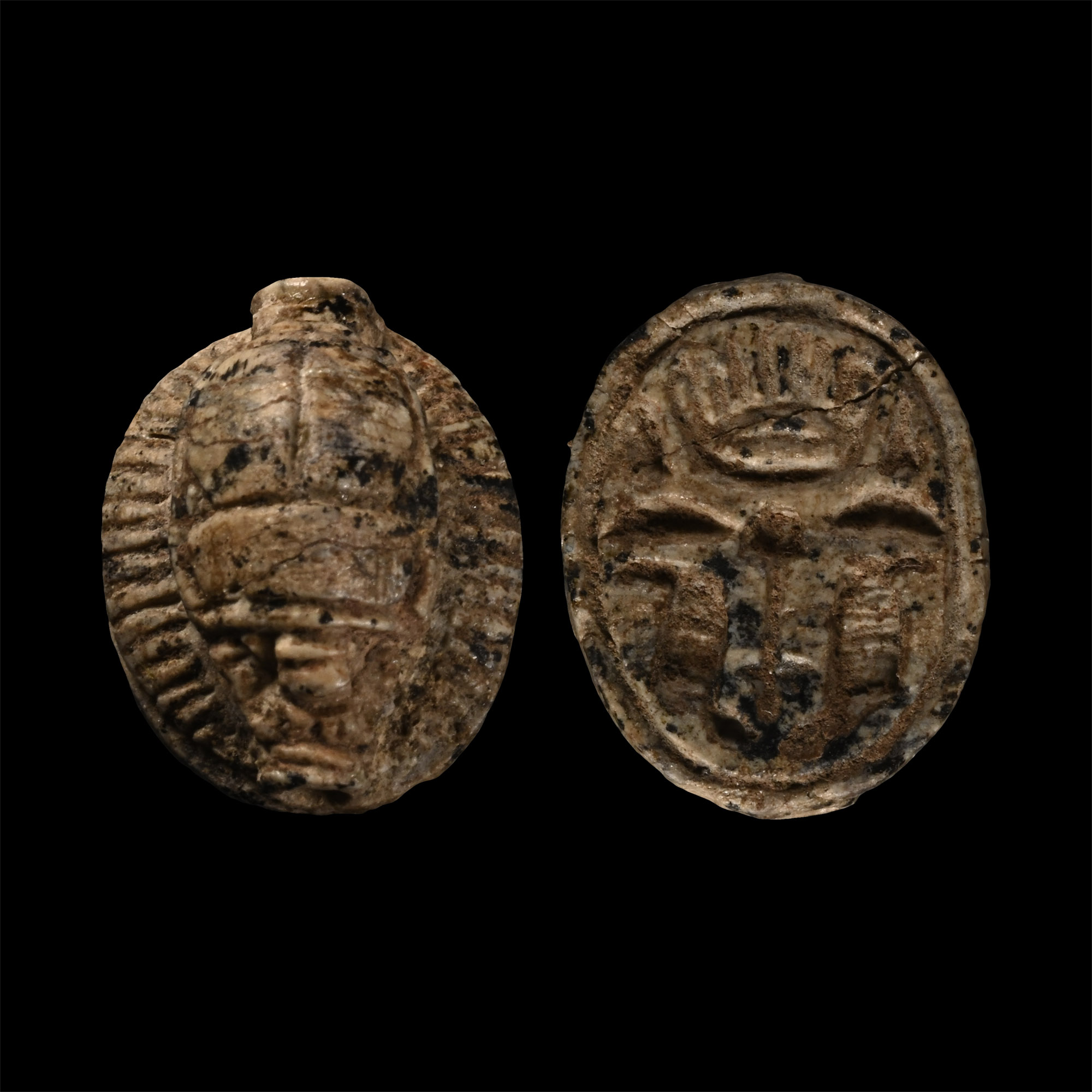
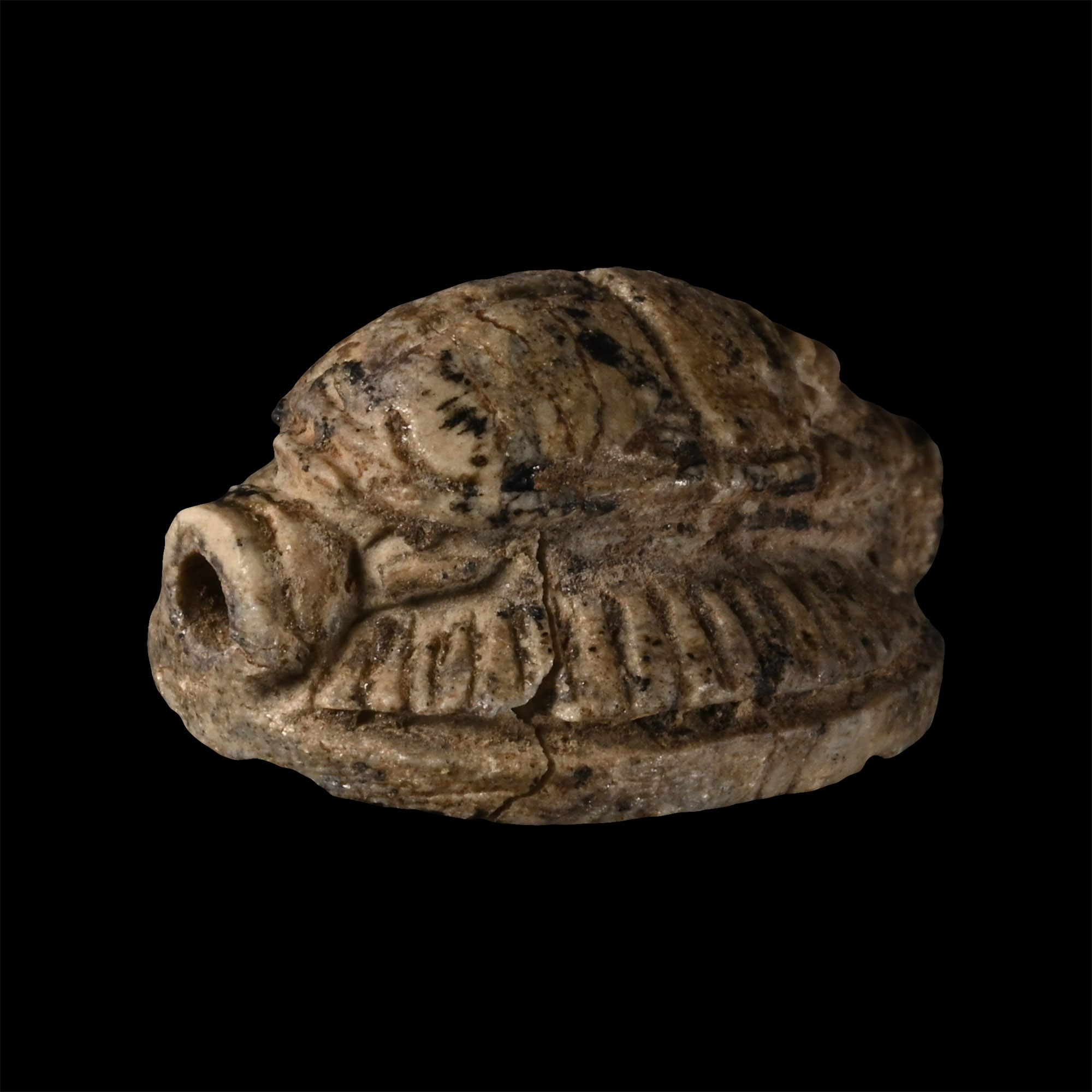
Egyptian Faience Scarab with Hieroglyphs
LATE PERIOD, 664-332 B.C.
5/8 in. (2.66 grams, 18 mm).
Modelled as a scarab resting on a textured base with a tubular extension behind and before the head forming part of the piercing, the underside features two rearing cobras atop neb signs flanking a nefer sign, with a large nwb sign (meaning 'gold') below.
ProvenanceFrom the property of a London, UK, gentleman, 1970-2000s.
This lot is accompanied by an illustrated lot declaration signed by the Head of the Antiquities Department, Dr Raffaele D'Amato.
TimeLine Auctions follows a vetting process to ensure the authenticity and legality of all items, reinforcing our commitment to integrity and responsible trading. Each antiquity, antique, and coin lot undergoes thorough examination by a vetting committee of at least ten external specialists, professional trade association members, scientists, and archaeologists: Our Vetting Process
AUCTIONS:
TimeLine is a leading auction house specialising in antiquities, ancient art, collectables, natural history, coins, medals, and books. Our auctions offer museums, collectors, historians, and enthusiasts the opportunity to acquire unique and historically significant pieces.
LOT 0597
Egyptian Faience Scarab with Hieroglyphs
Estimate £150 - 200€170 - 230 (for guidance only)$200 - 270 (for guidance only)
-
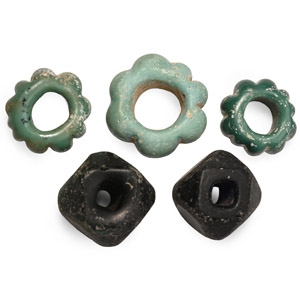
Phoenician Glass Bead Group
Circa 600-400 B.C.Sold for (Inc. bp): £85
Comprising: three ring-shaped with grooves and two irregular cube-shapes. 46 grams total, 18-25 mm
Prince collection, 1990s-2014. Ex private collection 1970s-1990s. -
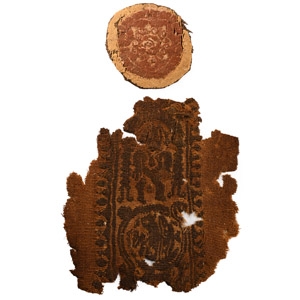
Egyptian Coptic Textile Fragment Group
Circa 5th-6th century A.D.Sold for (Inc. bp): £91
Comprising a fragment of a large segmentum in linen and wool, embroidered with a dancer, followed by a tondo with a Nereid riding a dolphin, borders with geometric decorations; an orbiculus decorated with vegetal patterns. 37 grams total including package, 6.7-14 cm
Acquired 1970s-1996. Property of a North American collector. London collection, 2016.
The segmentum was probably part of the vertical clavus of a tunic; it is highly probable that the embroidery refers to the Dionysian cycle with dancers, animals and probably, in the missing parts, hunters. -
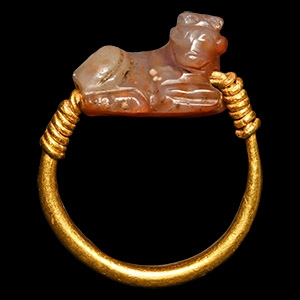
Egyptian Gold Ring with Agate Bull
New Kingdom, 1550-1292 B.C.Estimate: £6,000 - 8,000 (+bp*)
Opening Bid: £3,250
Comprising a round-section swivel ring set with a carved Apis bull depicted recumbent with its head turned to right. 4.71 grams, 27.98 mm overall, 19.07 mm internal diameter (approximate size British N, USA 6 1/2, Europe 13.72, Japan 13)
Private collection, UK. This lot has been checked against the Interpol Database of stolen works of art and is accompanied by search certificate number no.12939-245988.
The Apis bull was a sacred animal in ancient Egyptian religion, worshipped as a living manifestation of the god Ptah and later associated with Osiris and Ra. Regarded as an intermediary between the gods and humanity, the Apis bull was chosen based on specific physical characteristics, such as a black coat with unique white markings. Once identified, it was housed in a grand temple in Memphis, where it was treated with great reverence, adorned with jewellery, and participated in important religious ceremonies. Upon its death, the bull underwent elaborate mummification and burial rituals, symbolising its transition to the afterlife and its continued divine role. The cult of the Apis bull highlights the Egyptians’ deep connection to animals as symbols of divine power and their belief in the interconnectedness of the mortal and spiritual worlds.
