
Loading, please wait...
LOT 0453
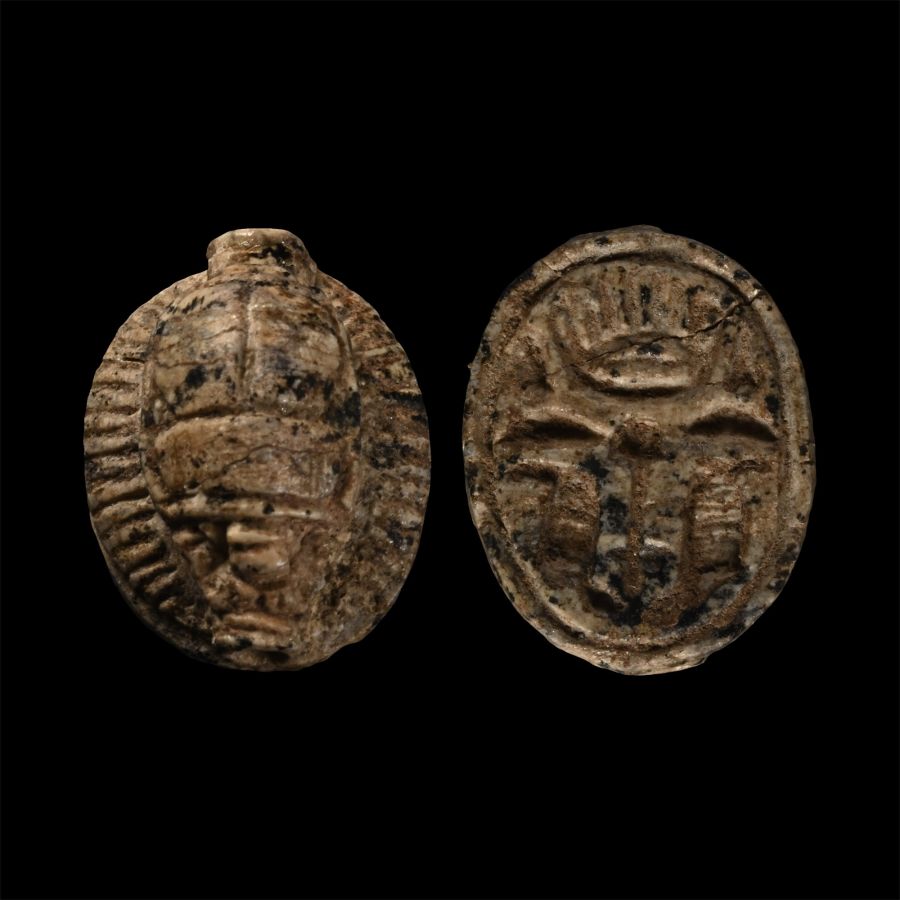
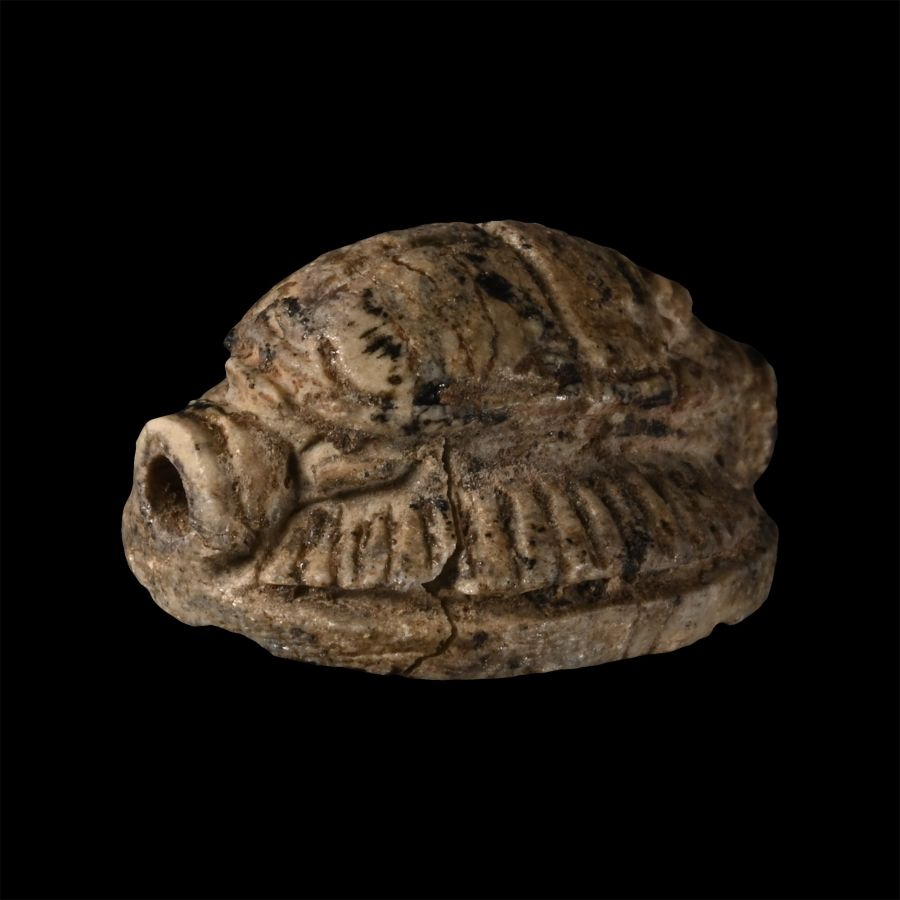
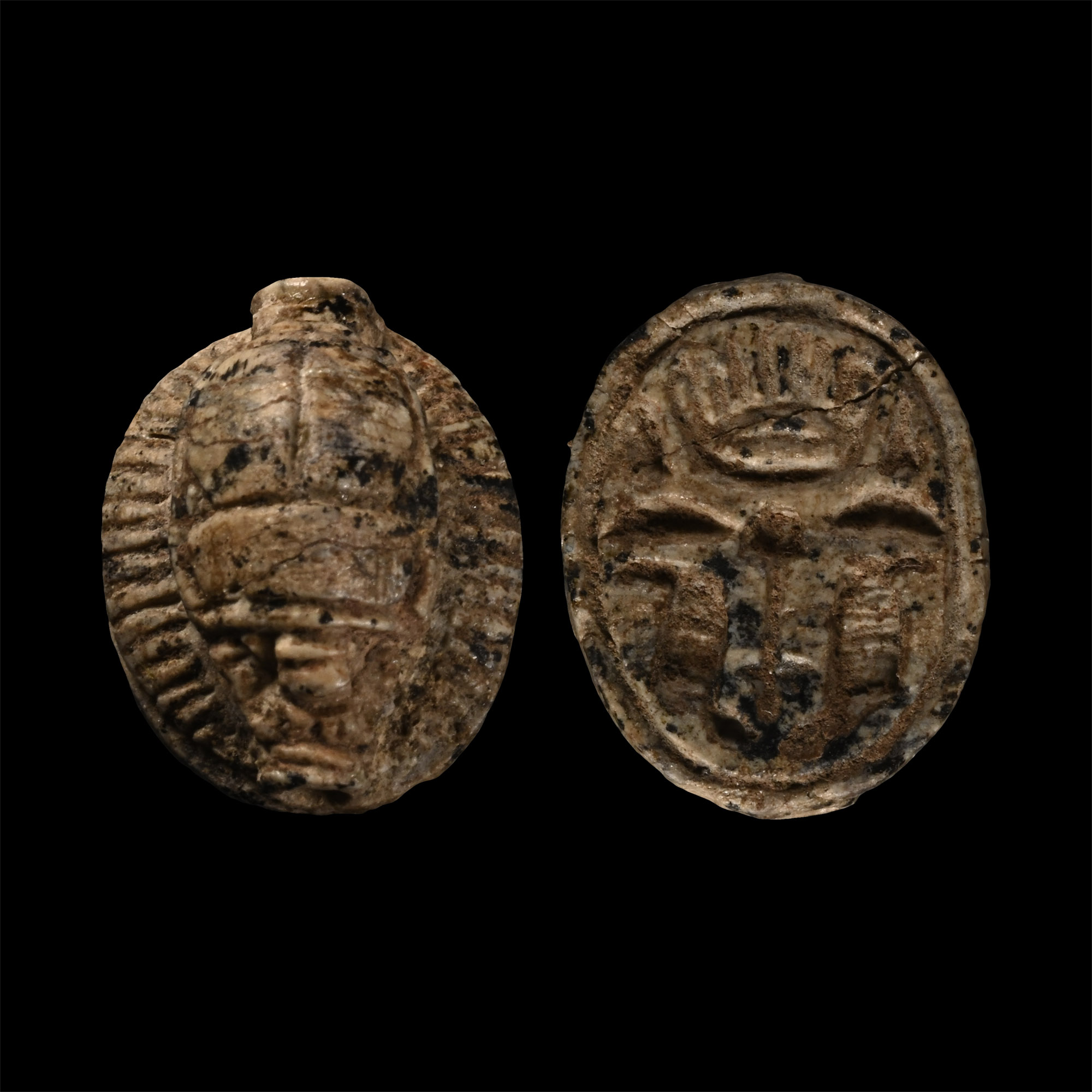
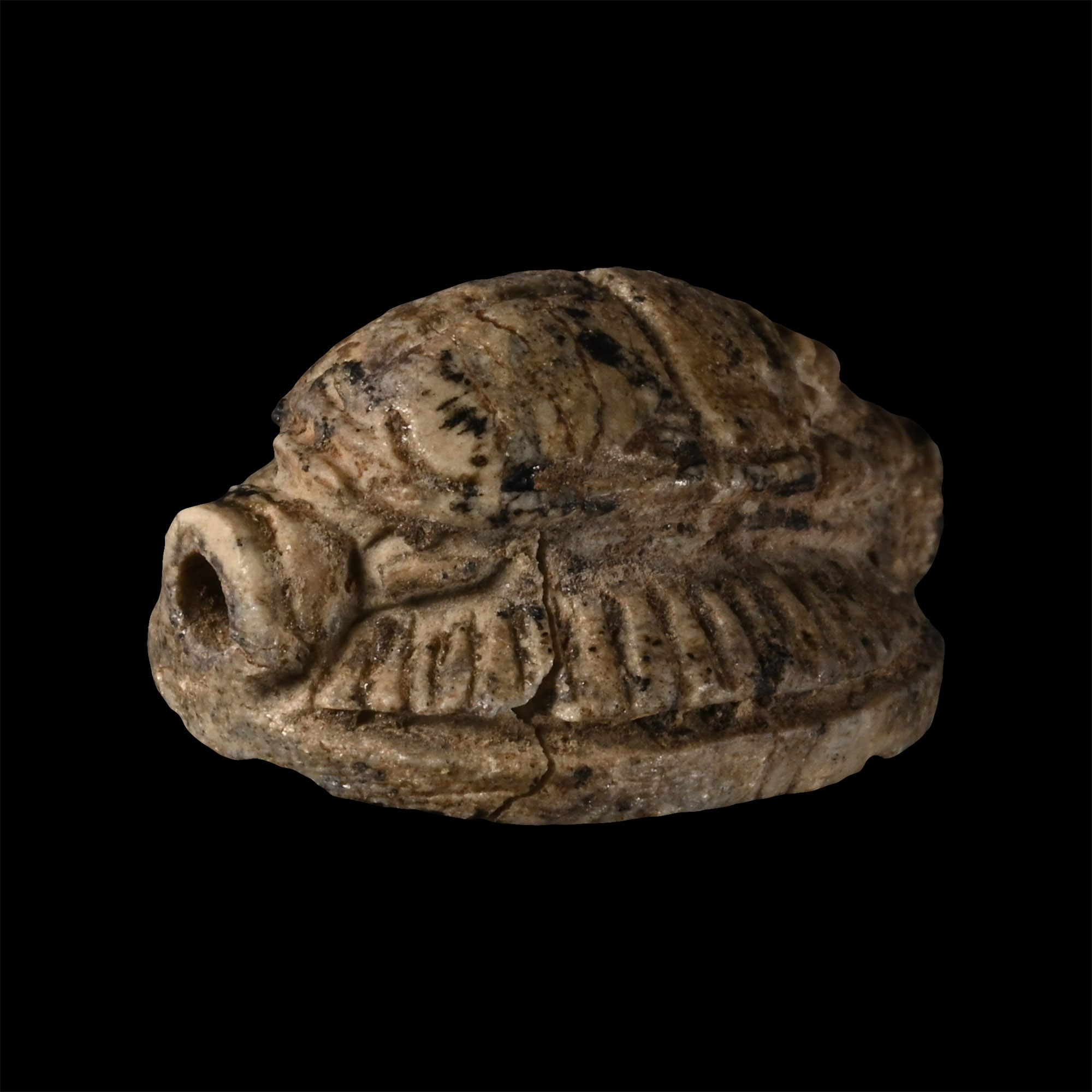
Egyptian Faience Scarab with Hieroglyphs
LATE PERIOD, 664-332 B.C.
5/8 in. (2.66 grams, 18 mm).
Modelled as a scarab resting on a textured base with a tubular extension behind and before the head forming part of the piercing, the underside features two rearing cobras atop neb signs flanking a nefer sign, with a large nwb sign (meaning 'gold') below.
ProvenanceFrom the property of a London, UK, gentleman, 1970-2000s.
This lot is accompanied by an illustrated lot declaration signed by the Head of the Antiquities Department, Dr Raffaele D'Amato.
TimeLine Auctions follows a vetting process to ensure the authenticity and legality of all items, reinforcing our commitment to integrity and responsible trading. Each antiquity, antique, and coin lot undergoes thorough examination by a vetting committee of at least ten external specialists, professional trade association members, scientists, and archaeologists: Our Vetting Process
AUCTIONS:
TimeLine is a leading auction house specialising in antiquities, ancient art, collectables, natural history, coins, medals, and books. Our auctions offer museums, collectors, historians, and enthusiasts the opportunity to acquire unique and historically significant pieces.
LOT 0453
Egyptian Faience Scarab with Hieroglyphs
Estimate £180 - 240€210 - 280 (for guidance only)$240 - 320 (for guidance only)
-
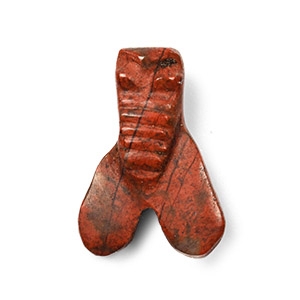
Egyptian Jasper Fly Amulet
New Kingdom, 1550-1070 B.C.Sold for (Inc. bp): £85
With incised line detailing to the body, pierced longitudinally for suspension. 0.33 grams, 11 mm
Ex London and Home Counties collection, UK, 1920-1940. This lot is accompanied by an illustrated lot declaration signed by the Head of the Antiquities Department, Dr Raffaele D'Amato.
Fly amulets are first attested during the Predynastic period (pre 3,100 BC). It is possible that they represented a wish to emulate the fly's renowned fecundity. These amulets were made in a variety of materials, including gold, and golden flies were used in the New Kingdom as an honorific award for military valour. No fewer than thirty-three fly amulets came from the tomb of the wives of Tuthmoses III. -
.jpg)
Egyptian Bronze Khonsu Statuette with Silver Eyes
Late Period, 664-332 B.C.Estimate: £4,000 - 6,000 (+bp*)
Opening Bid: £2,000
Modelled in the round figure of Khonsu standing, holding the crook, flail, and long was-sceptre, with false beard and sidelock, wearing a crown consisting of a lunar crescent and disc with uraeus, and a broad collar; the eyes with sheet-silver inlays; mounted on a custom-made stand. 378 grams total, 19 cm including stand
Ex Geneva collection, Switzerland, acquired before 1980. Ex Galerie Günter Puhze GmbH, Germany, 2008. Ex Keane collection, Kent, UK. Accompanied by an original invoice from Galerie Günter Puhze GmbH. This lot has been checked against the Interpol Database of stolen works of art and is accompanied by a search certificate number no.12628-235137. This lot has been cleared against the Art Loss Register database, and is accompanied by an illustrated lot declaration signed by the Head of the Antiquities Department, Dr Raffaele D'Amato.
Khonsu is an ancient Egyptian god of the moon, often depicted as a young man with a sidelock, a uraeus, and headgear featuring a lunar crescent and disc. He is associated with Thoth, another moon god. Together with his father Amun and mother Mut, Khonsu forms the Theban Triad. -
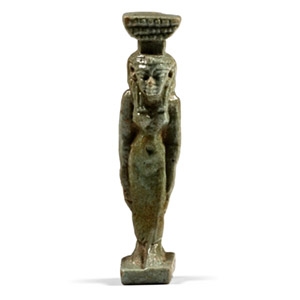
Egyptian Green Glazed Faience Amulet of Nephthys
Late Period, 26th Dynasty, circa 664-525 B.C.Estimate: £500 - 700 (+bp*)
Opening Bid: £250
Depicting the goddess Nephthys wearing the two hieroglyphic parts of her name (Neb(et)-Hut), with dorsal pillar and base. 2.68 grams, 37 mm
with B.M.S., Switzerland. Private collection, London, UK, acquired from the above on 14 September 1981. This lot is accompanied by an illustrated lot declaration signed by the Head of the Antiquities Department, Dr Raffaele D'Amato.
Nephthys was a protective goddess linked to mourning, magic, and the afterlife. As the sister of Isis, she played a vital role in the funerary rites of Osiris. Amulets like this were placed on the deceased to invoke her protection and aid in rebirth. Typically made of faience or semi-precious stone, they were especially common in the Late Period.
