
Loading, please wait...
LOT 0514
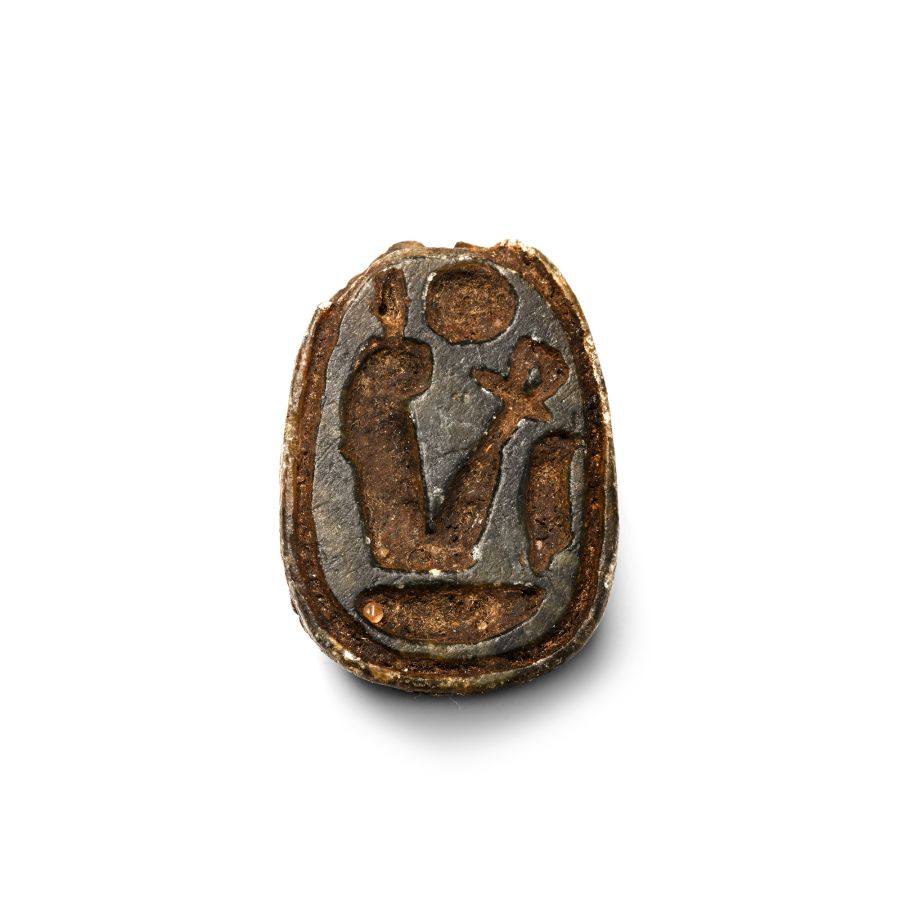
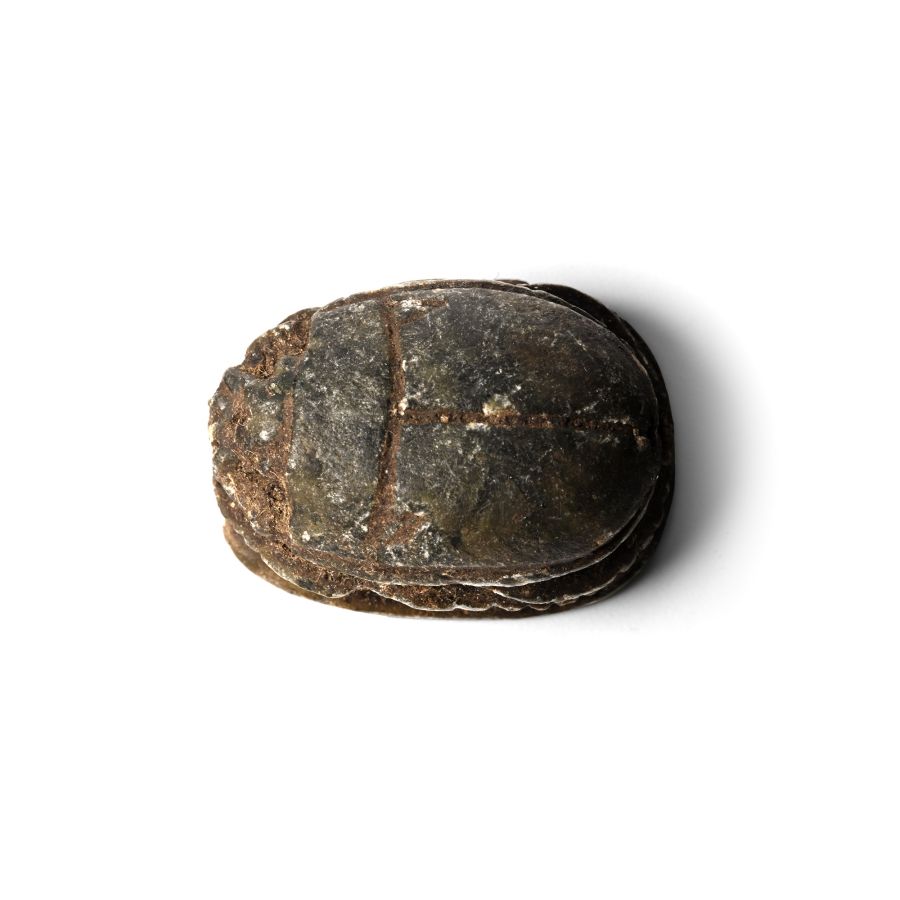
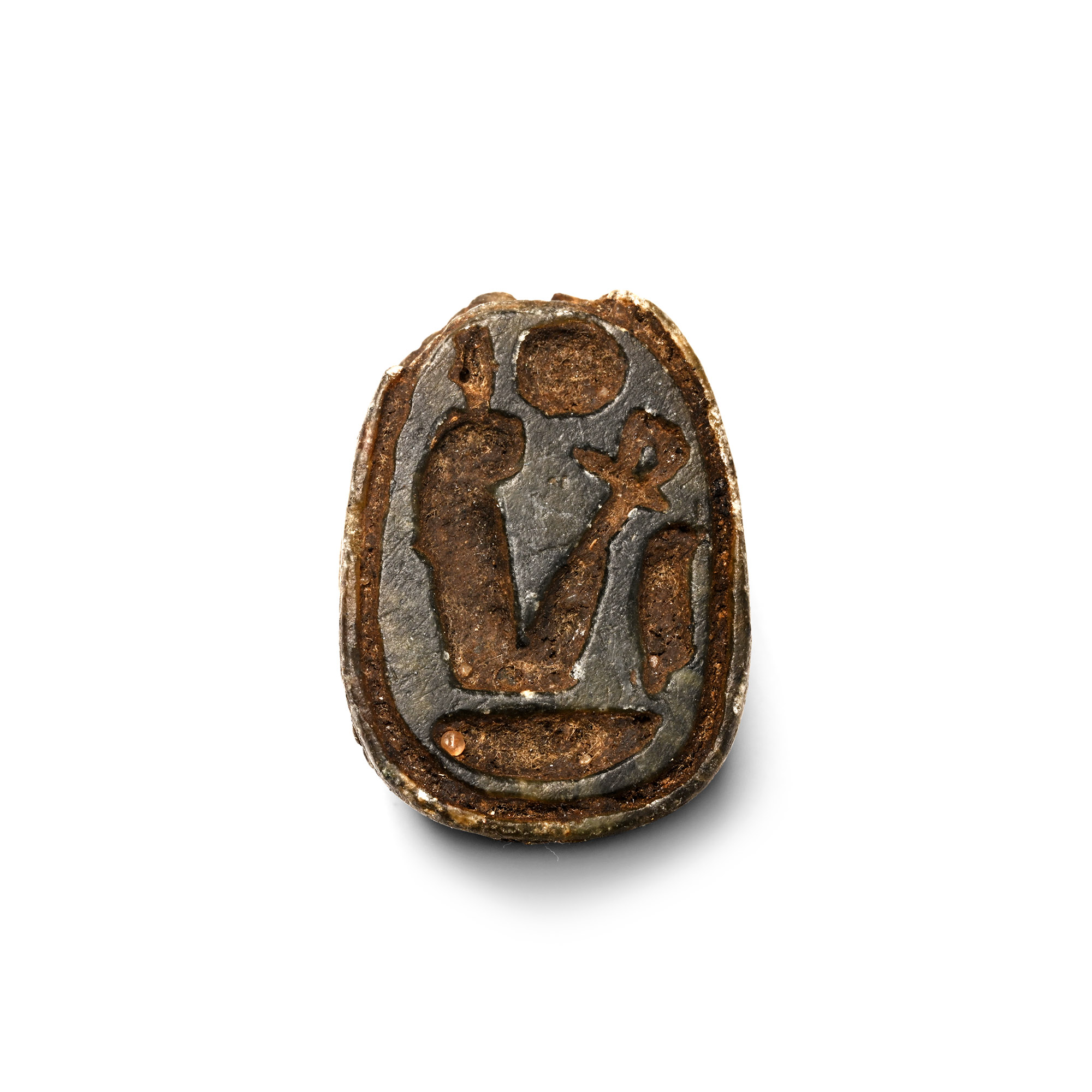
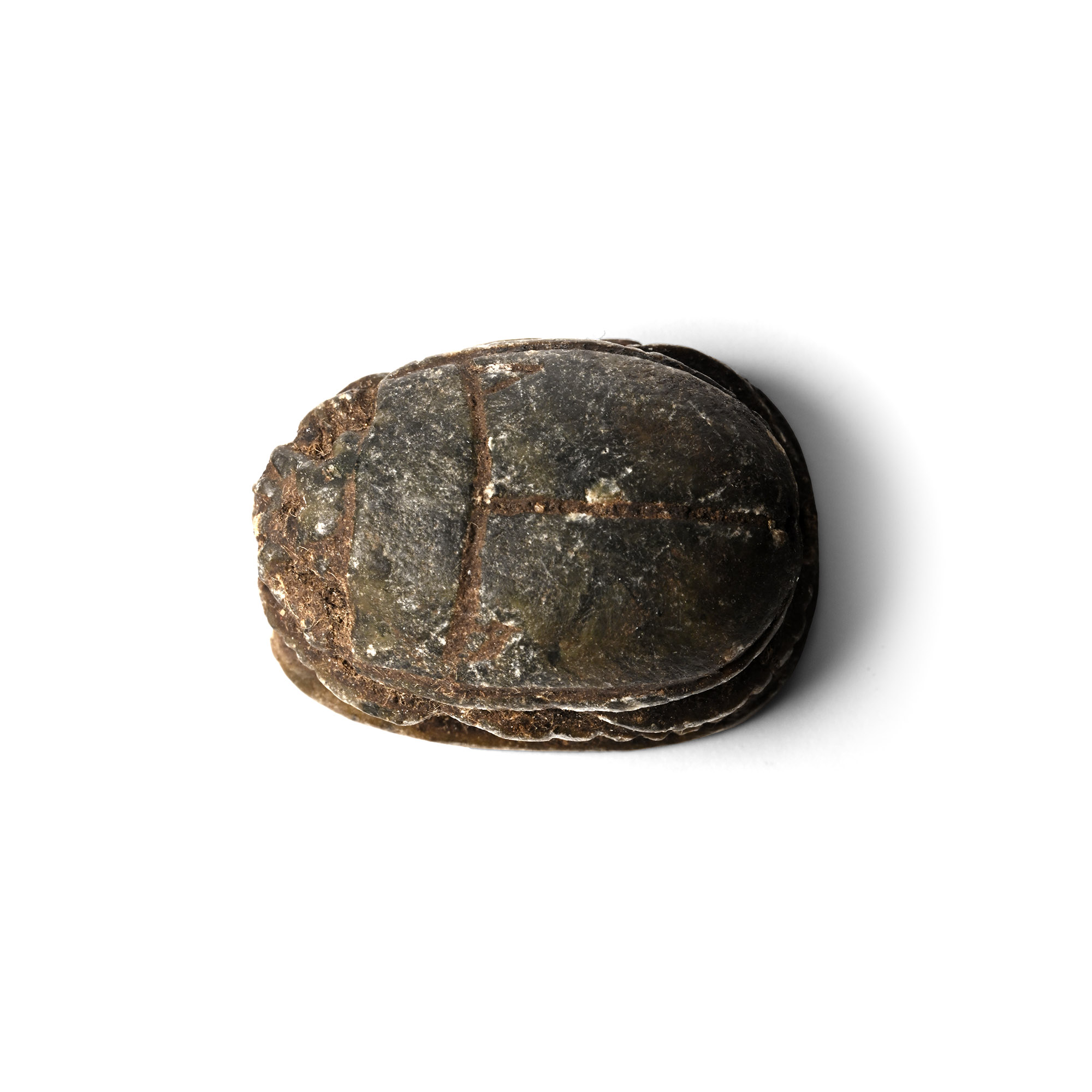
Egyptian Faience Scarab of Amenhotep III
LATE-PTOLEMAIC PERIOD, CIRCA 664-30 B.C.
7/8 in. (6.4 grams, 22 mm).
Detailed body and legs, underside with a cartouche of Amenhotep III containing his throne name Nebmaatre.
ProvenanceFrom the collection of a gentleman, acquired on the London art market in the 1990s.
CONDITIONTimeLine Auctions follows a vetting process to ensure the authenticity and legality of all items, reinforcing our commitment to integrity and responsible trading. Each antiquity, antique, and coin lot undergoes thorough examination by a vetting committee of at least ten external specialists, professional trade association members, scientists, and archaeologists: Our Vetting Process
AUCTIONS:
TimeLine is a leading auction house specialising in antiquities, ancient art, collectables, natural history, coins, medals, and books. Our auctions offer museums, collectors, historians, and enthusiasts the opportunity to acquire unique and historically significant pieces.
-
Egyptian Limestone Offering Table for Iny
Late Old Kingdom-First Intermediate Period, circa 2400-2040 B.C.Sold for (Inc. bp): £11,700
Rectangular table with the upper part carved in high relief in the shape of a bread loaf on a mat representing the hieroglyphic sign for "offering" (ḥtp), with two rectangular recesses for libations, and extensive hieroglyphic inscriptions displaying offering formulae along with the titles and name of the deceased: "an offering that the king gives and Anubis, the one upon his mountain, a voice offering of bread and beer for the sole companion, god’s sealer, the revered one before the god, lord of the sky/heaven, In[y]". 14.75 kg, 45.5 cm
Acquired 1970s-1996. Private collection, Switzerland. with a North American collector. London collection, 2016. Accompanied by an academic report by Egyptologist Paul Whelan. This lot has been checked against the Interpol Database of stolen works of art and is accompanied by search certificate number no.13001-244462.
Offering tables played a significant role in ritualistic activity within tombs. Their origins may be traced back to the simple act of placing a loaf of bread on a reed mat during Predynastic burials, which gradually evolved into a more formalised and durable expression in stone. The distinctive form also became a hieroglyph, used in words meaning “to be satisfied,” “to be satiated,” and similar expressions, reflecting appropriate sentiments for food and drink offerings. -
Egyptian Coptic Textile Fragment Group
Circa 6th-7th century A.D.Sold for (Inc. bp): £117
Comprising the terminal part of a clavus in white and purple linen and wool, S torsion, borders embroidered with pilasters, the central scene representing eagles alternating with geometric elements; a large fragment of another clavus, ornamented with geometric patterns in red, green and yellow wool. 49 grams total including package, 22 cm each
Acquired 1970s-1996. Property of a North American collector. London collection, 2016.
The clavi are realised in tapestry technique, and the one with prominent figures has a rounded end. They were part of the decoration of a tunic, and the presence of the Imperial eagle, not a common pattern, could refer to a military tunic. -
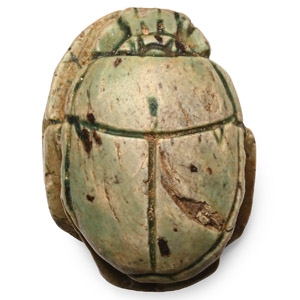
Large Egyptian Steatite Scarab with Hieroglyphs
Late Period, 664-332 B.C.Estimate: £300 - 400 (+bp*)
Opening Bid: £150
Detailed carapace and head, underside with animals and wedjat motif; pierced longitudinally. 6.65 grams, 24 mm
Mrs Allinson to Mrs Foster, 1867 and thence by descent to the current owner, Stanley Crescent, London, UK.
