
Loading, please wait...

LOT 0482
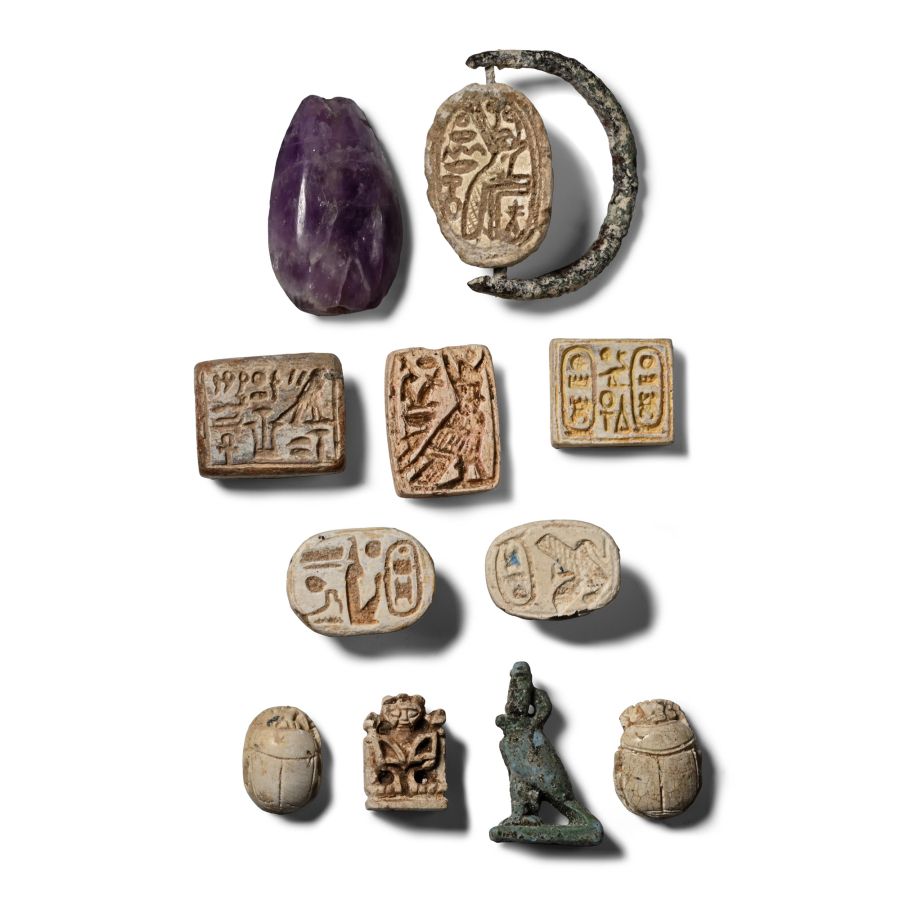
Egyptian Faience Scarab Collection
MAINLY 15TH-14TH CENTURY B.C.
1/2 - 1 1/8 in. (22.7 grams total, 12-28 mm).
Including a white scarab with cartouche of Thutmose III; a white rectangle with two cartouches of Thutmose III, a white rectangle with hieroglyphs to one face for Amenhotep III and to the reverse those for Teje, one of his wives; and other items. [11]
ProvenanceAcquired in the mid 1980s-1990s.
Private collection, Switzerland, thence by descent.
Private collection, since the late 1990s.
TimeLine Auctions follows a vetting process to ensure the authenticity and legality of all items, reinforcing our commitment to integrity and responsible trading. Each antiquity, antique, and coin lot undergoes thorough examination by a vetting committee of at least ten external specialists, professional trade association members, scientists, and archaeologists: Our Vetting Process
AUCTIONS:
TimeLine is a leading auction house specialising in antiquities, ancient art, collectables, natural history, coins, medals, and books. Our auctions offer museums, collectors, historians, and enthusiasts the opportunity to acquire unique and historically significant pieces.
-
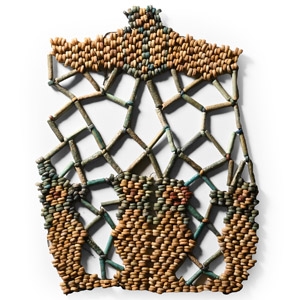
Egyptian Faience Mummy Bead Panel with Four Sons of Horus
Ptolemaic Period, 332-30 B.C.Sold for (Inc. bp): £117
Restrung as an openwork panel with a winged scarab above and the Four Sons of Horus below as two opposing pairs; restrung with some later beads. 34.6 grams, 15 cm
From an early 20th century Home Counties, UK, collection.
These elements would have been placed on the chest and body below a beadwork mummy mask. Winged scarabs were often used as funerary amulets and believed to symbolise the deceased's rebirth and regeneration. The Four Sons of Horus protected the deceased's internal organs. Here, on the left, is the erect-eared jackal-headed Duamutef who protects the stomach, followed by the falcon-headed Qebehsenuef, who protects the intestines, then the human-headed Imsety, protector of the liver and, finally, the baboon-headed Hapy on the right, protector of the lungs. -
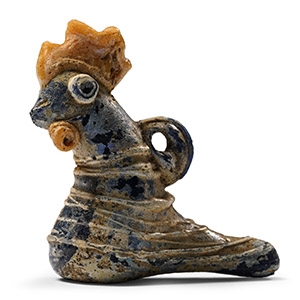
Phoenician Blue Glass Bird Pendant
425-200 B.C.Sold for (Inc. bp): £468
Hollow-formed amuletic pendant with applied trails to the body, iridescent surface, yellow glass detailing. 5.5 grams, 32 mm
From the collection of a gentleman, acquired on the London art market in the 1990s. -
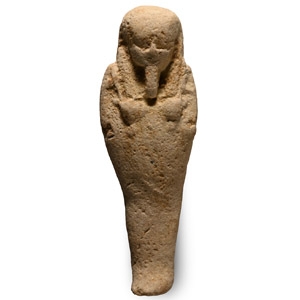
Egyptian White Faience Shabti
Ptolemaic Period, 332-30 B.C.Sold for (Inc. bp): £111
Modelled in the half-round with rounded facial features, lappet wig, false beard and crossed arms holding a pick and a hoe. 18 grams, 78 mm
Ex H. Norry collection, 1980s-1990s.
One of the primary purposes of shabti figures was to carry out heavy manual tasks on behalf of a person in the afterlife, and they were often depicted with necessary implements in their hands, such as baskets, picks, and hoes. Over time, the number of shabtis in a standard elite burial increased, from one in the Eighteenth Dynasty to several in the Nineteenth Dynasty, to one for every day of the year by the Third Intermediate Period. The high number of shabtis remained a feature in the Late and Ptolemaic Periods.
