
Loading, please wait...
LOT 0503
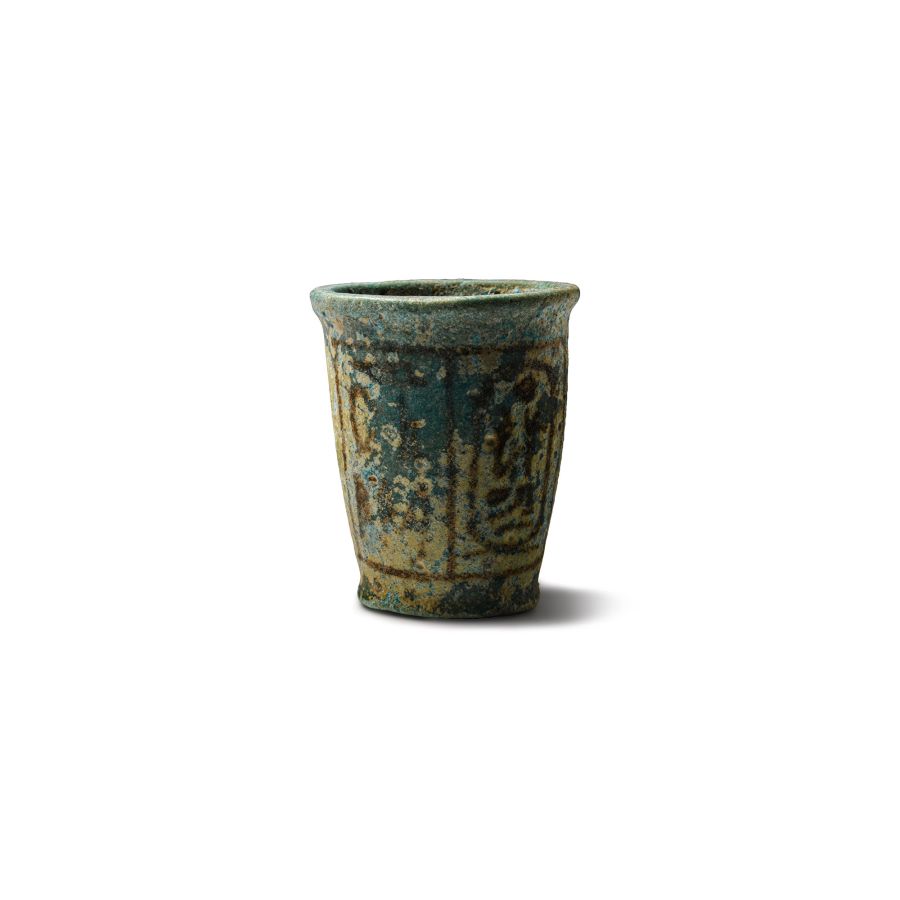
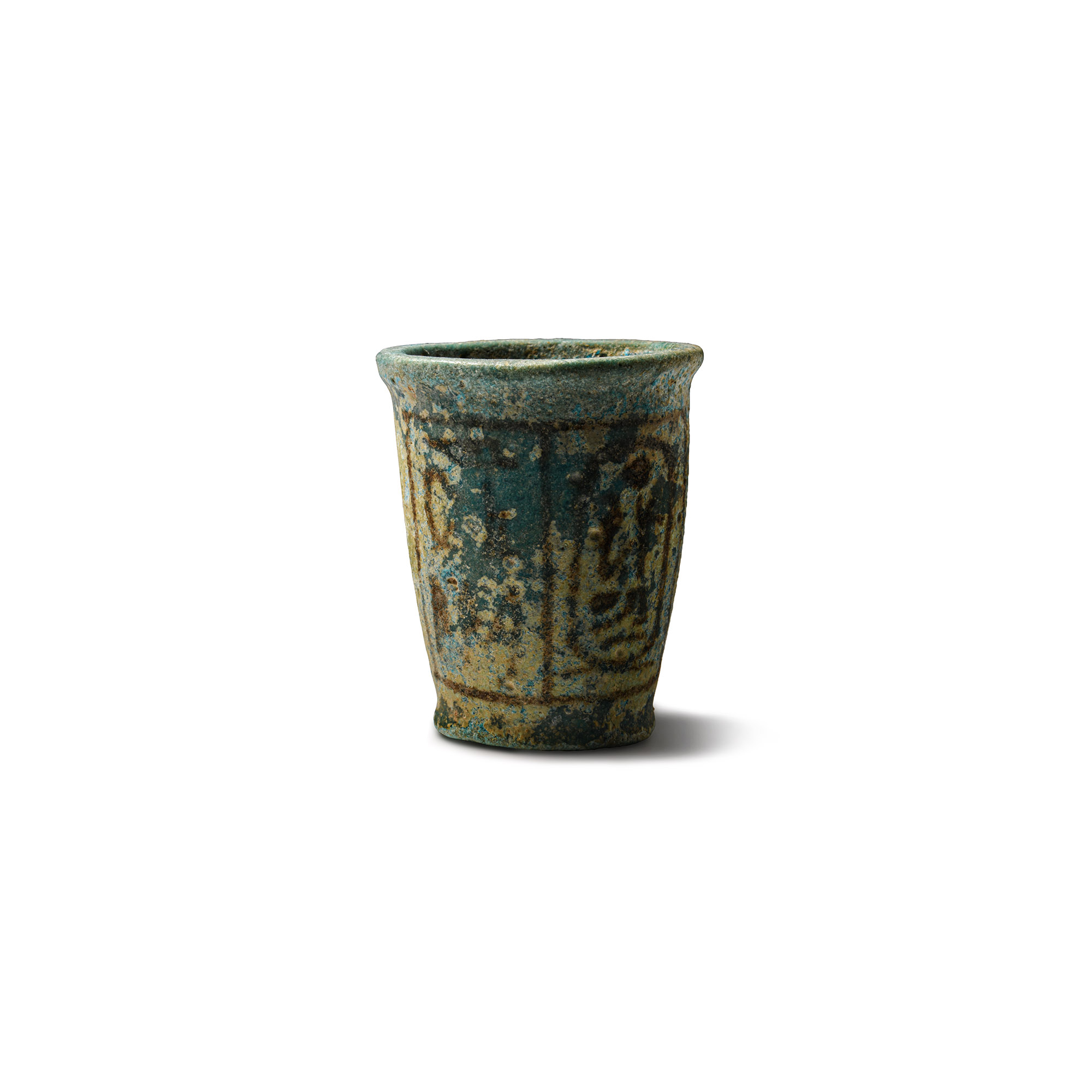
Egyptian Faience Ramesses II Offering Cup
NEW KINGDOM, 19TH DYNASTY, 1279-1213 B.C.
1 3/4 in. (31 grams, 45 mm).
Glazed blue and painted with two conjoined rectangular panels, one containing the king's cartouche, the other with the epithet 'beloved of Osiris'.
ProvenanceAcquired in Europe before 1994.
FootnotesAlso known as Ramses the Great, famed for his building projects and military achievements, this king was the second longest reigning in Egyptian history, ascending the throne at age 13 and remaining there for around 67 years.
CONDITIONTimeLine Auctions follows a vetting process to ensure the authenticity and legality of all items, reinforcing our commitment to integrity and responsible trading. Each antiquity, antique, and coin lot undergoes thorough examination by a vetting committee of at least ten external specialists, professional trade association members, scientists, and archaeologists: Our Vetting Process
AUCTIONS:
TimeLine is a leading auction house specialising in antiquities, ancient art, collectables, natural history, coins, medals, and books. Our auctions offer museums, collectors, historians, and enthusiasts the opportunity to acquire unique and historically significant pieces.
-
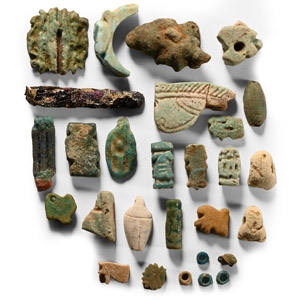
Egyptian Faience Amulet and Bead Collection
Late Period, 664-332 B.C.Sold for (Inc. bp): £260
Mixed group including eye of Horus, flower, standing figure and other types. 18 grams total, 3 - 33 mm
From a collection acquired on the UK art market from various auction houses and collections mostly before 2000. From an important Cambridgeshire estate; thence by descent. -
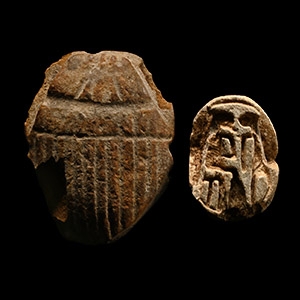
Egyptian Hardstone Scarab Group
New Kingdom, 1550-1069 B.CSold for (Inc. bp): £104
Comprising: one agate with ribbed carapace, leg detailing to underside; one steatite with two figures to the underside; with old dealer's notes. 3.77 grams total, 15-23 mm
Ex Chapman collection, UK, 1990s. Accompanied by two previous handwritten catalogue information slips. -
.jpg)
Egyptian Faience Scarab with Hieroglyphs
Late Period, 664-332 B.C.Estimate: £800 - 1,000 (‡+bp*)
Opening Bid: £400
Naturalistic detailing to the blue stained body and legs with section of openwork between the front and back legs; hieroglyphs on base giving the good luck message 'When Amun is behind you, do not fear'; pierced for suspension. 1.72 grams, 15 mm
Ex collection of Emil Saad, Paris-Alexandria.
