
Loading, please wait...
LOT 0430
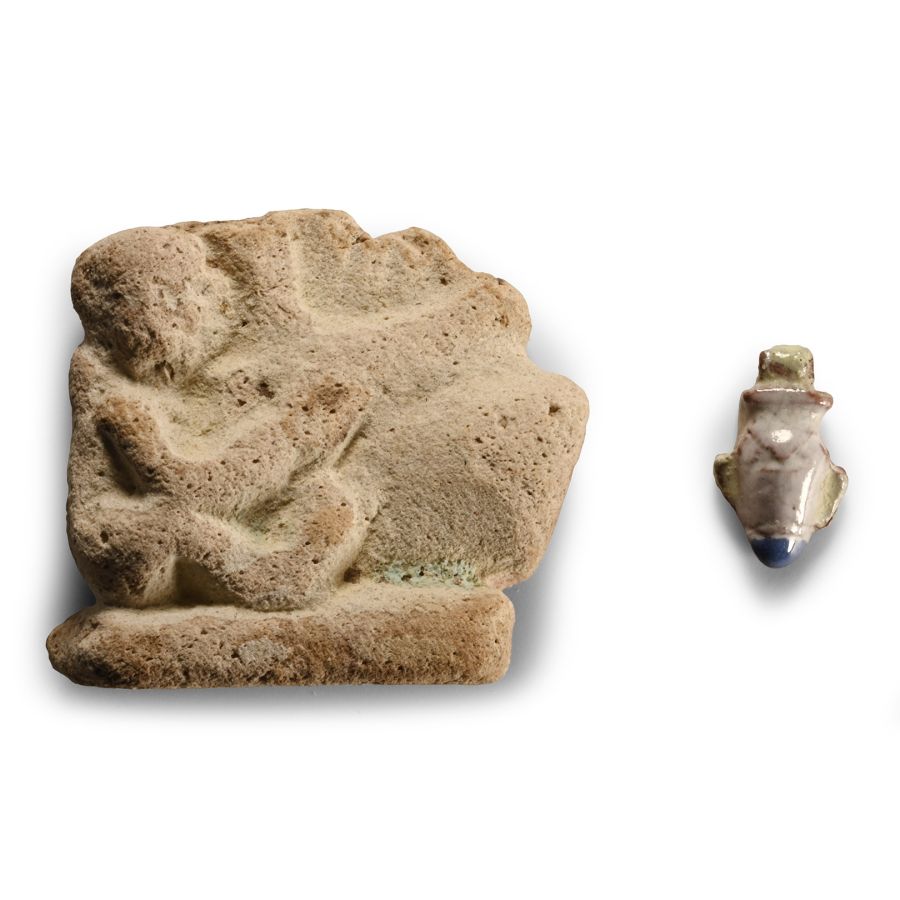
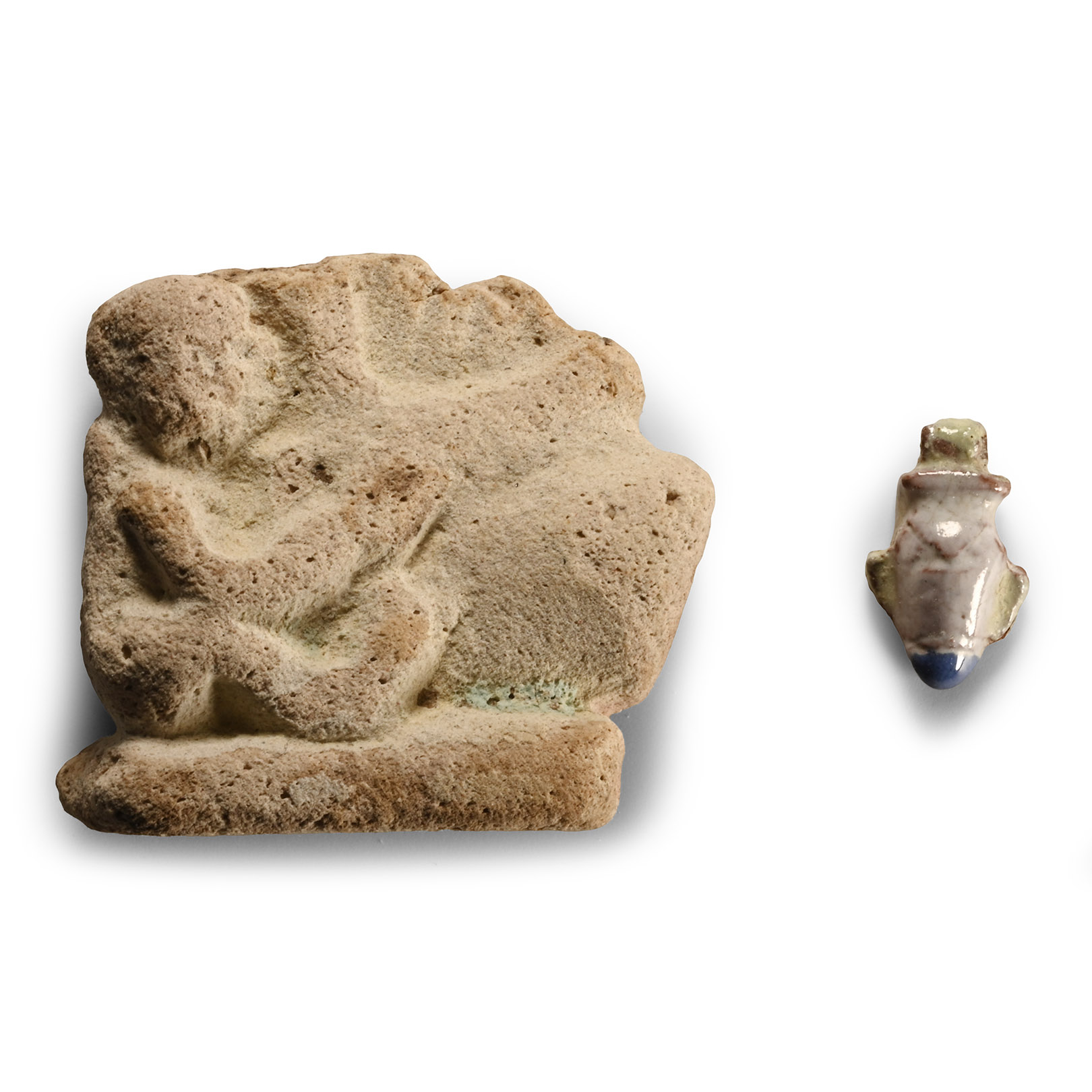
Egyptian Faience Phallic Figural Amulet
LATE PERIOD, 664-332 B.C.
3/4 - 1 3/4 in. (24.5 grams total, 18-44 mm).
Figurine of a naked male seated on a rectangular base, his phallus extended forward on which the harp he is playing rests; sold with a later white-glazed heart with blue finial, possibly after the antique. [2, No Reserve]
ProvenanceFrom the collection of Doctor Girard, a collector for over 60 years.
with Hotel des Ventes de Clermont-Ferrand, 22 May 2017.
Property of a French collector.
Cf. Petrie, W.M.F., Amulets. Illustrated by the Egyptian Collection in University College, London, 1914, pl. I, nos. 7a-p, for examples of heart amulets.
CONDITIONTimeLine Auctions follows a vetting process to ensure the authenticity and legality of all items, reinforcing our commitment to integrity and responsible trading. Each antiquity, antique, and coin lot undergoes thorough examination by a vetting committee of at least ten external specialists, professional trade association members, scientists, and archaeologists: Our Vetting Process
AUCTIONS:
TimeLine is a leading auction house specialising in antiquities, ancient art, collectables, natural history, coins, medals, and books. Our auctions offer museums, collectors, historians, and enthusiasts the opportunity to acquire unique and historically significant pieces.
-
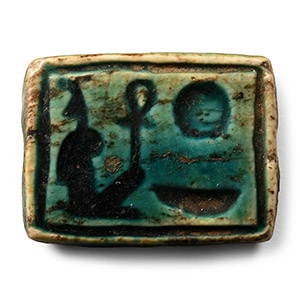
Egyptian Faience Block Bead for Amenhotep III and Queen Tiye
New Kingdom, 18th Dynasty, circa 1398-1338 B.C.Sold for (Inc. bp): £520
Rectangular bifacial stamp with hieroglyphs writing the prenomen of Amenhotep III (Neb-Maat-Re) to obverse, and to reverse 'King's Wife Tiye'. 1.84 grams, 16 mm
Ex Emile Bouillon Bey, c. 1880. From the Gaston Maspero Archaeological Fund. with Hotel des Ventes du Perigord, Bergerac, 24 June 2007. Property of a French collector. -
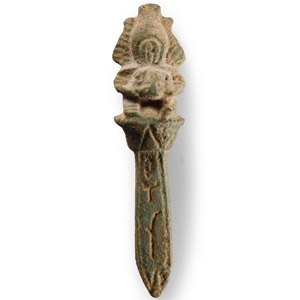
Egyptian Faience Wadj Amulet
Late Period, 664-332 B.C.Sold for (Inc. bp): £468
Square-section wadj papyrus stalk amulet surmounted by a ram's head wearing the Atef crown; the front inscribed with ankh (life) and renpet (year) hieroglyphs. 1.92 grams, 39 mm
From the collection of Doctor Girard, a collector for over 60 years. with Hotel des Ventes de Clermont-Ferrand, 22 May 2017. Property of a French collector.
The papyrus column or wadj amulet is typically made out of turquoise feldspar or faience, as is prescribed in the Book of the Dead. The word wadj, meaning “green”, evokes concepts of well-being and vitality. Papyrus amulets were often placed around the neck of the deceased to ensure eternal youth in the afterlife. The ram's head is associated with the god Amun and the Atef crown with Osiris, ruler of the Underworld. -
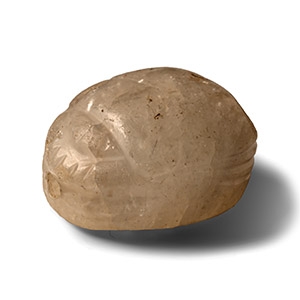
Egyptian Rock Crystal Scarab
Late Period, 664-332 B.C.Estimate: £200 - 300 (+bp*)
Opening Bid: £111
With segmented carapace, plain underside. 4.45 grams, 18 mm
From the property of the late Mr SM, London, UK, 1969-1999.
