
Loading, please wait...
LOT 0479
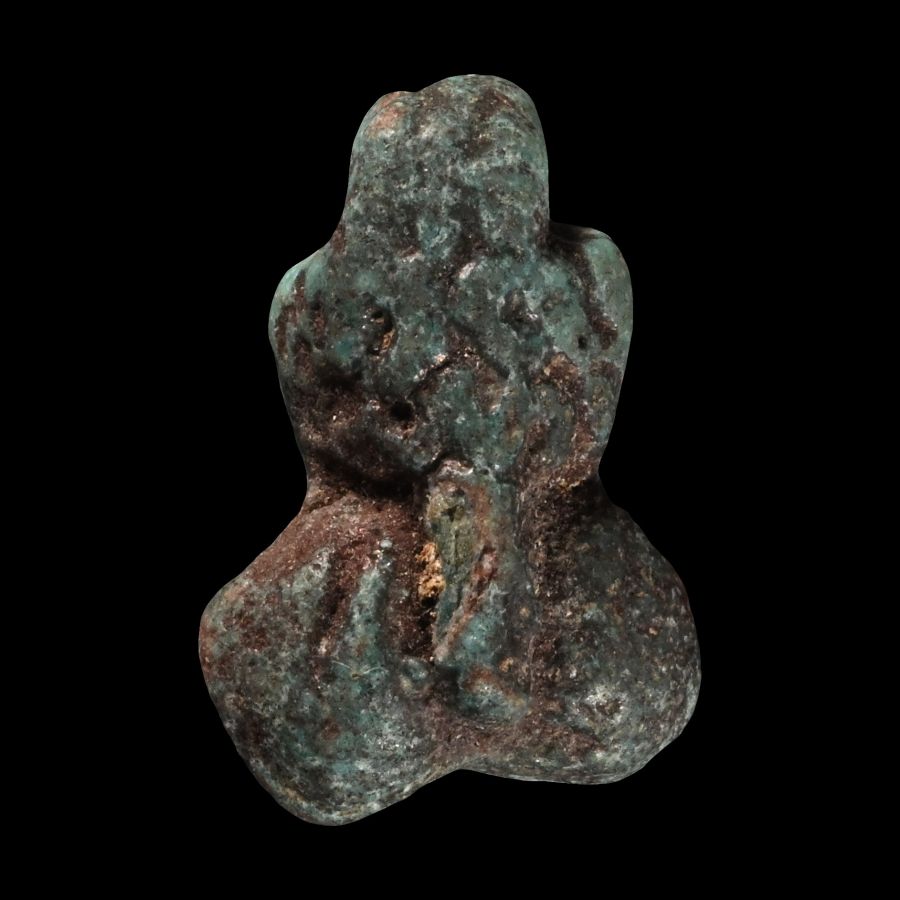
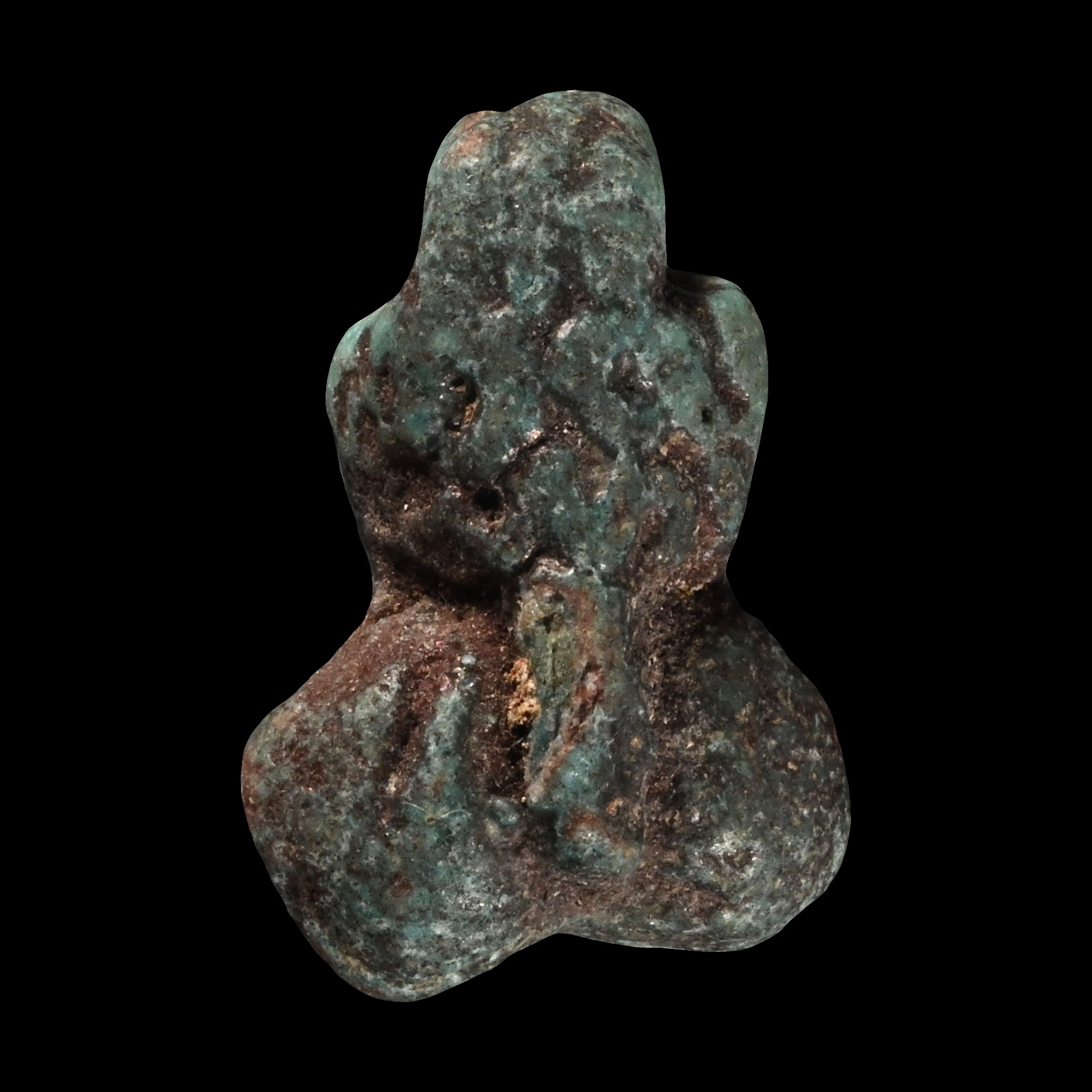
Egyptian Faience Phallic Amuletic Pendant
PTOLEMAIC PERIOD, 332-30 B.C.
3/4 in. (1.54 grams, 18 mm).
Formed as stylised phallus with large testes and part of the lower abdomen, suspension loop above.
ProvenanceFrom the collection of a late London, UK, gentleman, 1970s.
This lot is accompanied by an illustrated lot declaration signed by the Head of the Antiquities Department, Dr Raffaele D'Amato.
Cf. Petrie, W.M.F., Amulets. Illustrated by the Egyptian Collection in University College, London, 1914, pl. I, nos. 16a-d, for similar examples.
FootnotesSmall phallic amulets in ancient Egypt symbolised fertility, protection, and vitality. Often worn as jewellery or carried as personal charms, these amulets invoked the generative power of the male form, which was closely tied to life, creation, and strength. They were commonly used to ward off evil, ensure male potency, and protect children or the wearer from harm. These amulets reflect the Egyptian belief in the protective and regenerative power of sexuality, and their use spanned both everyday life and funerary contexts.
CONDITIONTimeLine Auctions follows a vetting process to ensure the authenticity and legality of all items, reinforcing our commitment to integrity and responsible trading. Each antiquity, antique, and coin lot undergoes thorough examination by a vetting committee of at least ten external specialists, professional trade association members, scientists, and archaeologists: Our Vetting Process
AUCTIONS:
TimeLine is a leading auction house specialising in antiquities, ancient art, collectables, natural history, coins, medals, and books. Our auctions offer museums, collectors, historians, and enthusiasts the opportunity to acquire unique and historically significant pieces.
LOT 0479
Egyptian Faience Phallic Amuletic Pendant
Estimate £100 - 140€120 - 160 (for guidance only)$140 - 190 (for guidance only)
-
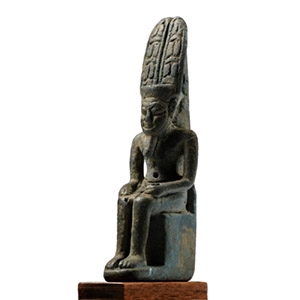
Egyptian Blue Amulet of Amun
Late Period, 26th Dynasty, circa 664-525 B.C.Estimate: £2,000 - 3,000 (+bp*)
Opening Bid: £1,000
The god modelled seated on a throne with a dorsal pillar, hands resting on his knees, wearing a short kilt and a two-plume feather crown; mounted on a wooden stand. 15.75 grams total, 71 mm including stand
with Charles Ede Ltd, London, UK. Private collection, London, UK, acquired from the above on 12 July 1994. Accompanied by a copy of the Charles Ede invoice. This lot has been checked against the Interpol Database of stolen works of art and is accompanied by a search certificate number no.12632-235078. This lot has been cleared against the Art Loss Register database, and is accompanied by an illustrated lot declaration signed by the Head of the Antiquities Department, Dr Raffaele D'Amato.
The amulet of the god Amun served both religious and protective purposes in ancient Egypt. Amun, a major deity associated with creation, kingship, and hidden power. Wearing an amulet bearing Amun’s image or name was believed to invoke his divine protection, grant strength, and confer favour or legitimacy. Such amulets were also placed among burial goods to ensure the deceased was protected and guided in the afterlife. -
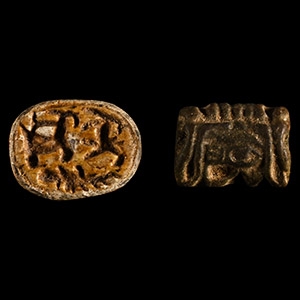
Egyptian Scarab and Amulet Group
Late Period, 664-332 B.C.Sold for (Inc. bp): £59
Comprising: a scarab with anatomical detailing to the carapace, underside with a crocodile and two quadrupeds; a rectangular Eye of Horus amulet with domed upper face. 3.04 grams total, 14-16 mm
Norfolk family collection, 1940s-1960s; thence by descent. This lot is accompanied by an illustrated lot declaration signed by the Head of the Antiquities Department, Dr Raffaele D'Amato. -
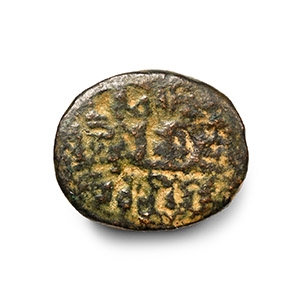
Phoenician Inscribed Bronze Scaraboid Seal
Late 1st millennium B.C.Sold for (Inc. bp): £52
Plain domed body pierced longitudinally, inscribed underside. 8.9 grams, 17 mm
Ex London, UK, gentleman, 1990. This lot is accompanied by an illustrated lot declaration signed by the Head of the Antiquities Department, Dr Raffaele D'Amato.
Although it is difficult to make out for certain, the outer design appears to be composed of the 'a-n-r' hieroglyphs. The signs do not form a word and are thought to have been a decorative device used by Asiatic scarab makers, employing recognisably Egyptian hieroglyphs.
