
Loading, please wait...
LOT 0497
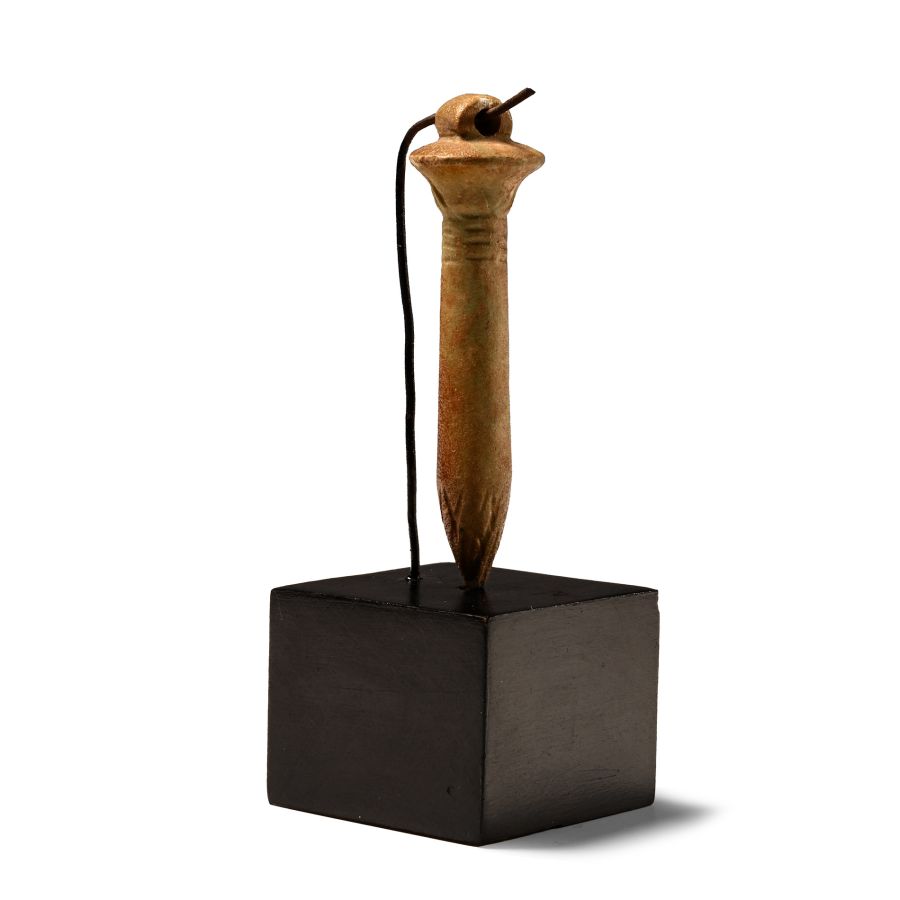
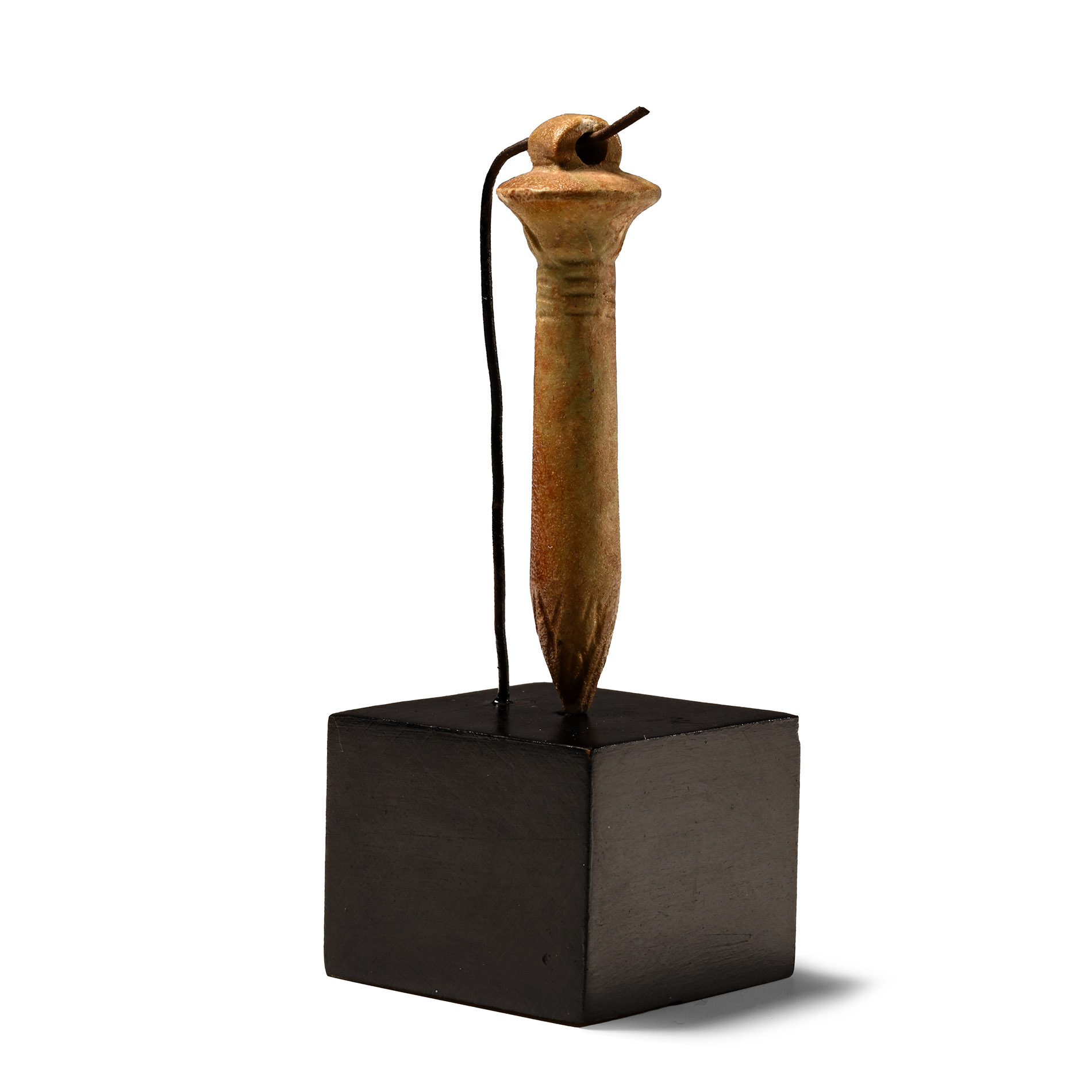
Egyptian Faience Papyrus Sceptre Pendant
LATE PERIOD, 664-332 B.C.
2 1/2 in. (3 3/4 in.) (7.15 grams, 64 mm (34.4 grams total, 94 mm including stand)).
Amulet in the form of a wadj papyrus sceptre with suspension loop; with light encrustations; supplied with a wooden display stand.
ProvenanceEx Foxwell collection.
Acquired from a London gallery.
Ex Mr A.S. collection, 1990s.
Property of a Bristol, UK, gentleman.
Cf. Petrie, W.M.F., Amulets. Illustrated by the Egyptian Collection in University College, London, 1914, pl. II, no. 20c, for similar.
FootnotesThe papyrus column or wadj amulet is typically made out of turquoise feldspar or faience, as is prescribed in the Book of the Dead. The word wadj, meaning “green”, evokes concepts of well-being and vitality. Papyrus amulets were often placed around the neck of the deceased to ensure eternal youth in the afterlife. They were particularly popular during the Late Period (664-332 B.C.).
CONDITIONTimeLine Auctions follows a vetting process to ensure the authenticity and legality of all items, reinforcing our commitment to integrity and responsible trading. Each antiquity, antique, and coin lot undergoes thorough examination by a vetting committee of at least ten external specialists, professional trade association members, scientists, and archaeologists: Our Vetting Process
AUCTIONS:
TimeLine is a leading auction house specialising in antiquities, ancient art, collectables, natural history, coins, medals, and books. Our auctions offer museums, collectors, historians, and enthusiasts the opportunity to acquire unique and historically significant pieces.
-
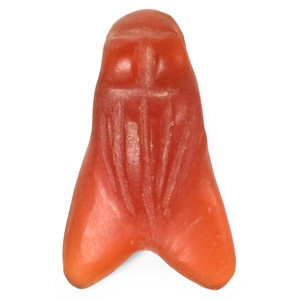
Egyptian Carnelian Fly Amulet
Late Period, 664-332 B.C.Sold for (Inc. bp): £312
Carved with simple body and eye detailing and polished; drilled through the eyes for suspension. 0.44 grams, 13 mm
From an early 20th century collection, Surrey, UK.
Considering Egyptian artists often depicted fly whisks in the hands of pharaohs and high officials, one might assume that flies were simply a nuisance. However, the Egyptians held flies in high regard due to their quick speed, reactions, and persistence. Small fly amulets were made from various materials, including gold, silver, lapis lazuli, carnelian, amethyst, faience, and bone. These amulets were believed to protect against insect bites and ward off flying creatures through apotropaic magic. -
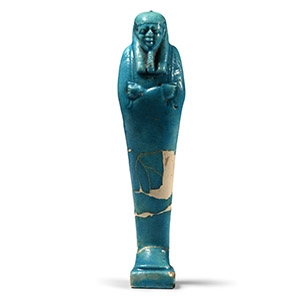
Egyptian Blue Glazed Shabti
Late Period, 664-332 B.C.Sold for (Inc. bp): £364
Faience shabti with detailed face, beard and wig, holding a pick and hoe, dorsal pillar and seed bag to left shoulder; some loss to surface; repaired. 162 grams, 16.5 cm
Ex Gilles Grimm collection, Paris, France. Acquired by the current owner from Aguttes, 19 December 2018, no.451. Property of a French collector. -
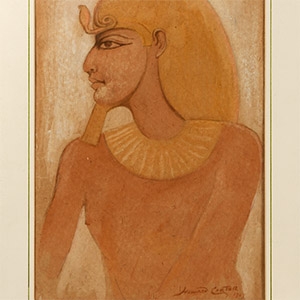
Egyptian Pharaoh Watercolour Attributed to Howard Carter
Dated 1917 A.D.Sold for (Inc. bp): £1,430
Profile bust of an Egyptian male in nemes headcloth with uraeus to the brow, wesekh segmented collar; signed bottom right 'Howard Carter, 1905'; board to reverse with pencilled note 'Hatshepsu' and inked 'Watercolour painting signed H carter 1905 / remnants of an old Philips auction label on verso', with pencilled star motif. 898 grams total, 38.5 x 31 cm
with old Phillips label to the verso.
Hatshepsut was the longest-reigning female ruler in Egyptian history (1473-1458 B.C.), who undertook several military expeditions. Howard Carter's father, Samuel, was an illustrator for the Illustrated London News in the later 1800s. In 1891, Howard Carter accompanied Percy Newberry on an expedition focussing on First Intermediate Period tombs at the Middle Egyptian site of Beni Hasan, from which many of his original pieces survive. During his time at El-Amarna, the excavator Flinders-Petrie took Carter to visit the newly discovered royal tomb of Pharaoh Akhenaten. Carter made some sketches there which were published in The Daily Graphic on March 23, 1892, accompanying Petrie’s article on the tomb. These sketches were the first Egyptian drawings published by Howard Carter, and the first to convey the uniqueness of Amarna art to the European public.
