
Loading, please wait...
LOT 0527
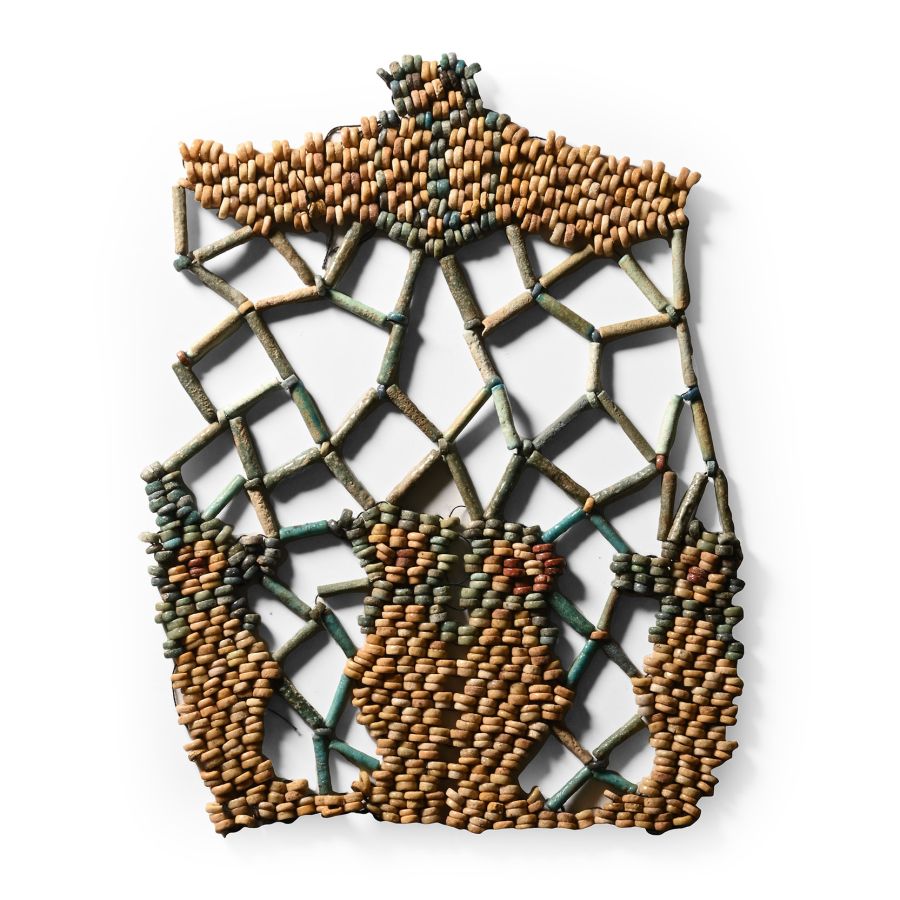
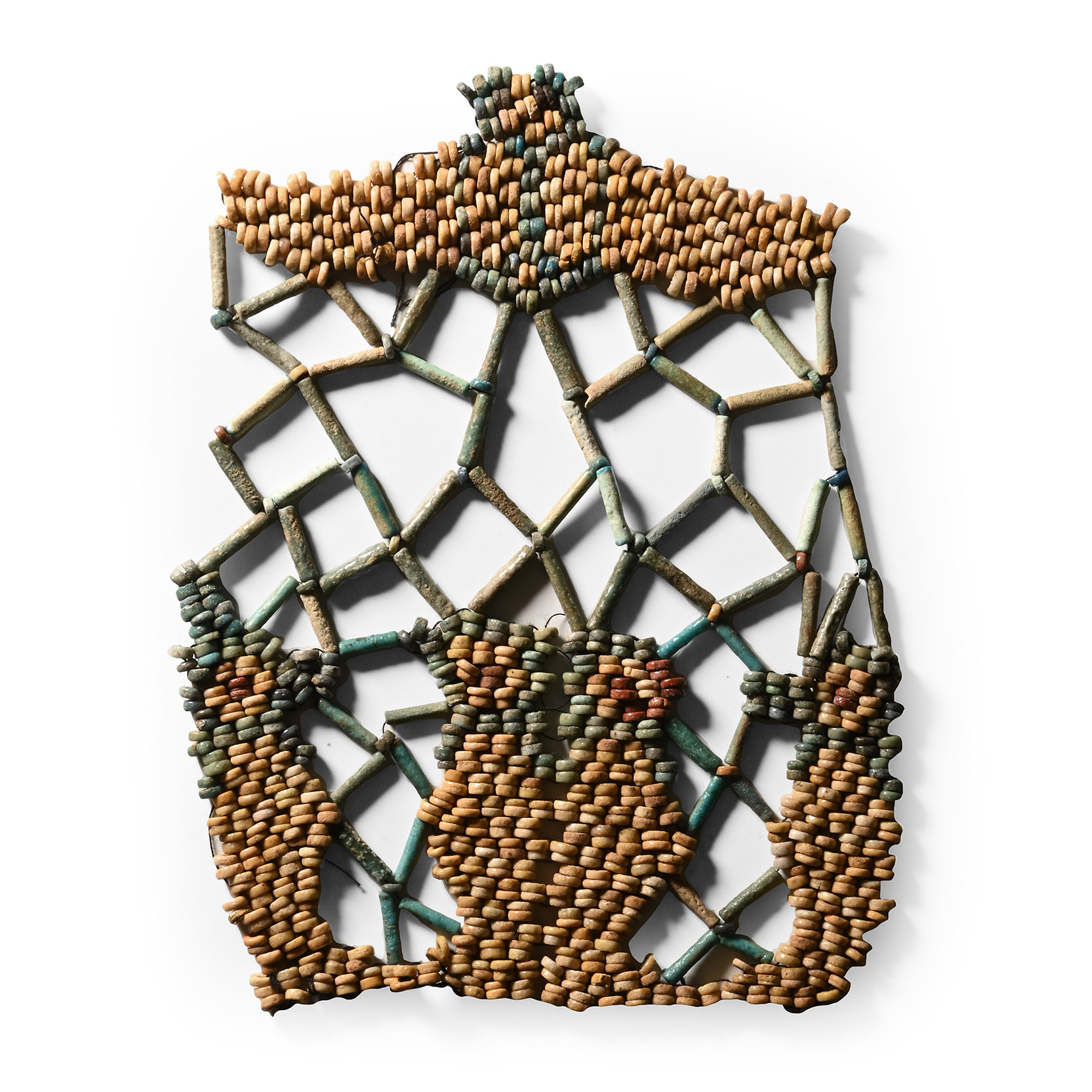
Egyptian Faience Mummy Bead Panel with Four Sons of Horus
PTOLEMAIC PERIOD, 332-30 B.C.
5 7/8 in. (34.6 grams, 15 cm).
Restrung as an openwork panel with a winged scarab above and the Four Sons of Horus below as two opposing pairs; restrung with some later beads.
ProvenanceFrom an early 20th century Home Counties, UK, collection.
LiteratureCf. Manley, B., and Dodson, A., Life Everlasting. National Museum of Scotland Collection of Ancient Egyptian Coffins, Edinburgh, 2010, p.114, no.43, for a bead-work shroud incorporating the winged scarab and Four Sons of Horus.
FootnotesThese elements would have been placed on the chest and body below a beadwork mummy mask. Winged scarabs were often used as funerary amulets and believed to symbolise the deceased's rebirth and regeneration. The Four Sons of Horus protected the deceased's internal organs. Here, on the left, is the erect-eared jackal-headed Duamutef who protects the stomach, followed by the falcon-headed Qebehsenuef, who protects the intestines, then the human-headed Imsety, protector of the liver and, finally, the baboon-headed Hapy on the right, protector of the lungs.
CONDITIONTimeLine Auctions follows a vetting process to ensure the authenticity and legality of all items, reinforcing our commitment to integrity and responsible trading. Each antiquity, antique, and coin lot undergoes thorough examination by a vetting committee of at least ten external specialists, professional trade association members, scientists, and archaeologists: Our Vetting Process
AUCTIONS:
TimeLine is a leading auction house specialising in antiquities, ancient art, collectables, natural history, coins, medals, and books. Our auctions offer museums, collectors, historians, and enthusiasts the opportunity to acquire unique and historically significant pieces.
LOT 0527
Egyptian Faience Mummy Bead Panel with Four Sons of Horus
Sold for (Inc. bp): £117
-
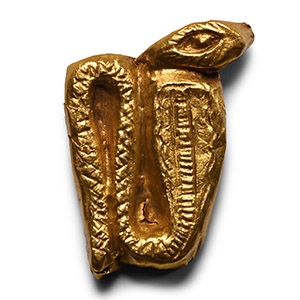
Egyptian Gold Uraeus Appliqué
Late Period, 664-332 B.C.Sold for (Inc. bp): £195
Sheet-gold repoussé mount with S-curved serpentine body, ovoid head; edges recurved. 0.87 grams, 21 mm
From an old UK collection, 1980s. -
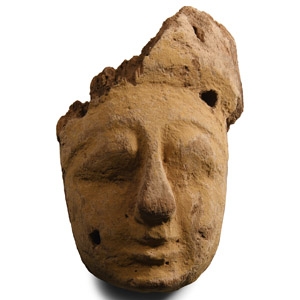
Egyptian Painted Wooden Mask
Late Period, 664-332 B.C.Sold for (Inc. bp): £364
D-shaped in plan with carved facial detailing, thick nose and narrow mouth, with ochre-coloured painted finish; pierced for attachment. 170 grams, 20 cm
with a London, UK gallery, 1971-early 2000s.
This is the face and front portion of a wig belonging to a mummiform wooden coffin. It was attached using wooden dowels, the holes for which are visible. -
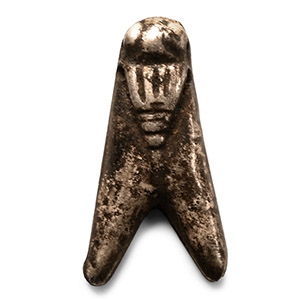
Egyptian Silver Fly Amulet
Late Period, 664-332 B.C.Sold for (Inc. bp): £124
Formed as a fly with long triangular wings and domed eyes. 0.84 grams, 16 mm
From an early 20th century collection.
Considering Egyptian artists often depicted fly whisks in the hands of pharaohs and high officials, one might assume that flies were simply a nuisance. However, the Egyptians held flies in high regard due to their quick speed, reactions, and persistence. Small fly amulets first appeared in burials during the Naqada II Period, c. 3200 B.C. These amulets grew in popularity, and the materials used to make them expanded during the New Kingdom. They are crafted from various materials such as gold, silver, lapis lazuli, carnelian, amethyst, faience, and bone. These amulets were thought to protect against insect bites and to ward off troublesome flying creatures through apotropaic magic. Some believe they may have even been intended to symbolise the fly’s fecundity. Additionally, pharaohs would bestow gold fly-shaped pendants as military awards to honour soldiers' bravery and fly-like persistence in battle.
