
Loading, please wait...
LOT 0435
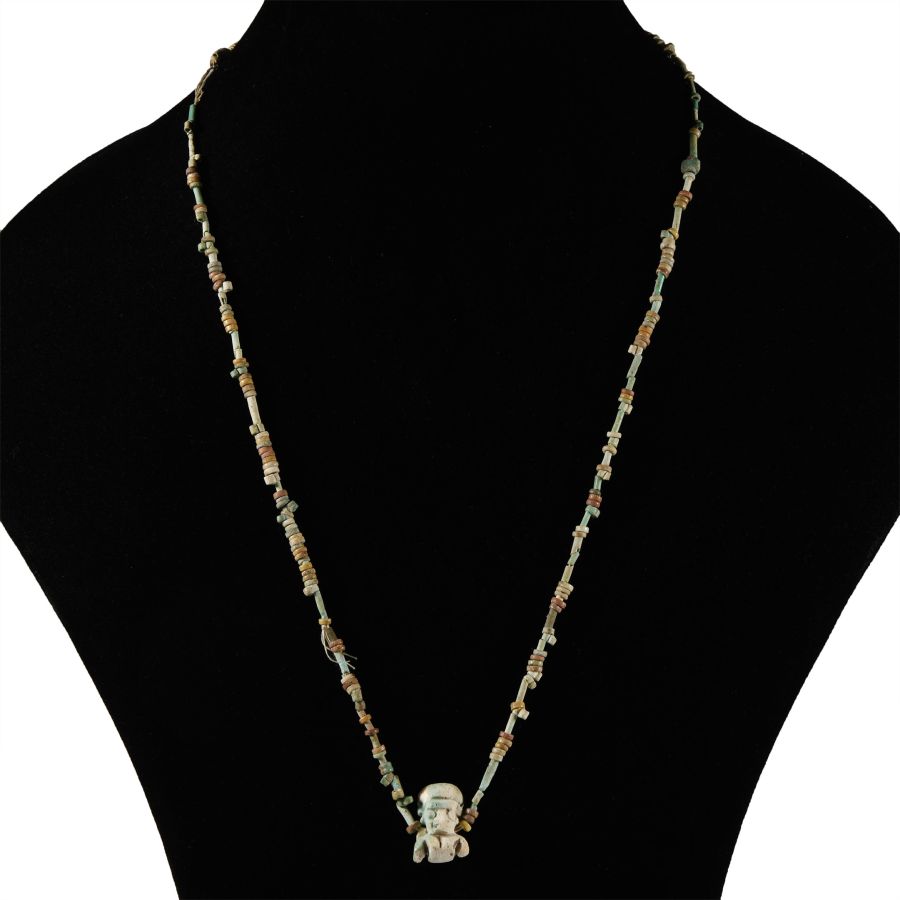
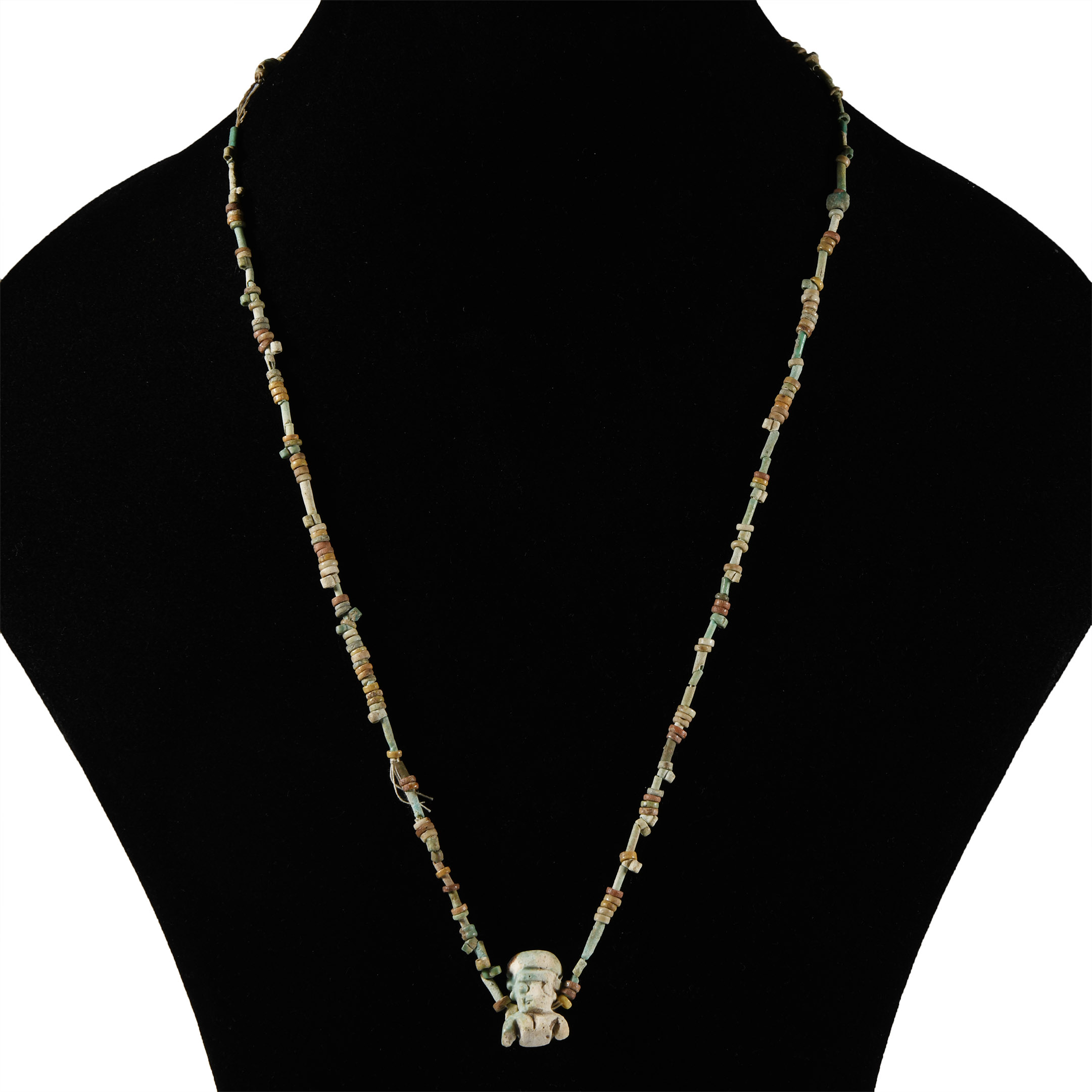
Egyptian Faience Mummy Bead Necklace
LATE PERIOD, 664-332 B.C.
25 1/4 in. (8.46 grams, 64 cm long).
Restrung group of tubular and annular beads, centrepiece a pendant bust of Pataikos. [No Reserve]
ProvenanceFrom an old English deceased estate.
Acquired on the London art market in the early 1990s.
Property of a London, UK, collector.
Pataikos is a representation of the creator deity Ptah, and his diminutive form is a symbol of his immense magical power.
CONDITIONTimeLine Auctions follows a vetting process to ensure the authenticity and legality of all items, reinforcing our commitment to integrity and responsible trading. Each antiquity, antique, and coin lot undergoes thorough examination by a vetting committee of at least ten external specialists, professional trade association members, scientists, and archaeologists: Our Vetting Process
AUCTIONS:
TimeLine is a leading auction house specialising in antiquities, ancient art, collectables, natural history, coins, medals, and books. Our auctions offer museums, collectors, historians, and enthusiasts the opportunity to acquire unique and historically significant pieces.
-
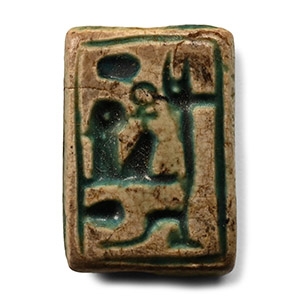
Egyptian Faience Block Bead for Ramesses II
New Kingdom, 19th Dynasty, 1279-1213 B.C.Sold for (Inc. bp): £442
Rectangular bead pierced for suspension, hieroglyphic text to both broad faces, one giving the throne name of Ramesses II, 'User-Maat-Re Setep-en-Re', the other, 'Ramesses, beloved of Amun'. 1.18 grams, 14 mm
Ex Emile Bouillon Bey, c. 1880. From the Gaston Maspero Archaeological Fund. with Hotel des Ventes du Perigord, Bergerac, 24 June 2007. Property of a French collector. -
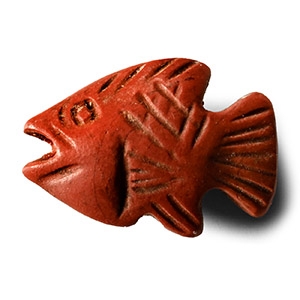
Egyptian Jasper Fish Amulet
Late Period, 664-332 B.C.Sold for (Inc. bp): £182
Pierced longitudinally with hatched detailing to the flanks. 0.80 grams, 14 mm
From an early 20th century collection.
Fish amulets were worn by young women and children, often at the end of a plait of hair, to guard against the risk of drowning. -
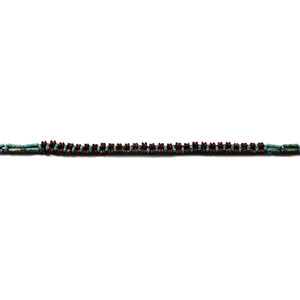
Egyptian Faience Mummy Bead Necklace
Late New Kingdom, 1295-1069 B.C.Estimate: £400 - 600 (+bp*)
Opening Bid: £200
Restrung designer necklace using tubular green-glazed beads in a double row, interspersed with small two-holed beads; the central feature a net-like composition of small brown and blue-glazed ring-shaped beads. 9.54 grams, 46 cm long
By repute, 'Excavated at Gurob by Prof. Flinders Petrie. From a quantity of beadwork taken from the neck of a mummy'. Ex 1920s UK collection.
