
Loading, please wait...
LOT 0449
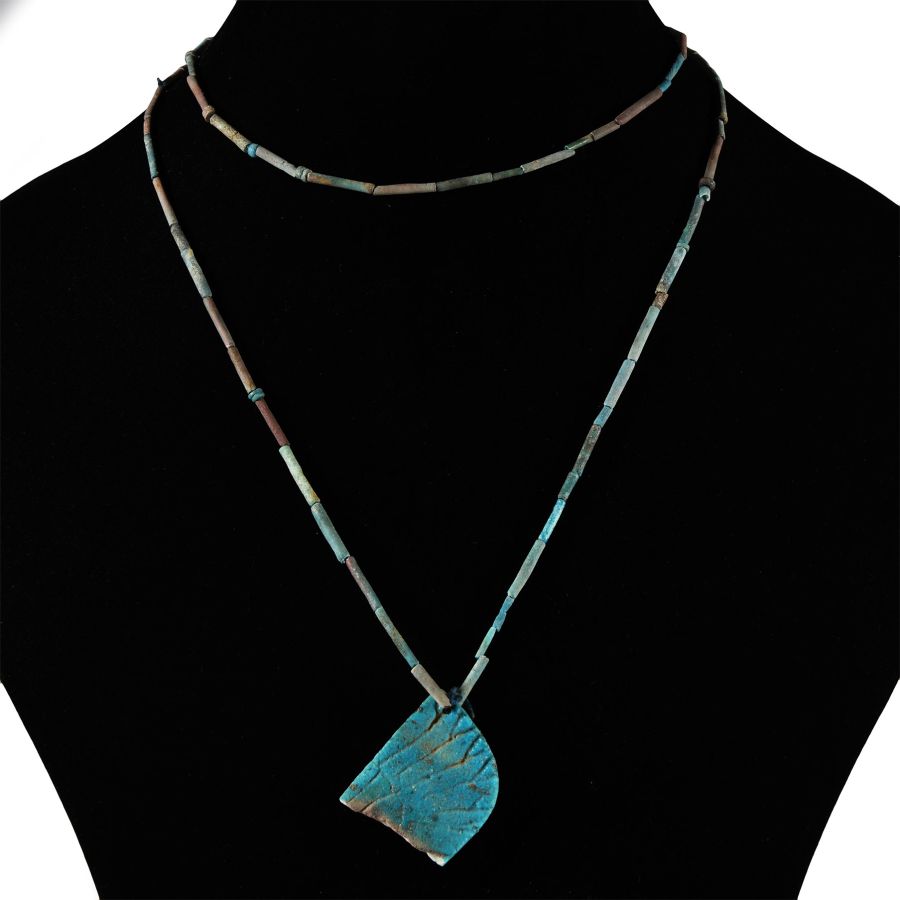
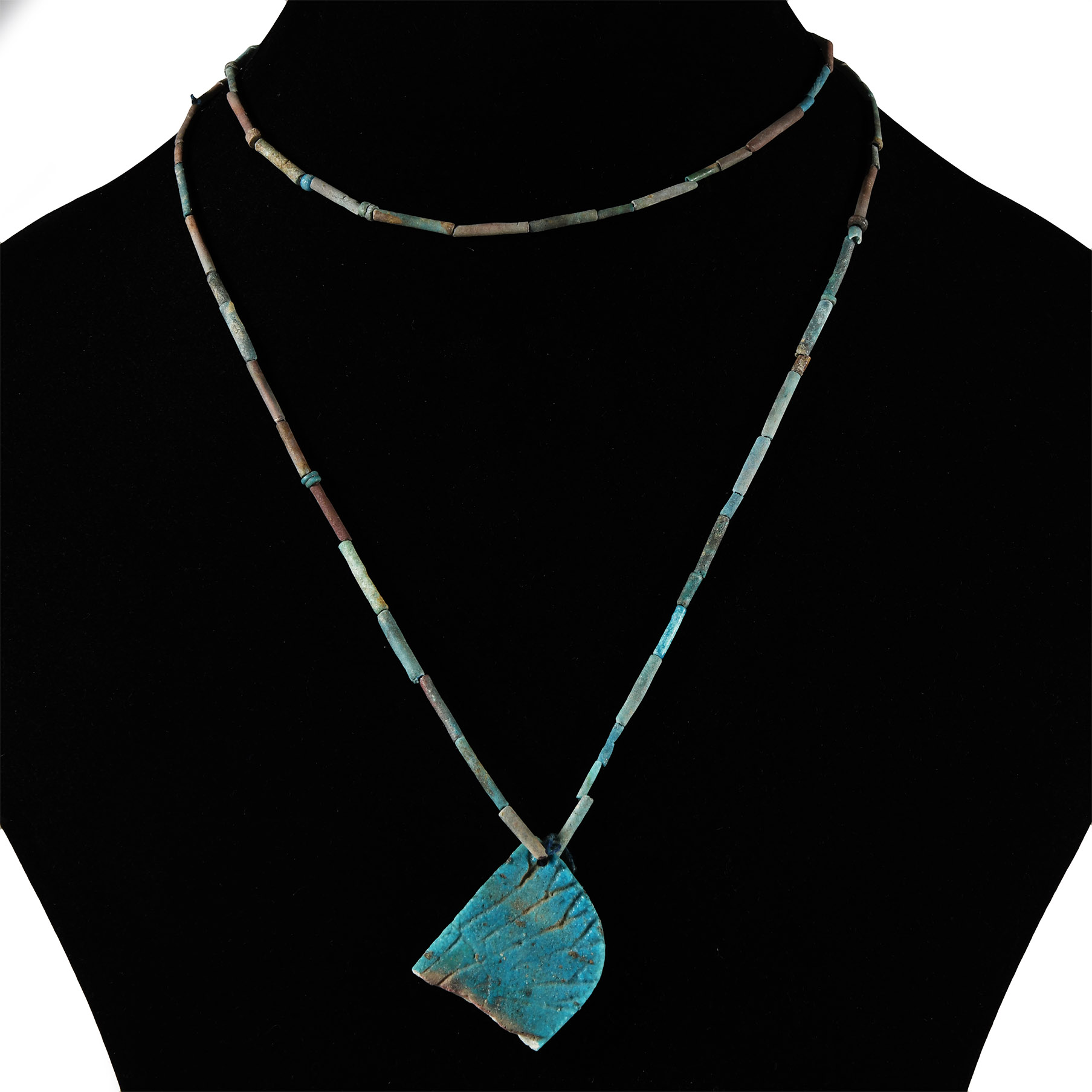
Egyptian Faience Mummy Bead Necklace
LATE PERIOD, 664-332 B.C.
37 in. (11.9 grams, 94 cm long).
Restrung group of mainly tubular beads with centrepiece a fragment of the extended wing from a pectoral. [No Reserve]
ProvenanceFrom an old English deceased estate.
Acquired on the London art market in the early 1990s.
Property of a London, UK, collector.
TimeLine Auctions follows a vetting process to ensure the authenticity and legality of all items, reinforcing our commitment to integrity and responsible trading. Each antiquity, antique, and coin lot undergoes thorough examination by a vetting committee of at least ten external specialists, professional trade association members, scientists, and archaeologists: Our Vetting Process
AUCTIONS:
TimeLine is a leading auction house specialising in antiquities, ancient art, collectables, natural history, coins, medals, and books. Our auctions offer museums, collectors, historians, and enthusiasts the opportunity to acquire unique and historically significant pieces.
-
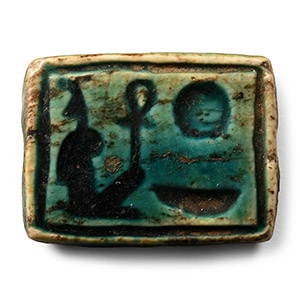
Egyptian Faience Block Bead for Amenhotep III and Queen Tiye
New Kingdom, 18th Dynasty, circa 1398-1338 B.C.Sold for (Inc. bp): £520
Rectangular bifacial stamp with hieroglyphs writing the prenomen of Amenhotep III (Neb-Maat-Re) to obverse, and to reverse 'King's Wife Tiye'. 1.84 grams, 16 mm
Ex Emile Bouillon Bey, c. 1880. From the Gaston Maspero Archaeological Fund. with Hotel des Ventes du Perigord, Bergerac, 24 June 2007. Property of a French collector. -
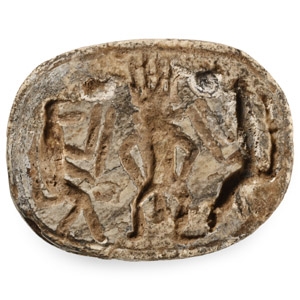
Egyptian Hardstone Scarab with Bes
Late Period, 664-332 B.C.Sold for (Inc. bp): £208
Plano-convex in section with detailed obverse, the underside with the figure of Bes flanked by adoring baboons and sun disks. 10.7 grams, 31 mm
Ex London, UK collection, 1990s.
Bes became one of ancient Egypt's most popular apotropaic deities from the New Kingdom onwards. Despite his somewhat fearful appearance, Bes was the patron and protector of pregnant women and children and believed to protect the wearer from snakes. The depiction of baboons flanking Bes with their arms raised before the sun disk was a common feature on temple wall reliefs. In ancient Egyptian religious literature, baboons heralded the dawn and, thus, the rebirth of the sun. -
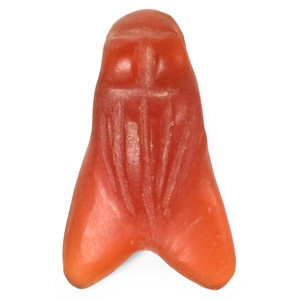
Egyptian Carnelian Fly Amulet
Late Period, 664-332 B.C.Sold for (Inc. bp): £312
Carved with simple body and eye detailing and polished; drilled through the eyes for suspension. 0.44 grams, 13 mm
From an early 20th century collection, Surrey, UK.
Considering Egyptian artists often depicted fly whisks in the hands of pharaohs and high officials, one might assume that flies were simply a nuisance. However, the Egyptians held flies in high regard due to their quick speed, reactions, and persistence. Small fly amulets were made from various materials, including gold, silver, lapis lazuli, carnelian, amethyst, faience, and bone. These amulets were believed to protect against insect bites and ward off flying creatures through apotropaic magic.
