
Loading, please wait...
_900x900.jpg "Egyptian Faience Mummy Bead Necklace")
_200x200.jpg "Egyptian Faience Mummy Bead Necklace")
.jpg "Egyptian Faience Mummy Bead Necklace")
LOT 0013
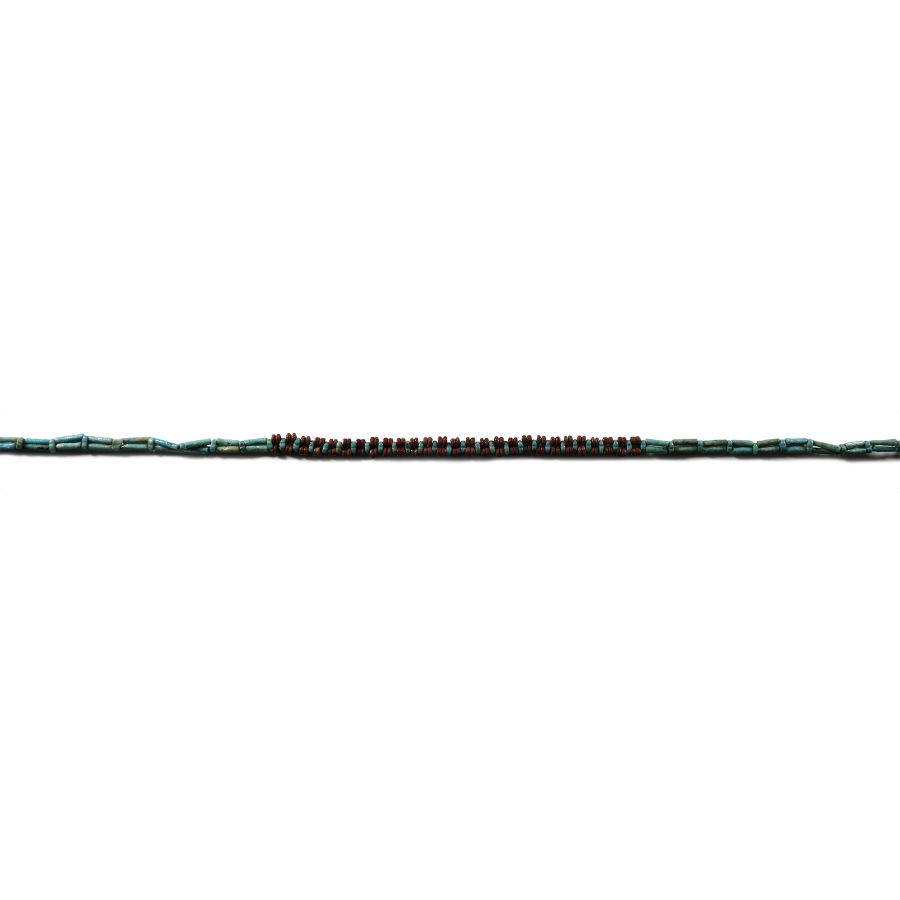
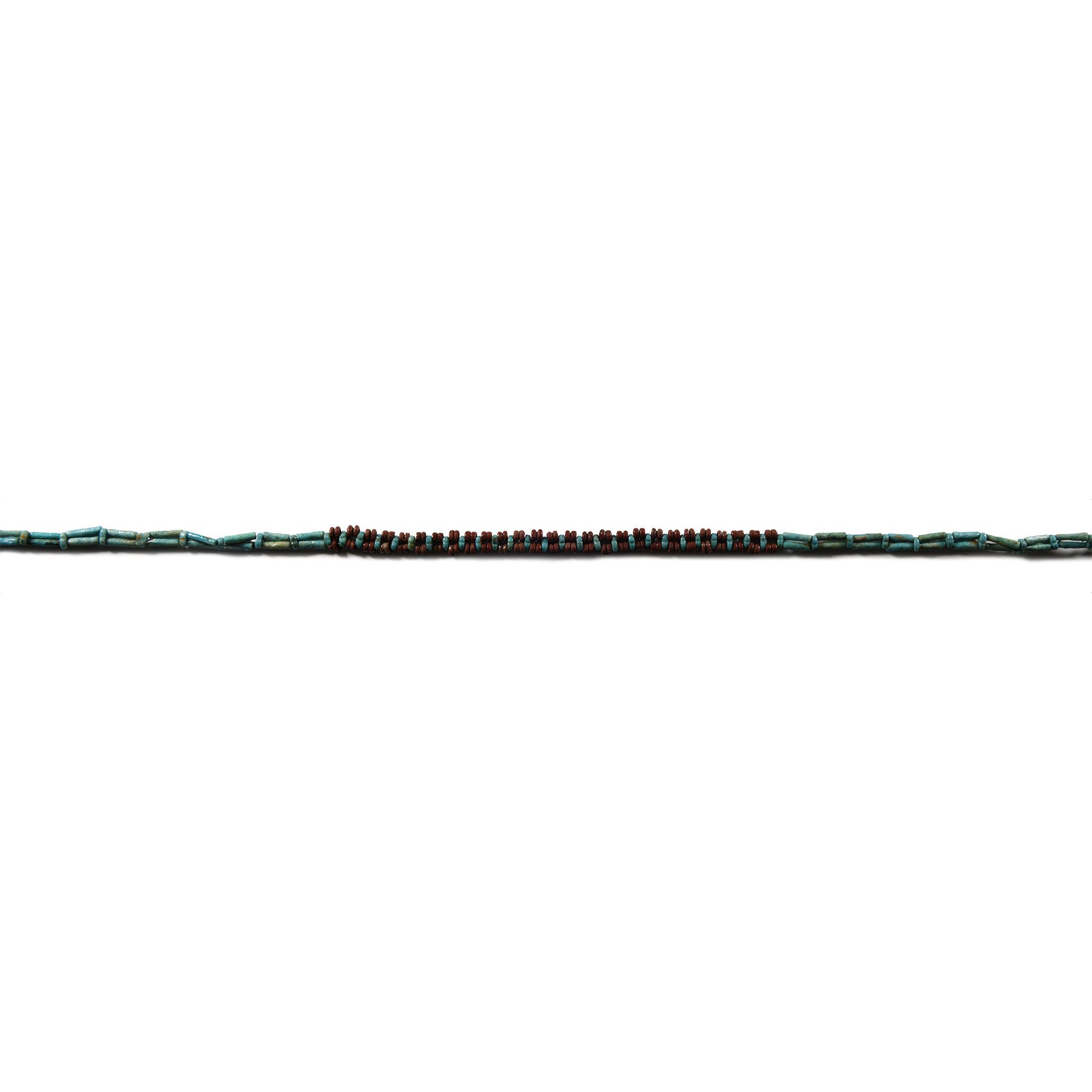
Egyptian Faience Mummy Bead Necklace
LATE NEW KINGDOM, 1295-1069 B.C.
18 1/8 in. (9.54 grams, 46 cm long).
Restrung designer necklace using tubular green-glazed beads in a double row, interspersed with small two-holed beads; the central feature a net-like composition of small brown and blue-glazed ring-shaped beads.
ProvenanceBy repute, 'Excavated at Gurob by Prof. Flinders Petrie. From a quantity of beadwork taken from the neck of a mummy'.
Ex 1920s UK collection.
Cf. faience necklaces and pendants with similar typology in Boyce, A., ‘Chapter II, Collar and necklace designs at Amarna: a preliminary study of fayence pendants’ in Kemp, B.J. (ed), Amarna Reports 6, pp.336-371, figs.11 lett.4a-b and 5, lett.a,g p.338.
CONDITIONTimeLine Auctions follows a vetting process to ensure the authenticity and legality of all items, reinforcing our commitment to integrity and responsible trading. Each antiquity, antique, and coin lot undergoes thorough examination by a vetting committee of at least ten external specialists, professional trade association members, scientists, and archaeologists: Our Vetting Process
AUCTIONS:
TimeLine is a leading auction house specialising in antiquities, ancient art, collectables, natural history, coins, medals, and books. Our auctions offer museums, collectors, historians, and enthusiasts the opportunity to acquire unique and historically significant pieces.
LOT 0013
Egyptian Faience Mummy Bead Necklace
Estimate £600 - 800€700 - 930 (for guidance only)$810 - 1,080 (for guidance only)
-
Egyptian Diorite Shell-Shaped Bowl
Early Dynastic-Old Kingdom, circa 3100-2181 B.C.Sold for (Inc. bp): £2,210
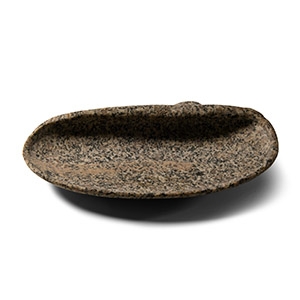
Sculpted as one half of a bivalve shell with thin lip to outer edge; repaired; mounted on a custom-made stand. 713 grams total, 19.5 cm wide
Ex Mayfair gallery collection, London, UK, pre 1999. -
.jpg)
Egyptian PreDynastic Black-Topped Jar
Naqada I-II, 4000-3200 B.C.Sold for (Inc. bp): £1,430
Of ovoid form tapering to a narrow flattened base. 274 grams, 13.5 cm
From the vendor's grandfather's collection, formed in the 1950s; thence by family descent circa 1974.
The 'black-topped' ware was the most common funerary pottery during Naqada I and Naqada II periods, with a small volume of production in the Naqada III, Early Dynastic and Old Kingdom periods. -
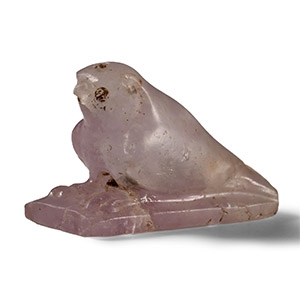
Egyptian Amethyst Horus Amulet
Late Period, 664-332 B.C.Sold for (Inc. bp): £2,600
Carved in the round, the falcon seated on a rectangular base with outstretched talons, the wings neatly tucked against the body, incised detailing and drilled eyes; a small drilled depression on the top of the head; drilled longitudinally for suspension. 5.98 grams, 27 mm
From an early 20th century collection. Accompanied by a previous catalogue information slip.
