
Loading, please wait...
LOT 0459
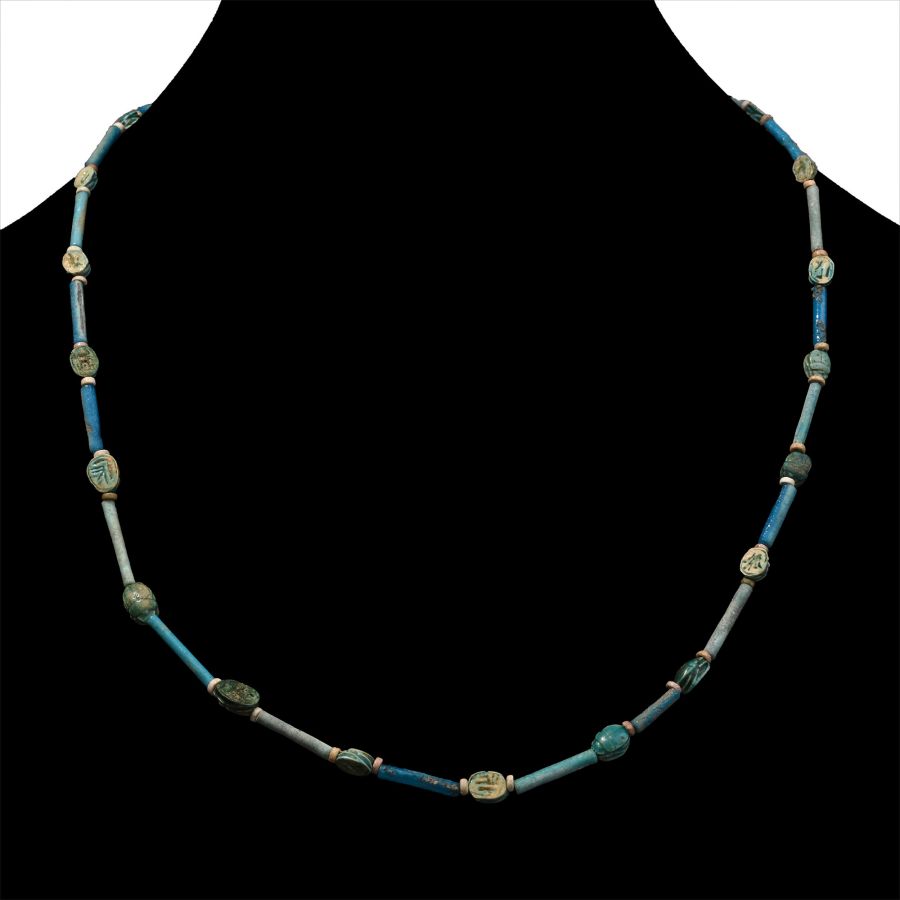
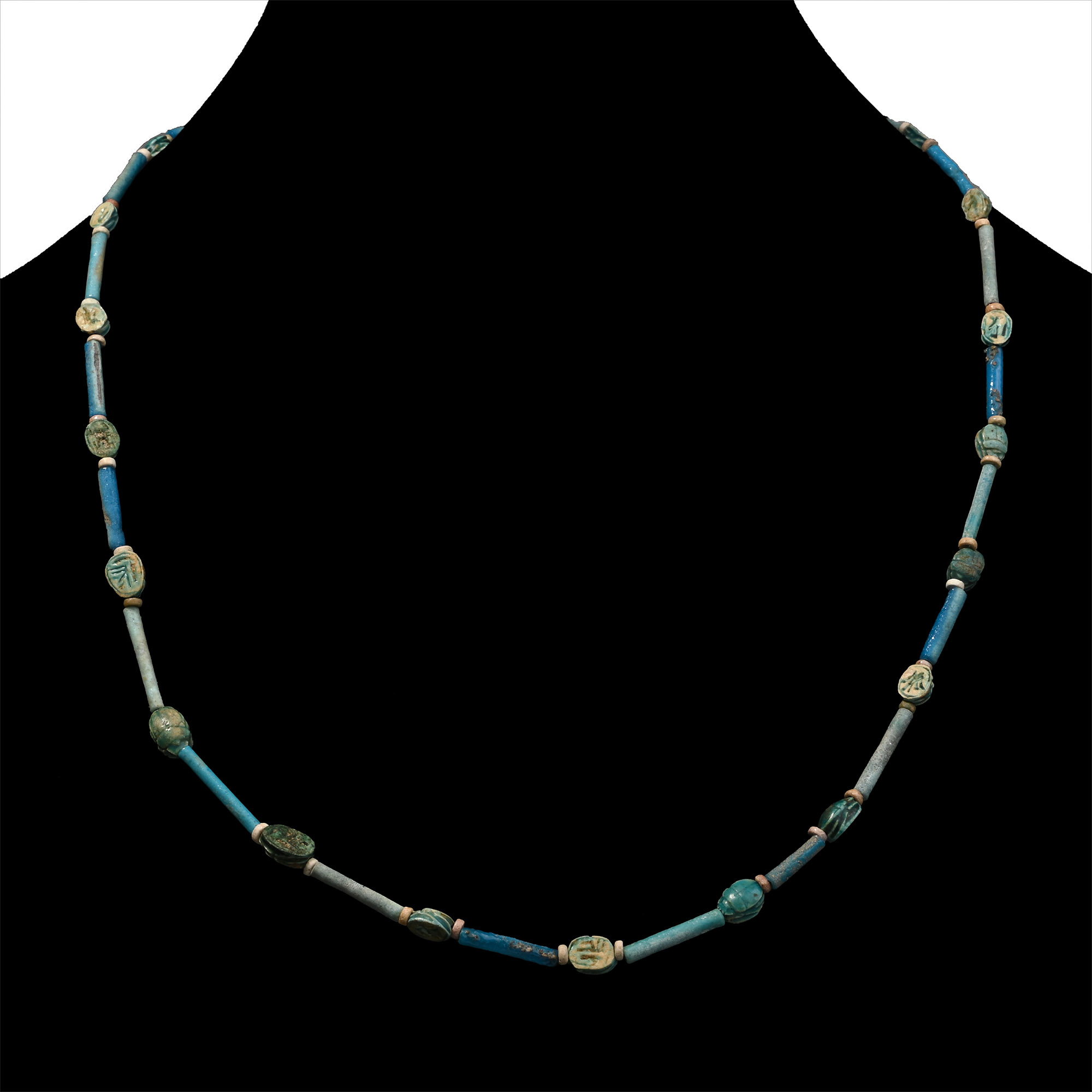
Egyptian Faience Mummy Bead Necklace with Reproduction Scarabs
LATE PERIOD, 664-332 B.C. AND LATER
24 3/8 in. (9.9 grams, 62 cm long).
Restrung group of tubular and annular beads with interstitial later scarabs. [No Reserve]
ProvenanceFrom a private Tyneside collection, formed since the early 2000s.
CONDITIONTimeLine Auctions follows a vetting process to ensure the authenticity and legality of all items, reinforcing our commitment to integrity and responsible trading. Each antiquity, antique, and coin lot undergoes thorough examination by a vetting committee of at least ten external specialists, professional trade association members, scientists, and archaeologists: Our Vetting Process
AUCTIONS:
TimeLine is a leading auction house specialising in antiquities, ancient art, collectables, natural history, coins, medals, and books. Our auctions offer museums, collectors, historians, and enthusiasts the opportunity to acquire unique and historically significant pieces.
LOT 0459
Egyptian Faience Mummy Bead Necklace with Reproduction Scarabs
Sold for (Inc. bp): £72
-
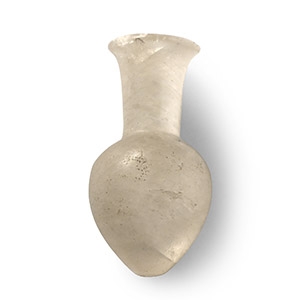
Egyptian Rock Crystal Piriform Vessel
Old Kingdom, 5th-6th Dynasty, circa 2500-2200 B.C.Estimate: £4,000 - 6,000 (+bp*)
Opening Bid: £1,500
Model amphora with trumpet-shaped mouth and piriform body; shallow socket above. 55 grams, 59 mm
with Archaeologia, Switzerland, before 1983. Ex private North American collection. London private collection, 2016.
This model vessel was probably linked to the "Opening of the Mouth" ritual, which revived the deceased. -
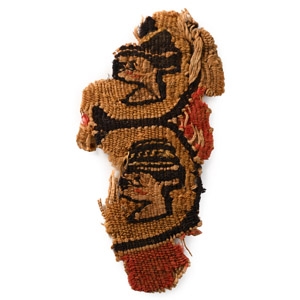
Egyptian Coptic Textile Fragment
Circa 5th-6th century A.D.Sold for (Inc. bp): £78
Small fragment of a garment in yellow, green and red wool, S torsion, embroidered with female heads wearing high propoloma. 10 grams total including package, 76 mm
Acquired 1970s-1996. Property of a North American collector. London collection, 2016.
This fragment was most likely part of a tapestry medallion with symbolic figures, likely linked to the Christian cult or, perhaps, to the Dionysian iconography. These figures could surround Tyche (a city's patron deity) or a figure of Christ or Saints. -
.jpg)
Egyptian Rock Crystal Scarab
Late Period, 664-332 B.C.Sold for (Inc. bp): £650
Carved scarab with segmented carapace and legs. 6.45 grams, 23 mm
Ex Belinda Elliston collection, a member of the Egyptian Exploration Society, 1940s onwards.
