
Loading, please wait...
LOT 0474
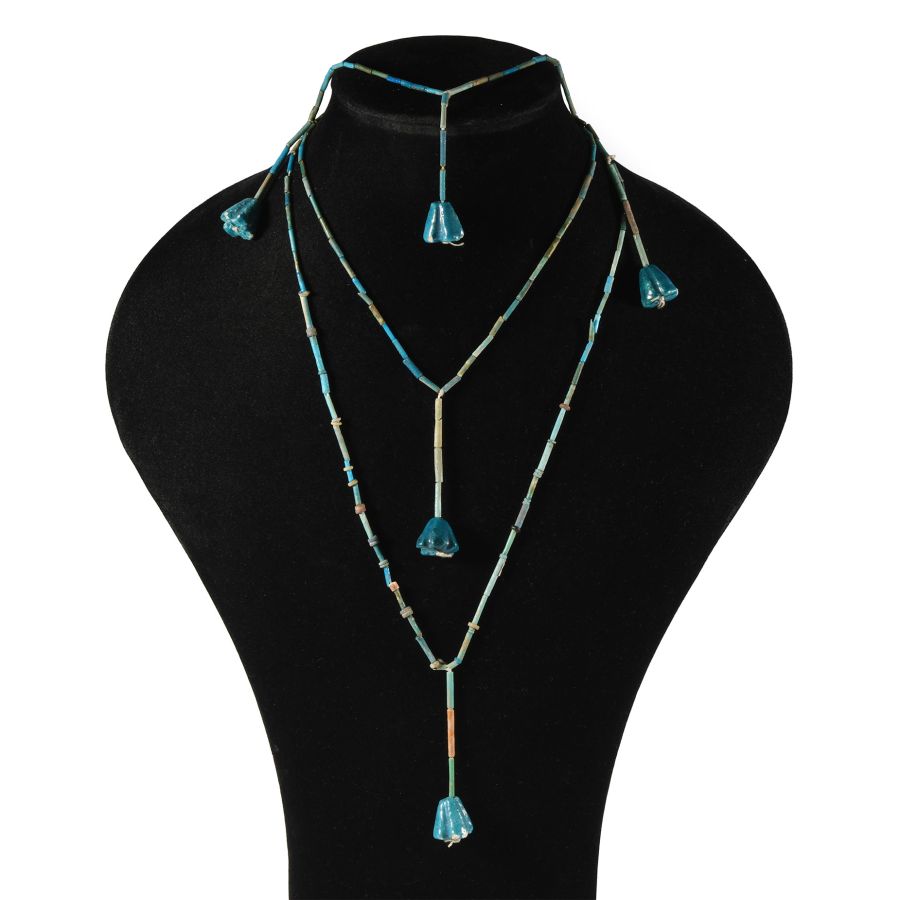
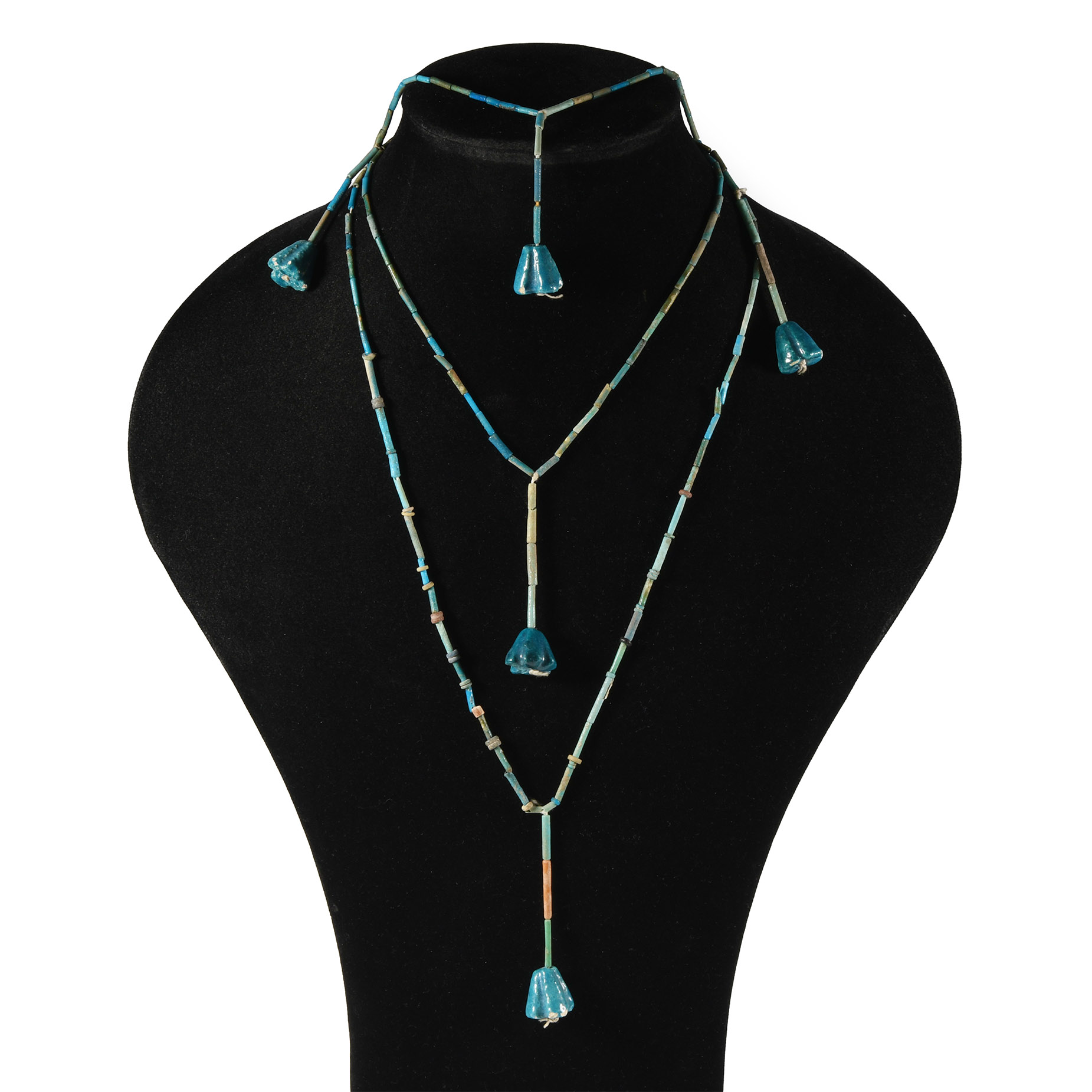
Egyptian Faience Mummy Bead Necklace with Lotus Flower Amulets
LATE PERIOD, 664-332 B.C.
43 3/4 in. (24.9 grams, 111 cm long).
Restrung group of mainly tubular beads with five faience lotus-flower pendants. [No Reserve]
ProvenanceFrom an old English deceased estate.
Acquired on the London art market in the early 1990s.
Property of a London, UK, collector.
TimeLine Auctions follows a vetting process to ensure the authenticity and legality of all items, reinforcing our commitment to integrity and responsible trading. Each antiquity, antique, and coin lot undergoes thorough examination by a vetting committee of at least ten external specialists, professional trade association members, scientists, and archaeologists: Our Vetting Process
AUCTIONS:
TimeLine is a leading auction house specialising in antiquities, ancient art, collectables, natural history, coins, medals, and books. Our auctions offer museums, collectors, historians, and enthusiasts the opportunity to acquire unique and historically significant pieces.
LOT 0474
Egyptian Faience Mummy Bead Necklace with Lotus Flower Amulets
Sold for (Inc. bp): £208
-
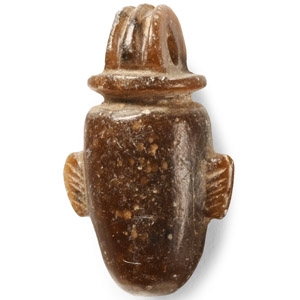
Egyptian Hardstone Heart Amulet
Late Period, 664-332 B.C.Sold for (Inc. bp): £156
Modelled in the round with ribbed loop above, flange and two lateral tabs. 1.64 grams, 18 mm
From the collection of Doctor Girard, a collector for over 60 years. with Hotel des Ventes de Clermont-Ferrand, 22 May 2017. Property of a French collector.
According to ancient Egyptian beliefs, the heart (ib) was considered to be the centre of intelligence, emotions, and behaviour. The heart was also believed to store an individual's memories. During the Weighing of the Heart ceremony in the afterlife, the heart could speak up for the deceased and account for their lifetime of actions before Osiris. For this reason, heart amulets were placed on the mummy to safeguard the organ and ensure a favourable outcome during judgment. -
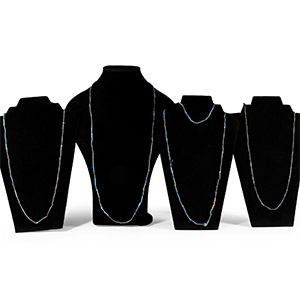
Egyptian Faience Mummy Bead Necklace Group
Late Period, 664-332 B.C.Sold for (Inc. bp): £221
Comprising four necklace strings with tubular and annular beads. 23 grams total, 72-95 cm long
From an old English deceased estate. Acquired on the London art market in the early 1990s. Property of a London, UK, collector. -
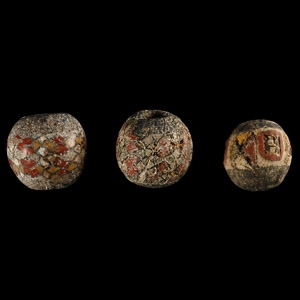
Egyptian Millefiori Glass Bead Group
Roman Period, 30 B.C.-323 A.D.Sold for (Inc. bp): £208
Three spherical glass beads decorated with geometric millefiori patterns. 10 grams total, 12-15 mm
Collected from 1969-1999. From the collection of the late Mr S.M., London, UK.
