
Loading, please wait...
LOT 0515
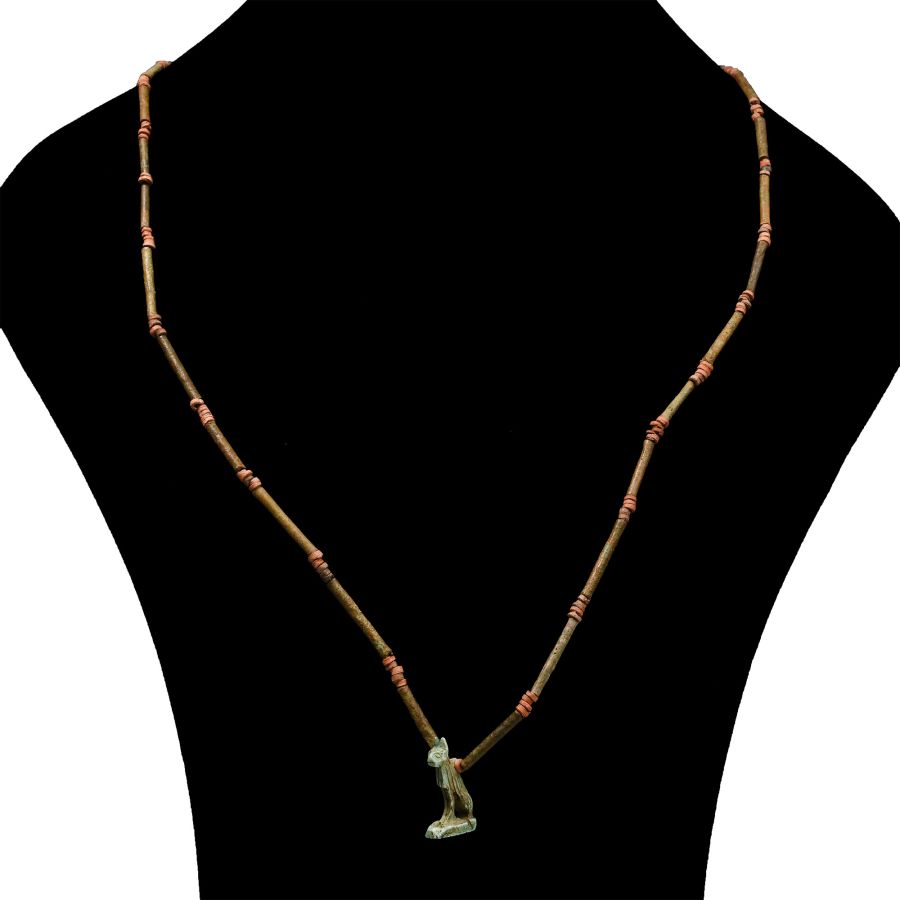
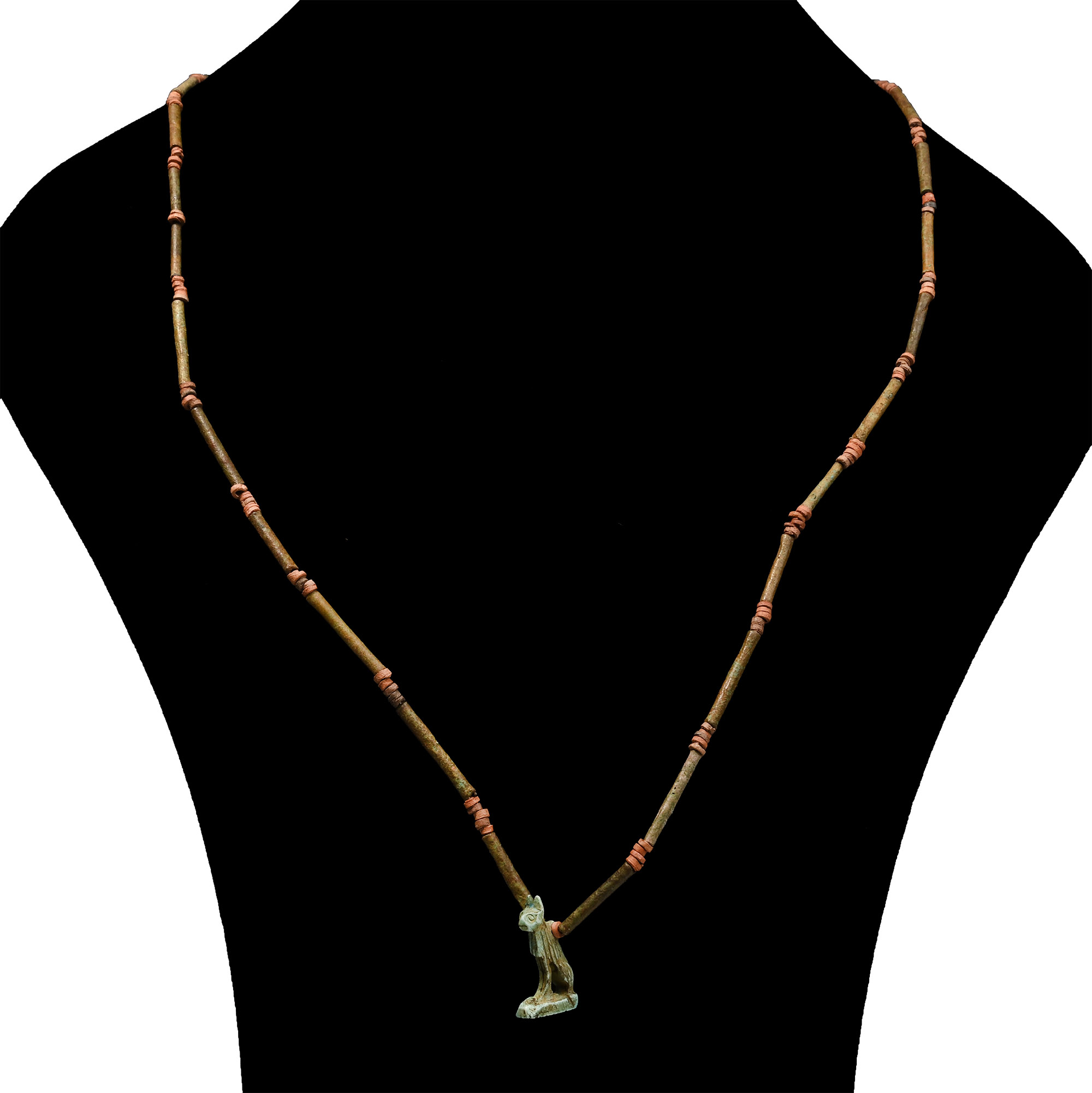
Egyptian Faience Mummy Bead Necklace with Bastet
LATE PERIOD, 664-332 B.C. AND LATER
3 1/8 in. (9.93 grams, 80 cm long).
Restrung necklace of tubular and annular beads with later pendant figure of Bastet as centrepiece. [No Reserve]
ProvenanceFrom a private Tyneside collection, formed since the early 2000s.
CONDITIONTimeLine Auctions follows a vetting process to ensure the authenticity and legality of all items, reinforcing our commitment to integrity and responsible trading. Each antiquity, antique, and coin lot undergoes thorough examination by a vetting committee of at least ten external specialists, professional trade association members, scientists, and archaeologists: Our Vetting Process
AUCTIONS:
TimeLine is a leading auction house specialising in antiquities, ancient art, collectables, natural history, coins, medals, and books. Our auctions offer museums, collectors, historians, and enthusiasts the opportunity to acquire unique and historically significant pieces.
-
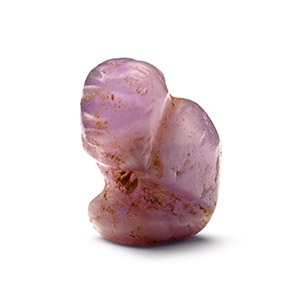
Egyptian Amethyst Ba-Bird Amulet
Late Period, 664-332 B.C.Sold for (Inc. bp): £124
Crouched figure of a human-headed Ba-bird on a rectangular base, carved in the round. 0.62 grams, 9.8 mm
with Archaeologia, Switzerland, before 1983. Ex private North American collection. London private collection, 2016. -
.jpg)
Egyptian Limestone Relief Fragment with Female Figure
New Kingdom, 18th Dynasty, circa 1295 B.C.Sold for (Inc. bp): £4,550
Showing a female figure as part of a procession, carrying a loaf of bread, a second offerant behind her; mounted on a custom-made display stand. 3.12 kg total, 42 cm high including stand
From the estate of the late Professor Dr E. Bernardo Streiff, Geneva; a distinguished collection of antiquities formed during the 1950s-1970s. with Galerie Rhéa, Zurich, Switzerland. This lot has been checked against the Interpol Database of stolen works of art and is accompanied by a search certificate number no.12625-236383.
Professor Dr E. Bernardo Streiff (1911-2001) was a prominent Swiss physician and academic based in Geneva, best known for his contributions to medical science as well as his deep passion for ancient art and antiquities. Over the course of several decades, particularly between the 1950s and 1970s, Professor Streiff assembled a highly regarded private collection of antiquities, reflecting both scholarly discernment and aesthetic sensitivity. His interests focused on the art and material culture of the ancient Mediterranean, with a particular emphasis on Greek, Etruscan, and Roman objects. A connoisseur guided by academic rigour, Dr Streiff maintained close ties with museums, galleries, and archaeological experts of his time. Many pieces from his collection were acquired from leading European dealers and fairs, and are notable for their quality, provenance, and condition. Following his passing, objects from the Streiff collection have appeared in respected sales and exhibitions, recognised for their integrity and the refined eye of the collector behind them. -
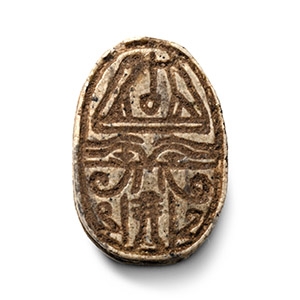
Egyptian Faience Hieroglyphic Scarab
Late-Ptolemaic Period, circa 664-30 B.C.Sold for (Inc. bp): £176
Detailed carapace and legs, underside with hieroglyphs including opposing wedjat and djed pillar; pierced longitudinally. 6.64 grams, 24 mm
From the collection of a gentleman, acquired on the London art market in the 1990s.
