
Loading, please wait...
LOT 0424
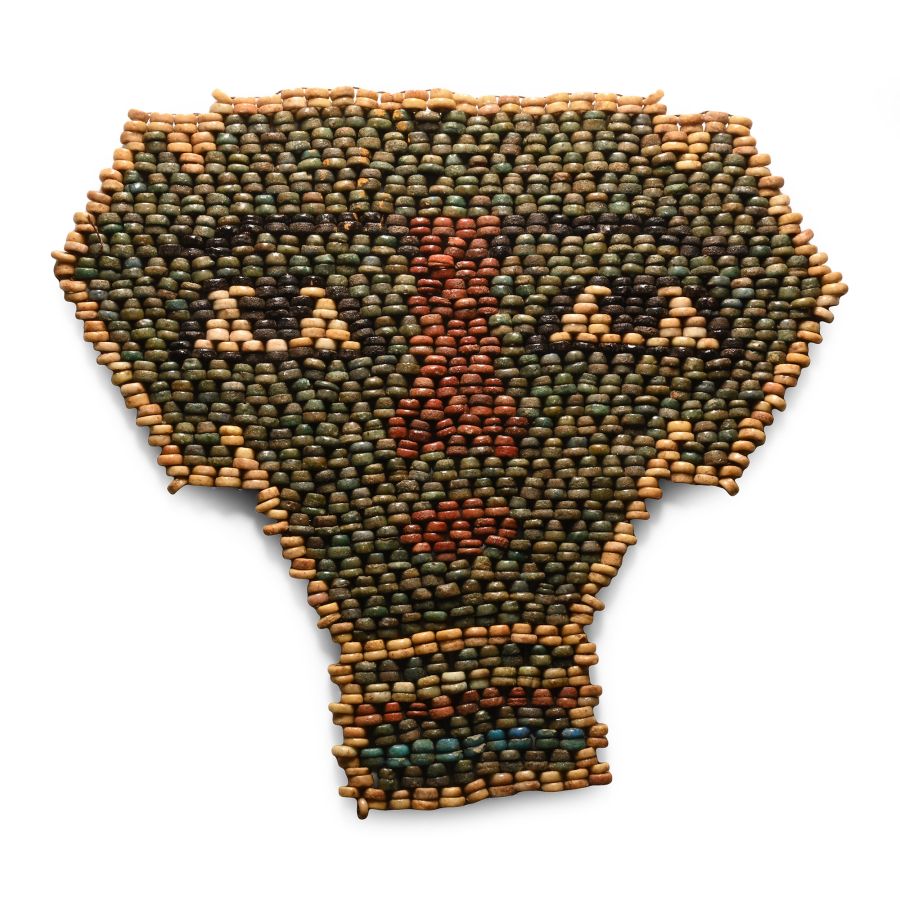
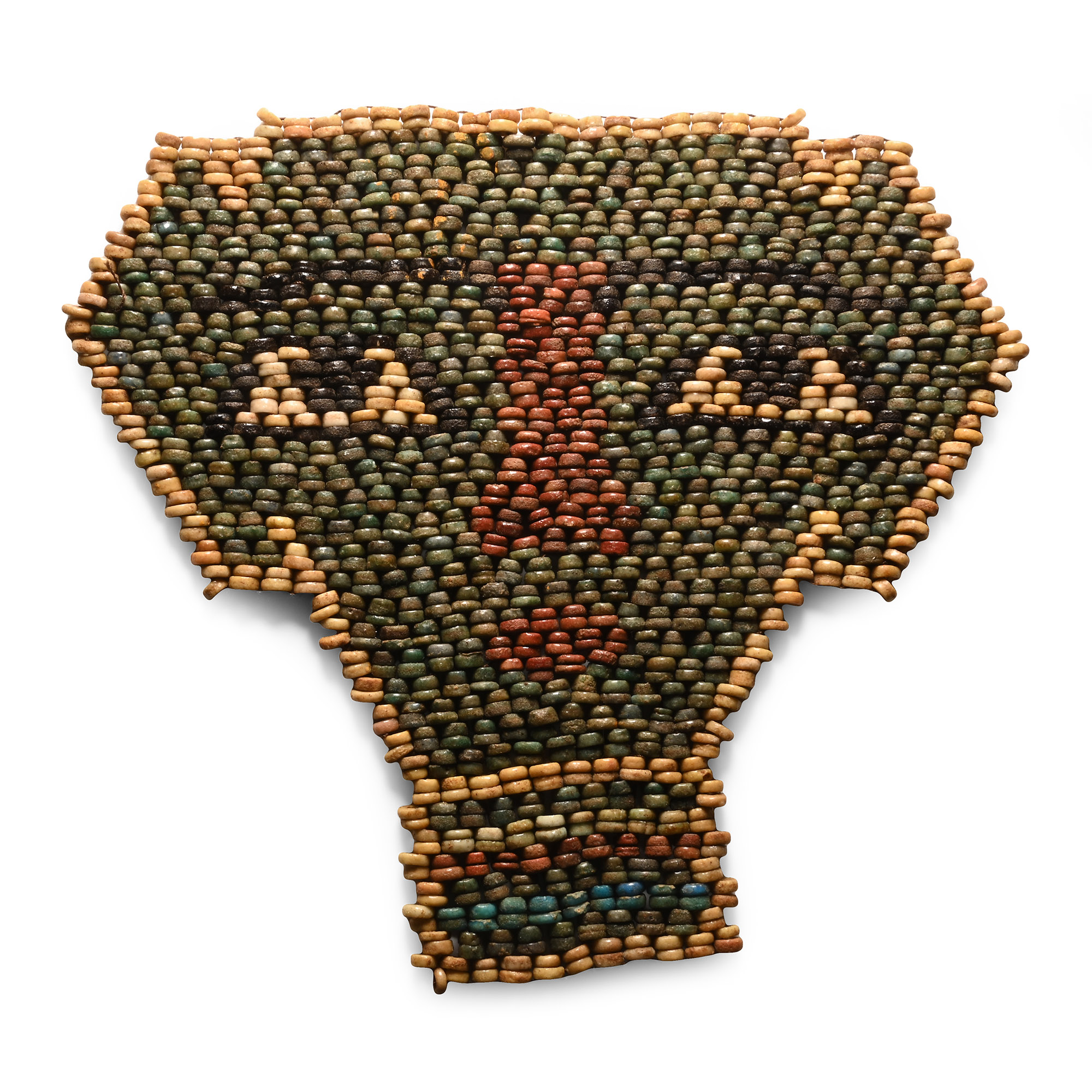
Egyptian Faience Mummy Bead Mask
PTOLEMAIC PERIOD, 332-30 B.C.
5 1/4 in. (43.3 grams, 13.2 cm wide).
A restrung beadwork panel of small glazed composition beads in various colours representing a mummy face mask with false beard. [No Reserve]
ProvenanceEx London gallery, 1990s.
LiteratureCf. Manley, B., and Dodson, A., Life Everlasting. National Museum of Scotland Collection of Ancient Egyptian Coffins, Edinburgh, 2010, p. 114, no. 43, for a bead mummy shroud with a face similar in style and colour.
CONDITIONTimeLine Auctions follows a vetting process to ensure the authenticity and legality of all items, reinforcing our commitment to integrity and responsible trading. Each antiquity, antique, and coin lot undergoes thorough examination by a vetting committee of at least ten external specialists, professional trade association members, scientists, and archaeologists: Our Vetting Process
AUCTIONS:
TimeLine is a leading auction house specialising in antiquities, ancient art, collectables, natural history, coins, medals, and books. Our auctions offer museums, collectors, historians, and enthusiasts the opportunity to acquire unique and historically significant pieces.
-
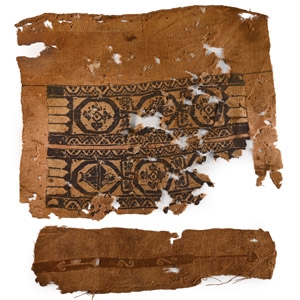
Egyptian Coptic Textile Fragment Group
Circa 7th century A.D.Sold for (Inc. bp): £286
Comprising: a large fragment of a tunic with double segmenta in dark purple wool over linen, S torsion, formed by two parallel stripes, embroidered with kantharos and floral patterns, inscribed in tondos within bands with crenellated borders; a thin clavus connected to an orbiculus ending in an arrow shape, red purple and brown wool over linen, S torsion, embroidered with S shaped and lanceolate patterns. 207 grams total including package, 31-33.5 cm
Acquired 1970s-1996. Property of a North American collector. London collection, 2016.
This type of embroideries were typical of tunics and garments characterised by full-length clavi, and segmenta, decorated with either intricate geometric patterns or floral and vegetal motifs. In Christian symbology, the kantharos was an ancient Greek wine cup that symbolised resurrection and eternal life through Christ. -
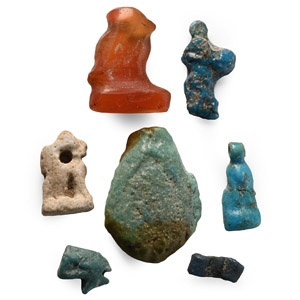
Egyptian Amulet Bead Collection
Late Period, 664-332 B.C.Sold for (Inc. bp): £104
Group of amuletic beads and pendants including a wedjat-eye, Horus in falcon form, a seated Bastet, Bes playing a tambourine, and other types. 3.3 grams total, 8-19.5 mm
with Archaeologia, Switzerland, before 1983. Ex private North American collection. London private collection, 2016. -
.jpg)
Egyptian Bronze Head of a Cat
Late-Ptolemaic Period, 664-30 B.C.Sold for (Inc. bp): £1,820
The head of goddess Bastet modelled in the round with alert ears and eyes, ears pierced; hollow-formed. 40.4 grams, 33.6 mm high
Acquired in the mid 1990s. Private collection, Switzerland, thence by descent. Private collection, since the late 1990s.
The feline's pierced ears likely once held earrings or other ornaments. It was probably attached to a statuette of a cat, whose body may have been crafted from wood. The cat was sacred to Bastet, a protective mother goddess and the daughter of the sun god Re. Amulets provided the wearer with the goddess's protection. Her name means ‘she of the bast [ointment jar],’ which may have contained a substance favoured by or exclusive to royalty. Originally, Bastet was depicted as a woman with the head of a lioness, but by the late New Kingdom, she was typically shown with a cat's head. She is sometimes portrayed with kittens, emphasising her maternal role as a fierce protector of her offspring.
