
Loading, please wait...


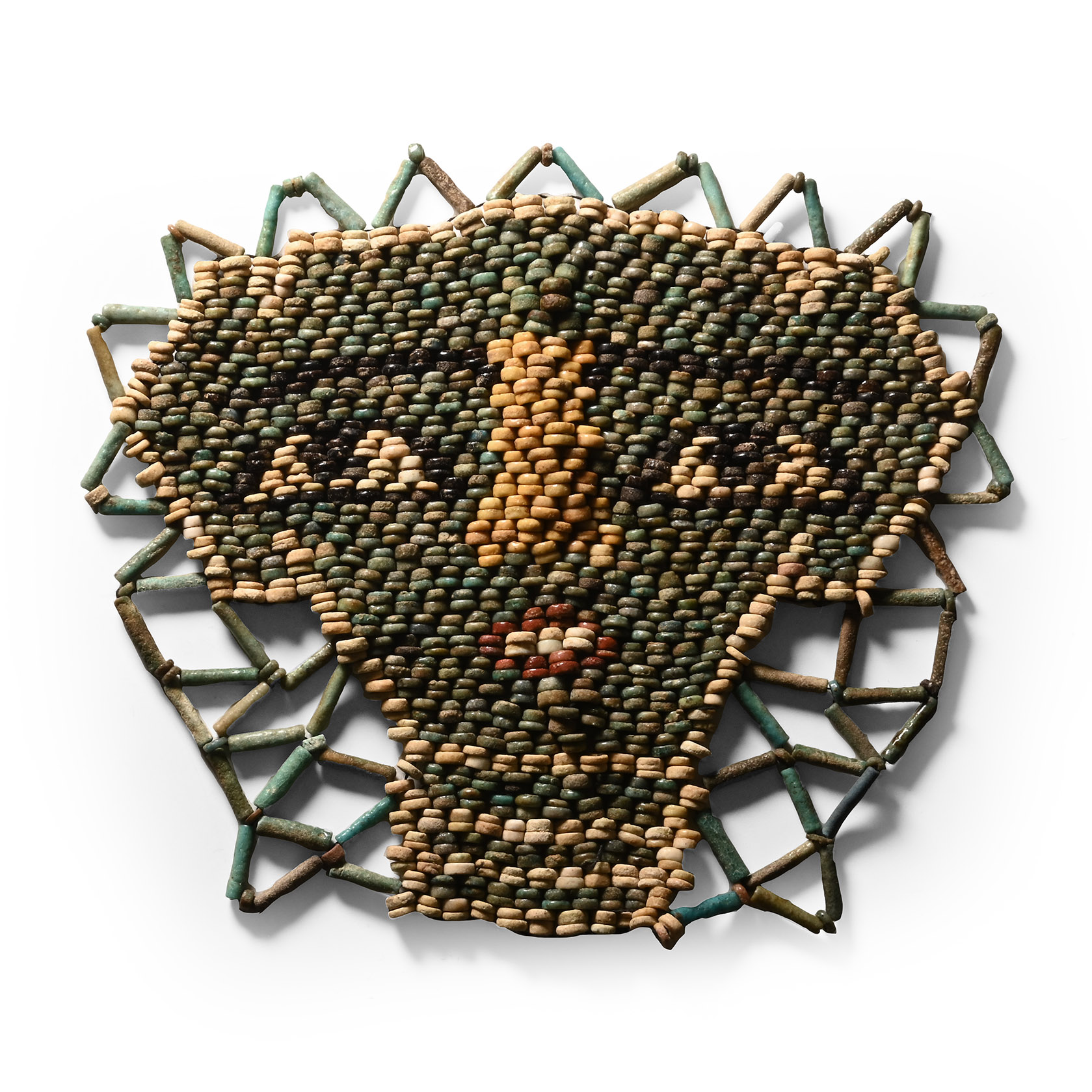
LOT 0470
Egyptian Faience Mummy Bead Mask
PTOLEMAIC PERIOD, 332-30 B.C.
5 3/8 in. (42 grams, 13.5 cm).
A panel of small glazed composition beads in various colours representing a mummy face mask with false beard with netted border; restrung with some later beads.
ProvenanceEx Mariaud des Serres, Paris, France, 1990s.
LiteratureCf. Bienkowski, P., Tooley, A., Gifts of The Nile: Ancient Egyptian Arts and Crafts in Liverpool Museum, Liverpool, 1995, p.68 and pl.103, for an example still attached to a mummy.
CONDITIONTimeLine Auctions follows a vetting process to ensure the authenticity and legality of all items, reinforcing our commitment to integrity and responsible trading. Each antiquity, antique, and coin lot undergoes thorough examination by a vetting committee of at least ten external specialists, professional trade association members, scientists, and archaeologists: Our Vetting Process
AUCTIONS:
TimeLine is a leading auction house specialising in antiquities, ancient art, collectables, natural history, coins, medals, and books. Our auctions offer museums, collectors, historians, and enthusiasts the opportunity to acquire unique and historically significant pieces.
-
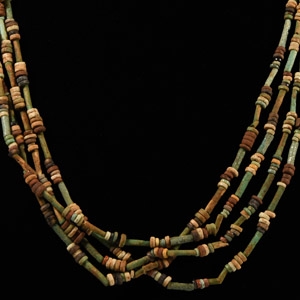
Egyptian Multi-Stranded Mummy Bead Necklace
Late Period, 664-525 B.C.Sold for (Inc. bp): £85
Multi-stranded restrung composition necklace composed of beads of mainly annular and tubular types. 27 grams, 66 cm
Acquired before 1979. From the private collection of Mr F. A., South Kensington, London, UK; thence by descent 2014.
For thousands of years, artisans in Egypt created vibrant ceramics to echo the beauty of rare jewels. These ornaments were created with almost every material, colour, and texture imaginable and they come from across Egypt and beyond: vibrant blue lapis lazuli from Afghanistan, glossy black obsidian from Turkey, and aqua-green turquoise from the Sinai. They were worn in life and, after death, they served as precious ornamentation for mummies. -
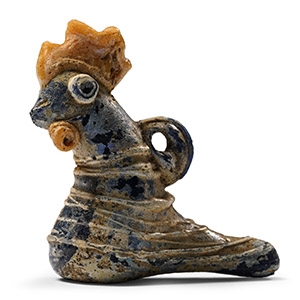
Phoenician Blue Glass Bird Pendant
425-200 B.C.Sold for (Inc. bp): £468
Hollow-formed amuletic pendant with applied trails to the body, iridescent surface, yellow glass detailing. 5.5 grams, 32 mm
From the collection of a gentleman, acquired on the London art market in the 1990s. -
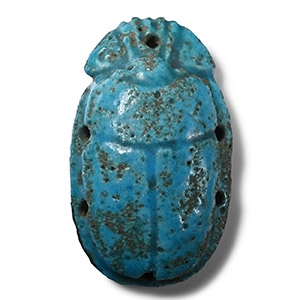
Large Egyptian Blue Faience Scarab
750-332 B.C.Sold for (Inc. bp): £572
With boldly indicated head, clypeus, prothorax, and elytra; flat underside; holes at the head, back, and sides for attachment. 19.5 grams, 50 mm
with Beaussant Lefèvre, 17 November 2015, no.48. Acquired by the present owner from the above.
Scarabs were often used as funerary amulets and were believed to symbolise the rebirth and regeneration of the deceased.
