
Loading, please wait...

LOT 0534
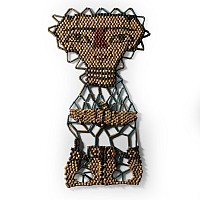
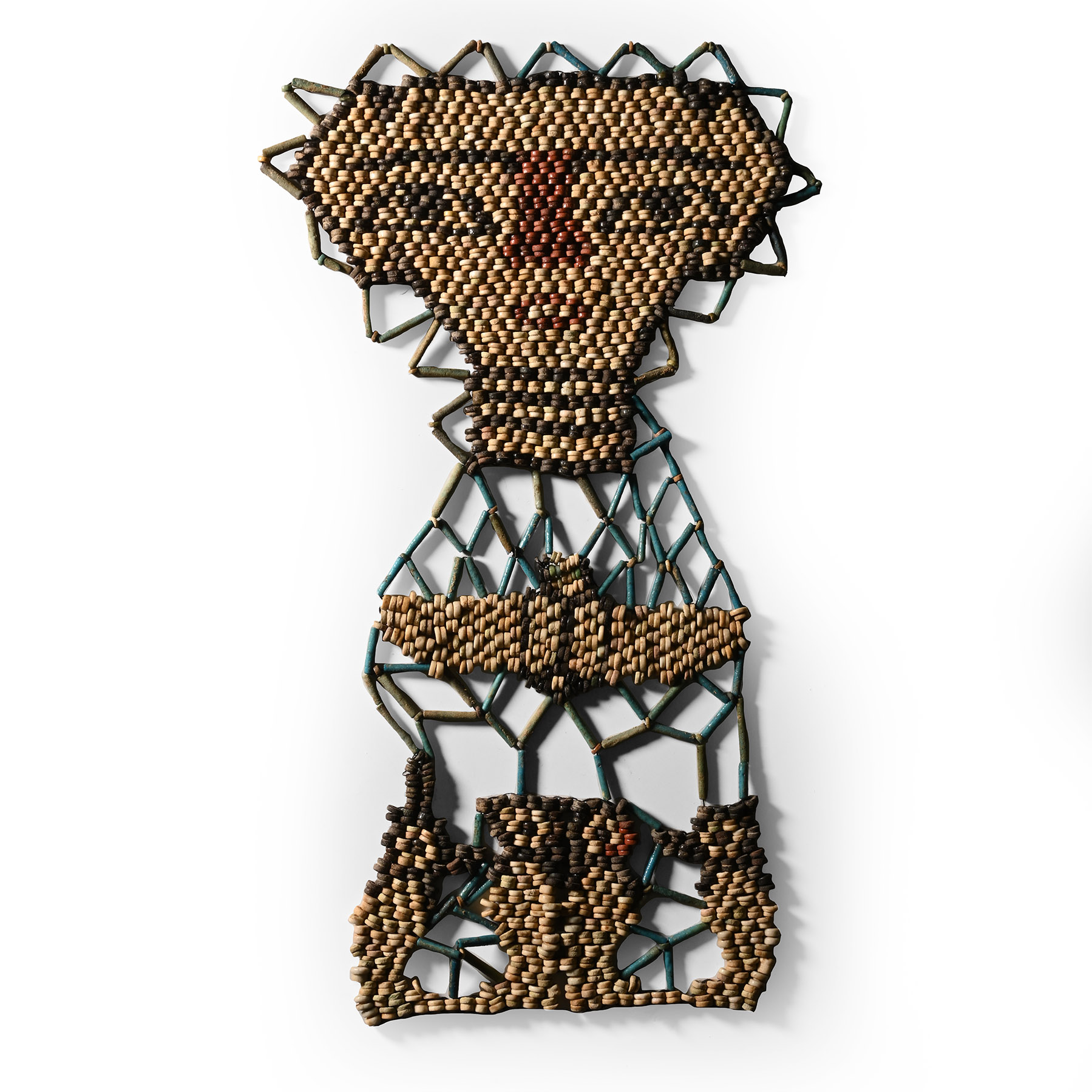
Egyptian Faience Mummy Bead Mask with Four Sons of Horus
PTOLEMAIC PERIOD, 332-30 B.C.
11 7/8 in. (113 grams, 30 cm).
A netted beadwork panel of annular and tubular glazed composition beads in blues, greens, black, cream and red-brown colours, depicting a mummy face mask with a false beard, a scarab with extended wings below, and the 'Four Sons of Horus’ figures beneath the scarab, joined together with areas of open netting of tubular examples; restrung with some later beads.
ProvenanceEx Mariaud des Serres, Paris, France, 1990s.
LiteratureCf. Manley, B., and Dodson, A., Life Everlasting. National Museum of Scotland Collection of Ancient Egyptian Coffins, Edinburgh, 2010, p.114, no.43, for a bead-work shroud incorporating the mask, winged scarab, and Four Sons of Horus.
FootnotesWinged scarabs were often used as funerary amulets and believed to symbolise the deceased's rebirth and regeneration.
The Four Sons of Horus were deities responsible for protecting the deceased's internal organs. Here, on the left, is the erect-eared jackal-headed Duamutef who protects the stomach, followed by the falcon-headed Qebehsenuef, who protects the intestines, then the human-headed Imsety, protector of the liver and, finally, the baboon-headed Hapy on the right, protector of the lungs. The internal organs were often placed in canopic jars with the head of the respective Son of Horus. Amulets depicting these deities were placed within the mummy wrappings.
TimeLine Auctions follows a vetting process to ensure the authenticity and legality of all items, reinforcing our commitment to integrity and responsible trading. Each antiquity, antique, and coin lot undergoes thorough examination by a vetting committee of at least ten external specialists, professional trade association members, scientists, and archaeologists: Our Vetting Process
AUCTIONS:
TimeLine is a leading auction house specialising in antiquities, ancient art, collectables, natural history, coins, medals, and books. Our auctions offer museums, collectors, historians, and enthusiasts the opportunity to acquire unique and historically significant pieces.
LOT 0534
Egyptian Faience Mummy Bead Mask with Four Sons of Horus
Sold for (Inc. bp): £312
-
Large Egyptian Blue Faience Scarab
750-332 B.C.Sold for (Inc. bp): £572
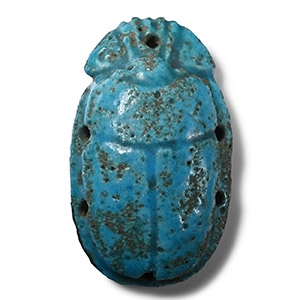
With boldly indicated head, clypeus, prothorax, and elytra; flat underside; holes at the head, back, and sides for attachment. 19.5 grams, 50 mm
with Beaussant Lefèvre, 17 November 2015, no.48. Acquired by the present owner from the above.
Scarabs were often used as funerary amulets and were believed to symbolise the rebirth and regeneration of the deceased. -
Egyptian Faience Mummy Bead Panel with Four Sons of Horus
Ptolemaic Period, 332-30 B.C.Sold for (Inc. bp): £117
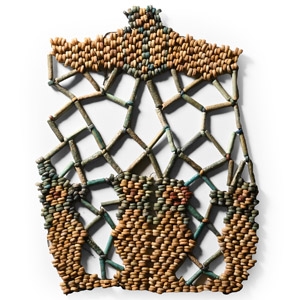
Restrung as an openwork panel with a winged scarab above and the Four Sons of Horus below as two opposing pairs; restrung with some later beads. 34.6 grams, 15 cm
From an early 20th century Home Counties, UK, collection.
These elements would have been placed on the chest and body below a beadwork mummy mask. Winged scarabs were often used as funerary amulets and believed to symbolise the deceased's rebirth and regeneration. The Four Sons of Horus protected the deceased's internal organs. Here, on the left, is the erect-eared jackal-headed Duamutef who protects the stomach, followed by the falcon-headed Qebehsenuef, who protects the intestines, then the human-headed Imsety, protector of the liver and, finally, the baboon-headed Hapy on the right, protector of the lungs. -
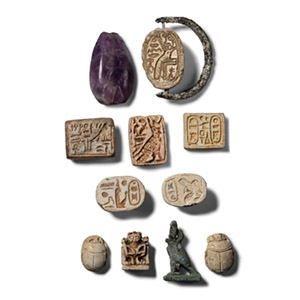
Egyptian Faience Scarab Collection
Mainly 15th-14th century B.C.Sold for (Inc. bp): £1,690
Including a white scarab with cartouche of Thutmose III; a white rectangle with two cartouches of Thutmose III, a white rectangle with hieroglyphs to one face for Amenhotep III and to the reverse those for Teje, one of his wives; and other items. 22.7 grams total, 12-28 mm
Acquired in the mid 1980s-1990s. Private collection, Switzerland, thence by descent. Private collection, since the late 1990s.
