
Loading, please wait...
LOT 0004
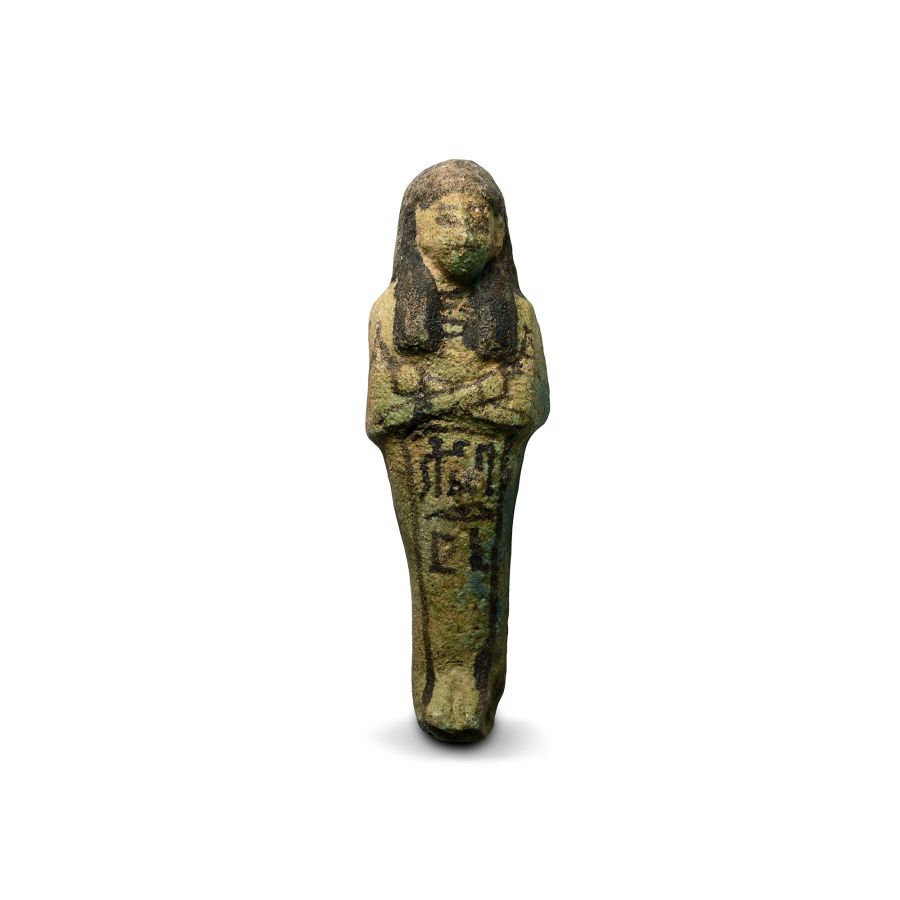
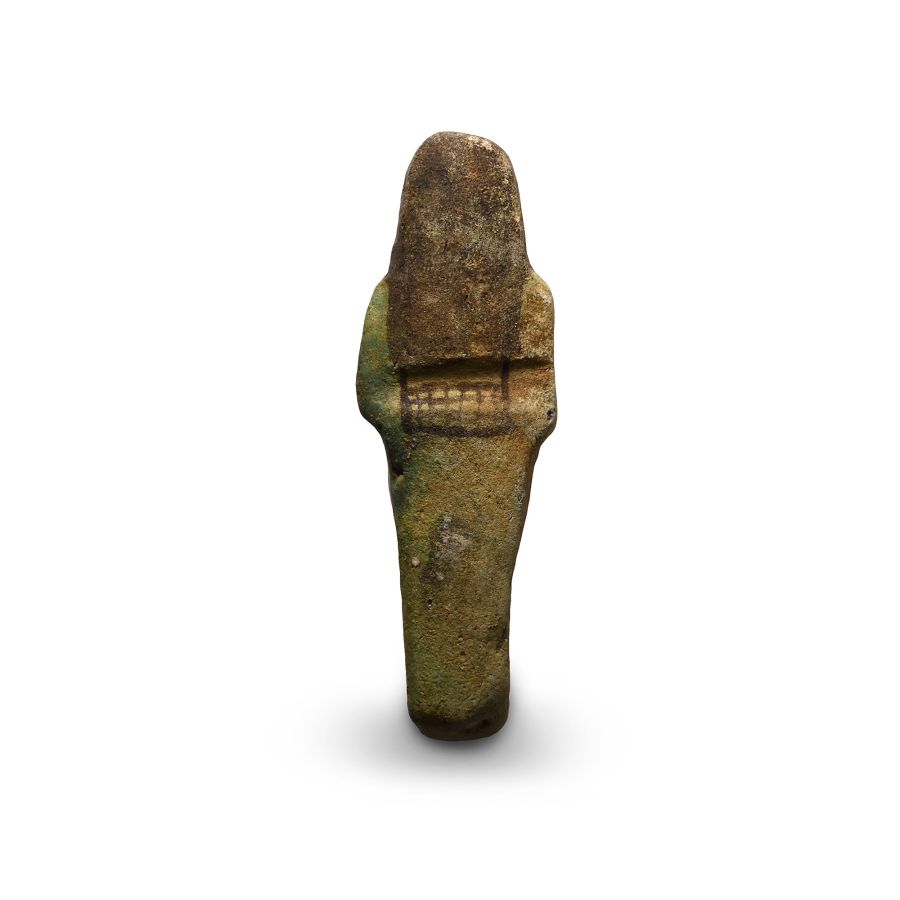
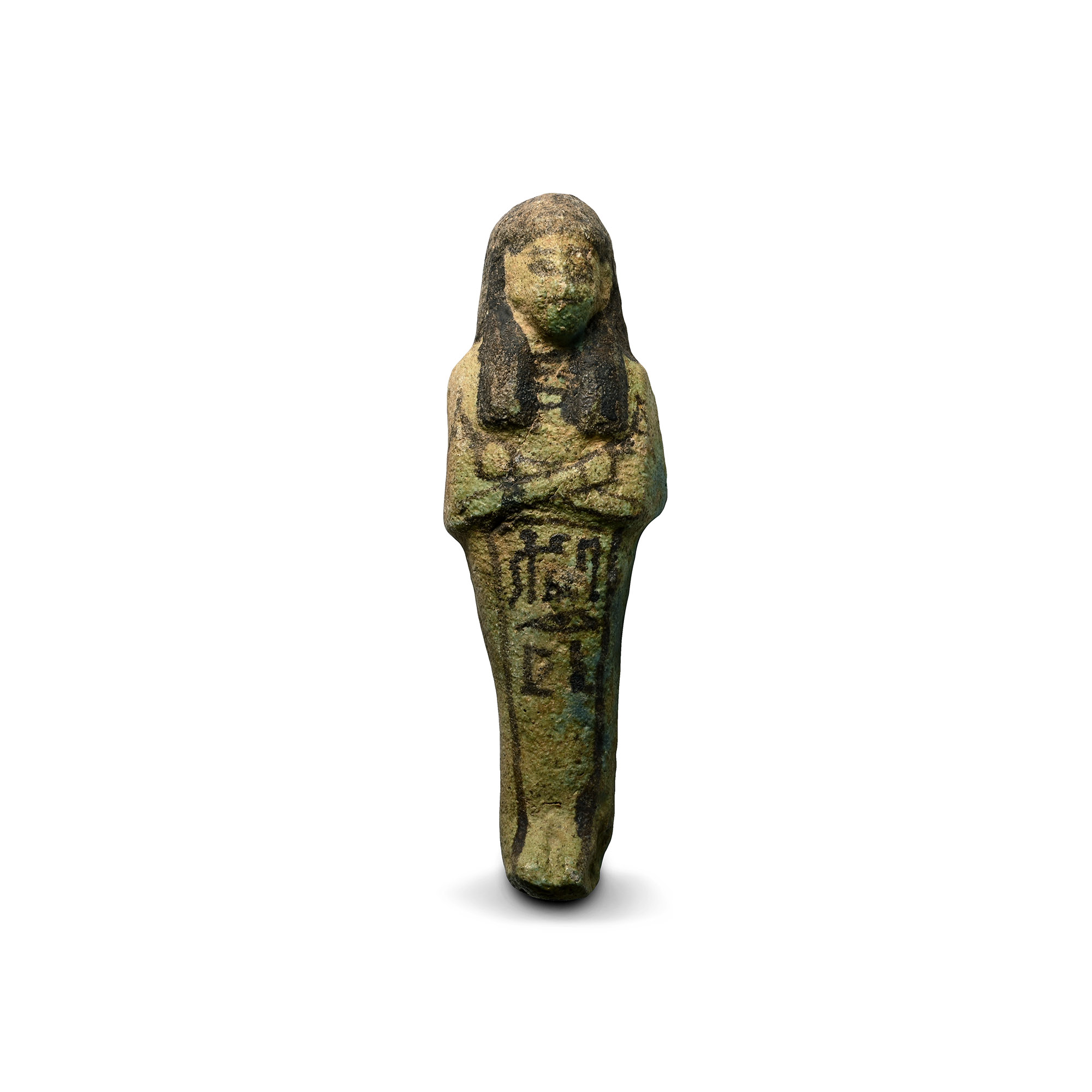
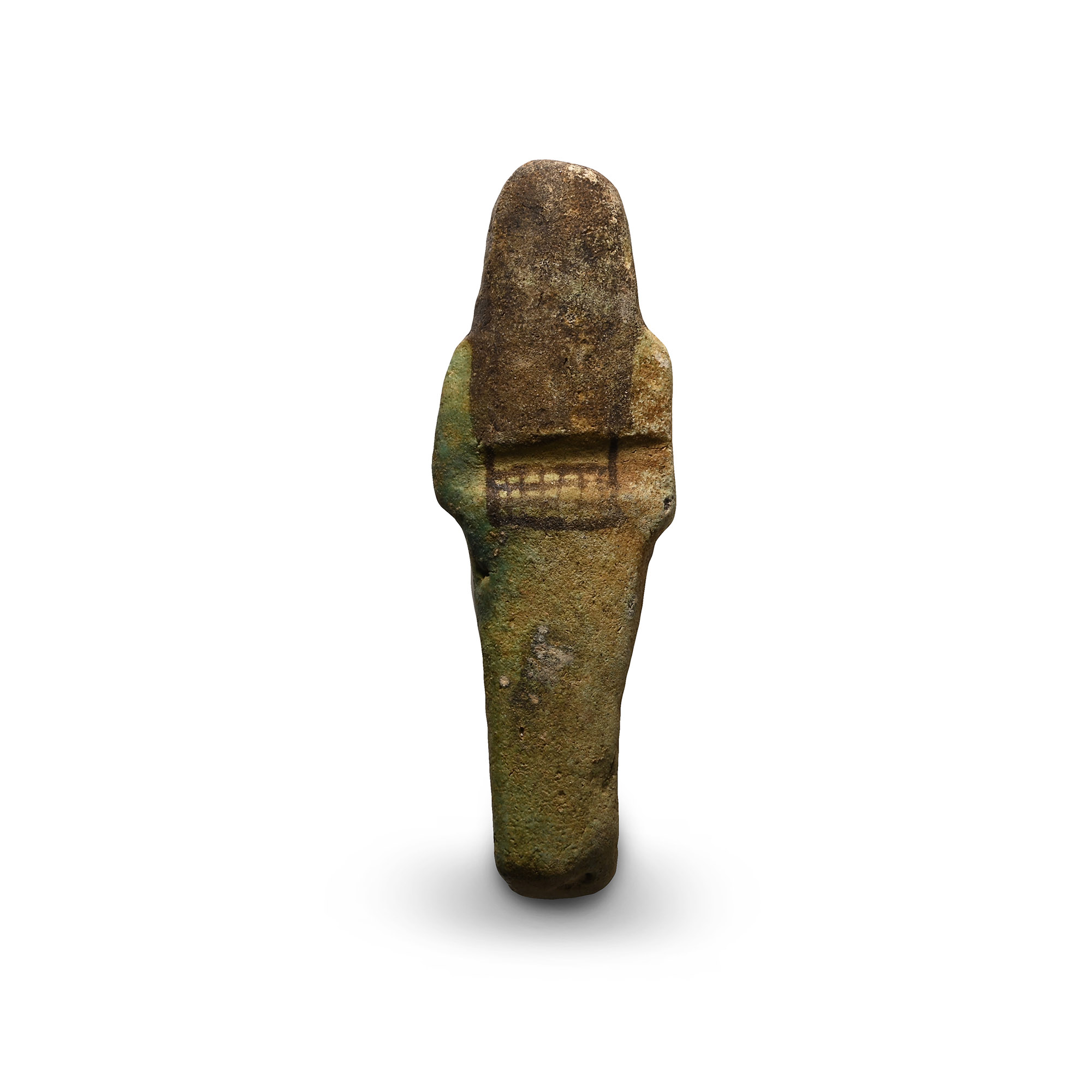
Egyptian Faience Hieroglyphic Shabti
LATE NEW KINGDOM-EARLY THIRD INTERMEDIATE PERIOD, CIRCA 1200-1000 B.C.
4 1/2 in. (87 grams, 11.3 cm).
Mummiform figure wearing a lappet wig, with arms crossed and holding a pick and hoe outlined in black; the wig, facial features, necklace, and seed bag painted black; hieroglyphic text to lower body: sḥḏ wsỉr "The illuminated, the Osiris".
ProvenanceFrom the collection of a gentleman, acquired on the London art market in the 1990s.
LiteratureCf. Janes, G., The Shabti Collections 6: A Selection from the World Museum, Liverpool, Lymm, 2016, p. 170-171, nos. 62-63, for similar partially inscribed shabtis.
FootnotesThe shabti was a stock product included with an opening dedication, awaiting the addition of the prospective purchaser's name. However, many examples of shabtis with only partial dedications are known to have been buried with the deceased.
CONDITIONTimeLine Auctions follows a vetting process to ensure the authenticity and legality of all items, reinforcing our commitment to integrity and responsible trading. Each antiquity, antique, and coin lot undergoes thorough examination by a vetting committee of at least ten external specialists, professional trade association members, scientists, and archaeologists: Our Vetting Process
AUCTIONS:
TimeLine is a leading auction house specialising in antiquities, ancient art, collectables, natural history, coins, medals, and books. Our auctions offer museums, collectors, historians, and enthusiasts the opportunity to acquire unique and historically significant pieces.
-
Large Mounted Egyptian Coptic Textile Pair with Animals
Mid 6th century A.D.Sold for (Inc. bp): £1,560
Pair of decorative tunic strips (clavi) ending with circular decorations (orbiculi), red, green and yellow wool, S-twist tapestry, decorated with two rows of lions alternating with vegetal elements running in a contrasting manner. 434 grams total, mount: 1.21 m
Acquired 1970s-1996. Property of a North American collector. London collection, 2016.
Among the many fragments of wool tunics are several long strips that match to form nearly full-length central pectoral clavi. They are patterned with a profusion of small figures or interlaced abstract designs, birds, plants and animals with a contrasting border filled with geometric motifs. -
Very Large Egyptian Expedition Lithograph of the Temple of Edfou
Early 19th century A.D.Estimate: £100 - 140 (+bp*)
Opening Bid: £50
Proof etching on laid paper of plate 52 from Vol.I of Description de l'Égypte : ou, Recueil des observations et des recherches qui ont été faites en Égypte pendant l'expédition de l'armée française. entitled Edfou (Apollinopolis magna. Coupe et élévation intérieure du pylône du grand temple. 230 grams, 105.5 x 69 cm
From the collection of a North American priest. Acquired between 1981-1996. Property of a North American collector.
Produced between February 1802 and 1830 on the orders of Napoleon Bonaparte; published between 1809 and 1828. Just 1,000 copies were distributed to various institutions, printed on laid paper with an 'Égypte ancienne et moderne' watermark. The book is subtitled Recueil des observations et des recherches qui ont été faites en Égypte pendant l’expédition de l’Armée française, publié par les ordres de Sa Majesté l’Empereur Napoléon le Grand (Gathering of observations and discoveries which were made in Egypt during the expedition of the French army, published on the orders of His Majesty the Emperor Napoleon the Great). It was the world's first encyclopedia devoted exclusively to the remains of ancient Egypt. The plates of this book are the first to present the archaeological sites of Thebes (Luxor). The temple at Edfu in Upper Egypt is dedicated to Horus and was built during the Ptolemaic Period. It remains one of the best-preserved temples in Egypt. -
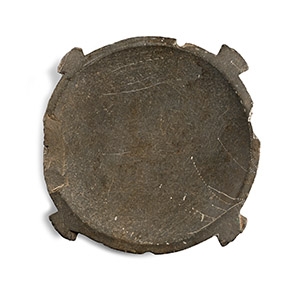
Egyptian Schist Plate
Middle Kingdom, 2040-1782 B.C.Estimate: £650 - 850 (‡+bp*)
Opening Bid: £325
Discoid palette with rounded underside and flat base, dished central field, flat rim with four radiating trapezoidal projections. 450 grams, 16.4 cm
Acquired in the mid 1980s-1990s. Private collection, Switzerland, thence by descent. Private collection, since the late 1990s. Accompanied by a copy of an Art Loss Register certificate no.S00038135.
