
Loading, please wait...
LOT 0425
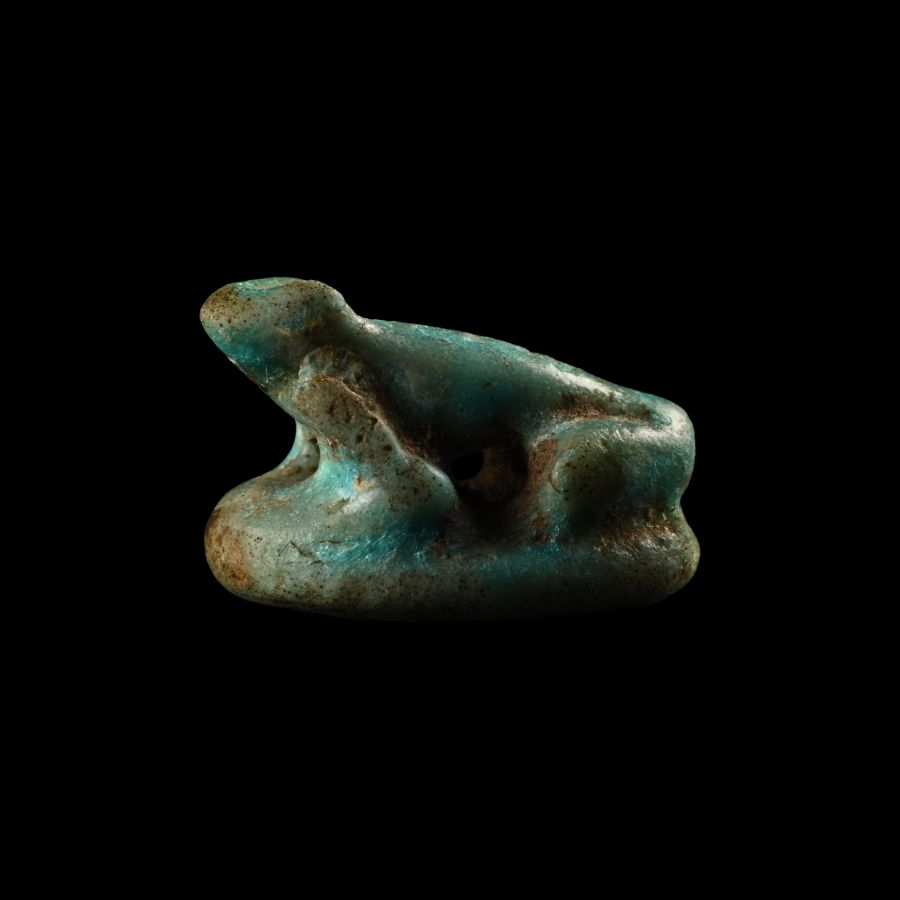
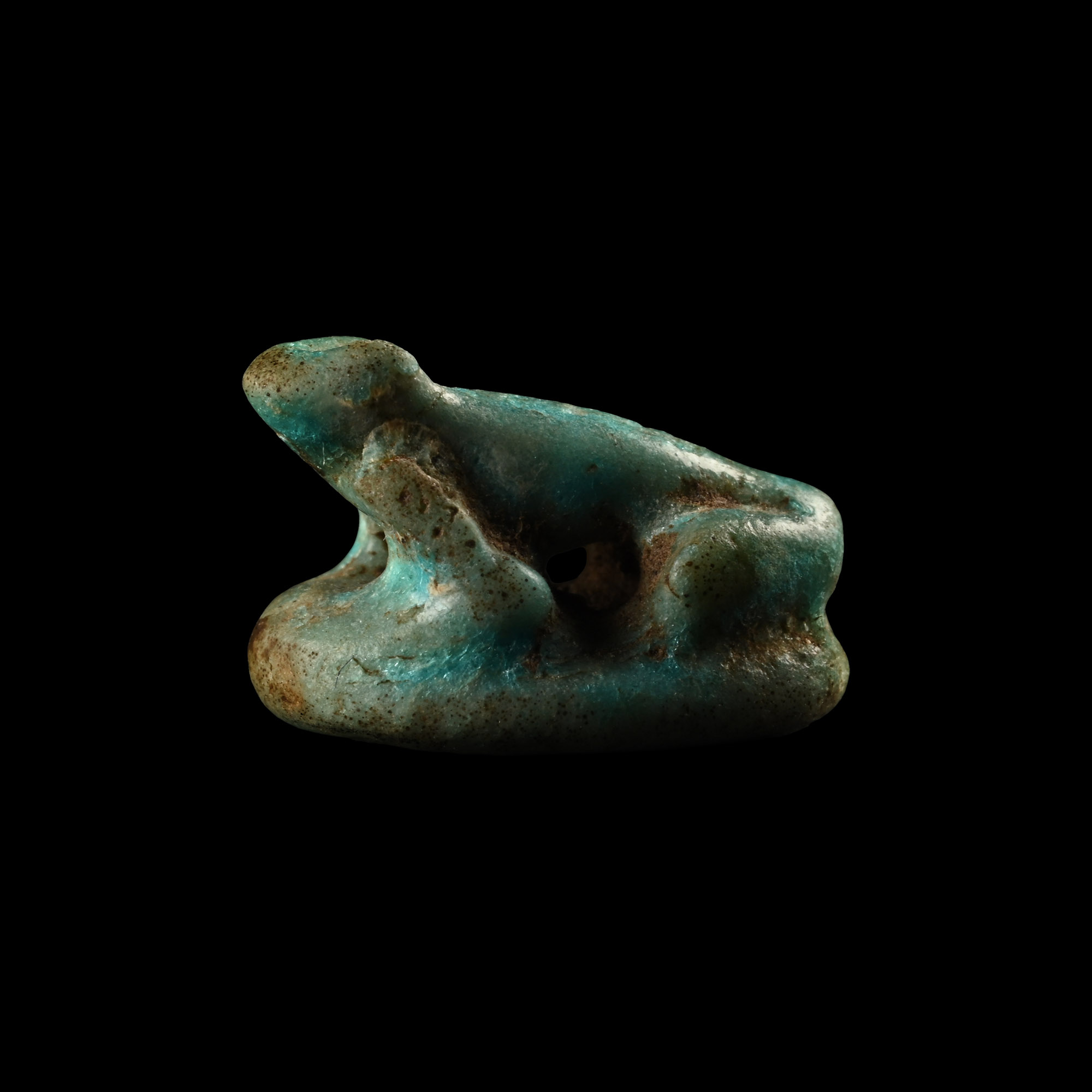
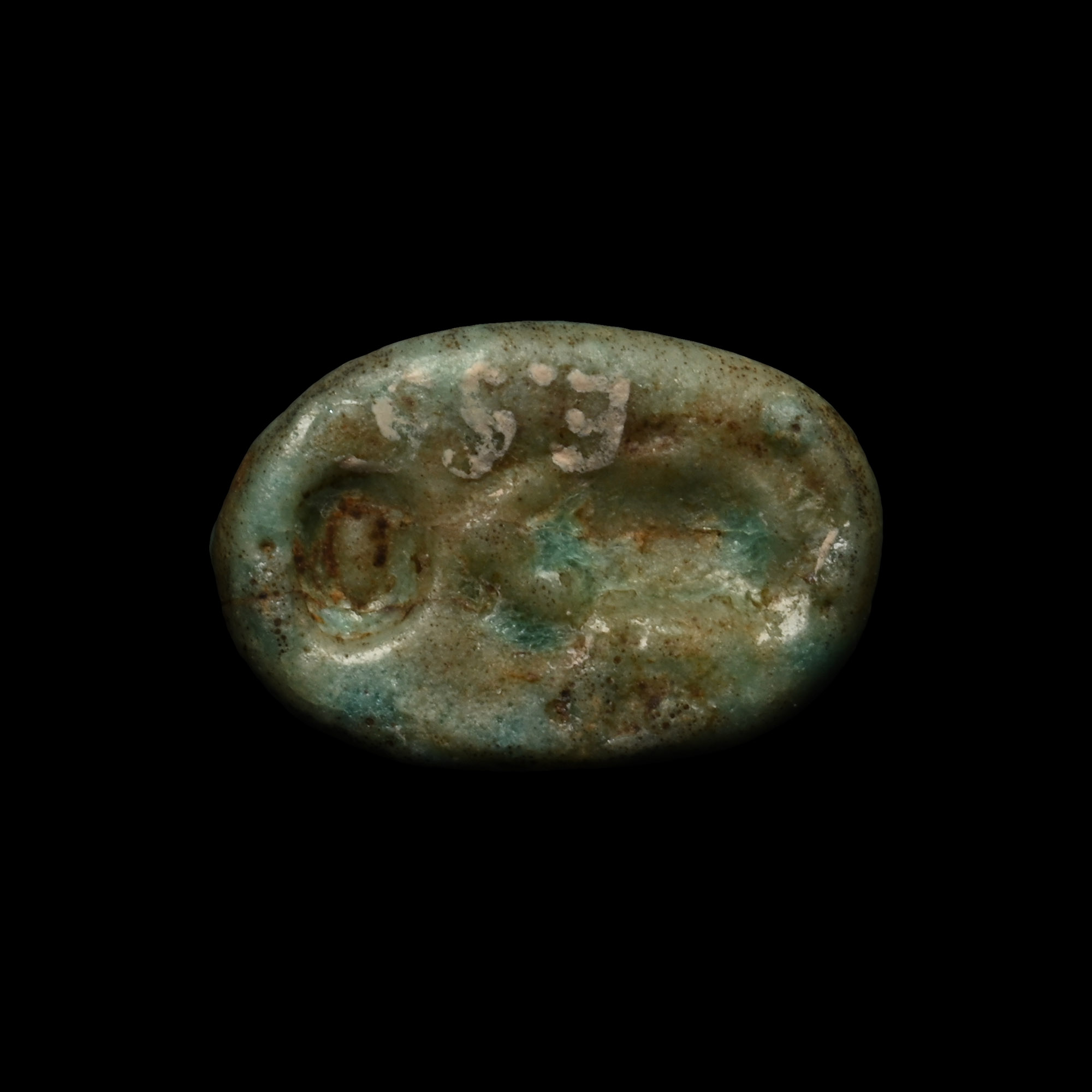
Egyptian Faience Frog Scaraboid
PTOLEMAIC PERIOD, CIRCA 300 B.C.
1/2 in. (0.56 grams, 13 mm).
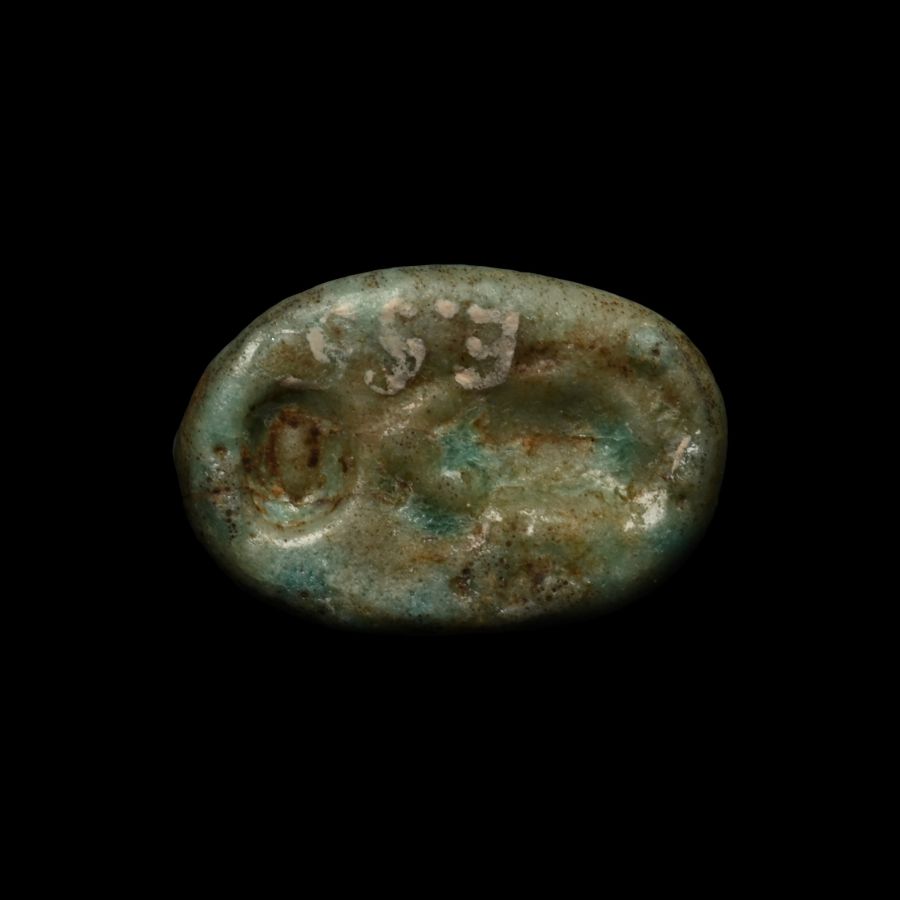
Discoid base with crouching frog pierced longitudinally for threading; underside with a solar disc and unidentified symbol.
ProvenanceEx R. Liechti (1934-2010) Geneva, Switzerland, formed between 1950-1990s.
Accompanied by a copy of an old collection inventory note.
This lot is accompanied by an illustrated lot declaration signed by the Head of the Antiquities Department, Dr Raffaele D'Amato.
Cf. Lacovara, P., and Markowitz, Y.J., Jewels of the Nile: Ancient Egyptian Treasures from the Worcester Art Museum, Worcester MA, 2020, p. 116, no.1925.594, for similar.
CONDITIONTimeLine Auctions follows a vetting process to ensure the authenticity and legality of all items, reinforcing our commitment to integrity and responsible trading. Each antiquity, antique, and coin lot undergoes thorough examination by a vetting committee of at least ten external specialists, professional trade association members, scientists, and archaeologists: Our Vetting Process
AUCTIONS:
TimeLine is a leading auction house specialising in antiquities, ancient art, collectables, natural history, coins, medals, and books. Our auctions offer museums, collectors, historians, and enthusiasts the opportunity to acquire unique and historically significant pieces.
-
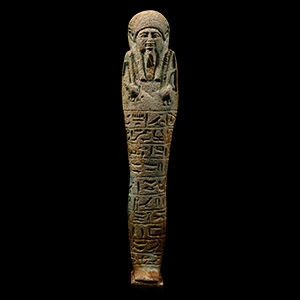
Egyptian Blue Glazed Hieroglyphic Shabti for Ta-Amun
Saite Period, 26th Dynasty, 664-525 B.C. or laterEstimate: £1,200 - 1,700 (+bp*)
Opening Bid: £600
Slender columnar shabti featuring a dorsal pillar, with ten rows of hieroglyphic text on the lower body beginning with the dedication 'The illuminated one, the Osiris priest Ta-Amun born of Ta-seh-nebty' ( sḥḏ wsỉr ḥm nṯr TꜢ-I͗mn ms (n) TꜢ-sḥ-nbty); the features of the small face are finely modelled, including a long, plaited false beard and a heavy lappet wig; the arms are crossed, with hands holding a pick and a hoe, along with a cord for a seed bag. 137 grams, 17.8 cm
Acquired on the German art market, 1989-1995. with The Museum Gallery, 19 Bury Place, London, WC1, UK, 1998-2003. Property of a London based academic, 2003-present. This lot is accompanied by an illustrated lot declaration signed by the Head of the Antiquities Department, Dr Raffaele D'Amato. -
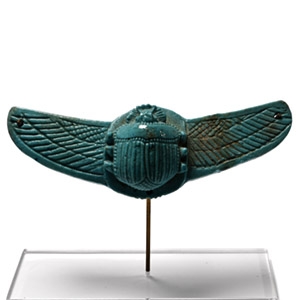
Egyptian Blue Faience Scarab
Late Period, 7th-6th century B.C.Sold for (Inc. bp): £4,550
Comprising a crescentic plaque with central scarab modelled in the half-round, and lateral wings with hatched texturing; scarab with ribbing and other detailing; pierced in four places for attachment; accompanied by a custom-made stand. 22.3 grams, 10 cm wide (44 grams total, 10 cm wide including stand)
Acquired in the 1950-1990s. Mr C., Geneva, Switzerland. Private collection, Europe. This lot has been checked against the Interpol Database of stolen works of art and is accompanied by a search certificate number no.12592-232170. This lot has been cleared against the Art Loss Register database, and is accompanied by an illustrated lot declaration signed by the Head of the Antiquities Department, Dr Raffaele D'Amato.
Winged scarabs were thought to ensure the rebirth and regeneration of the deceased, making them popular funerary amulets. This is a particularly fine example of a rarer one-piece amulet, as they are usually made from three separate elements. -
.jpg)
Egyptian Steatite Harpocrates Statuette
Late Period, 664-332 B.C.Estimate: £1,500 - 2,000 (+bp*)
Opening Bid: £750
Carved in the round, the nude standing figure of the god sporting a solar disc and uraeus headdress, wearing a sidelock, and holding a lotus flower, accompanied by an integral dorsal pillar and base; one arm missing. 15.26 grams, 78 mm
Ex Thomas collection, UK, 1980s-1990s. This lot has been cleared against the Art Loss Register database, and is accompanied by an illustrated lot declaration signed by the Head of the Antiquities Department, Dr Raffaele D'Amato.
Harpocrates is the Greek rendering of the Egyptian Hor-pa-khered, which translates as ‘Horus the Child’. This designation refers to Horus as the divine infant of Isis and Osiris. His nudity represents youth and purity. The sun disc and lotus flower symbolises divine rebirth and solar renewal. The sun disc connects him to Ra and the daily cycle of rebirth, while the lotus—opening with the sunrise—emphasises creation and emergence from chaos. Together, these elements express triumph over death and the promise of eternal life.
