
Loading, please wait...
LOT 0491
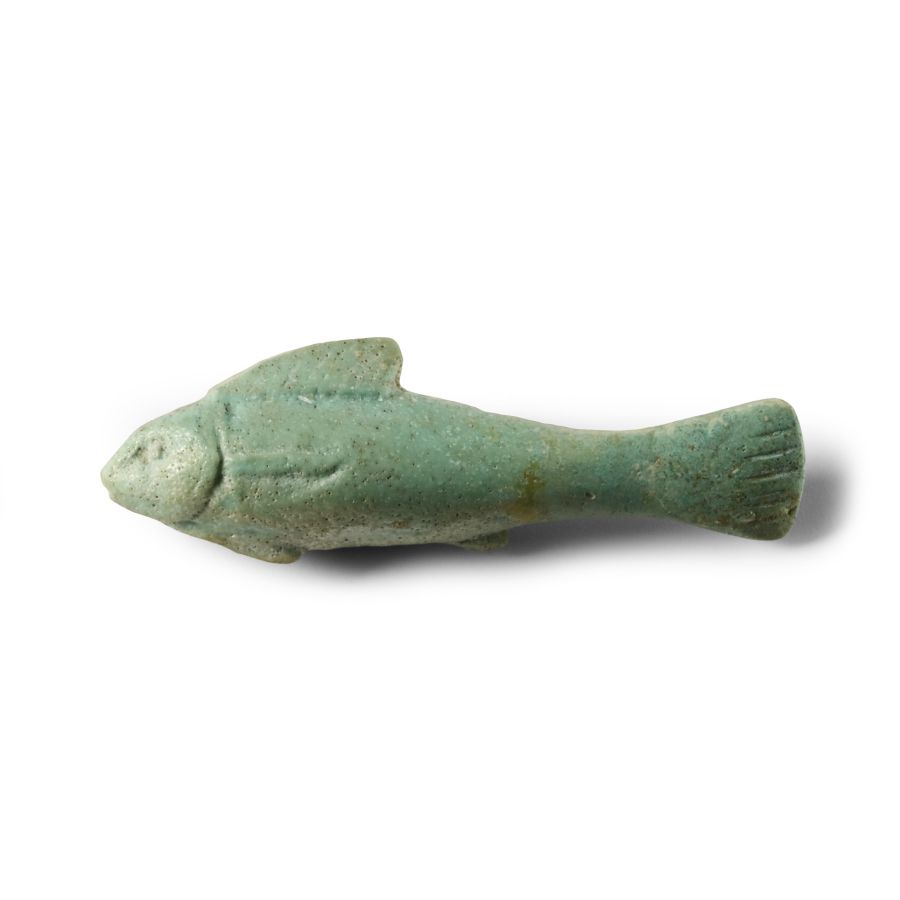
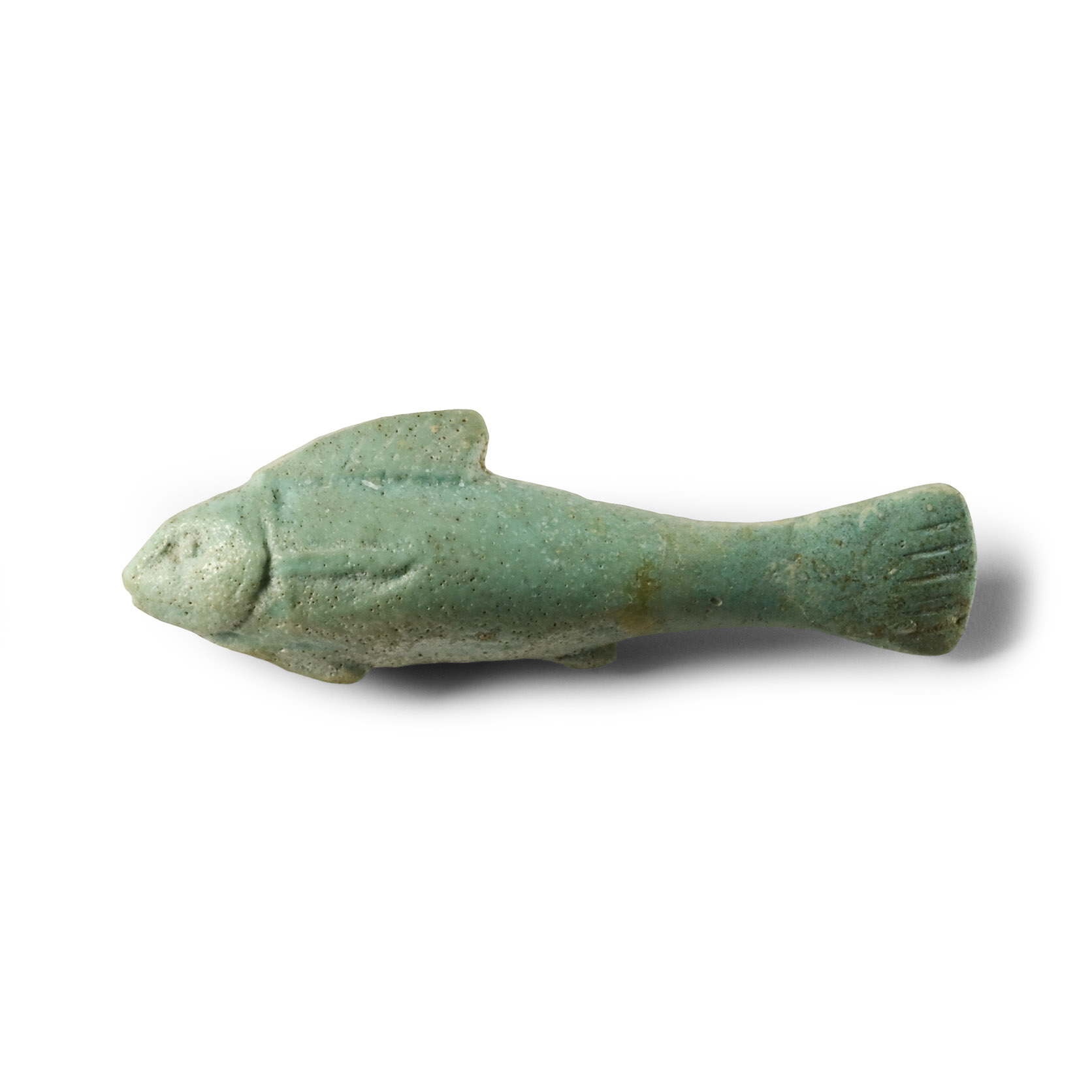
Egyptian Faience Fish Amulet
LATE PERIOD, 664-332 B.C.
1 3/4 in. (3.20 grams, 43 mm).
Tilapia fish modelled in the round; tail restored. [No Reserve]
ProvenanceFrom the collection of Doctor Girard, a collector for over 60 years.
with Hotel des Ventes de Clermont-Ferrand, 22 May 2017.
Property of a French collector.
Cf. Andrews, C., Amulets of Ancient Egypt, London, 1994, pl.93(c).
FootnotesThis amulet represents a ‘Tilapia nilotica’ or ‘bolti’, a prevalent fish species found in the Nile. Not only was it esteemed for its delicious taste, but it was also revered as a symbol of rebirth and resurrection due to its unique ability to carry its eggs in its mouth, suggesting self-creation.
CONDITIONTimeLine Auctions follows a vetting process to ensure the authenticity and legality of all items, reinforcing our commitment to integrity and responsible trading. Each antiquity, antique, and coin lot undergoes thorough examination by a vetting committee of at least ten external specialists, professional trade association members, scientists, and archaeologists: Our Vetting Process
AUCTIONS:
TimeLine is a leading auction house specialising in antiquities, ancient art, collectables, natural history, coins, medals, and books. Our auctions offer museums, collectors, historians, and enthusiasts the opportunity to acquire unique and historically significant pieces.
-
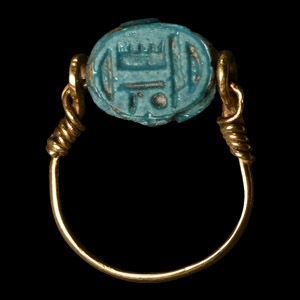
Egyptian Bright Blue Faience Scarab in Gold Ring
Late Period, 664-332 B.C. and laterSold for (Inc. bp): £494
Scarab with detailed carapace and legs, impressed hieroglyphs to the underside; set in a 19th century gold ring. 2.44 grams, 23.63 mm overall, 17.57 x 16.48 mm internal diameter (approximate size British M, USA 6, Europe 12.46, Japan 12)
From an early 20th century collection. -
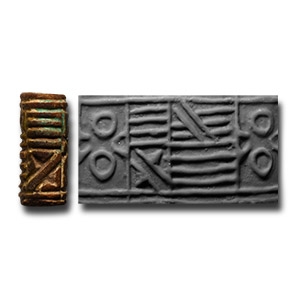
Egyptian Faience Cylinder Seal with Geometric Decoration
Late Period, 664-332 B.C.Sold for (Inc. bp): £234
With horizontal ribbing and reserved geometric design; old stock label '8752'. 5.78 grams, 31 mm
Private collection, Oxford, UK. Acquired from Helios Gallery, December 2009. Private collection, London, UK, -
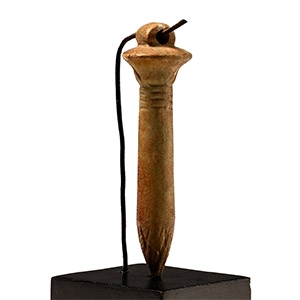
Egyptian Faience Papyrus Sceptre Pendant
Late Period, 664-332 B.C.Sold for (Inc. bp): £117
Amulet in the form of a wadj papyrus sceptre with suspension loop; with light encrustations; supplied with a wooden display stand. 7.15 grams, 64 mm (34.4 grams total, 94 mm including stand)
Ex Foxwell collection. Acquired from a London gallery. Ex Mr A.S. collection, 1990s. Property of a Bristol, UK, gentleman.
The papyrus column or wadj amulet is typically made out of turquoise feldspar or faience, as is prescribed in the Book of the Dead. The word wadj, meaning “green”, evokes concepts of well-being and vitality. Papyrus amulets were often placed around the neck of the deceased to ensure eternal youth in the afterlife. They were particularly popular during the Late Period (664-332 B.C.).
