
Loading, please wait...
LOT 0481
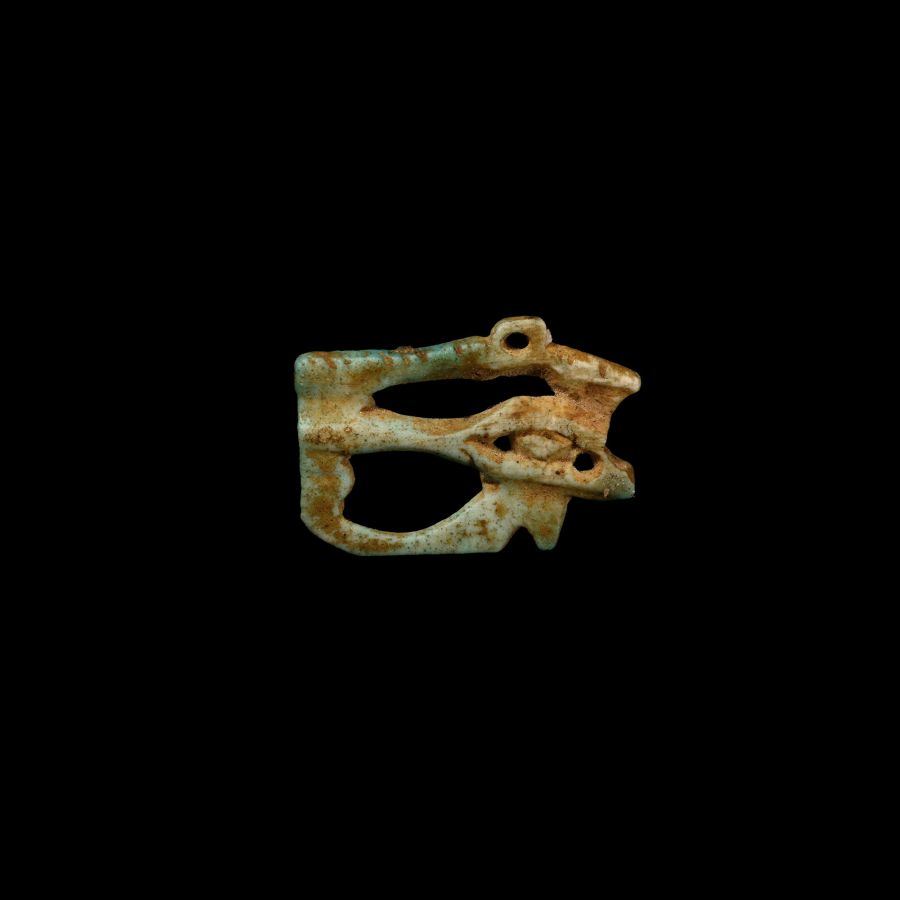
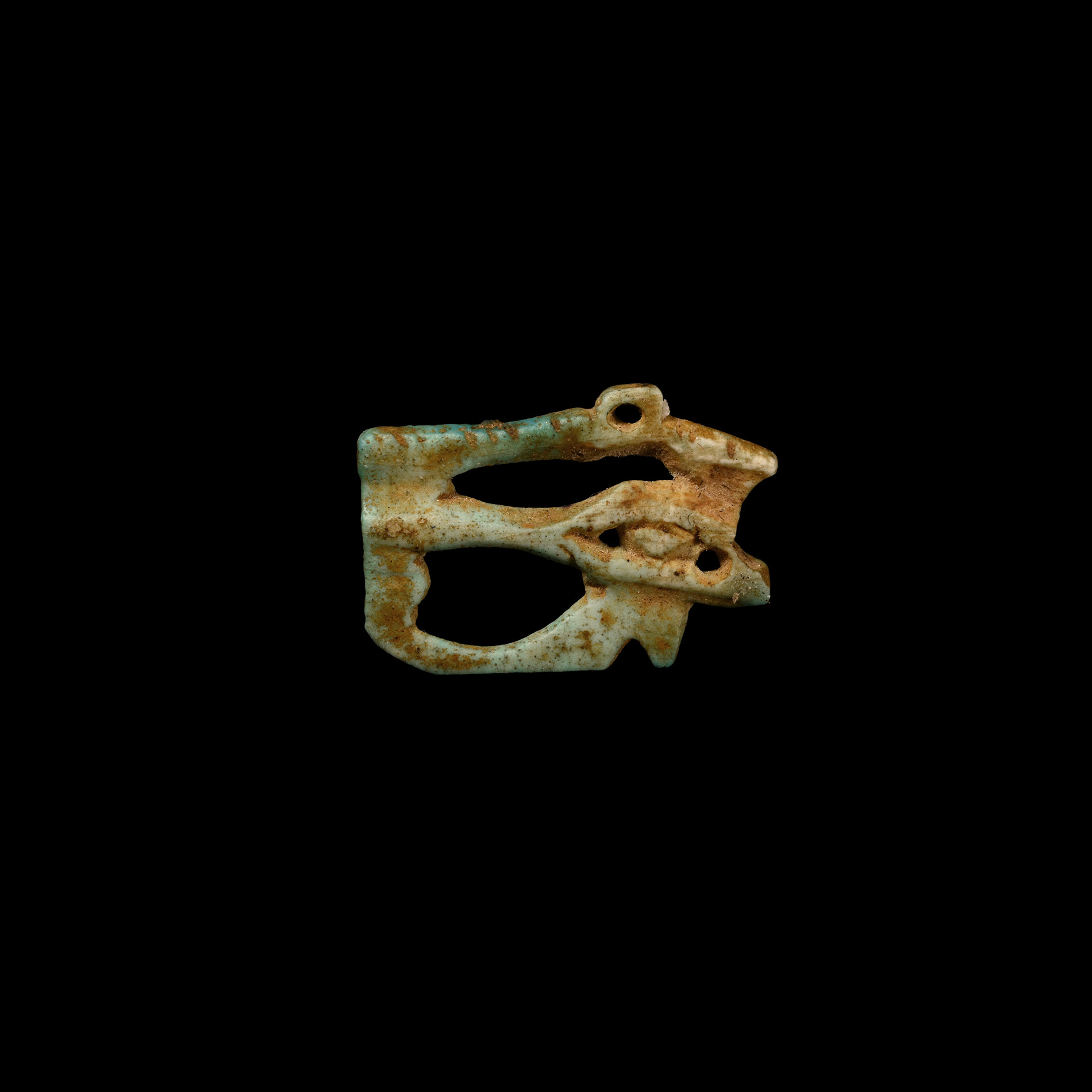
Egyptian Faience Eye of Horus
LATE NEW KINGDOM, CIRCA 1300-1075 B.C.
3/4 in. (0.78 grams, 21 mm).
Openwork wedjat eye pendant with suspension loop above and slender frame.
ProvenanceAcquired 1970s onwards.
Private collection of Michael O'Hara, Cambridgeshire, UK.
Cf. Andrews, C., Amulets of Ancient Egypt, London, 1994, pl.46 (j).
CONDITIONTimeLine Auctions follows a vetting process to ensure the authenticity and legality of all items, reinforcing our commitment to integrity and responsible trading. Each antiquity, antique, and coin lot undergoes thorough examination by a vetting committee of at least ten external specialists, professional trade association members, scientists, and archaeologists: Our Vetting Process
AUCTIONS:
TimeLine is a leading auction house specialising in antiquities, ancient art, collectables, natural history, coins, medals, and books. Our auctions offer museums, collectors, historians, and enthusiasts the opportunity to acquire unique and historically significant pieces.
-
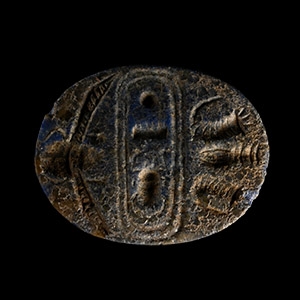
Egypto-Phoenician Lapis Lazuli Scarab with Cartouche for Thutmose III
Late 1st millennium B.C.Estimate: £3,000 - 4,000 (‡+bp*)
Opening Bid: £1,500
With carapace detailing to obverse, plaque with intaglio cartouche for the throne name of Thutmose III, winged scarab and fronds flanking. 7.4 grams, 25 mm
Private collection of Mr S.A., Switzerland, 1990s, thence by descent. This lot has been checked against the Interpol Database of stolen works of art and is accompanied by search certificate no.12127-211877. -
.jpg)
Large Egyptian Bronze Body of Horus-Harpocrates
Ptolemaic Period, 332-30 B.C.Sold for (Inc. bp): £520
An acephalic seated nude statuette of Horus-Harpocrates, legs held together and arms by his side, semi-naturalistic anatomical detailing; cleaned. 1.67 kg total, 22 cm high (26 cm high including stand)
Collection of Brugsch Pasha (1842-1930). with Hotel Drouot, Paris, 30 September 1997, no.643. Ex property of Mr Naudy. Property of a French collector.
Horus, son of Isis and Osiris, was considered a solar deity who overcame darkness and defeated the chaotic forces of his evil uncle, the god Seth. Egyptian pharaohs considered themselves to be reincarnations of Horus. In his youthful form, Horus the child embodies the new sun and all associated benefits. In Graeco-Roman Egypt he became Harpocrates, son of Serapis and Isis, the deity-symbol of rebirth and fertility, perhaps the most popular deity to be represented in Ptolemaic and Roman Egypt. -
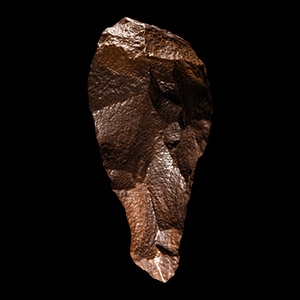
Egyptian Classic Teardrop-Shaped Knapped Handaxe
Palaeolithic Period, circa 200,000 B.C.Sold for (Inc. bp): £98
Lozenge-section knapped piriform handaxe; inked inscription 'NILE' to verso. 225 grams, 12.6 cm
From a very old collection based on the cabinet patination. From a collection acquired on the UK art market from various auction houses and collections mostly before 2000. From an important Cambridgeshire estate; thence by descent.
