
Loading, please wait...
LOT 0006
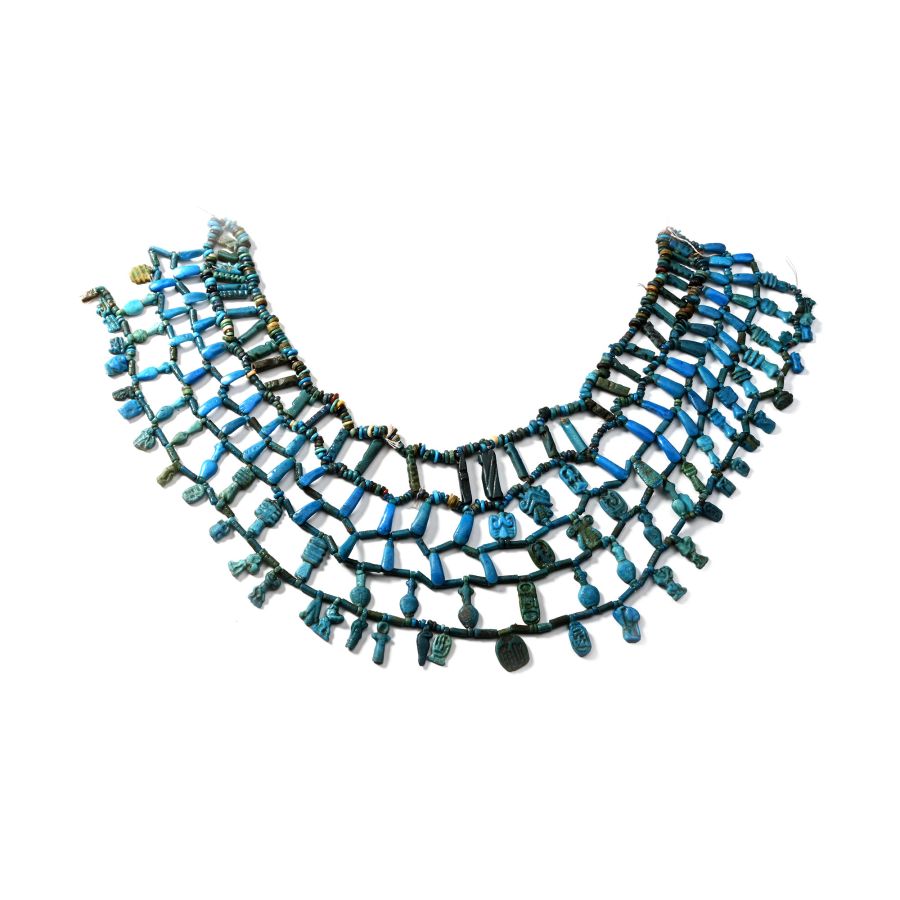
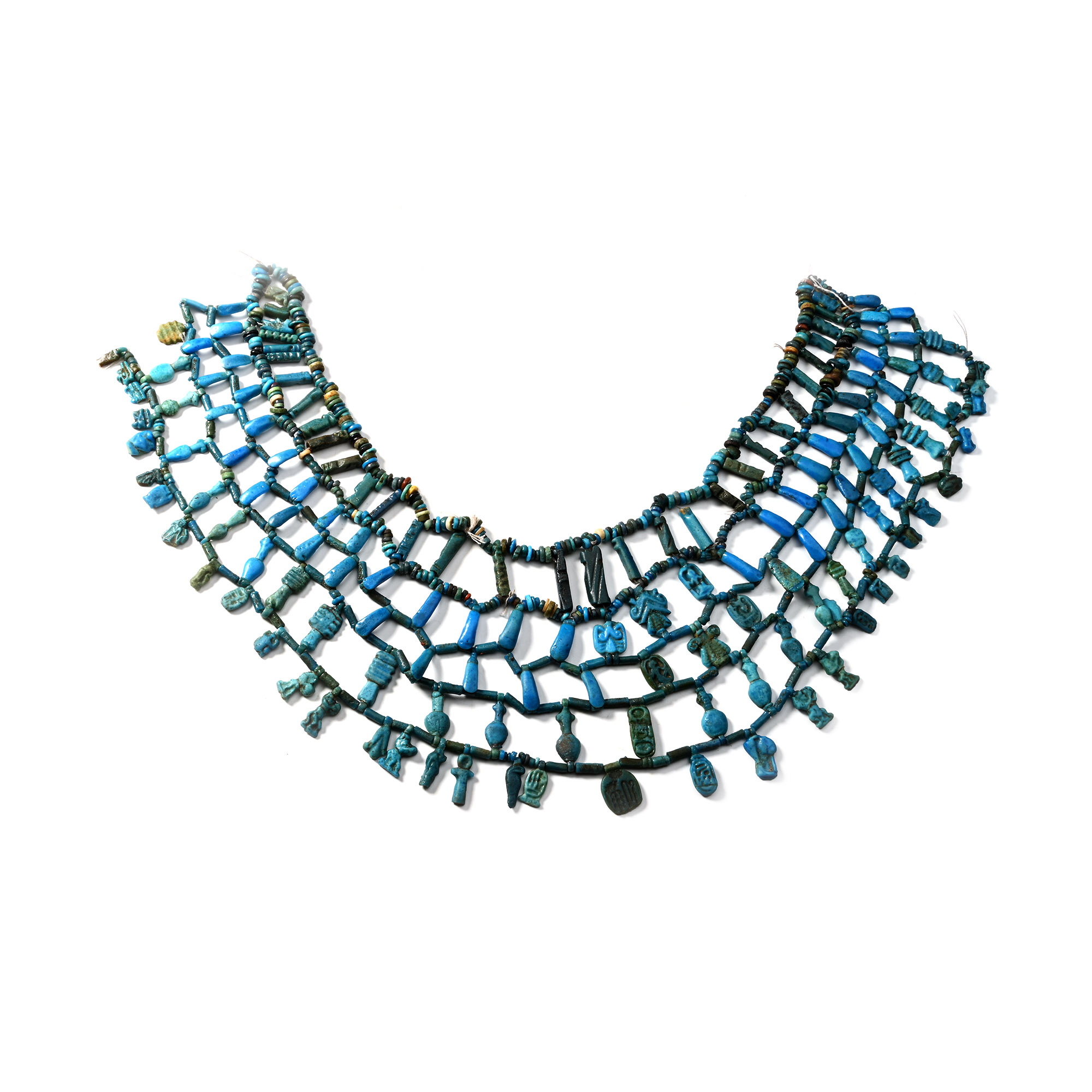
Egyptian Faience Broad Collar Amulet Necklace
LATE PERIOD, 664-332 B.C.
12 3/4 in. (53 grams total, 32.5 cm wide).
A restrung group of annular and figural beads forming a collar of five descending tiers including djed pillar, atef crown, cartouche and other types.
ProvenanceProperty of a North London, UK, gallery.
This lot has been checked against the Interpol Database of stolen works of art and is accompanied by search certificate number no.12935-246384.
Cf. faience necklaces and pendants of similar typology in Boyce, A., ‘Chapter II, Collar and necklace designs at Amarna: a preliminary study of fayence pendants’ in Kemp, B.J. (ed), Amarna Reports 6, pp.336-371, figs.11, for similar pendants.
FootnotesSeveral faience collars found in the tomb of Tutankhamun use amuletic forms, the hes-vase, nefer-sign, and cartouche pendants as part of primarily plant-form collars. Depictions of collars on the sarcophagi and gold mask from the tomb of Tuiya and Yuia also show nefer-signs and palmettes used alongside the more common plant designs.
CONDITIONTimeLine Auctions follows a vetting process to ensure the authenticity and legality of all items, reinforcing our commitment to integrity and responsible trading. Each antiquity, antique, and coin lot undergoes thorough examination by a vetting committee of at least ten external specialists, professional trade association members, scientists, and archaeologists: Our Vetting Process
AUCTIONS:
TimeLine is a leading auction house specialising in antiquities, ancient art, collectables, natural history, coins, medals, and books. Our auctions offer museums, collectors, historians, and enthusiasts the opportunity to acquire unique and historically significant pieces.
LOT 0006
Egyptian Faience Broad Collar Amulet Necklace
Estimate £2,500 - 3,500€2,900 - 4,060 (for guidance only)$3,380 - 4,730 (for guidance only)
-
Egyptian Faience Bead Necklace
Late-Ptolemaic Period, 664-30 B.C.Sold for (Inc. bp): £46
Composed of vibrant blue tubular and annular beads, restrung. 8.9 grams, 96 cm
Ex Norri collection, Milton Keynes, UK, 1980s-1990s. -
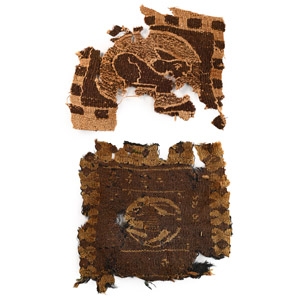
Egyptian Coptic Textile Fragment Group
Circa 5th-6th century A.D.Sold for (Inc. bp): £130
Comprising two large tablia in linen and wool, with one showing an image of a hare and the other one a lion; borders with geometric decorations. 36 grams total including package, 11.2-12.2 cm
Acquired 1970s-1996. Property of a North American collector. London collection, 2016.
The theme of rabbits or hares, in association with other characters and animals of the Dionysian thiasos (here a lion), in a hunting setting, has notable parallels. Such representations are linked to narratives of the Dionysian cycle. -
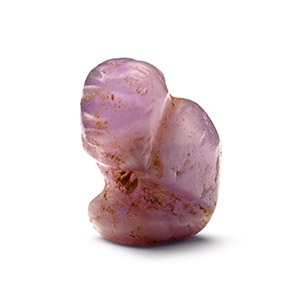
Egyptian Amethyst Ba-Bird Amulet
Late Period, 664-332 B.C.Sold for (Inc. bp): £124
Crouched figure of a human-headed Ba-bird on a rectangular base, carved in the round. 0.62 grams, 9.8 mm
with Archaeologia, Switzerland, before 1983. Ex private North American collection. London private collection, 2016.
