
Loading, please wait...
LOT 0031
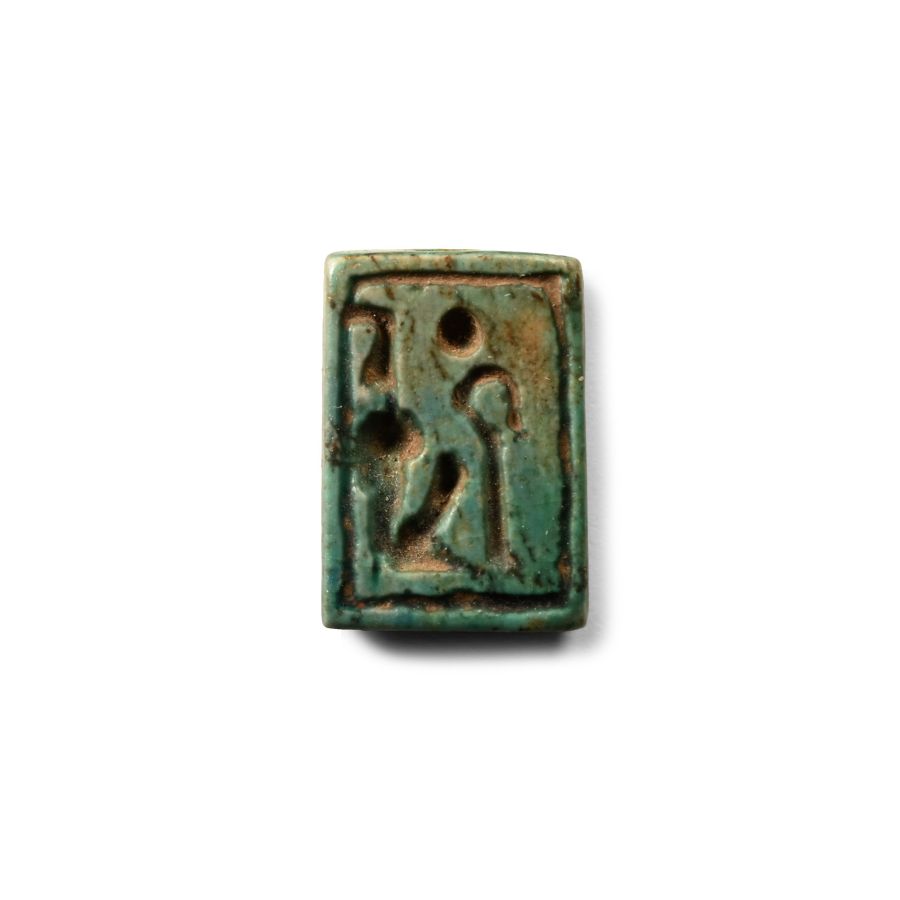
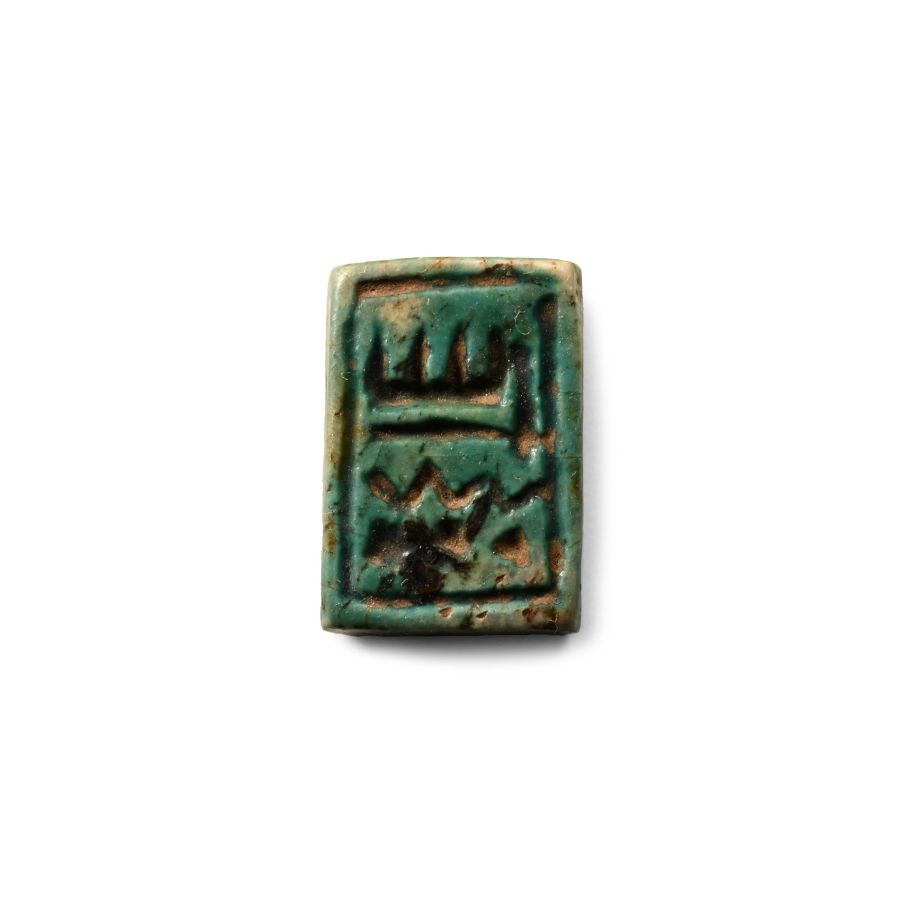
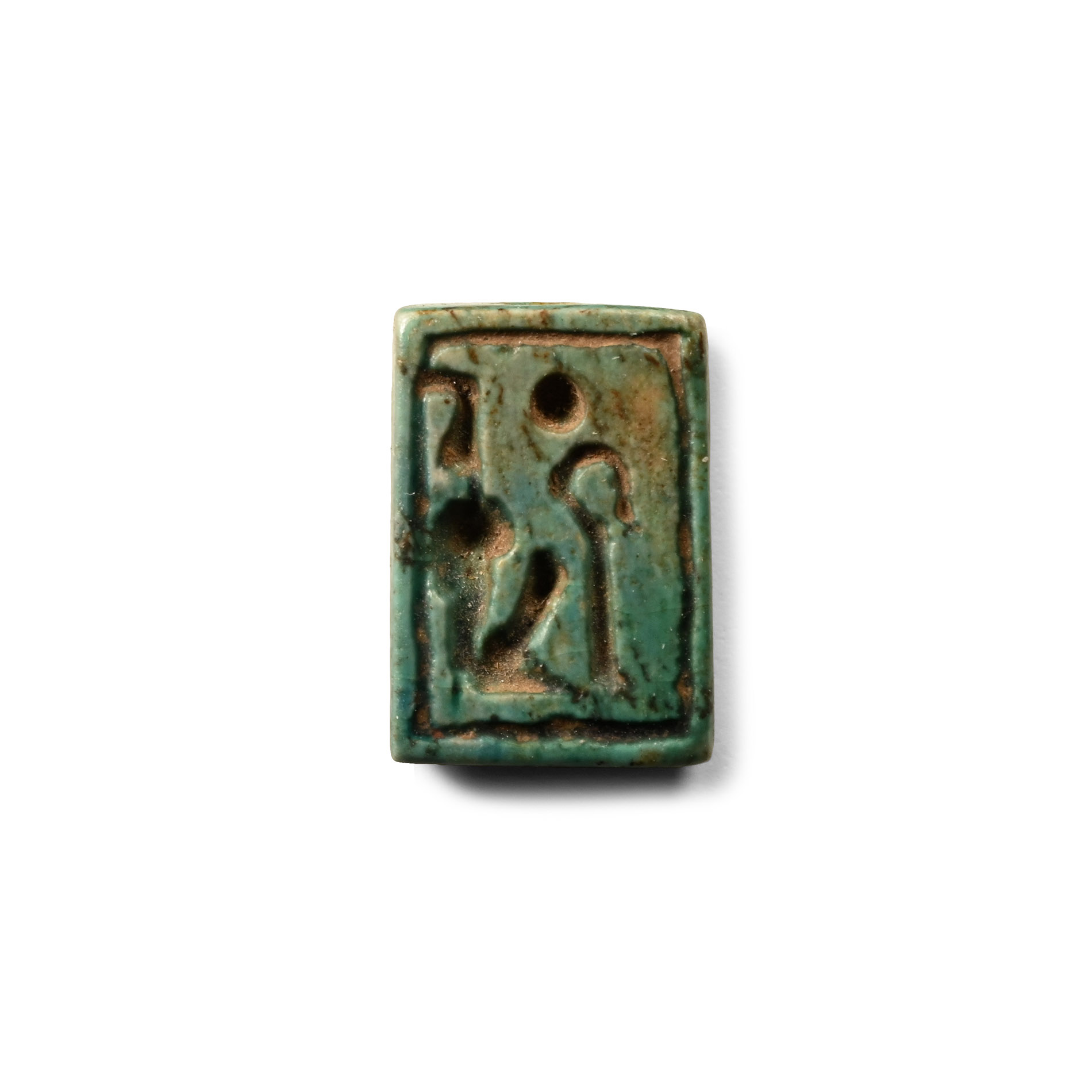
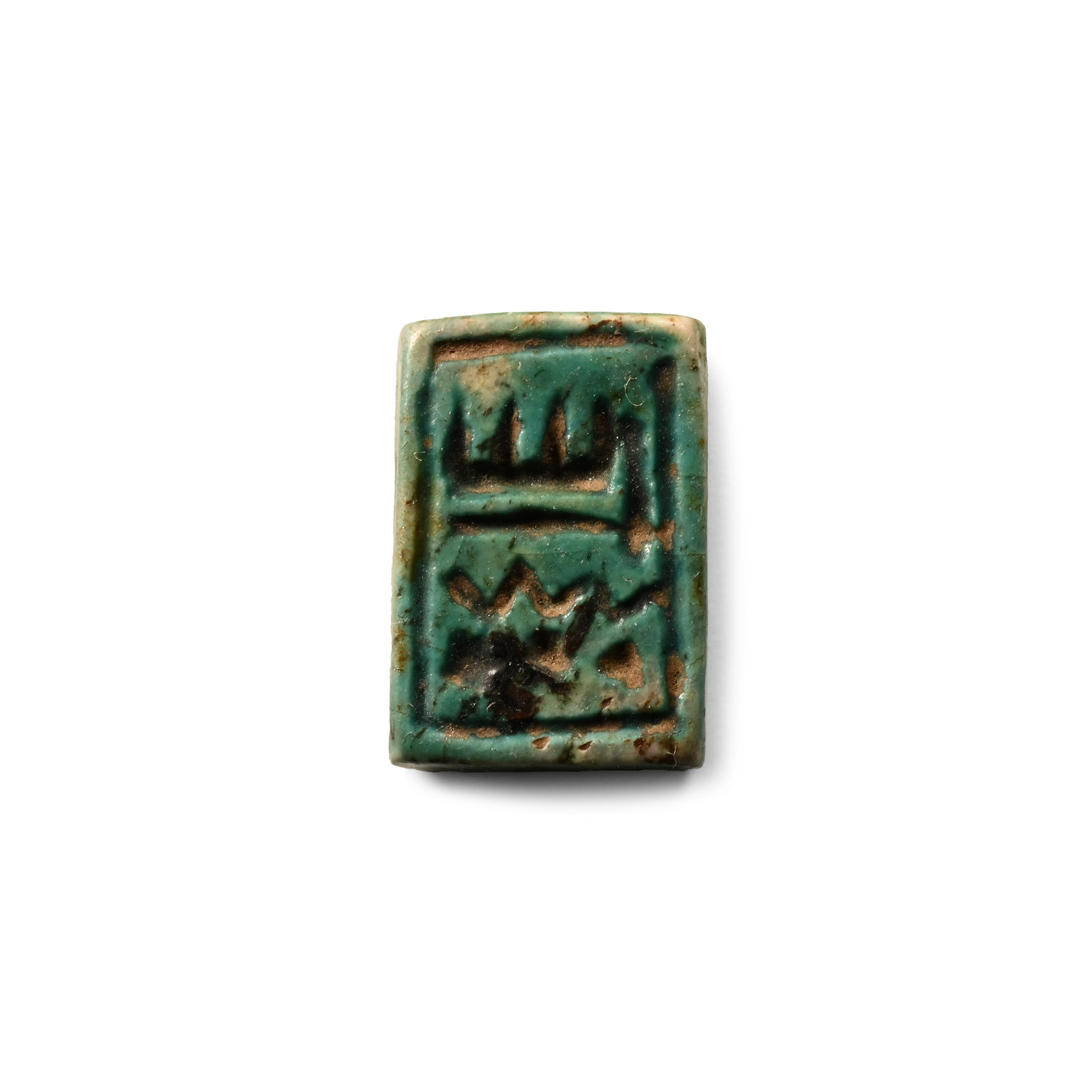
Egyptian Faience Block Bead of Ramesses IV
NEW KINGDOM, 20TH DYNASTY, 1166-1160 B.C.
1/2 in. (1.45 grams, 14 mm).
Rectangular block with hieroglyphs on both faces; one side gives the throne name of Ramesses IV (Heka-Maat-Re), the other side gives the name of the god Amun-Re. [No Reserve]
ProvenanceEx Emile Bouillon Bey, c. 1880.
From the Gaston Maspero Archaeological Fund.
with Hotel des Ventes du Perigord, Bergerac, 24 June 2007.
Property of a French collector.
Cf. Petrie, W.M.F., Scarabs and Cylinders with Names, London, 1917, pl. XLV, no.6, for a scarab with the throne name, nos. 12-13, for similar Ramesside block bead types.
CONDITIONTimeLine Auctions follows a vetting process to ensure the authenticity and legality of all items, reinforcing our commitment to integrity and responsible trading. Each antiquity, antique, and coin lot undergoes thorough examination by a vetting committee of at least ten external specialists, professional trade association members, scientists, and archaeologists: Our Vetting Process
AUCTIONS:
TimeLine is a leading auction house specialising in antiquities, ancient art, collectables, natural history, coins, medals, and books. Our auctions offer museums, collectors, historians, and enthusiasts the opportunity to acquire unique and historically significant pieces.
-
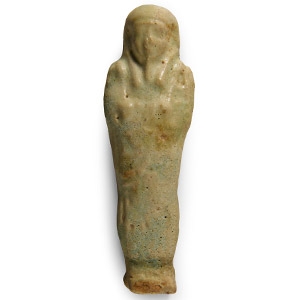
Egyptian Blue Glazed Faience Shabti
Late Period, 664-332 B.C.Sold for (Inc. bp): £111
With dorsal pillar, hands folded across the chest holding a pick and hoe, with a front panel of faintly impressed hieroglyphic text. 72 grams, 10.7 cm
Ex M.S. Ciappara collection, Norfolk, UK, 1939-1950.
Shabti figures were created to carry out heavy manual tasks on behalf of a person in the afterlife. They were often depicted with tools in their hands, such as baskets, mattocks, and hoes. Over time, the number of shabtis in a standard elite burial increased, from one in the Eighteenth Dynasty to several in the Nineteenth Dynasty, to one for every day of the year by the Third Intermediate Period. The number of shabtis remained in the hundreds during the Late Period. -
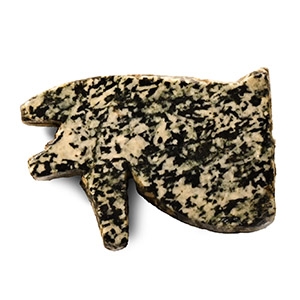
Egyptian Diorite Wedjat Eye Amulet
Late Period, 664-332 B.C.Sold for (Inc. bp): £72
With transverse piercing for suspension. 7.55 grams, 30 mm
From the old Belfort collection, expert Jean Roudillon. Ex Hotel des Ventes de Belfort. Property of a French collector.
The wedjat-eye amulet represents the healed eye of the god Horus, featuring both human and falcon elements. The name wedjat in ancient Egyptian means ‘the one that is sound.’ According to Egyptian mythology, Horus' eye was wounded or taken by the god Seth and restored by Thoth. The wedjat-eye amulet was thought to protect its wearer and bestow the power of recovery and regeneration onto them. As such, it was used by both the living and the dead. -
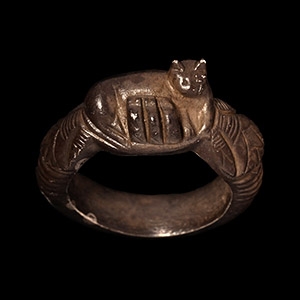
Romano-Egyptian Silver Ring with Bastet and Kittens
Roman Period, 30 B.C.-323 AD.Sold for (Inc. bp): £1,235
D-section hoop with lotus flowers on the shoulders, bezel formed as a reclining cat and three kittens. 15.21 grams, 28.80 mm overall, 17.01 mm internal diameter (approximate size British N, USA 6 1/2, Europe 13.72, Japan 13)
Ex London, UK collection, 1990s.
The cat was sacred to Bastet, a protective mother goddess and the daughter of the sun god Re. When shown with kittens, as here, Bastet's maternal role as a fierce protector of offspring is emphasised.
