
Loading, please wait...
LOT 0032
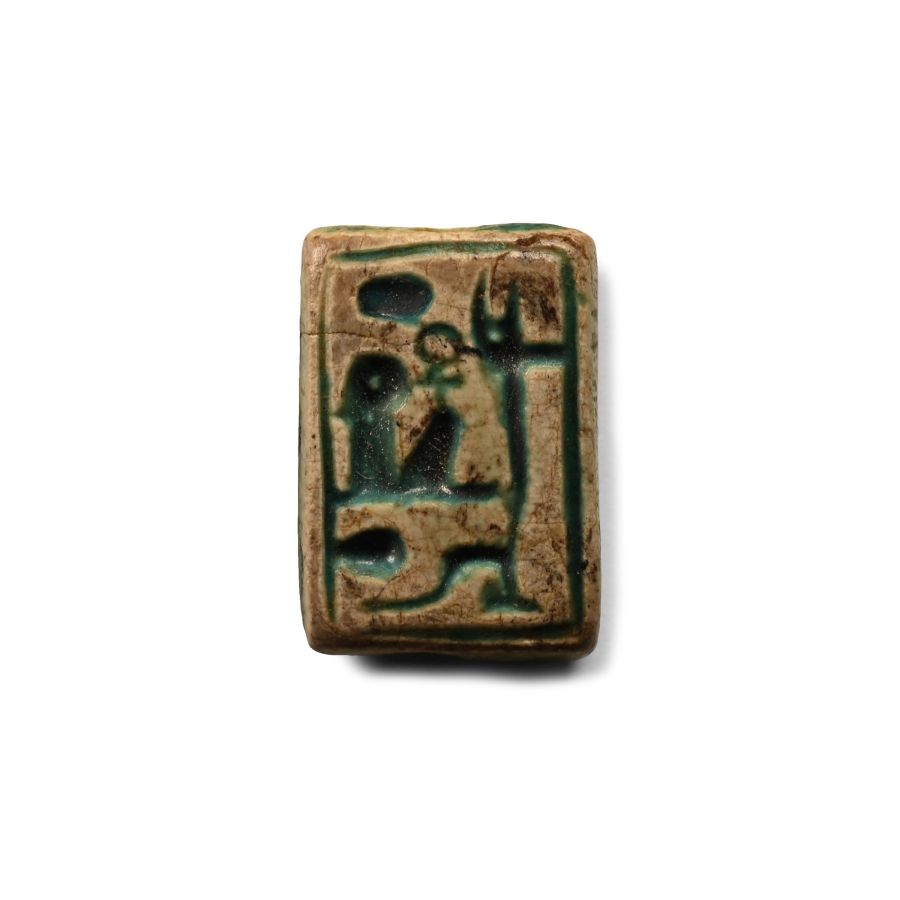
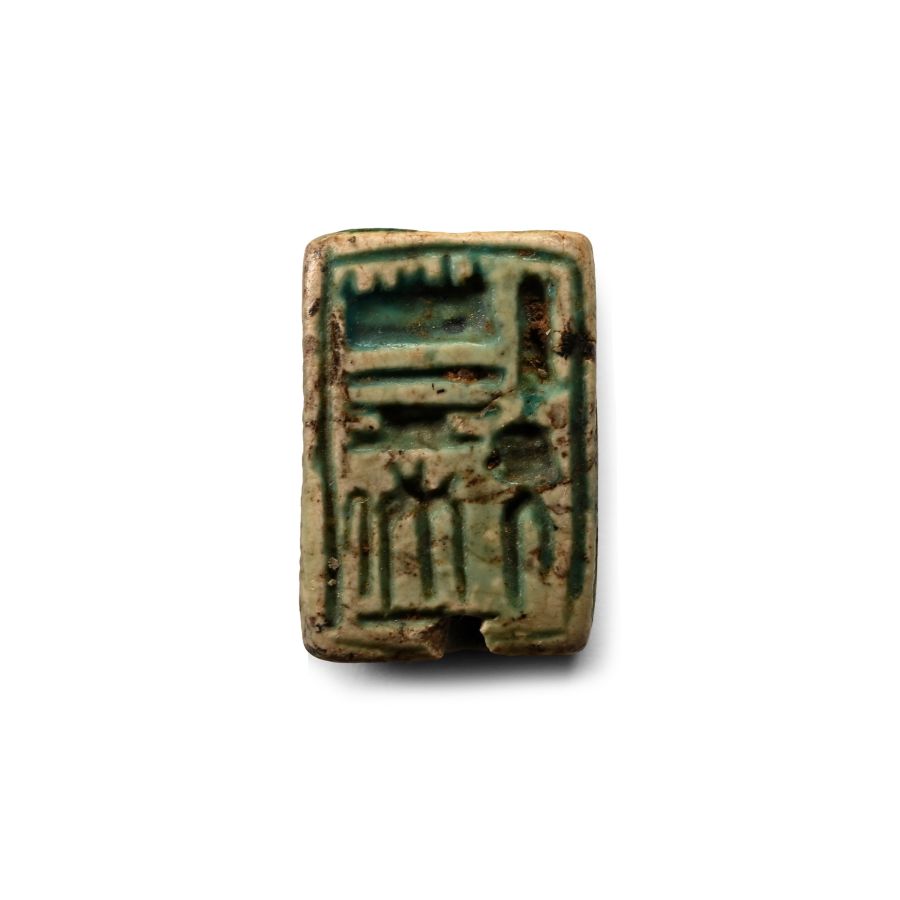
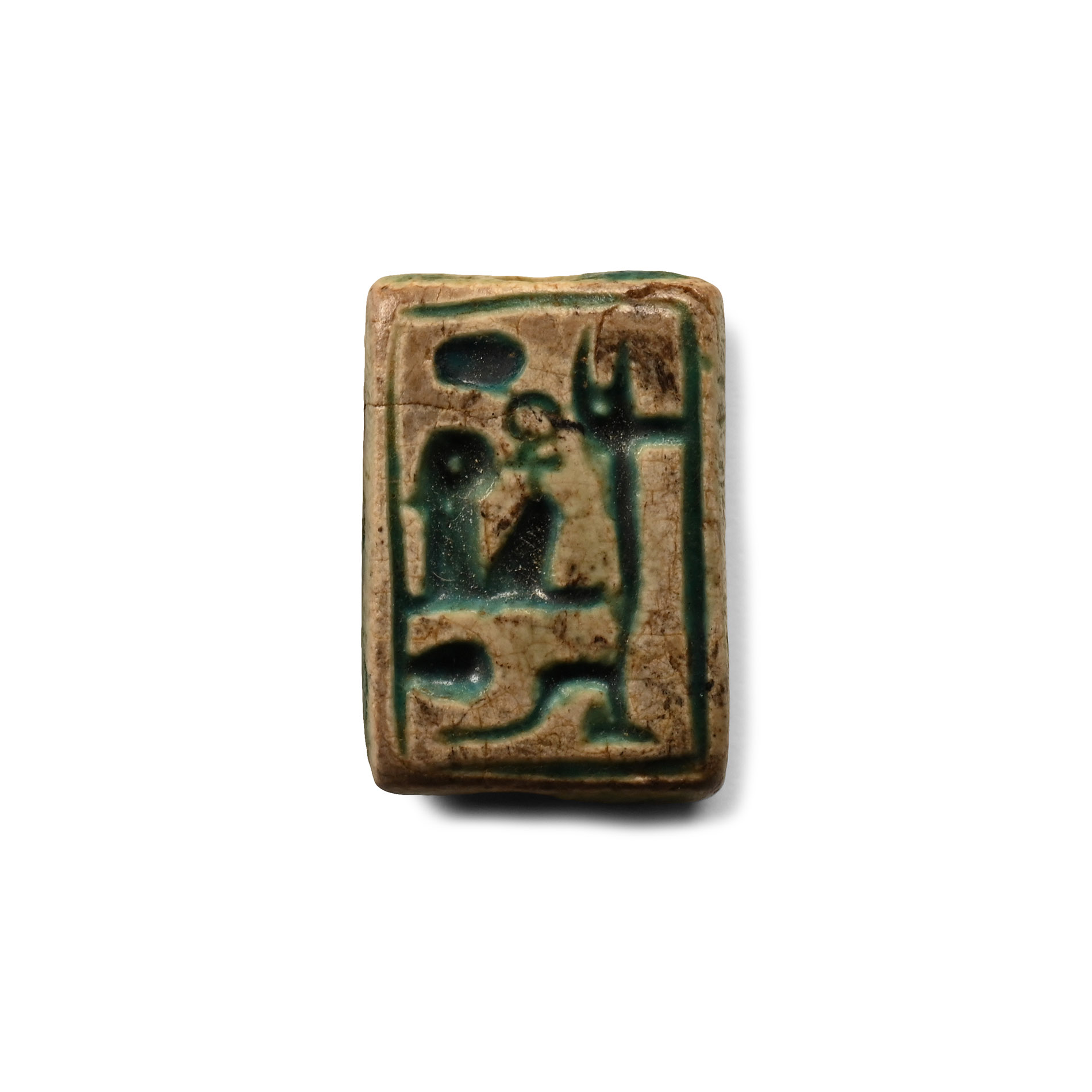
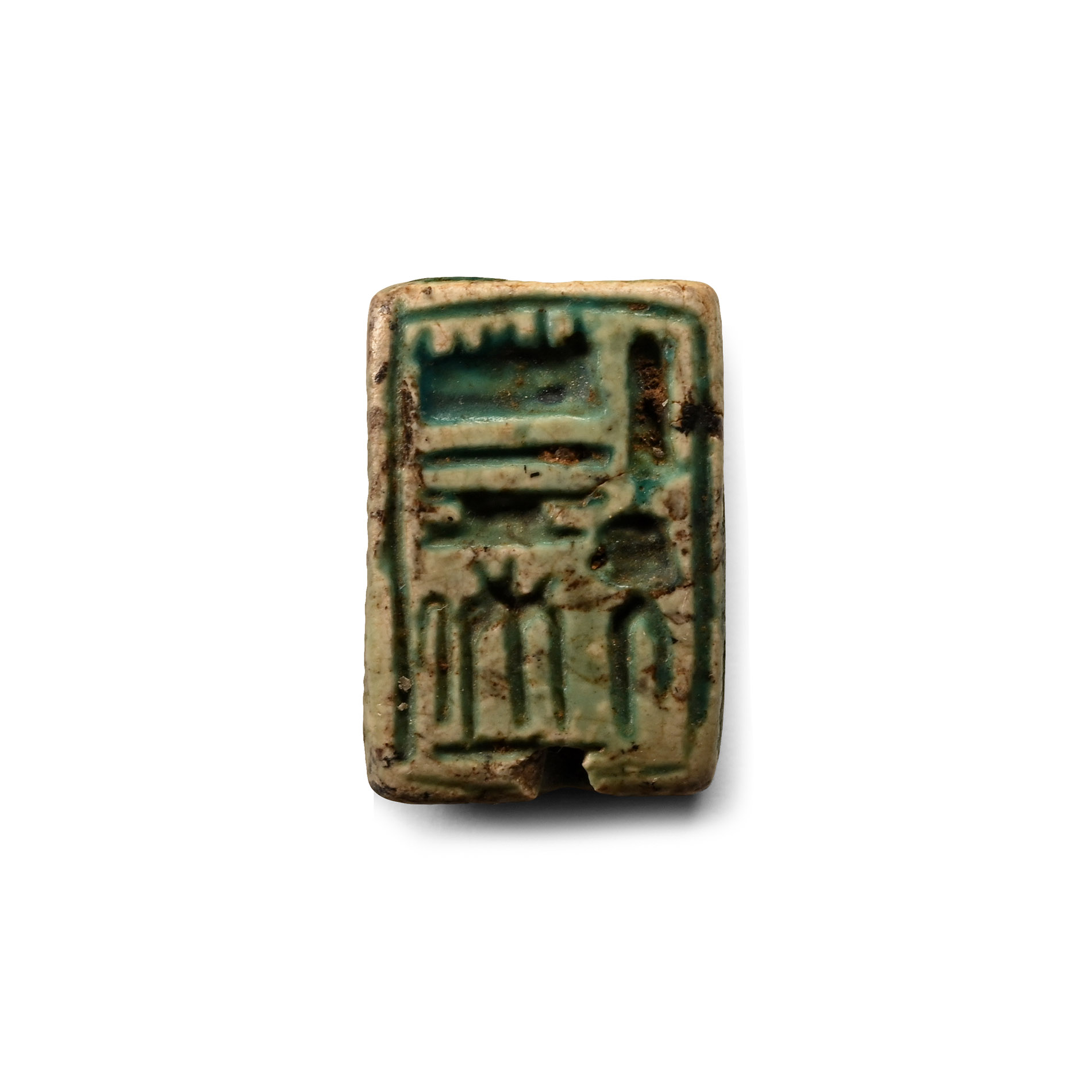
Egyptian Faience Block Bead for Ramesses II
NEW KINGDOM, 19TH DYNASTY, 1279-1213 B.C.
1/2 in. (1.18 grams, 14 mm).
Rectangular bead pierced for suspension, hieroglyphic text to both broad faces, one giving the throne name of Ramesses II, 'User-Maat-Re Setep-en-Re', the other, 'Ramesses, beloved of Amun'. [No Reserve]
ProvenanceEx Emile Bouillon Bey, c. 1880.
From the Gaston Maspero Archaeological Fund.
with Hotel des Ventes du Perigord, Bergerac, 24 June 2007.
Property of a French collector.
Cf. Petrie, W.M.F., Scarabs and Cylinders with Names, London, 1917, pl. XLII, no. 116, for another block bead design for Ramesses II.
CONDITIONTimeLine Auctions follows a vetting process to ensure the authenticity and legality of all items, reinforcing our commitment to integrity and responsible trading. Each antiquity, antique, and coin lot undergoes thorough examination by a vetting committee of at least ten external specialists, professional trade association members, scientists, and archaeologists: Our Vetting Process
AUCTIONS:
TimeLine is a leading auction house specialising in antiquities, ancient art, collectables, natural history, coins, medals, and books. Our auctions offer museums, collectors, historians, and enthusiasts the opportunity to acquire unique and historically significant pieces.
-
Large Egyptian Blue Glazed Hieroglyphic Shabti for a Sem Priest
Saite Period, 26th Dynasty, 664-525 B.C.Sold for (Inc. bp): £1,950
Pale blue composition with moulded detail to the wig, beard, tools and seed bag; nine horizontal bands of hieroglyphic text to the lower half of the body; dorsal pillar. 230 grams, 18.2 cm
Acquired on the German art market, 1989-1995. with The Museum Gallery, 19 Bury Place, London, WC1, UK, 1998-2003. Property of a London based academic, 2003-present. -
Egyptian Steatite Scarab for Thutmose III
New Kingdom or later, circa 1334-332 B.C.Estimate: £400 - 600 (+bp*)
Opening Bid: £175
Underside with cartouche of Pharaoh Thutmose III (Men-kheper-Re). 3.85 grams, 20 mm
Ex North London gentleman's collection, 1990s. Property of a Cambridgeshire, UK, gentleman.
The popularity of this great Egyptian pharaoh was such that his name appeared on scarabs during his reign and into the Late Period. -
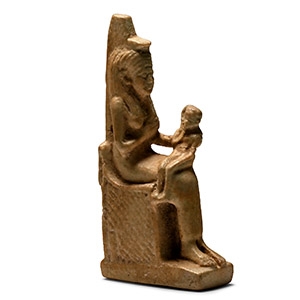
Large Egyptian Faience Amulet of Isis Nursing Baby Horus
Late Period, 664-332 B.C.Estimate: £1,000 - 1,400 (+bp*)
Opening Bid: £500
Amulet of Isis seated on an elaborate throne decorated with a crosshatch pattern, holding the infant Horus to her breast, supporting his head with her left hand; wearing a long close-fitting sheath dress and striated tripartite wig, surmounted by a crown in the form of her hieroglyphic name-sign, the "throne"; Horus wearing the sidelock of youth and holding his finger to his mouth; horizontal piercing just above the throne at the back for suspension. 20.16 grams, 65 mm
Ex Foxwell collection. Acquired from a London gallery. Ex Mr A.S. collection, 1990s.
In ancient Egyptian mythology, Isis was the sister-wife of Osiris and the mother of the sky god Horus. She is associated with aspects of fertility and motherhood and is often depicted in various artworks seated in a nursing pose with her son Horus on her lap.
