
Loading, please wait...
LOT 0028
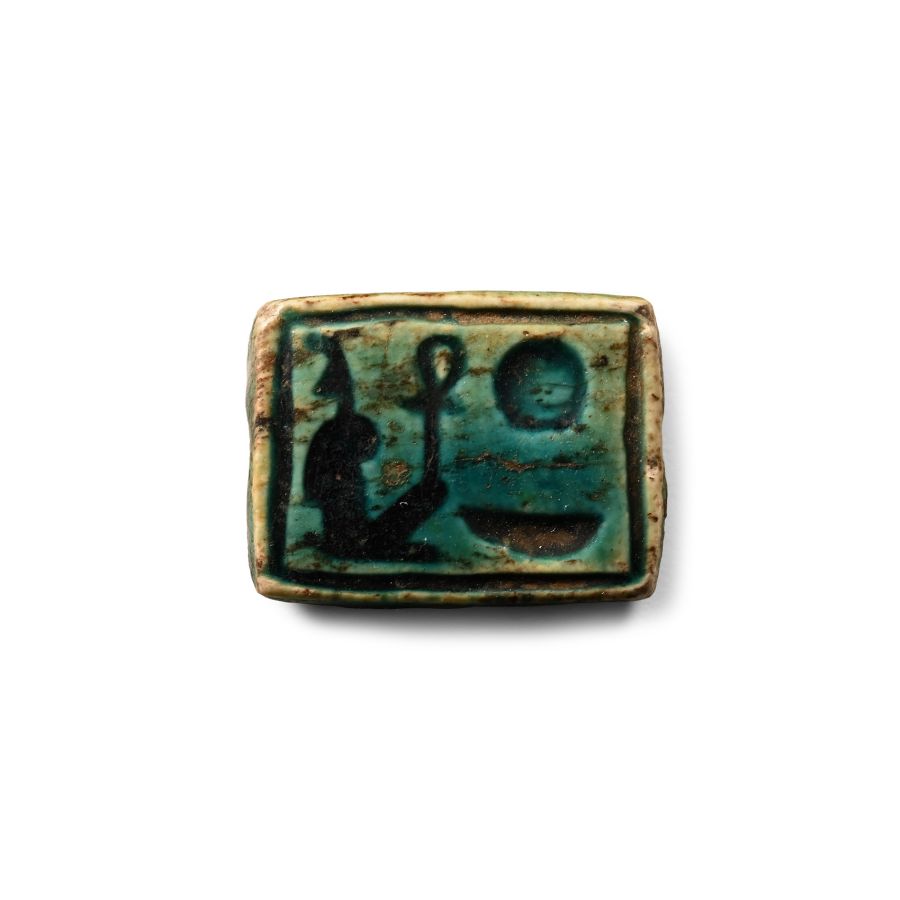
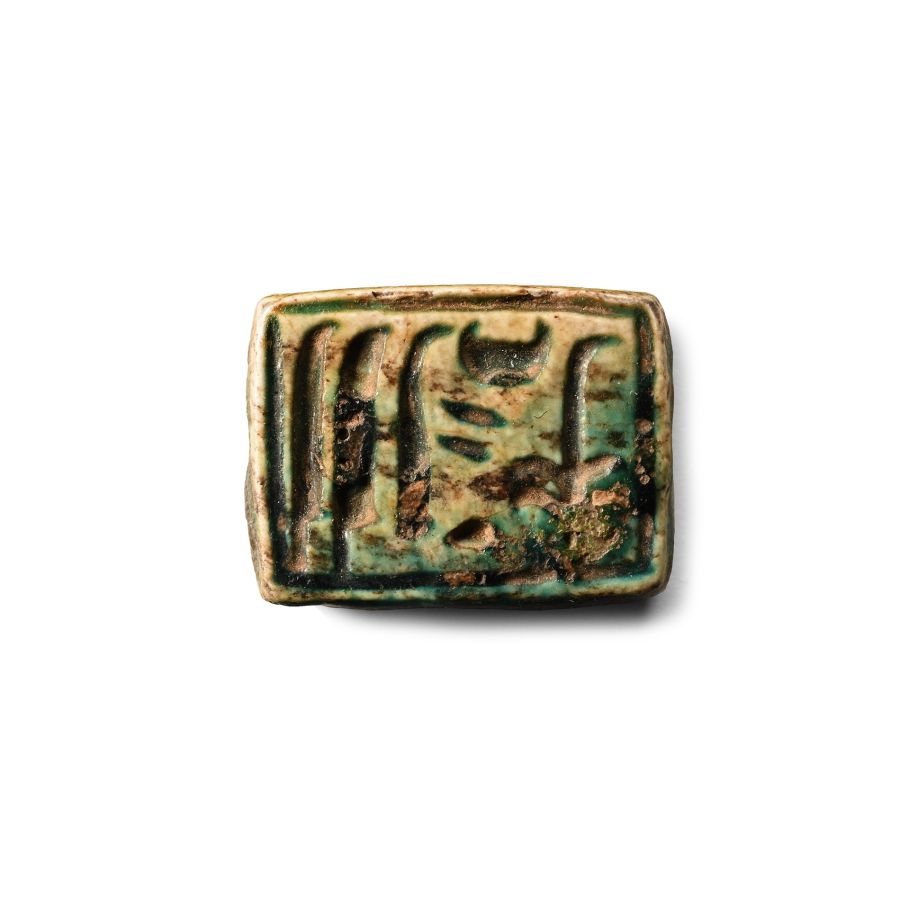
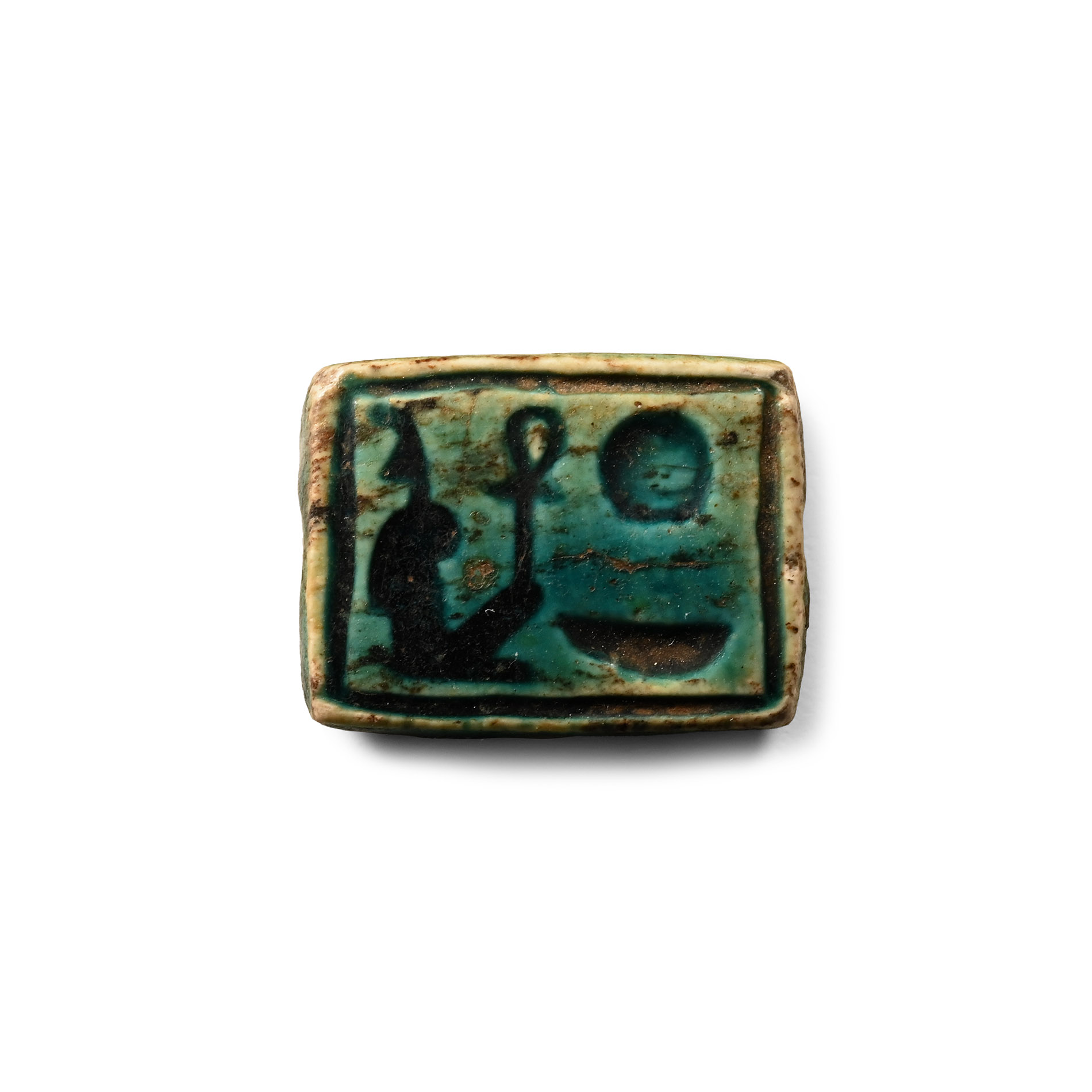
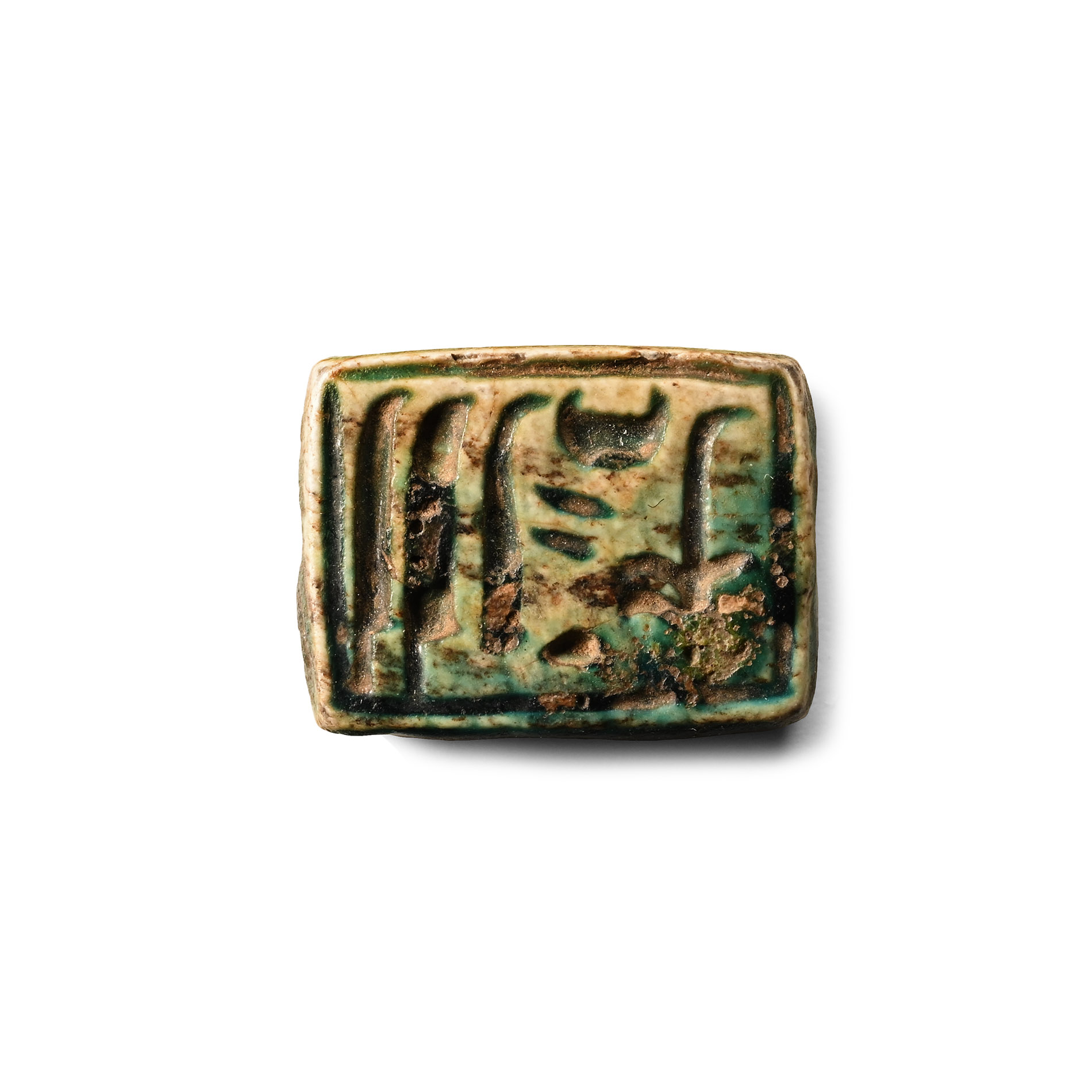
Egyptian Faience Block Bead for Amenhotep III and Queen Tiye
NEW KINGDOM, 18TH DYNASTY, CIRCA 1398-1338 B.C.
5/8 in. (1.84 grams, 16 mm).
Rectangular bifacial stamp with hieroglyphs writing the prenomen of Amenhotep III (Neb-Maat-Re) to obverse, and to reverse 'King's Wife Tiye'. [No Reserve]
ProvenanceEx Emile Bouillon Bey, c. 1880.
From the Gaston Maspero Archaeological Fund.
with Hotel des Ventes du Perigord, Bergerac, 24 June 2007.
Property of a French collector.
Cf. Petrie, W.M.F., Scarabs and Cylinders with Names, London, 1917, pl. XXXV, no. 154, for a variant of this design.
CONDITIONTimeLine Auctions follows a vetting process to ensure the authenticity and legality of all items, reinforcing our commitment to integrity and responsible trading. Each antiquity, antique, and coin lot undergoes thorough examination by a vetting committee of at least ten external specialists, professional trade association members, scientists, and archaeologists: Our Vetting Process
AUCTIONS:
TimeLine is a leading auction house specialising in antiquities, ancient art, collectables, natural history, coins, medals, and books. Our auctions offer museums, collectors, historians, and enthusiasts the opportunity to acquire unique and historically significant pieces.
LOT 0028
Egyptian Faience Block Bead for Amenhotep III and Queen Tiye
Sold for (Inc. bp): £520
-
Egyptian Alabaster Cosmetic Jar
Late Period, 664-332 B.C.Sold for (Inc. bp): £124
Carved cosmetics jar, tapering gradually towards the top, with two small lugs at the shoulders, a collared rim, and flattened base. 77 grams, 87 mm
Private collection, Zurich, acquired in 1975 when the owners lived in Cairo (1975-1980). with Bonhams London, Antiquities, 23 July 2020, lot 119 (part). Property of a Bristol, UK, gentleman. -
Large Egyptian Blue Glazed Hieroglyphic Shabti for a Sem Priest
Saite Period, 26th Dynasty, 664-525 B.C.Sold for (Inc. bp): £1,950
Pale blue composition with moulded detail to the wig, beard, tools and seed bag; nine horizontal bands of hieroglyphic text to the lower half of the body; dorsal pillar. 230 grams, 18.2 cm
Acquired on the German art market, 1989-1995. with The Museum Gallery, 19 Bury Place, London, WC1, UK, 1998-2003. Property of a London based academic, 2003-present. -
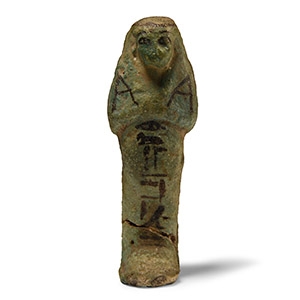
Egyptian Blue Glazed Shabti for the Priest of Amun Mi
Third Intermediate Period, 21st Dynasty, 1077-943 B.C.Sold for (Inc. bp): £442
Applied black pigment to the wig, eyes, two hoes, seed bag at the reverse, and a vertical panel of hieroglyphic text on the lower body with the dedication: 'The Osiris, the Priest of Amun Mi, true of voice'. 132 grams, 11.8 cm
Probably from a priests’ cachette at Luxor. Acquired in Egypt by Lieutenant James Alexander Goodman in the 1920s. Thence by descent to his grandson.
Lieutenant Goodman served in the 4th Battalion Welsh Regiment during World War I and saw action in Palestine during the capture of Bethlehem, (for which he won an MC). After the war, he setup a business selling Fordson trucks and tractors in Alexandria, Egypt. A keen antiquarian, he collected ancient objects during his time in Alexandria and when he visited the pyramids at Giza. After his first marriage failed, he returned to the UK in the early 1930s. On his death in 1959, he passed his small collection of Egyptian objects on to his second wife, Ruby Goodman. On Ruby’s death in 1994, they were left to their second daughter, Rosemary Johnson, (née Goodman), and are currently in the possession of her son.
