
Loading, please wait...
LOT 0458
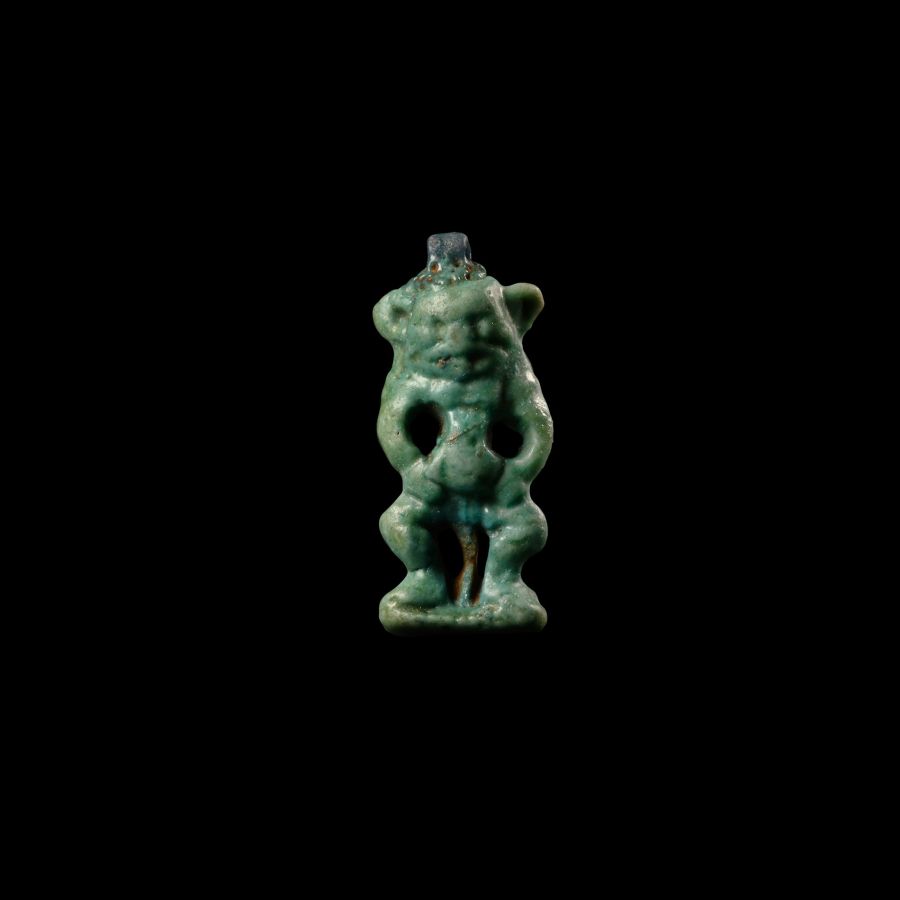
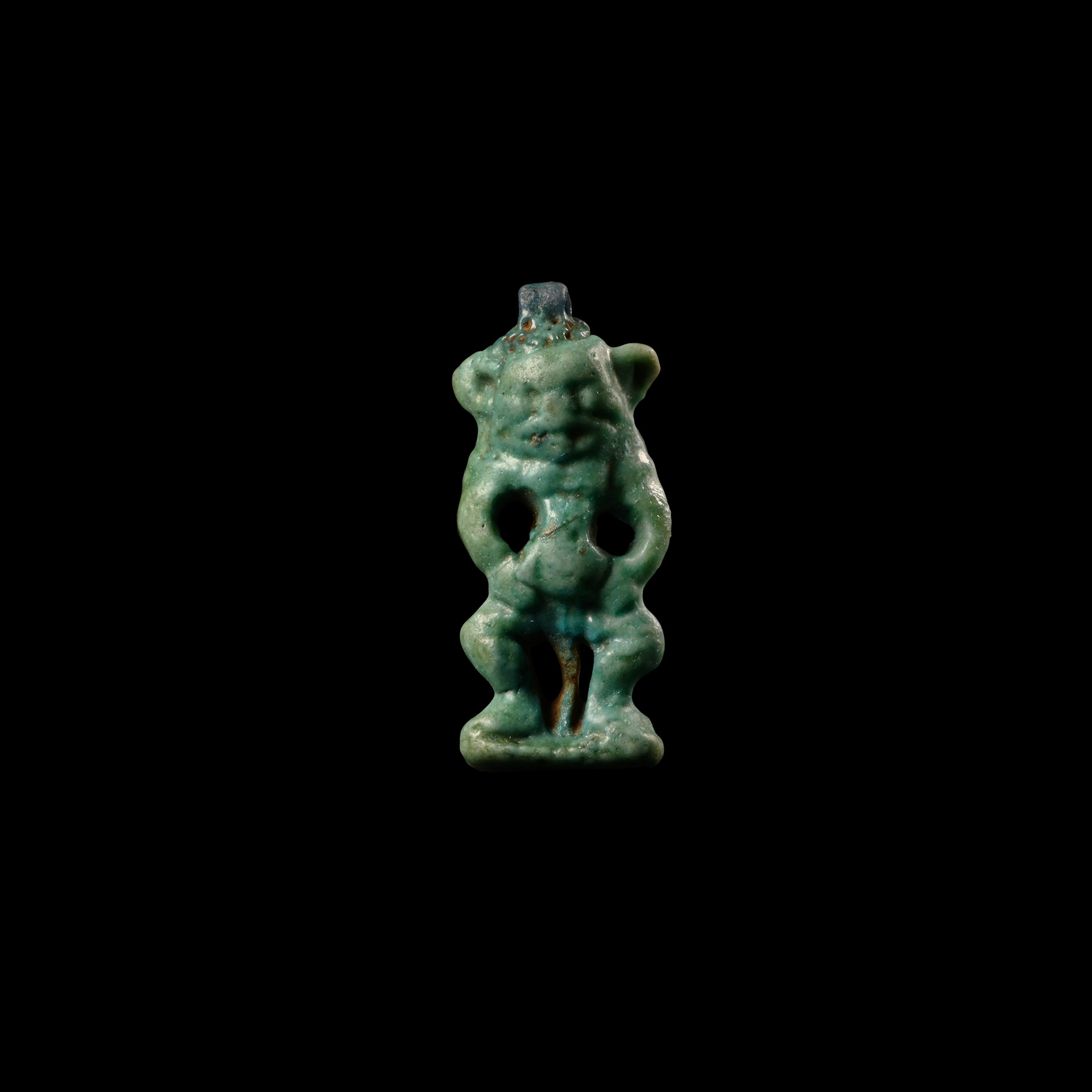
Egyptian Faience Bes Amulet
LATE NEW KINGDOM, 1550-1070 B.C.
1 in. (1.31 grams, 26 mm).
Standing on a roughly oval base with hands on thighs, grotesque facial features; suspension loop to head.
ProvenanceFrom an early 20th century Home Counties, UK, collection.
LiteratureCf. Metropolitan Museum, New York, accession number 11.215.178, for similar.
FootnotesDespite his fearsome appearance, Bes was the protector of women in childbirth.
CONDITIONTimeLine Auctions follows a vetting process to ensure the authenticity and legality of all items, reinforcing our commitment to integrity and responsible trading. Each antiquity, antique, and coin lot undergoes thorough examination by a vetting committee of at least ten external specialists, professional trade association members, scientists, and archaeologists: Our Vetting Process
AUCTIONS:
TimeLine is a leading auction house specialising in antiquities, ancient art, collectables, natural history, coins, medals, and books. Our auctions offer museums, collectors, historians, and enthusiasts the opportunity to acquire unique and historically significant pieces.
LOT 0458
Egyptian Faience Bes Amulet
Estimate £200 - 300€230 - 350 (for guidance only)$270 - 410 (for guidance only)
-

Egyptian Polished Black Stone Pesesh-Kef Amulet
Late Period, 664-332 B.C.Estimate: £600 - 800 (+bp*)
Opening Bid: £300
Ostrich feathers of Amun, delineated with a single vertical groove and curved tips; integral suspension loop to reverse; likely obsidian or basalt. 3.75 grams, 29 mm
From an early 20th century collection, Home Counties, UK, 1930-1940s.
The Pesesh-kef was a 'magical' ritual implement used in the ancient Egyptian Opening of the Mouth ceremony, which may have represented an implement used to cut umbilical cords. During the Opening of the Mouth ritual, priests held the implement to the mouth of a cult statue or mummy, allowing it to receive offerings. -

Egyptian Wooden Animal-Headed Furniture Leg
Late Period, 664-332 B.C.Sold for (Inc. bp): £325
Representing the head, chest and split forelegs of a lion with ochre-tan surface and applied black detailing; ledge to the reverse and socket to accept a mounting peg or mortice; mounted on a custom-made stand. 260 grams, 33 cm high (529 grams total, 35.5 cm high including stand)
Fine condition.
Swiss collection prior to late 1990s. Private London collection since 1999. -

Large Egyptian Bronze Statue of Khonsu
Late Period, 26th Dynasty, 664-525 B.C.Sold for (Inc. bp): £33,800
Standing in advancing pose on a rectangular base; the god modelled with a disk representing the full-moon surmounting a crescent new moon atop his head and fronted by a uraeus, the falcon-head sports a finely striated tripartite wig and with beaded silver wire frames to the (once inlaid) eyes; wearing a broad wesekh collar; the left arm bent and fist drilled to grip a staff, right arm straight to the side with similar drilled fist; pleated shendyt kilt and belt to the hips; mounted on a tiered socle base. 896 grams total, 27 cm including stand
Very fine condition.
Smith family collection, Cambridge, UK since 1949. Private UK collection since 1978. Accompanied by a scholarly note by Egyptologist Paul Whelan. This lot has been checked against the Interpol Database of stolen works of art and is accompanied by search certificate number no.11033-183985.
The moon god Khonsu (whose name means 'wanderer', referring to the passage of the moon across the sky) is known as a blood-thirsty sky-deity in the Pyramid Texts. In New Kingdom Thebes, however, he was regarded as a far more benevolent deity, being the child of Amun and Mut, and provided with his own temple at Karnak. There, he was considered to control destiny. Khonsu can appear in human form with a side-lock of youth, wearing an enveloping garment, and holding royal regalia, and also as a falcon-headed man with the full moon and crescent new moon headdress, as with this fine example. In his falcon-headed form he frequently holds an ankh symbol and a was-sceptre, for which the hands of this piece were drilled to accept the god's well-known attributes.
