
Loading, please wait...


LOT 0469
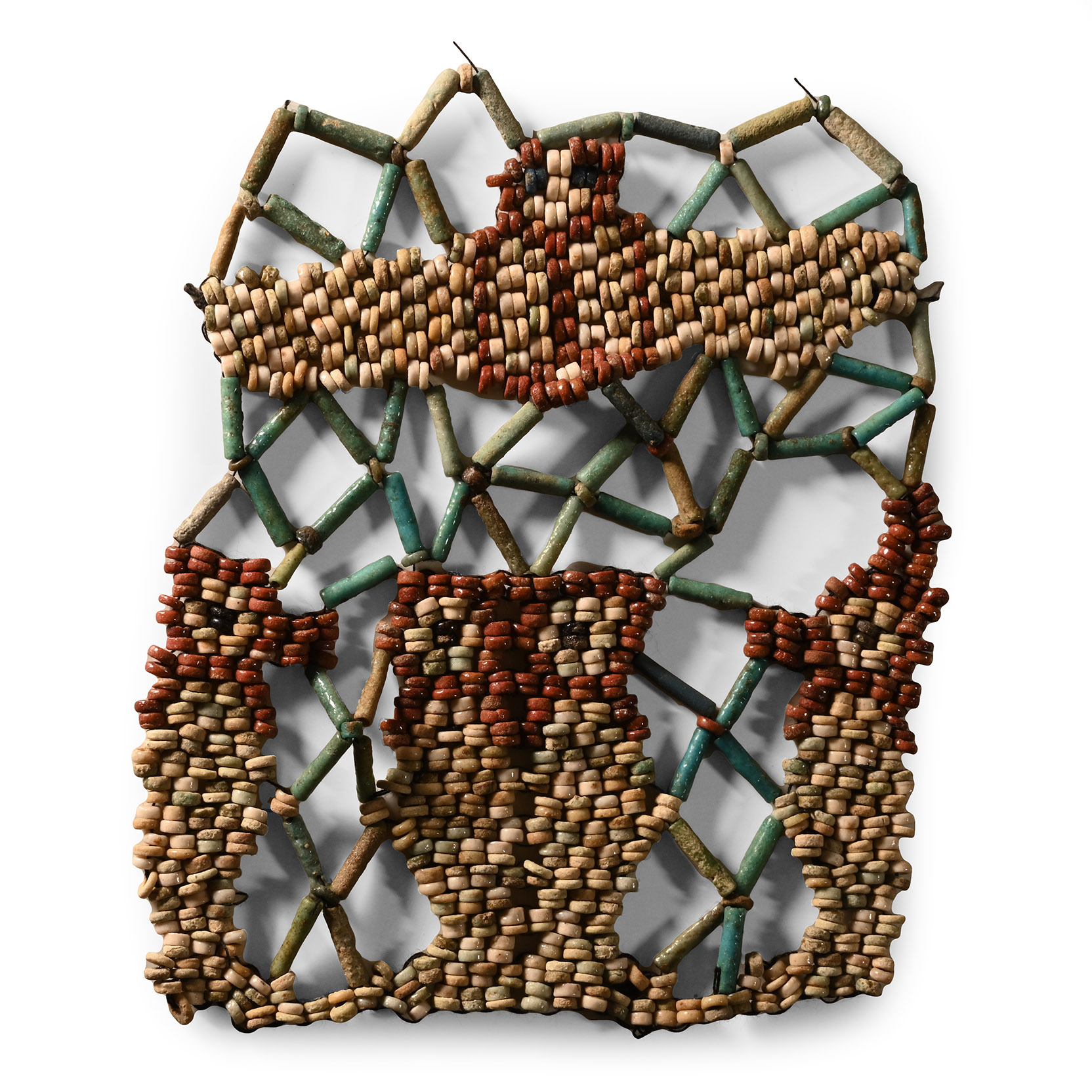
Egyptian Faience Bead Scarab with Four Sons of Horus
PTOLEMAIC PERIOD, 332-30 B.C.
4 1/2 in. (22.3 grams, 11.4 cm).
Openwork beaded panel depicting a winged scarab with the Four Sons of Horus, Hapy, Imsety, Qebehsenuef, and Duamutef below; restrung.
ProvenanceEx Mariaud de Serres, Paris, France, 1980-1990s.
From a London, UK, collection.
Cf. Manley, B., and Dodson, A., Life Everlasting. National Museum of Scotland Collection of Ancient Egyptian Coffins, Edinburgh, 2010, p.114, no.43, for a bead-work shroud incorporating the mask, winged scarab, and Four Sons of Horus.
FootnotesWinged scarabs were often used as funerary amulets and believed to symbolise the deceased's rebirth and regeneration.
The Four Sons of Horus were deities responsible for protecting the deceased's internal organs. Here, on the left, is the baboon-headed Hapy, protector of the lungs, then the human-headed Imsety, protector of the liver, followed by the falcon-headed Qebehsenuef, who protects the intestines and, finally, the erect-eared jackal-headed Duamutef on the right, who protected the stomach.
TimeLine Auctions follows a vetting process to ensure the authenticity and legality of all items, reinforcing our commitment to integrity and responsible trading. Each antiquity, antique, and coin lot undergoes thorough examination by a vetting committee of at least ten external specialists, professional trade association members, scientists, and archaeologists: Our Vetting Process
AUCTIONS:
TimeLine is a leading auction house specialising in antiquities, ancient art, collectables, natural history, coins, medals, and books. Our auctions offer museums, collectors, historians, and enthusiasts the opportunity to acquire unique and historically significant pieces.
LOT 0469
Egyptian Faience Bead Scarab with Four Sons of Horus
Estimate £100 - 140€120 - 160 (for guidance only)$140 - 190 (for guidance only)
-
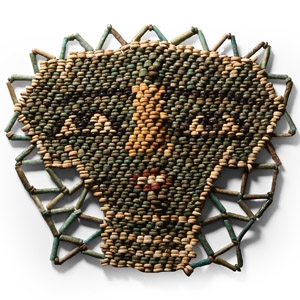
Egyptian Faience Mummy Bead Mask
Ptolemaic Period, 332-30 B.C.Sold for (Inc. bp): £286
A panel of small glazed composition beads in various colours representing a mummy face mask with false beard with netted border; restrung with some later beads. 42 grams, 13.5 cm
Ex Mariaud des Serres, Paris, France, 1990s. -
Egyptian Faience Bead Scarab with Four Sons of Horus
Ptolemaic Period, 332-30 B.C.Estimate: £100 - 140 (+bp*)
Opening Bid: £50
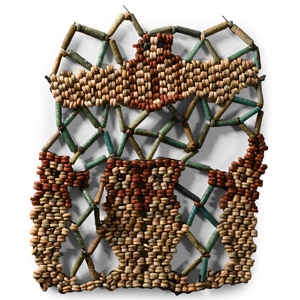
Openwork beaded panel depicting a winged scarab with the Four Sons of Horus, Hapy, Imsety, Qebehsenuef, and Duamutef below; restrung. 22.3 grams, 11.4 cm
Ex Mariaud de Serres, Paris, France, 1980-1990s. From a London, UK, collection.
Winged scarabs were often used as funerary amulets and believed to symbolise the deceased's rebirth and regeneration. The Four Sons of Horus were deities responsible for protecting the deceased's internal organs. Here, on the left, is the baboon-headed Hapy, protector of the lungs, then the human-headed Imsety, protector of the liver, followed by the falcon-headed Qebehsenuef, who protects the intestines and, finally, the erect-eared jackal-headed Duamutef on the right, who protected the stomach. -
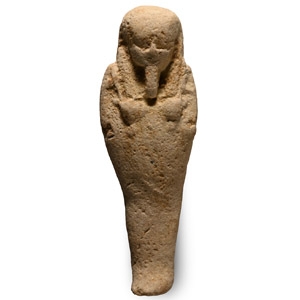
Egyptian White Faience Shabti
Ptolemaic Period, 332-30 B.C.Sold for (Inc. bp): £111
Modelled in the half-round with rounded facial features, lappet wig, false beard and crossed arms holding a pick and a hoe. 18 grams, 78 mm
Ex H. Norry collection, 1980s-1990s.
One of the primary purposes of shabti figures was to carry out heavy manual tasks on behalf of a person in the afterlife, and they were often depicted with necessary implements in their hands, such as baskets, picks, and hoes. Over time, the number of shabtis in a standard elite burial increased, from one in the Eighteenth Dynasty to several in the Nineteenth Dynasty, to one for every day of the year by the Third Intermediate Period. The high number of shabtis remained a feature in the Late and Ptolemaic Periods.
