
Loading, please wait...
LOT 0480
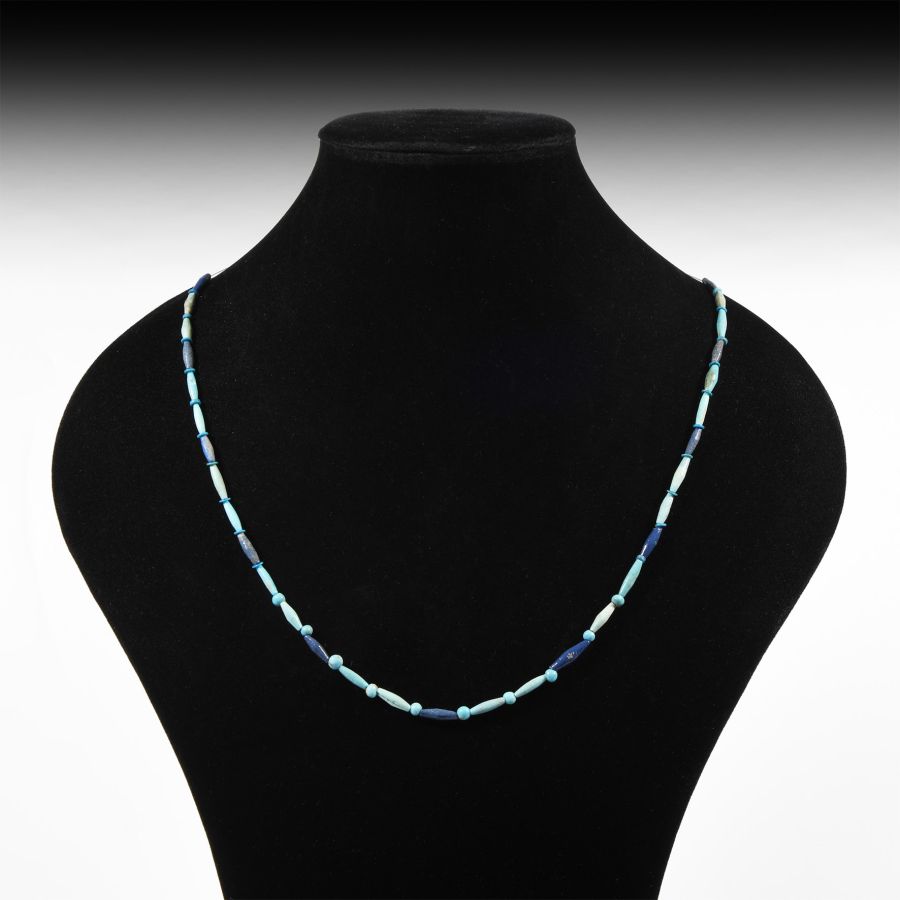
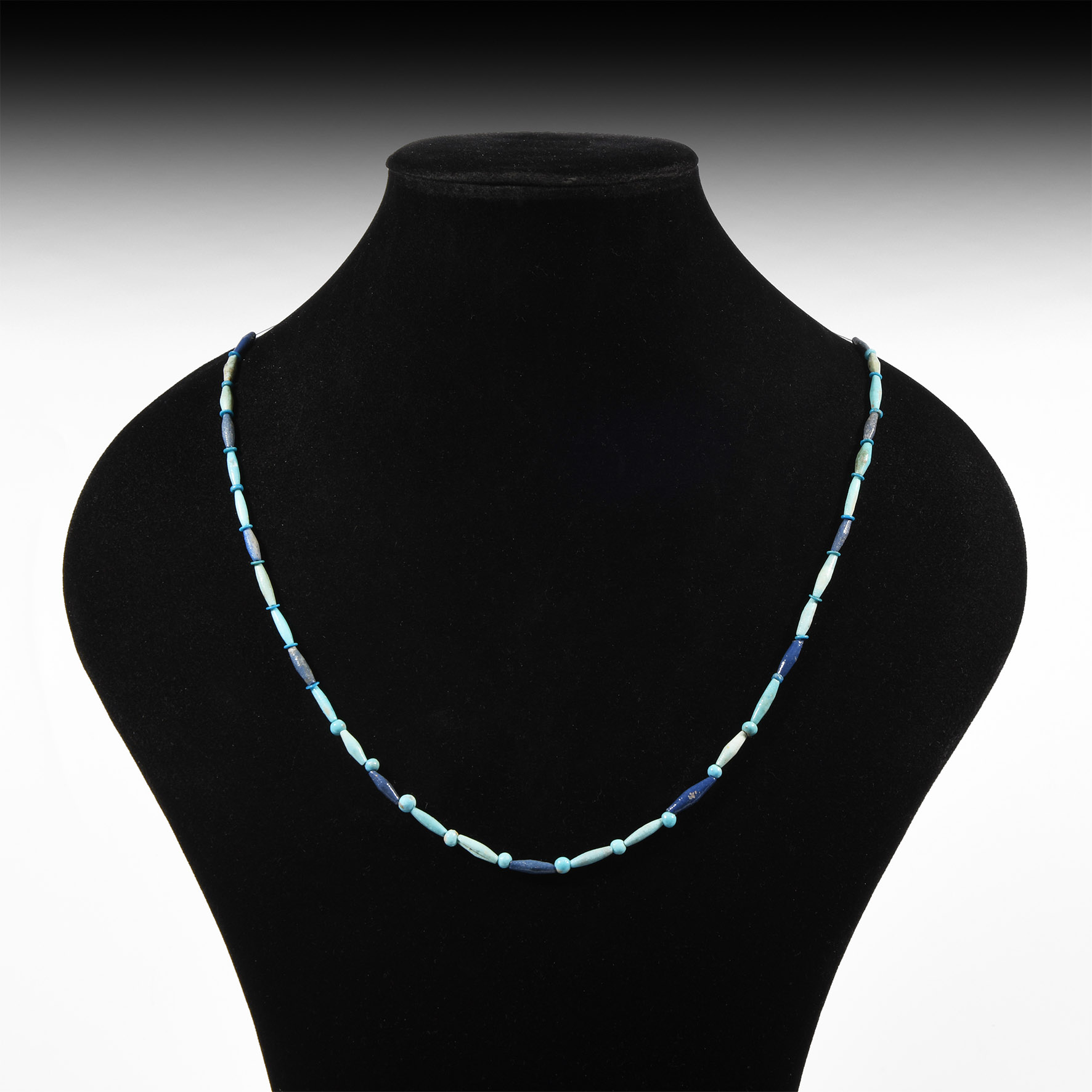
Egyptian Faience Bead Necklace
NEW KINGDOM, 1569-1081 B.C.
26 in. (6.43 grams, 66 cm long).
Composed of gently tapering biconical beads of various shades of turquoise and blue, interspersed with coin-shaped and spherical beads; restrung.
ProvenanceFrom an early 20th century UK collection.
CONDITIONTimeLine Auctions follows a vetting process to ensure the authenticity and legality of all items, reinforcing our commitment to integrity and responsible trading. Each antiquity, antique, and coin lot undergoes thorough examination by a vetting committee of at least ten external specialists, professional trade association members, scientists, and archaeologists: Our Vetting Process
AUCTIONS:
TimeLine is a leading auction house specialising in antiquities, ancient art, collectables, natural history, coins, medals, and books. Our auctions offer museums, collectors, historians, and enthusiasts the opportunity to acquire unique and historically significant pieces.
-
.jpg)
Egyptian Glass Inlay Collection
Circa 1st century B.C.-2nd century A.D.Estimate: £120 - 170 (+bp*)
Opening Bid: £60
Comprising sixteen drawn inlays of various colour combinations. 12 grams total, 12-39 mm
Fine condition.
Ex N.A. collection, 1970s. Kept in the U.K. since 2007. -
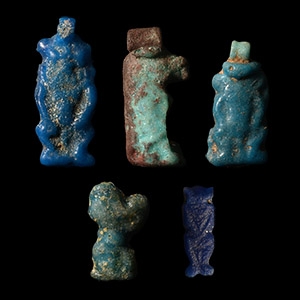
Egyptian Amarna Faience Amulet Group
New Kingdom, Amarna Period, 1353-1336 B.C.Sold for (Inc. bp): £208
Comprising polychrome amulets of various types, with suspension loops, including figures of Bes and other deities in animal form. 0.99 grams total, 10-16 mm
From an early 20th century collection, Surrey, UK. -
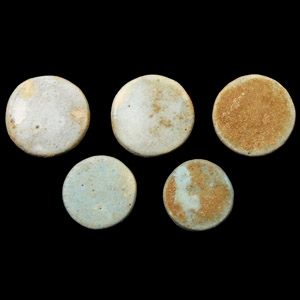
Egyptian Small Faience Pot Lid Collection
Late Period, 664-332 B.C.Sold for (Inc. bp): £39
Group of five pale blue discs each with a raised central panel. 23.1 grams total, 27-32 mm
From and early 20th century collection, Home Counties, UK.
