
Loading, please wait...
LOT 0499
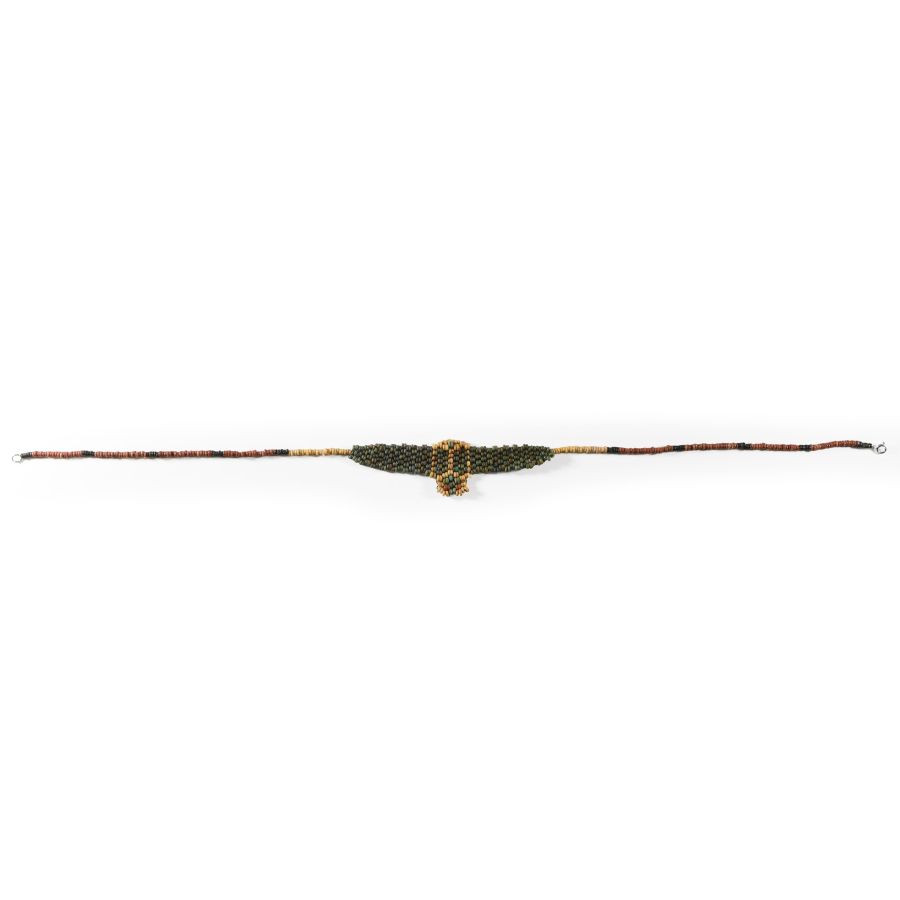
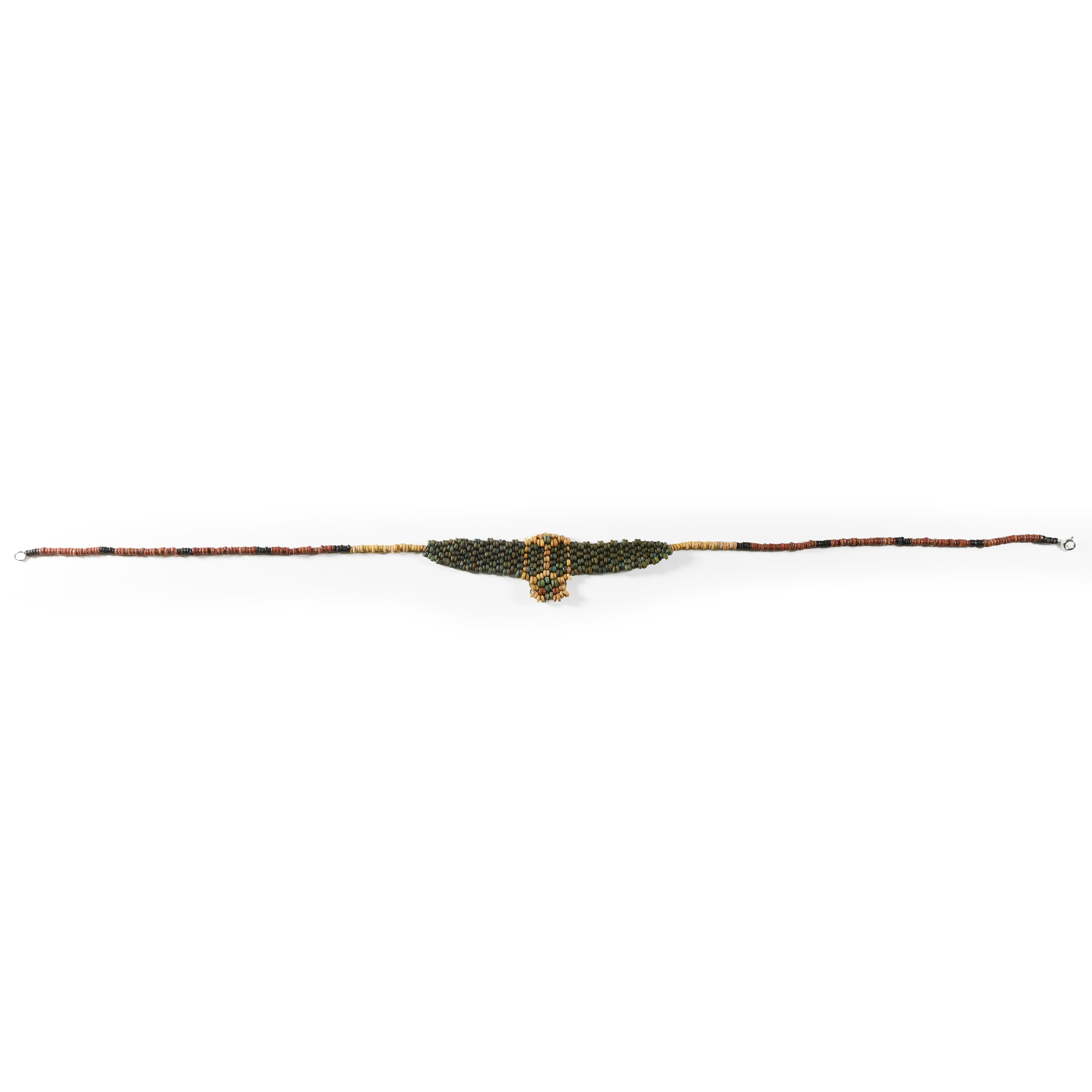
Egyptian Faience Bead Necklace with Winged Scarab Motif
PTOLEMAIC PERIOD, 332-30 B.C.
19 5/8 in. (12.4 grams, 50 cm long).
Composed of annular beads in several colours, restrung and with a modern catch.
ProvenanceProperty of a late lady collector, acquired 1940-1990s.
FootnotesWinged scarabs were often used as funerary amulets and were believed to symbolise the rebirth and regeneration of the deceased.
CONDITIONTimeLine Auctions follows a vetting process to ensure the authenticity and legality of all items, reinforcing our commitment to integrity and responsible trading. Each antiquity, antique, and coin lot undergoes thorough examination by a vetting committee of at least ten external specialists, professional trade association members, scientists, and archaeologists: Our Vetting Process
AUCTIONS:
TimeLine is a leading auction house specialising in antiquities, ancient art, collectables, natural history, coins, medals, and books. Our auctions offer museums, collectors, historians, and enthusiasts the opportunity to acquire unique and historically significant pieces.
LOT 0499
Egyptian Faience Bead Necklace with Winged Scarab Motif
Sold for (Inc. bp): £208
-
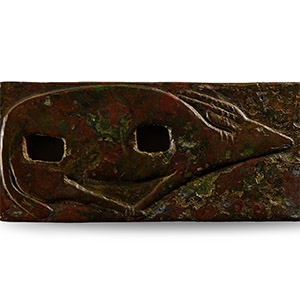
Egyptian Bronze Base with Ibex and Hieroglyphs
Late Period, 664-332 B.C.Sold for (Inc. bp): £442
Rectangular with two sockets to the upper face, low-relief recumbent ibex; incised hieroglyphic text to one short sidewall and remains on both long sidewalls, giving a dedication to 'give life, health, a long [lifetime......]'. 205 grams, 11.7 cm
Galerie Orient-Occident, Paris, 1990. Parisian private collection. with Pierre Berge, 2 February 2017, lot 85.
The bound ibex is a frequent image in ancient Egyptian art and a prized foodstuff. The animal's presence on this base symbolises the finest offerings to the once-attached deity. -
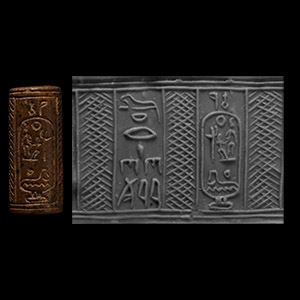
Egyptian Cylinder Seal with Cartouche of Ramesses II
New Kingdom, 19th Dynasty 1304-1237 B.C.Sold for (Inc. bp): £1,235
With crisp detail of crosshatched panels, hieroglyphic text in one and a cartouche in the other with the regnal name of Ramesses II (User-Maat-Re-setep-en-Re), supplied with a museum-quality impression. 5.01 grams, 25 mm
Gustave Mustaki, Alexandria, Egypt; exported from Egypt to the UK c.1950. Elsa McLellan, UK; by descent from the above. Private collection, London, UK; by descent from the above. -
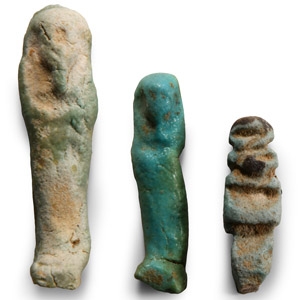
Egyptian Faience Shabti and Amulet Group
Late Period-Ptolemaic Period, 664-30 B.C.Sold for (Inc. bp): £78
Two mummiform shabti figurines, one faded pale green and the other bright turquoise; one amuletic figurine, possibly of a ram or baboon-headed deity with sun disk headdress, applied black pigment detailing. 20 grams total, 41-65 mm
From the H.N. collection, Milton Keynes, Berkshire, UK, 1990s.
Shabti figures were created to carry out heavy manual tasks on behalf of a person in the afterlife. From the Third Intermediate Period into the Late Period burials were often provided with several hundred shabtis.
