
Loading, please wait...
LOT 0406
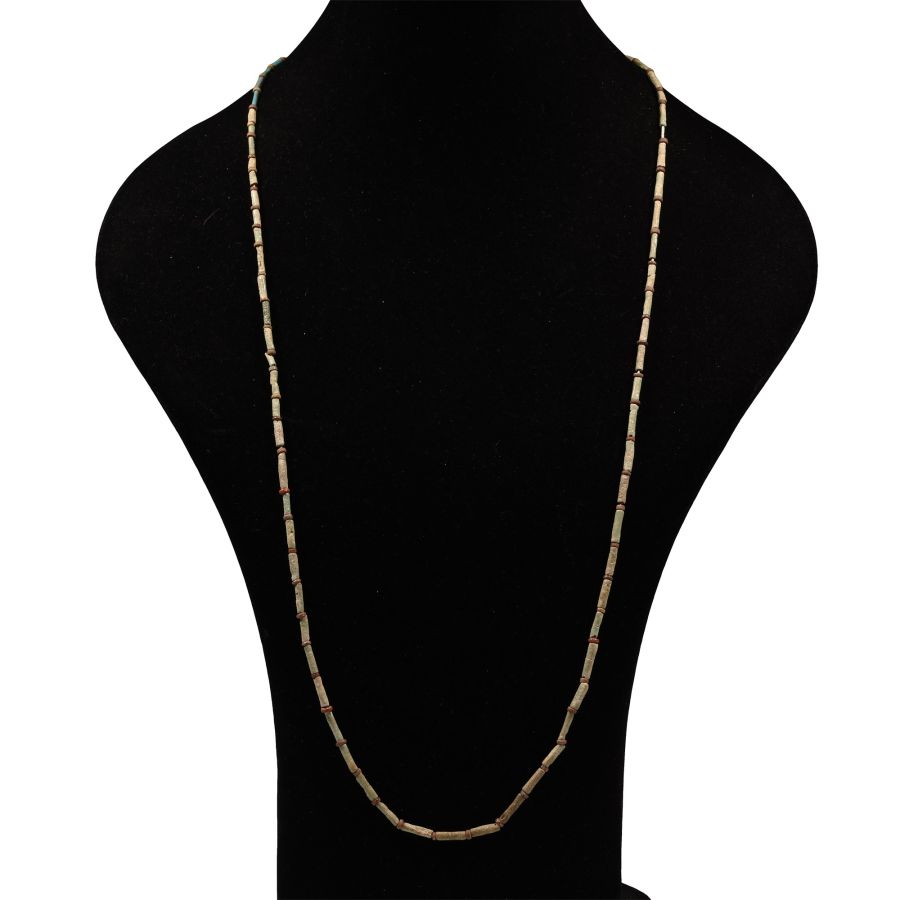
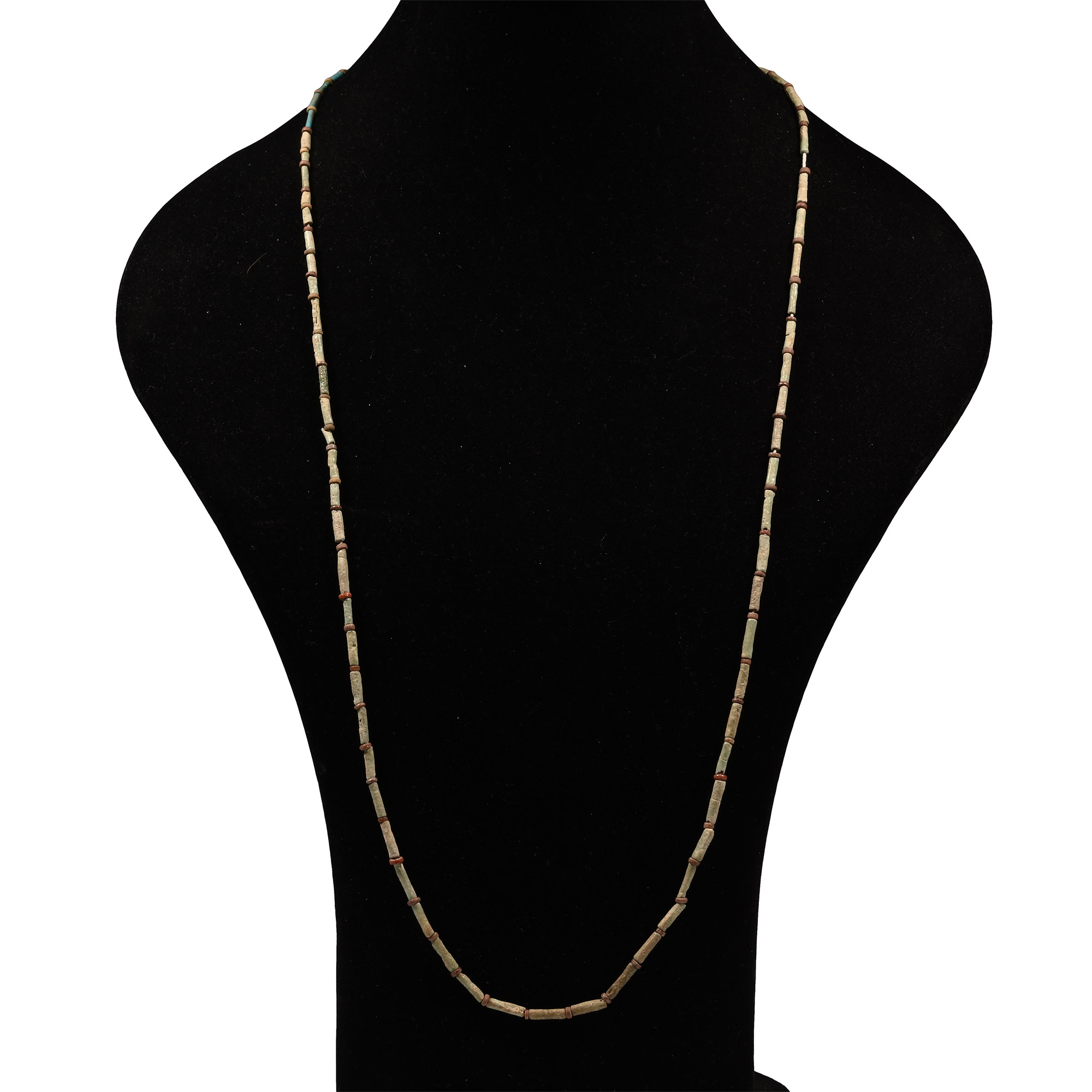
Egyptian Faience Bead Necklace String
LATE PERIOD, 664-332 B.C.
35 1/2 in. (8.44 grams, 90 cm).
Composed of blue tubular beads interspersed with brown annular beads; restrung. [No Reserve]
ProvenanceAcquired on the UK art market, circa 1980.
Property of an East London, UK, collector.
This lot is accompanied by an illustrated lot declaration signed by the Head of the Antiquities Department, Dr Raffaele D'Amato.
TimeLine Auctions follows a vetting process to ensure the authenticity and legality of all items, reinforcing our commitment to integrity and responsible trading. Each antiquity, antique, and coin lot undergoes thorough examination by a vetting committee of at least ten external specialists, professional trade association members, scientists, and archaeologists: Our Vetting Process
AUCTIONS:
TimeLine is a leading auction house specialising in antiquities, ancient art, collectables, natural history, coins, medals, and books. Our auctions offer museums, collectors, historians, and enthusiasts the opportunity to acquire unique and historically significant pieces.
-
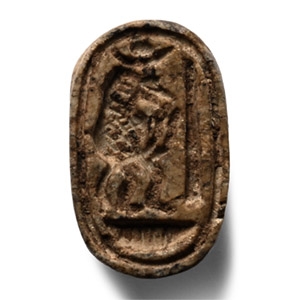
Egyptian Faience Duck Scaraboid with Hieroglyphs
Late Period, 664-332 B.C.Sold for (Inc. bp): £286
Modelled as a resting duck with its neck curved around the upper body, feather detailing on the wings, tail, and body, and delicately formed head; the underside features a baboon in a posture of adoration before an obelisk, wearing a lunar disc and crescent headdress, with a neb sign below. 2.82 grams, 19 mm
From the property of a London, UK, gentleman, 1970-2000s. This lot is accompanied by an illustrated lot declaration signed by the Head of the Antiquities Department, Dr Raffaele D'Amato.
Baboons were observed worshipping the rising sun with raised arms, a behaviour that Egyptians interpreted as divine reverence. The scarab's imagery symbolises cosmic harmony and sacred wisdom, with the baboon (a manifestation of Thoth in his lunar aspect) showing reverence to an obelisk (a symbol of the solar god, Ra). Thus, it blends moon and sun symbolism, embodying balance, cyclical renewal, divine order, and the interplay between knowledge (Thoth) and power (Ra). The neb sign indicates lordship or possession over all the celestial forces. -
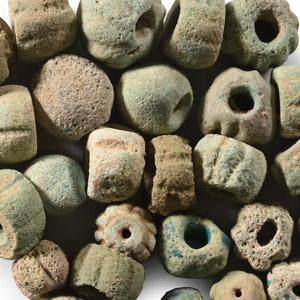
Romano-Egyptian Faience Melon Bead Collection
2nd-1st century B.C.Sold for (Inc. bp): £33
Comprising thirty green and blue beads in various sizes. 42 grams total, 8-18 mm
Ex H. Norry collection, Milton Keynes, UK, 1980s-1990s. This lot is accompanied by an illustrated lot declaration signed by the Head of the Antiquities Department, Dr Raffaele D'Amato. -
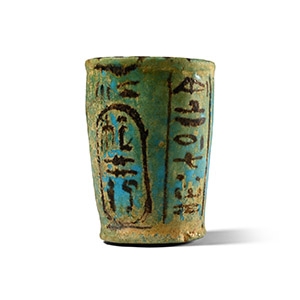
Egyptian Blue Glazed Libation Cup of Ramesses III
New Kingdom, 20th Dynasty, circa 1183-1152 B.C.Sold for (Inc. bp): £1,235
Ritual cup with sides tapering towards the base; the black glazed rectangular panel containing two columns of text: 'Lord of Appearances, Ramesses ruler of Heliopolis (Ramses heqa Iwnw) given life, beloved of Osiris, Lord of Rosetau'. 50 grams, 53 mm
with Hoshigaoka Gallery Co. Ltd, Japan. Private collection, London, acquired from the above on the 26th September 1981. This lot has been checked against the Interpol Database of stolen works of art and is accompanied by a search certificate number no.12637-235085. This lot is accompanied by an illustrated lot declaration signed by the Head of the Antiquities Department, Dr Raffaele D'Amato.
