
Loading, please wait...
LOT 0501
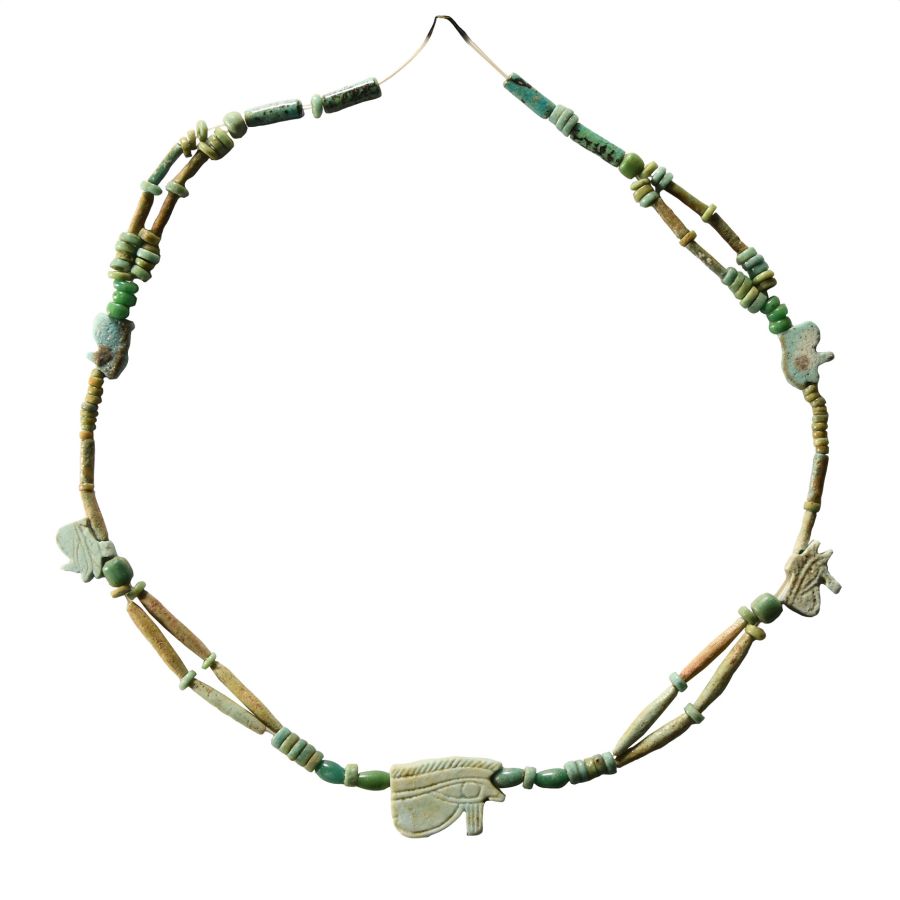
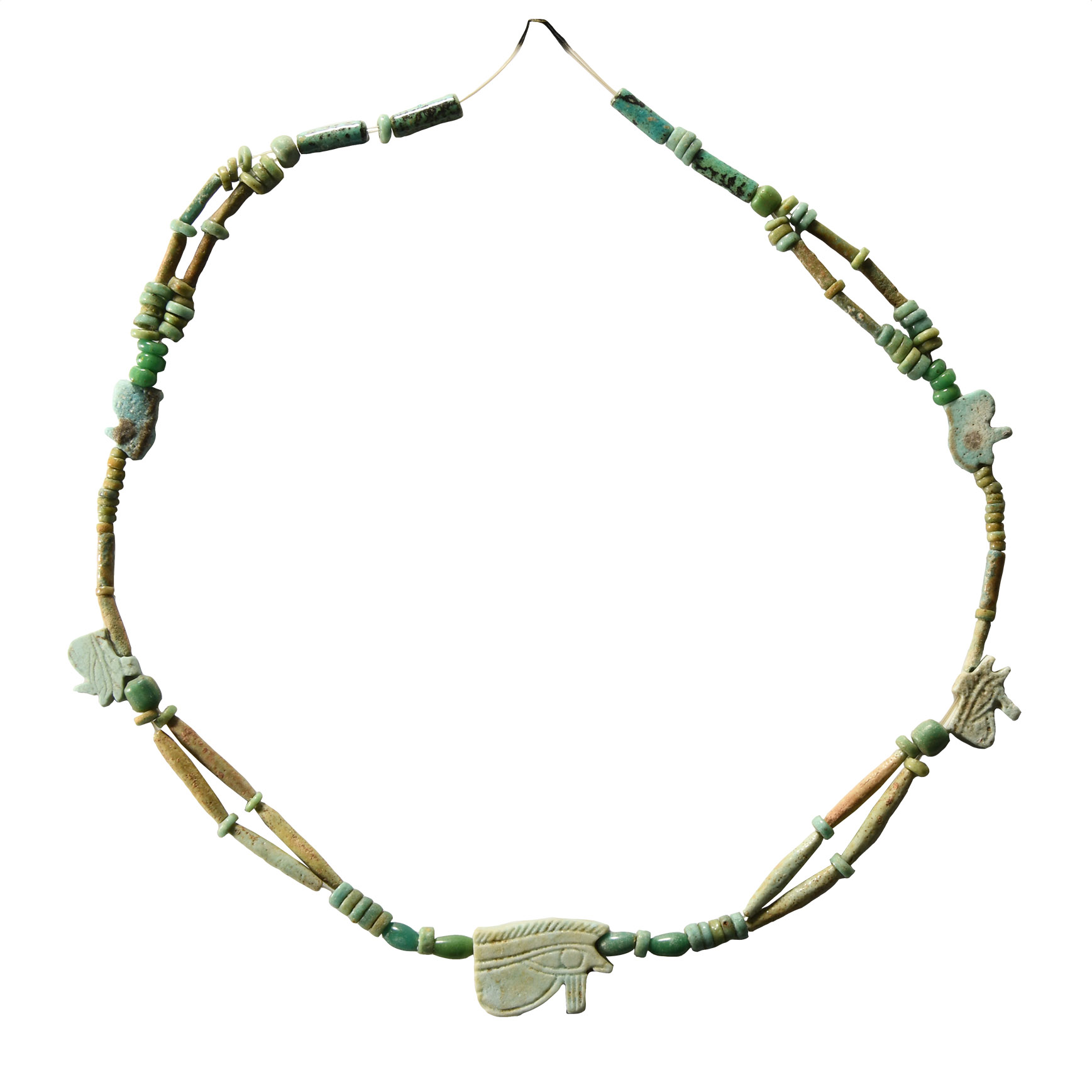
Egyptian Faience Bead Necklace String with Wedjat Eyes
LATE PERIOD, 664-332 B.C.
17 1/4 in. (14.1 grams, 44 cm).
Restrung on two parallel strands using mainly annular and tubular beads, enhanced with two pairs of small wedjat eye pendants, one pair with applied black detailing and the other pair with moulded low-relief detailing; with a central, large wedjat eye pendant with low-relief detailing.
ProvenanceFrom the vendor's grandfather's collection, formed in the 1950s; thence by family descent circa 1974.
LiteratureCf. Petrie, W.M.F., Amulets. Illustrated by the Egyptian Collection in University College, London, 1914, pl.XXV, no.138ad, for a wedjat eye similar to the central amulet.
CONDITIONTimeLine Auctions follows a vetting process to ensure the authenticity and legality of all items, reinforcing our commitment to integrity and responsible trading. Each antiquity, antique, and coin lot undergoes thorough examination by a vetting committee of at least ten external specialists, professional trade association members, scientists, and archaeologists: Our Vetting Process
AUCTIONS:
TimeLine is a leading auction house specialising in antiquities, ancient art, collectables, natural history, coins, medals, and books. Our auctions offer museums, collectors, historians, and enthusiasts the opportunity to acquire unique and historically significant pieces.
LOT 0501
Egyptian Faience Bead Necklace String with Wedjat Eyes
Estimate £400 - 600€460 - 700 (for guidance only)$540 - 810 (for guidance only)
-
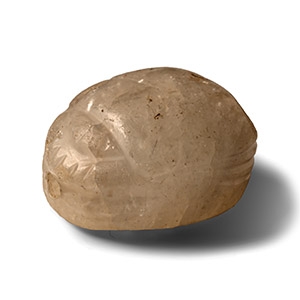
Egyptian Rock Crystal Scarab
Late Period, 664-332 B.C.Estimate: £250 - 350 (+bp*)
Opening Bid: £125
With segmented carapace, plain underside. 4.45 grams, 18 mm
From the property of the late Mr SM, London, UK, 1969-1999. -
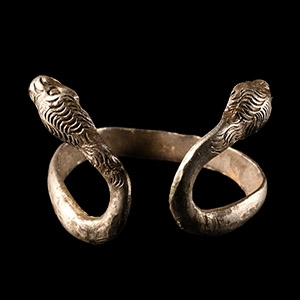
Egyptian Silver Double-Headed Snake Ring
Roman Period, 30 B.C.-323 A.D.Sold for (Inc. bp): £1,040
With bezel formed as two addorsed snake-head finials. 2.81 grams, 19.75 mm overall, 16.44 mm internal diameter (approximate size British L, USA 5 3/4, Europe 11.24, Japan 10)
Ex German art market, 2000s. Acquired from an EU collector living in London. From the collection of Surrey, UK, gentleman. -
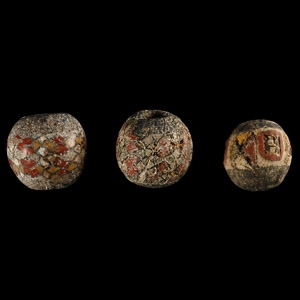
Egyptian Millefiori Glass Bead Group
Roman Period, 30 B.C.-395 A.D.Estimate: £150 - 200 (+bp*)
Opening Bid: £75
Three spherical glass beads decorated with geometric millefiori patterns. 10 grams total, 12-15 mm
Collected from 1969-1999. From the collection of the late Mr S.M., London, UK.
