
Loading, please wait...
_900x900.jpg "Egyptian Faience Bead Necklace String with Thoth Amulet")
_200x200.jpg "Egyptian Faience Bead Necklace String with Thoth Amulet")
.jpg "Egyptian Faience Bead Necklace String with Thoth Amulet")
LOT 0012
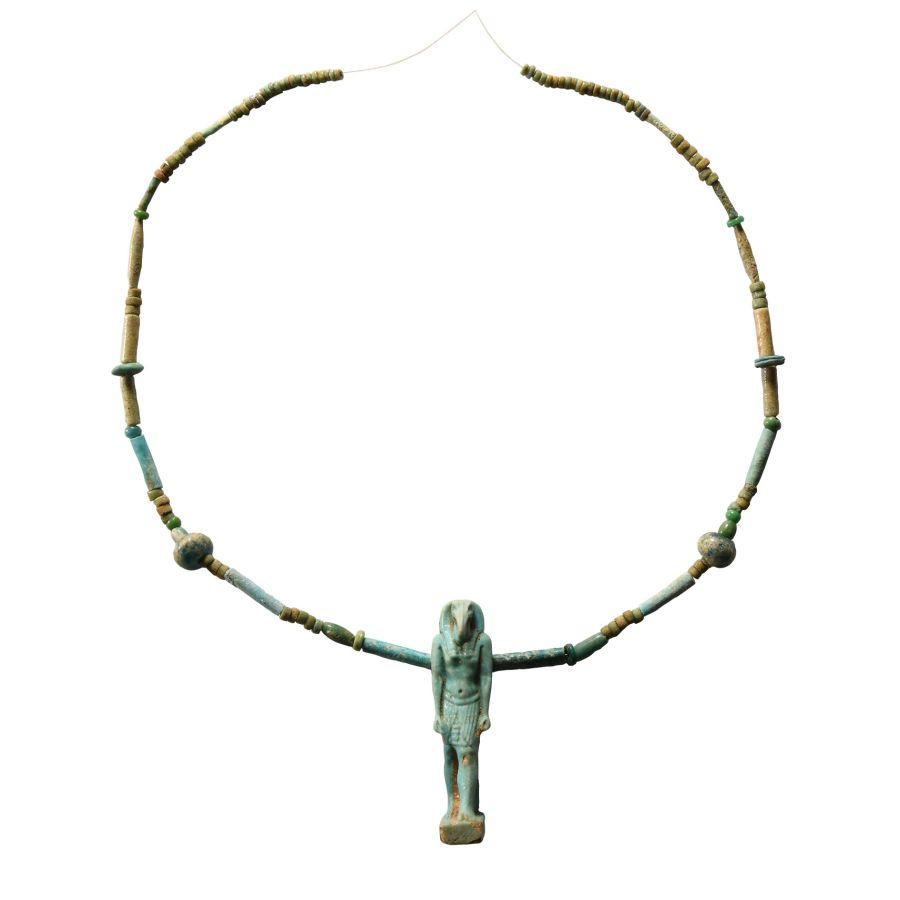
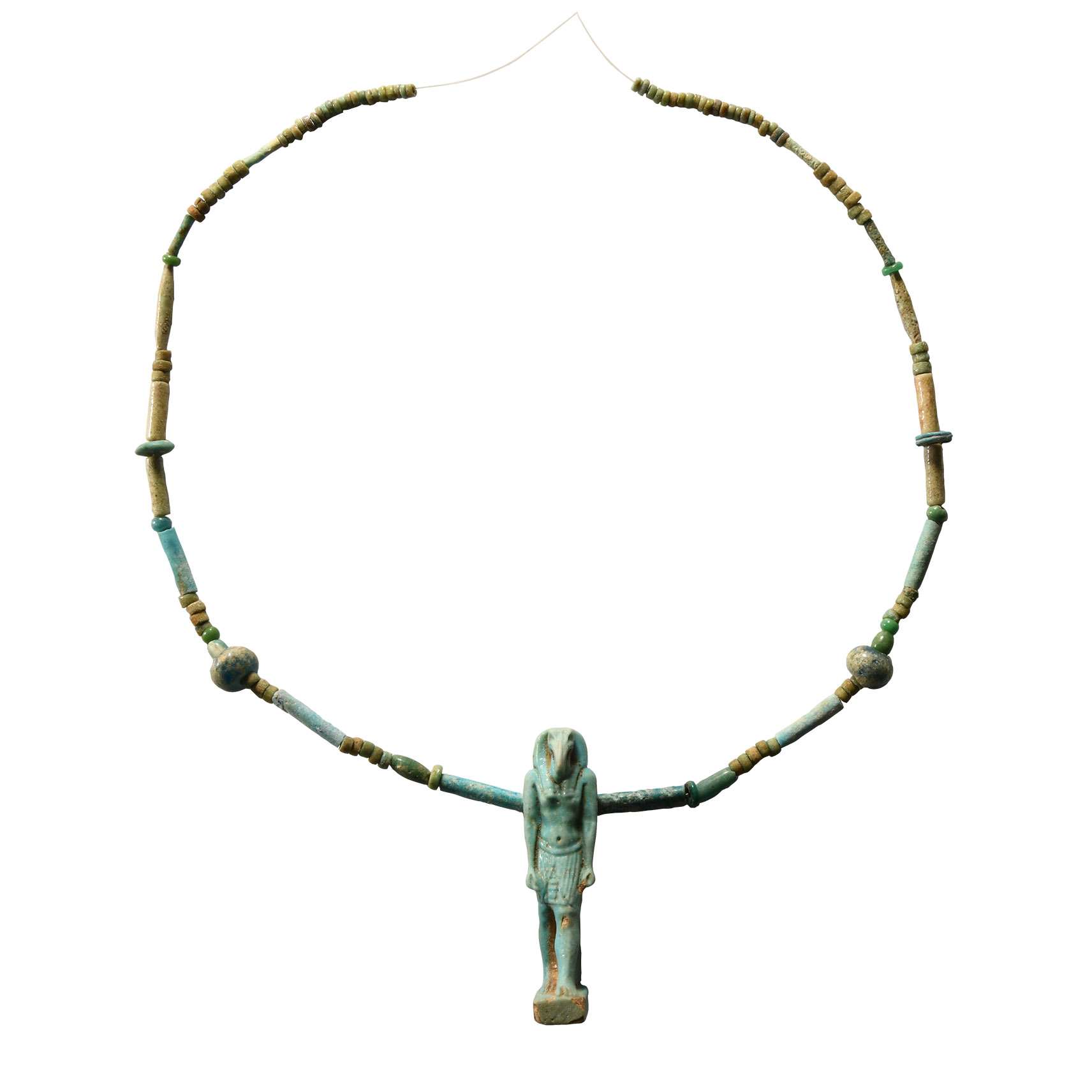
Egyptian Faience Bead Necklace String with Thoth Amulet
LATE PERIOD, 664-332 B.C.
18 1/8 in. (19 grams, 46 cm).
Restrung using mainly annular and tubular beads; the central feature a large amulet of Thoth in ibis-form wearing a short kilt and advancing on a rectangular plinth.
ProvenanceFrom the vendor's grandfather's collection, formed in the 1950s; thence by family descent circa 1974.
LiteratureCf. similar amulet in the Louvre, inventory no.E 19009.
CONDITIONTimeLine Auctions follows a vetting process to ensure the authenticity and legality of all items, reinforcing our commitment to integrity and responsible trading. Each antiquity, antique, and coin lot undergoes thorough examination by a vetting committee of at least ten external specialists, professional trade association members, scientists, and archaeologists: Our Vetting Process
AUCTIONS:
TimeLine is a leading auction house specialising in antiquities, ancient art, collectables, natural history, coins, medals, and books. Our auctions offer museums, collectors, historians, and enthusiasts the opportunity to acquire unique and historically significant pieces.
LOT 0012
Egyptian Faience Bead Necklace String with Thoth Amulet
Sold for (Inc. bp): £585
-
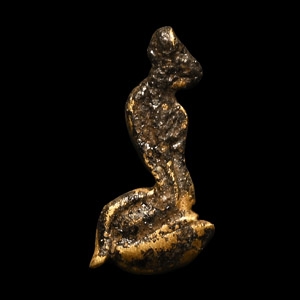
Egyptian Gold Uraeus Amulet
Late New Kingdom, 1070-900 B.C.Sold for (Inc. bp): £338
In rearing cobra pose with body coiled below. 0.38 grams, 11 mm
From an early 20th century French collection. -
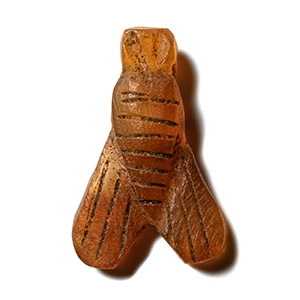
Egyptian Hardstone Fly Amulet
Late Period, 664-332 B.C.Sold for (Inc. bp): £143
With linear detailing to body and wings, pierced at the neck. 0.34 grams, 13 mm
From an early 20th century UK collection. -
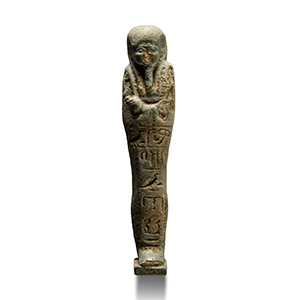
Egyptian Blue Glazed Shabti for Son of Ta-heb
30th Dynasty, 380-343 B.C.Sold for (Inc. bp): £494
Composed as a mummiform figure with tripartite wig and hands crossed at the chest, holding a pick, hoe, and seed bag; a T-shaped panel of hieroglyphic text reading: sḥḏ wsỉr tꜢ.... ms.n tꜢ ḥb mꜢʾ ḫrw, ‘The illuminated, the Osiris, Ta…. born to Ta-heb true of voice’. 36 grams, 10.7 cm
Acquired in Egypt in 1933. Ex Alexander Cameron (1897-1994) collection.
