
Loading, please wait...
LOT 0509
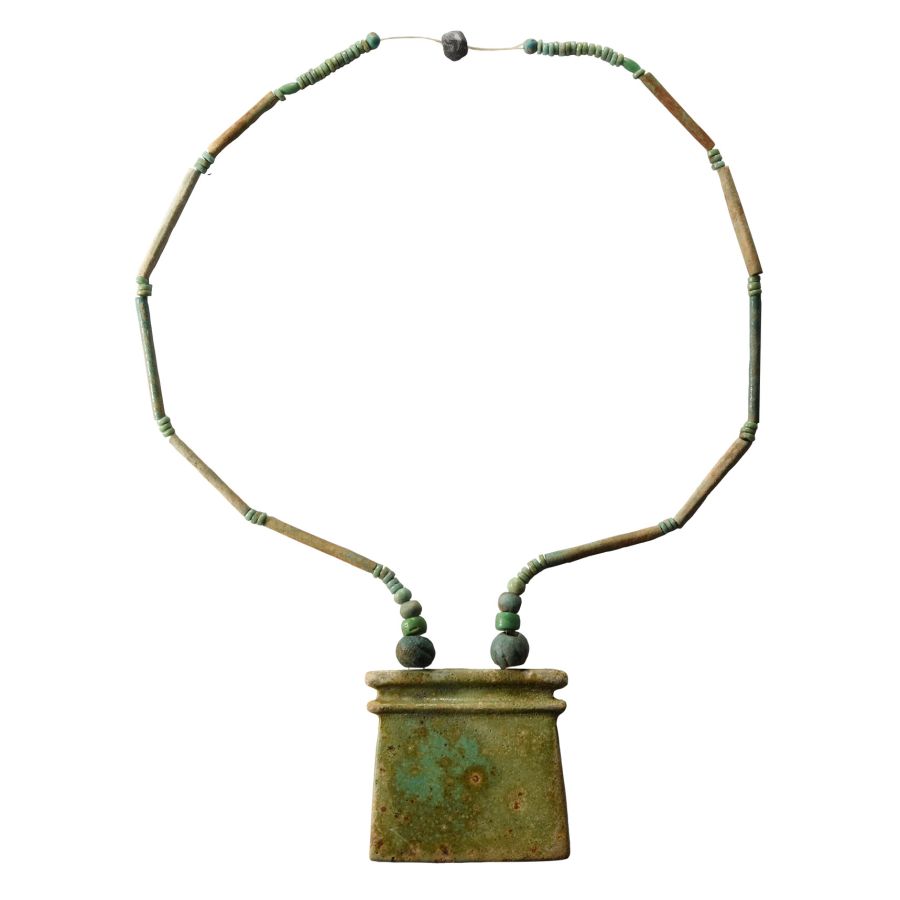
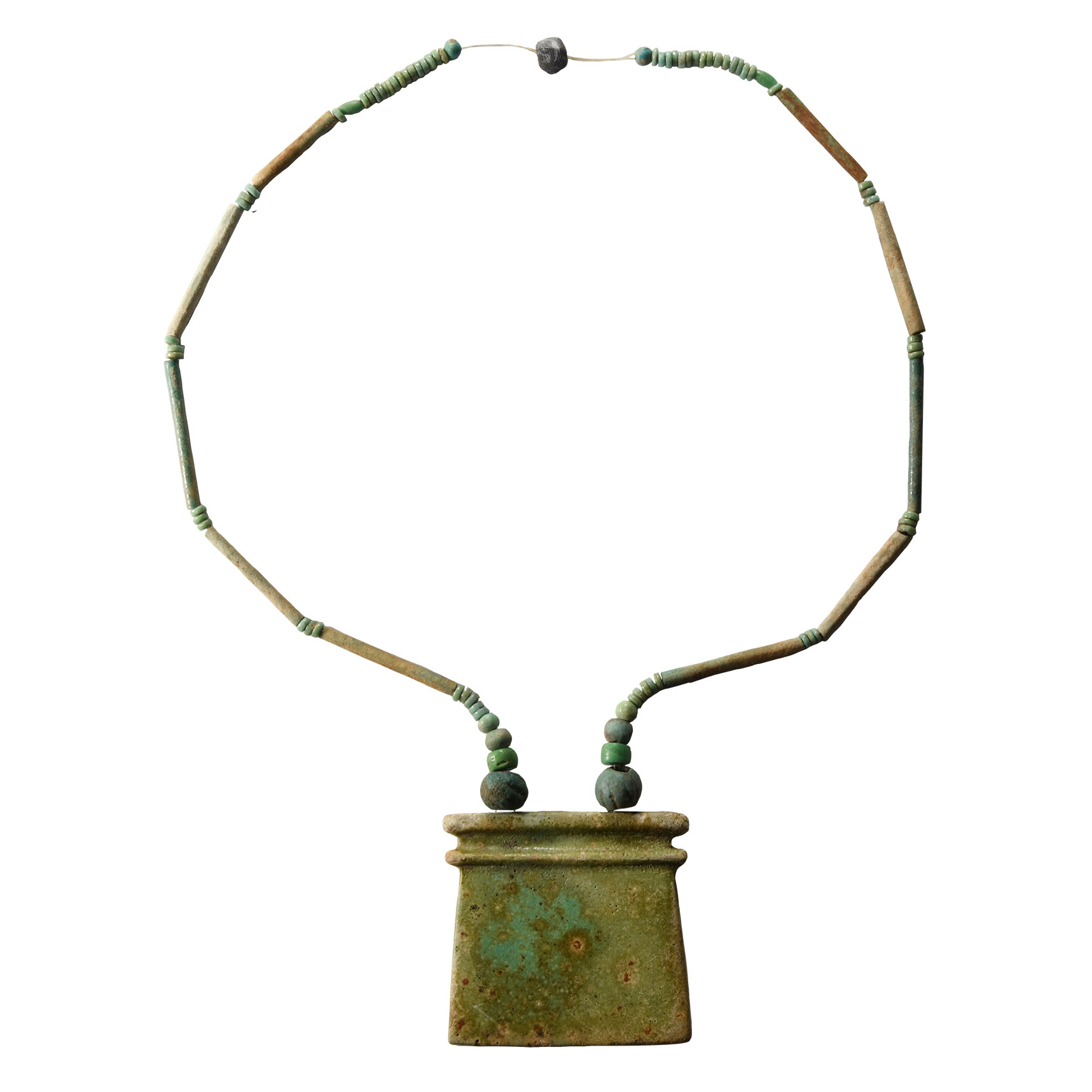
Egyptian Faience Bead Necklace String with Pectoral
LATE PERIOD, 664-332 B.C.
25 5/8 in. (62 grams, 65 cm).
Restrung using long tubular beads interspersed with annular beads, two melon beads above a large pylon-shaped pectoral pendant with raised lip.
ProvenanceFrom the vendor's grandfather's collection, formed in the 1950s; thence by family descent circa 1974.
CONDITIONTimeLine Auctions follows a vetting process to ensure the authenticity and legality of all items, reinforcing our commitment to integrity and responsible trading. Each antiquity, antique, and coin lot undergoes thorough examination by a vetting committee of at least ten external specialists, professional trade association members, scientists, and archaeologists: Our Vetting Process
AUCTIONS:
TimeLine is a leading auction house specialising in antiquities, ancient art, collectables, natural history, coins, medals, and books. Our auctions offer museums, collectors, historians, and enthusiasts the opportunity to acquire unique and historically significant pieces.
-
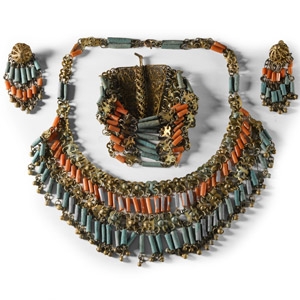
Egyptian Faience and Carnelian Beads in Victorian Necklace Set
Late Period, 664-332 B.C. and laterSold for (Inc. bp): £247
Comprising: a tiered choker-length necklace with ancient tubular carnelian and faience beads, 19th century base metal rosettes and jingles; cantanille bracelet with similar beads; two cantanille drop earrings. 101 grams total, 6-37 cm
From a collection acquired on the UK art market from various auction houses and collections mostly before 2000. From an important Cambridgeshire estate; thence by descent. -
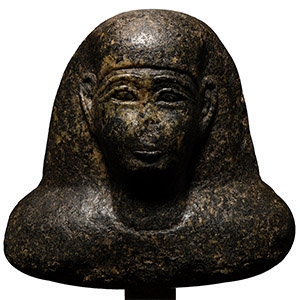
Egyptian Diorite Bust of a Dignitary
Late Period, 664-332 B.C.Sold for (Inc. bp): £4,420
Wearing a heavy wig over a rounded face with cosmetic lines and eyebrows in raised relief; vertical dorsal pillar with partial hieroglyphs to the reverse; some re-cutting, mounted on a custom-made display stand. 2.03 kg total, 20 cm high including stand
Fine condition.
Ex Jean-Paul Bourgis collection, Beaulieu-sur-Mer, France, 1980. This lot has been checked against the Interpol Database of stolen works of art and is accompanied by search certificate no.12128-213629. -
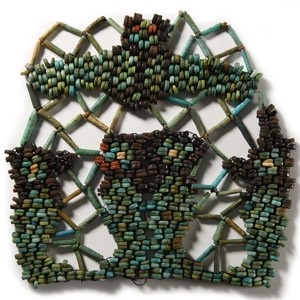
Egyptian Bead Panel with Four Sons of Horus and Winged Scarab
Ptolemaic Period, 332-30 B.C.Sold for (Inc. bp): £130
Restrung as an openwork panel with a winged scarab above and the four sons of Horus below as two opposing pairs. 46 grams, 12.5 cm high
Previously on French art market in the 1990s. Ex London, UK, collection.
The Four Sons of Horus were deities responsible for protecting the internal organs of the deceased. The human-headed Imsety protected the liver, the baboon-headed Hapy protected the lungs, the jackal-headed Duamutef protected the stomach, and the falcon-headed Qebehsenuef protected the intestines.
