
Loading, please wait...
_900x900.jpg "Egyptian Faience Bead Necklace String with Amulets")
_200x200.jpg "Egyptian Faience Bead Necklace String with Amulets")
.jpg "Egyptian Faience Bead Necklace String with Amulets")
LOT 0014
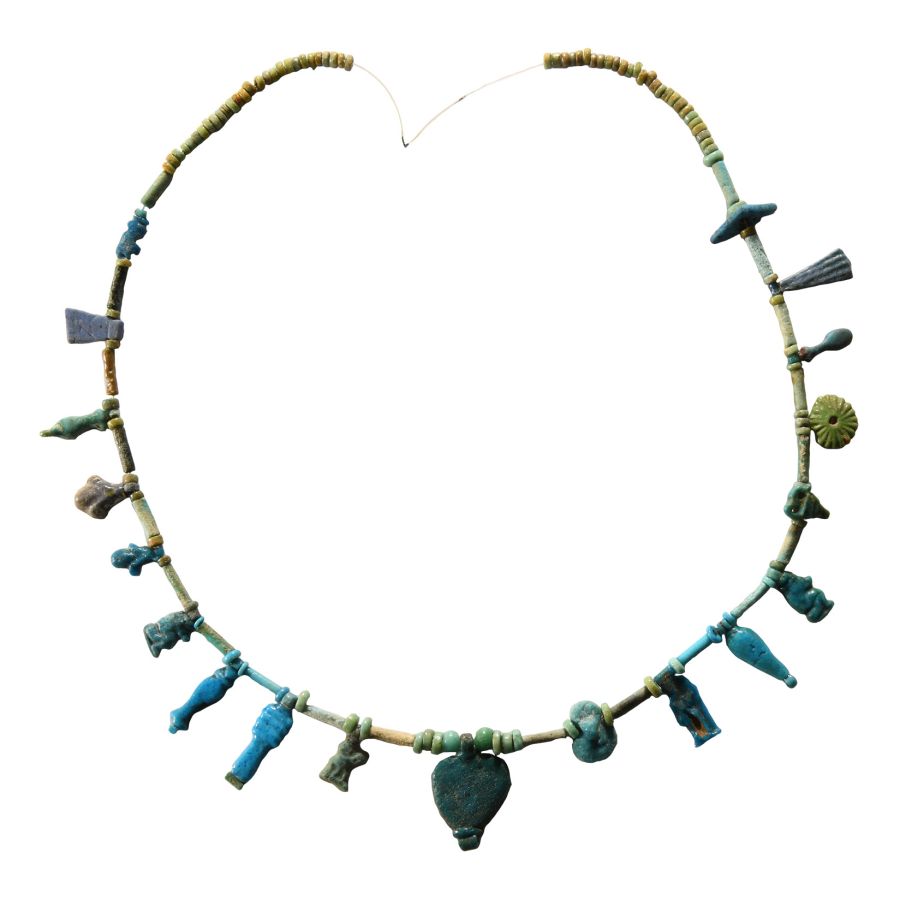
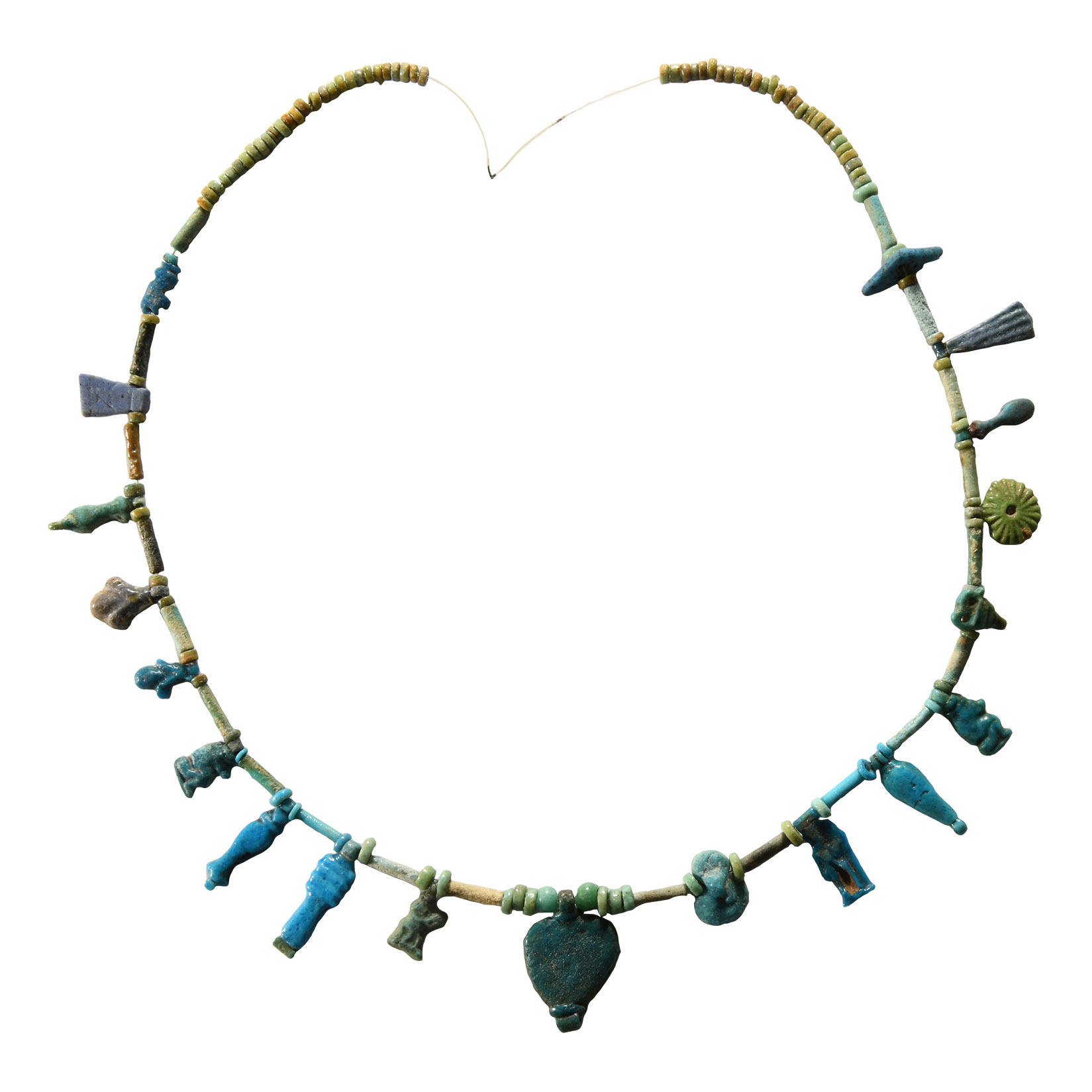
Egyptian Faience Bead Necklace String with Amulets
AMARNA PERIOD, 1353-1336 B.C.
15 3/4 in. (10.4 grams, 40 cm).
Restrung using mainly annular and tubular beads with a large central heart amulet, interspersed with various amulets including: poppy seed, rosette, lotus flower, two Thoth baboons, djed pillar, Bes, and others.
ProvenanceFrom the vendor's grandfather's collection, formed in the 1950s; thence by family descent circa 1974.
LiteratureCf. faience necklaces and pendants with similar typology in Boyce, A., ‘Chapter II, Collar and necklace designs at Amarna: a preliminary study of fayence pendants’ in Kemp, B.J. (ed), Amarna Reports 6, 1955, pp.336-371, figs.11.3-11.4.-11.5.
CONDITIONTimeLine Auctions follows a vetting process to ensure the authenticity and legality of all items, reinforcing our commitment to integrity and responsible trading. Each antiquity, antique, and coin lot undergoes thorough examination by a vetting committee of at least ten external specialists, professional trade association members, scientists, and archaeologists: Our Vetting Process
AUCTIONS:
TimeLine is a leading auction house specialising in antiquities, ancient art, collectables, natural history, coins, medals, and books. Our auctions offer museums, collectors, historians, and enthusiasts the opportunity to acquire unique and historically significant pieces.
LOT 0014
Egyptian Faience Bead Necklace String with Amulets
Estimate £800 - 1,000€930 - 1,160 (for guidance only)$1,080 - 1,350 (for guidance only)
-
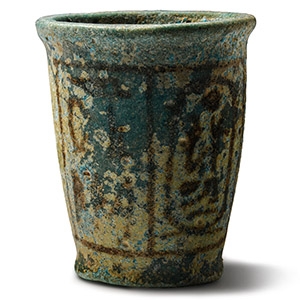
Egyptian Faience Ramesses II Offering Cup
New Kingdom, 19th Dynasty, 1279-1213 B.C.Sold for (Inc. bp): £1,690
Glazed blue and painted with two conjoined rectangular panels, one containing the king's cartouche, the other with the epithet 'beloved of Osiris'. 31 grams, 45 mm
Acquired in Europe before 1994.
Also known as Ramses the Great, famed for his building projects and military achievements, this king was the second longest reigning in Egyptian history, ascending the throne at age 13 and remaining there for around 67 years. -
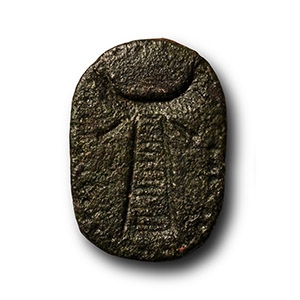
Phoenicio-Egyptian Dark Green Stone Scarab
Circa 6th-4th century B.C.Estimate: £400 - 600 (+bp*)
Opening Bid: £200
With textured carapace, bull-horned column to the reverse. 3.94 grams, 15 mm
From the property of the late Mr SM, London, UK, 1969-1999. -
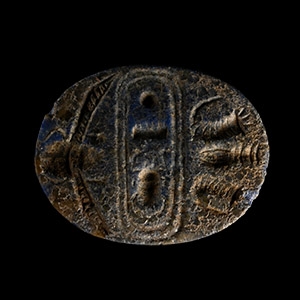
Egypto-Phoenician Lapis Lazuli Scarab with Cartouche for Thutmose III
Late 1st millennium B.C.Estimate: £3,000 - 4,000 (‡+bp*)
Opening Bid: £1,500
With carapace detailing to obverse, plaque with intaglio cartouche for the throne name of Thutmose III, winged scarab and fronds flanking. 7.4 grams, 25 mm
Private collection of Mr S.A., Switzerland, 1990s, thence by descent. This lot has been checked against the Interpol Database of stolen works of art and is accompanied by search certificate no.12127-211877.
