
Loading, please wait...
LOT 0479
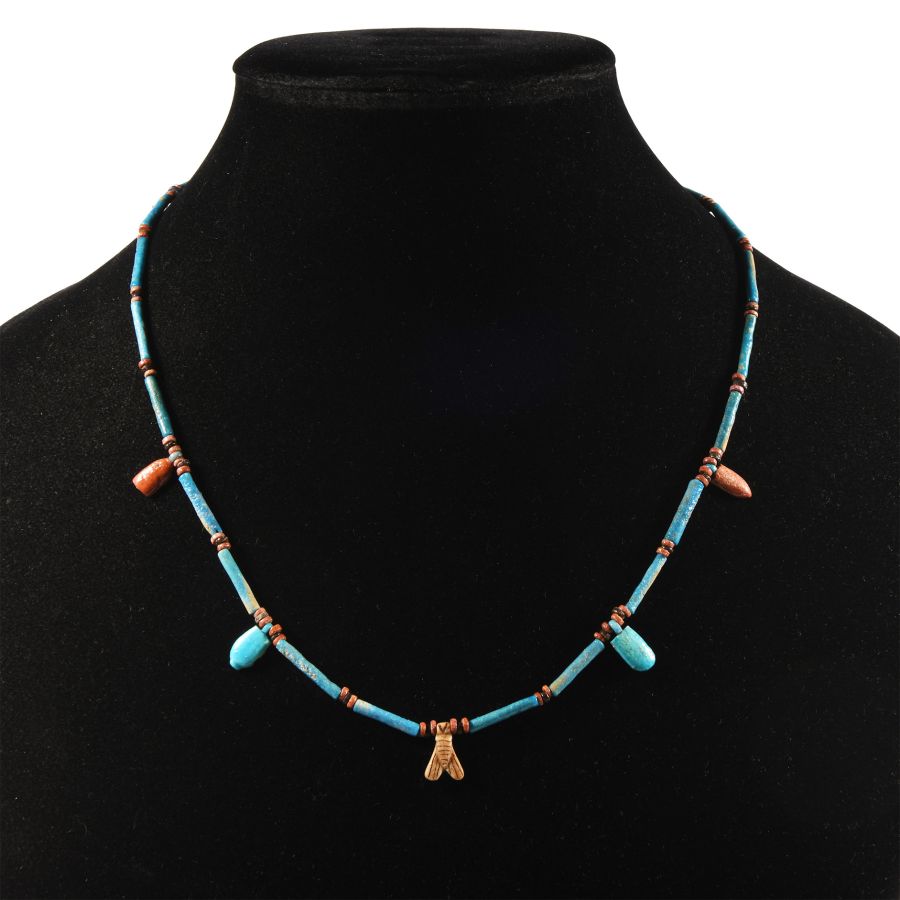
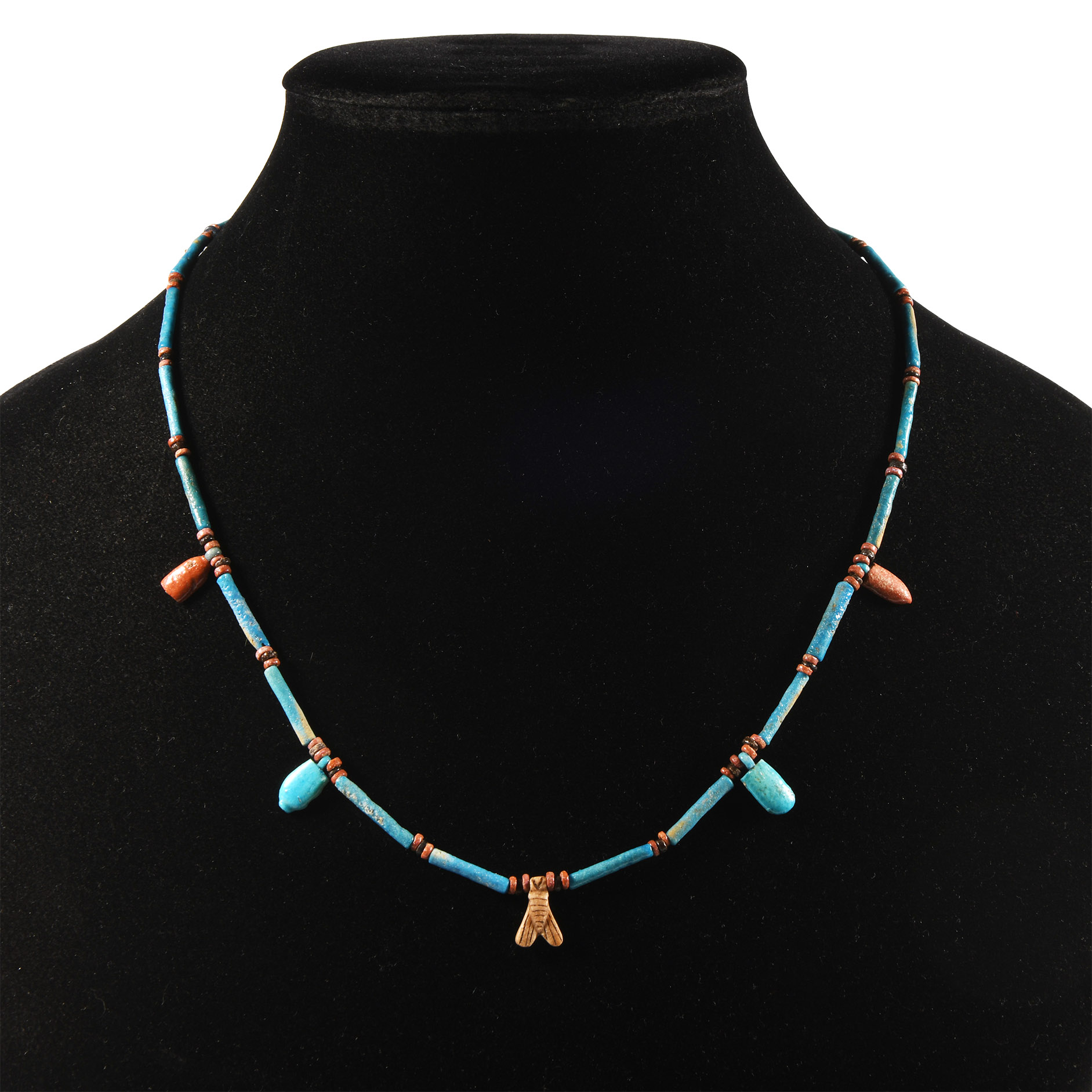
Egyptian Faience Bead and Amulet Necklace
NEW KINGDOM-LATE PERIOD, 1550-332 B.C.
19 in. (5.6 grams, 48 cm long).
Composed of polychrome glazed beads of tubular and annular types, together with pendant amulets including fly and fruit; restrung.
ProvenanceFrom the collection of a London gentleman, 1980s-1990s.
LiteratureCf. Andrews, C., Amulets of Ancient Egypt, London, 1994, pp.62-63, for discussion of the fly amulet.
CONDITIONTimeLine Auctions follows a vetting process to ensure the authenticity and legality of all items, reinforcing our commitment to integrity and responsible trading. Each antiquity, antique, and coin lot undergoes thorough examination by a vetting committee of at least ten external specialists, professional trade association members, scientists, and archaeologists: Our Vetting Process
AUCTIONS:
TimeLine is a leading auction house specialising in antiquities, ancient art, collectables, natural history, coins, medals, and books. Our auctions offer museums, collectors, historians, and enthusiasts the opportunity to acquire unique and historically significant pieces.
-
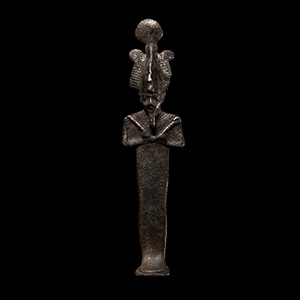
Egyptian Silver Osiris Amulet
Late New Kingdom, circa 1000 B.C.Sold for (Inc. bp): £2,210
Suspension loop to the reverse; Osiris standing wearing the Atef crown, arms folded across the chest holding the crook and flail, regalia of kingship. 8.7 grams, 64 mm
From an early 20th century collection, Home Counties, UK, 1930-1940s. -
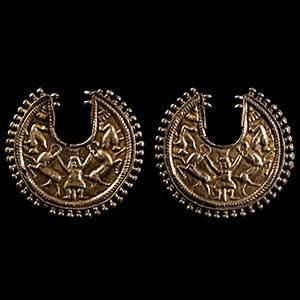
Egypto-Persian Silver-Gilt Earring Pair with Bes Holding Two Ibexes
Circa 530-330 B.C.Sold for (Inc. bp): £2,340
Each with bifacial repoussé decoration depicting the Egyptian god Bes controlling two ibexes, above them two geese or storks facing stylised lotus flowers, projecting knops to the perimeter, four loops to the inner edge. 26.73 grams total, 4.7 cm each
with Riyahi Gallery, London, prior to 1996. Private collection, Switzerland, acquired from the above, 1 July 1996. Acquired from the above, 23 December 2010. Accompanied by a copy of an Art Loss Register certificate, no 5068.C.V. -
.jpg)
Egyptian Glass Inlay Collection
Circa 1st century B.C.-2nd century A.D.Estimate: £120 - 170 (+bp*)
Opening Bid: £60
Comprising sixteen drawn inlays of various colour combinations. 12 grams total, 12-39 mm
Fine condition.
Ex N.A. collection, 1970s. Kept in the U.K. since 2007.
