
Loading, please wait...
LOT 0488
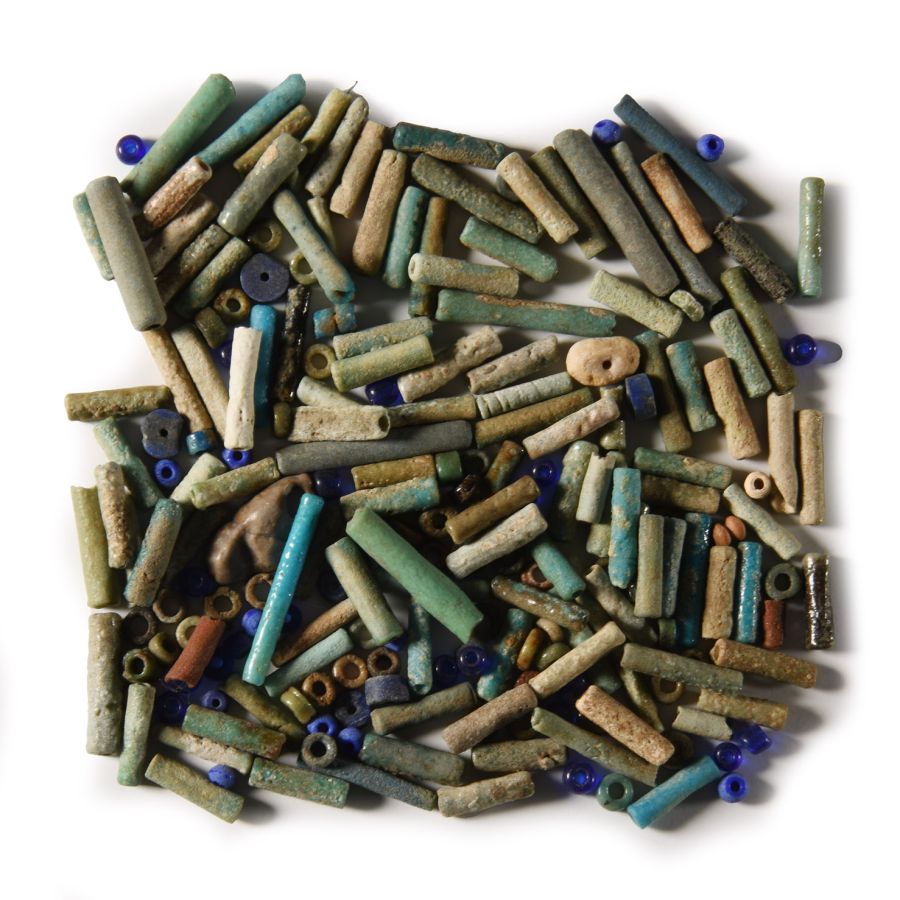
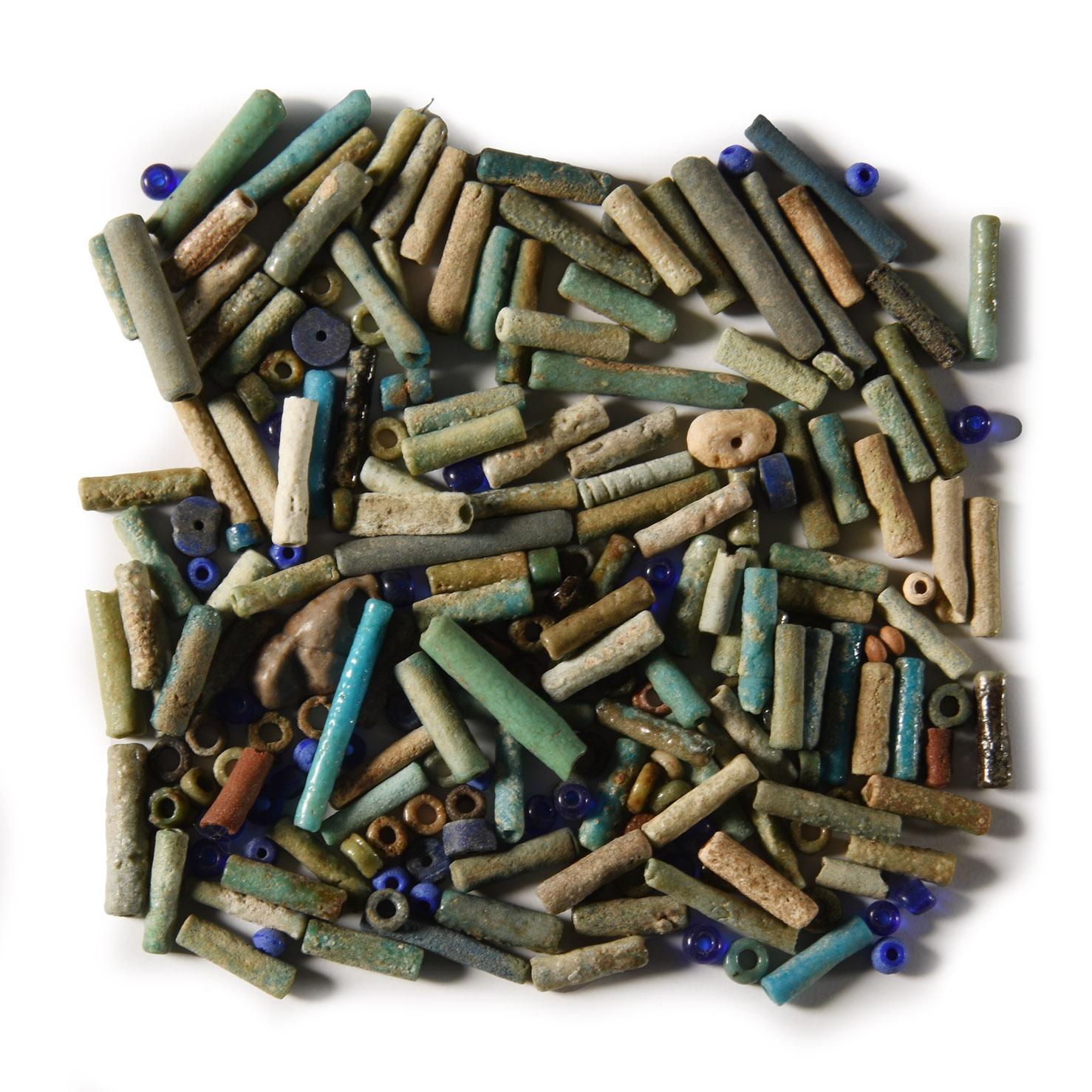
Egyptian Faience and Glass Bead Group
MOSTLY PTOLEMAIC PERIOD, 332-30 B.C.
1/8 - 3/4 in. (15.2 grams total, 2-20 mm).
Mixed group of mostly tubular glazed composition beads in various colours, with later small glass beads. [210+]
ProvenancePreviously with Mariaud de Serres, Paris, France, and from a Paris Gallery.
CONDITIONTimeLine Auctions follows a vetting process to ensure the authenticity and legality of all items, reinforcing our commitment to integrity and responsible trading. Each antiquity, antique, and coin lot undergoes thorough examination by a vetting committee of at least ten external specialists, professional trade association members, scientists, and archaeologists: Our Vetting Process
AUCTIONS:
TimeLine is a leading auction house specialising in antiquities, ancient art, collectables, natural history, coins, medals, and books. Our auctions offer museums, collectors, historians, and enthusiasts the opportunity to acquire unique and historically significant pieces.
-
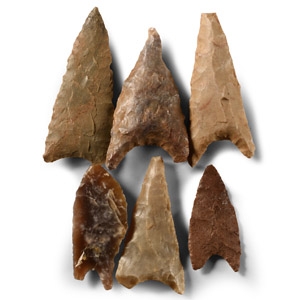
Egyptian Flint Arrowhead Group
Predynastic Period, Naqada II, 4000-3150 B.C.Sold for (Inc. bp): £72
With triangular blade and napped recess to the lower edge. 11.2 grams total, 24-36 mm
From a collection acquired on the UK art market from various auction houses and collections mostly before 2000. From an important Cambridgeshire estate; thence by descent. -
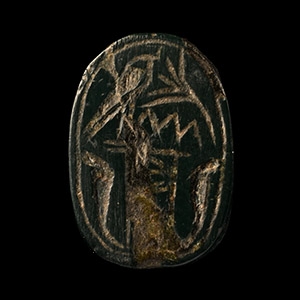
Phoenicio-Egyptian Hardstone Scarab with Hieroglyphs
Circa 6th-4th century B.C.Estimate: £400 - 600 (+bp*)
Opening Bid: £200
Haematite scarab with underside incised Horus falcon and lotus flower atop a fire-altar(?) flanked by uraei. 2.21 grams, 16 mm
Collected from 1969-1999. From the collection of the late Mr S.M., London, UK. -
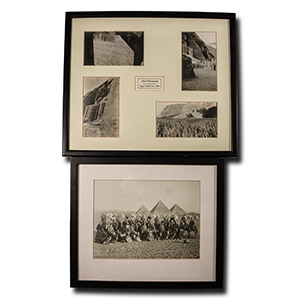
Original Photographs of Abu Simbel and Pyramids
1905 A.D.Sold for (Inc. bp): £111
Montage in a glazed wooden frame comprising four monochrome views of Abu Simbel with caption 'Album Photographs / Silver Gelatin Prints / Egypt Nubia Tour 1905'; plus one other framed photograph by G.M. Georgoulas of a group in front of the Old Kingdom pyramids at Giza dated 29 December 1932. 1.42 kg total, 32 x 27.5 - 37 x 31.5 cm
Property of a North Lincolnshire, UK, gentleman.
The four photographs of Abu Simbel show the original location of the magnificent rock-cut temple complex of Ramesses II before it was dismantled in 1964 and re-assembled on higher ground to rescue it from the rising waters of Lake Nassar.
