
Loading, please wait...
LOT 0521
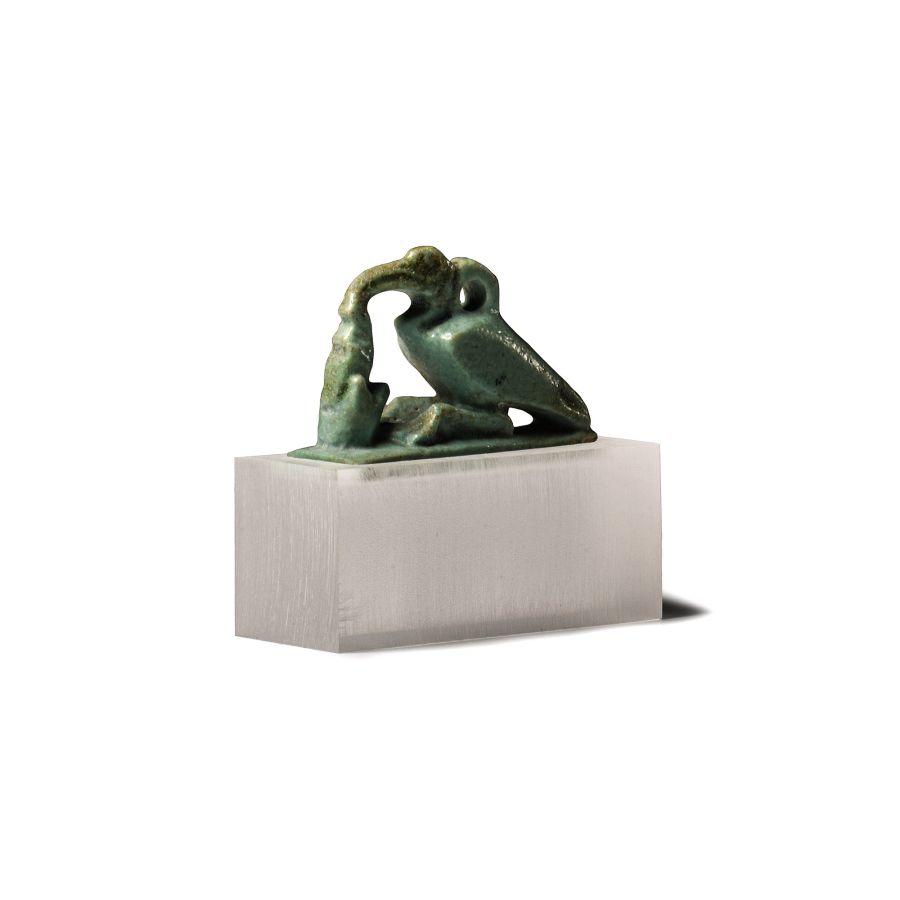
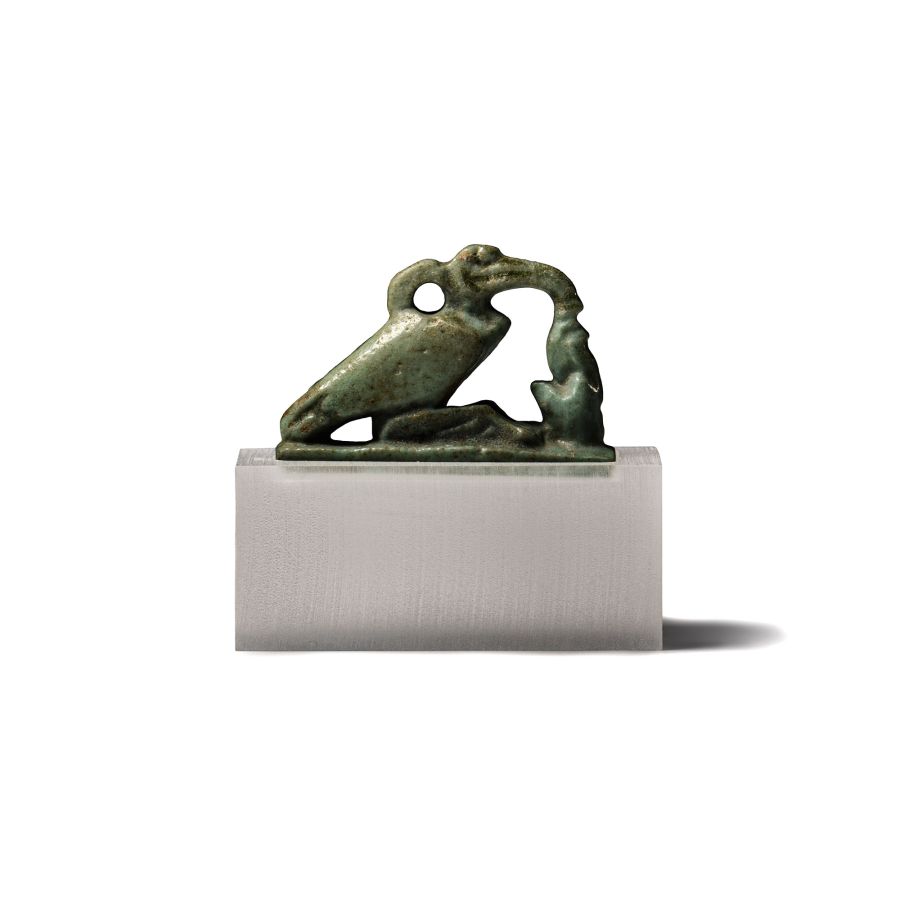
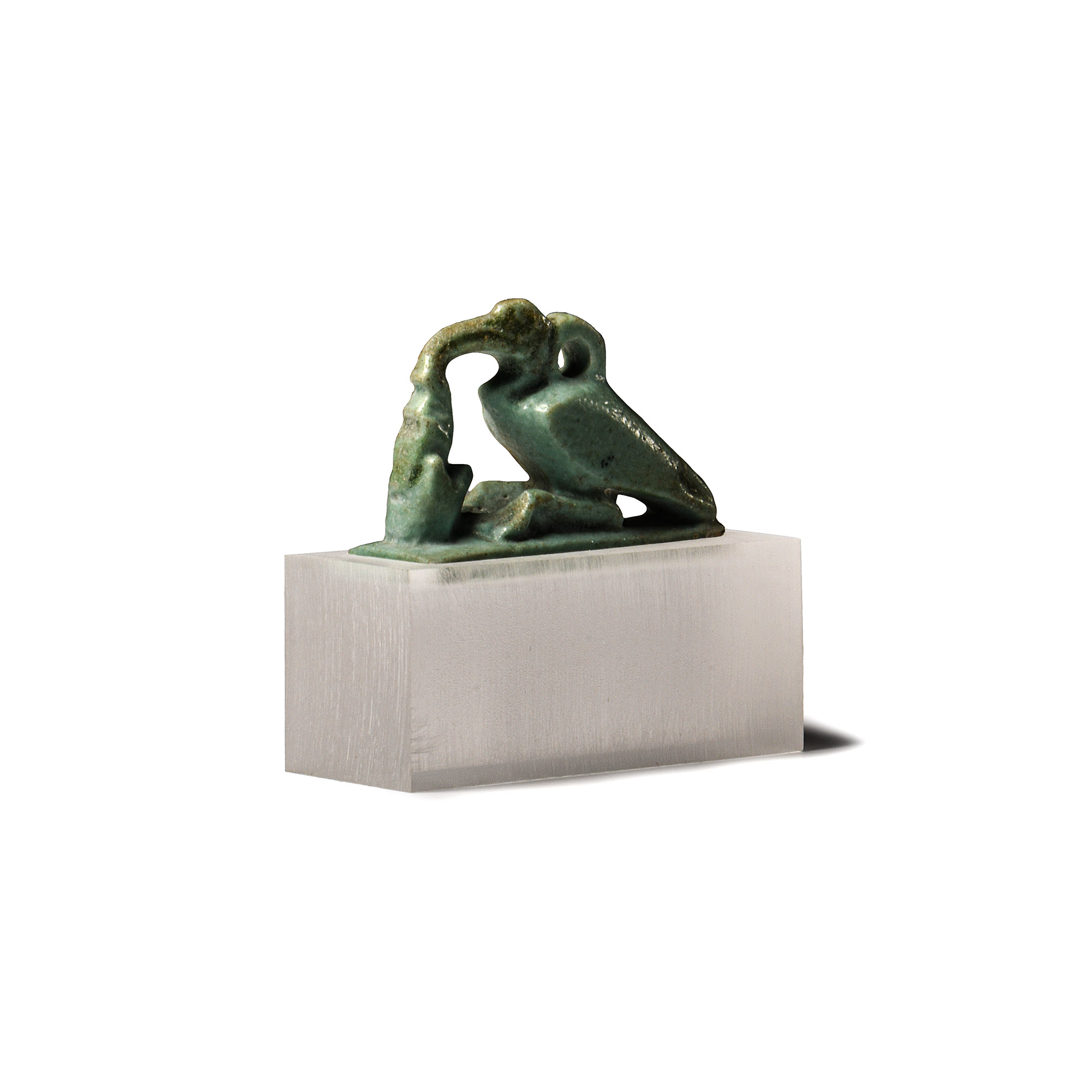
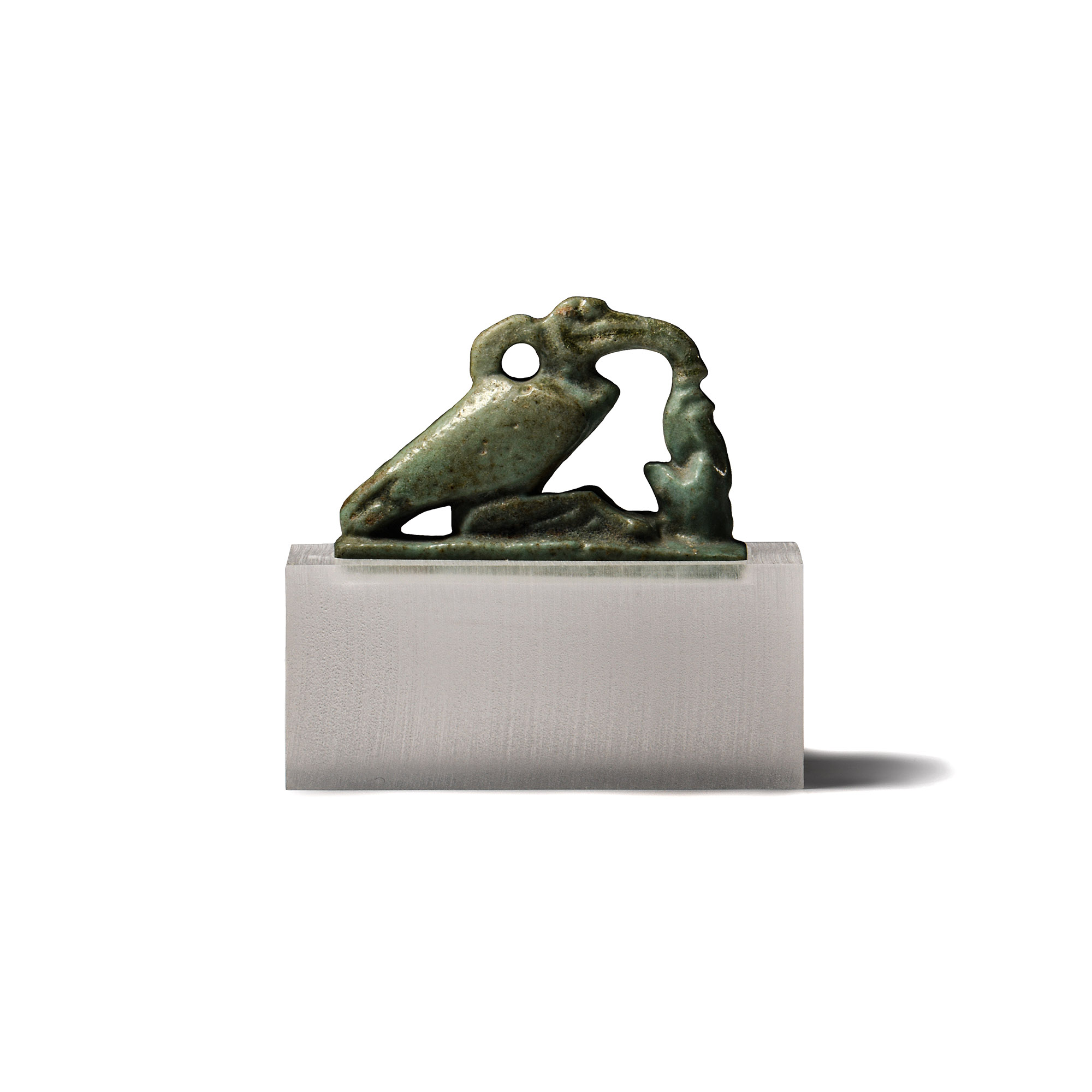
Egyptian Faience Amulet with Thoth as Ibis and Maat
LATE NEW KINGDOM-LATE PERIOD, 1304-332 B.C.
1 5/8 in. (22 grams total, 43 mm wide including stand).
On a wedge-shaped base and decorated in turquoise glaze; the ibis's beak resting on a diminutive figure of the goddess Maat; suspension loop on the neck of the bird; collector's inventory number E509' on the underside; accompanied by a custom-made display base.
ProvenanceEx Reine Margot, 1973.
Ex R. Liechti (1934-2010) Geneva, Switzerland, collection between 1950-1990s.
Cf. Andrews, C., Amulets of Ancient Egypt, London, 1994, p.25, fig.21f, for similar.
FootnotesIn the judgment of the dead (Book of the Dead saying 125), Thoth, who is often represented in ibis form, records the result of weighing the heart of the deceased. The god is therefore mostly depicted in connection with the goddess Maat, whose feather was used as a counterbalance to the purity of the heart; such amulets were thus aimed at protecting the deceased from failing in the decision of the court of the dead.
CONDITIONTimeLine Auctions follows a vetting process to ensure the authenticity and legality of all items, reinforcing our commitment to integrity and responsible trading. Each antiquity, antique, and coin lot undergoes thorough examination by a vetting committee of at least ten external specialists, professional trade association members, scientists, and archaeologists: Our Vetting Process
AUCTIONS:
TimeLine is a leading auction house specialising in antiquities, ancient art, collectables, natural history, coins, medals, and books. Our auctions offer museums, collectors, historians, and enthusiasts the opportunity to acquire unique and historically significant pieces.
LOT 0521
Egyptian Faience Amulet with Thoth as Ibis and Maat
Estimate £1,500 - 2,000€1,740 - 2,320 (for guidance only)$2,030 - 2,700 (for guidance only)
-
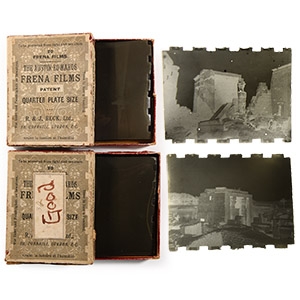
Historic Collection of Thirty-Six Original Slide Images of Egypt Including Archaeological Sites
Circa 1897 A.D.Sold for (Inc. bp): £260
Group of photographic negatives in 'quarter plate size', in two old cardboard lidded boxes, one stamped 'D.W.Collings'; archaeological expedition to Egypt. 168 grams total, 11.6 cm
From the private collection of Dudley Collings, from his travels in Egypt in the late 19th century. -
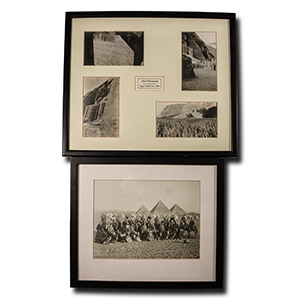
Original Photographs of Abu Simbel and Pyramids
1905 A.D.Sold for (Inc. bp): £111
Montage in a glazed wooden frame comprising four monochrome views of Abu Simbel with caption 'Album Photographs / Silver Gelatin Prints / Egypt Nubia Tour 1905'; plus one other framed photograph by G.M. Georgoulas of a group in front of the Old Kingdom pyramids at Giza dated 29 December 1932. 1.42 kg total, 32 x 27.5 - 37 x 31.5 cm
Property of a North Lincolnshire, UK, gentleman.
The four photographs of Abu Simbel show the original location of the magnificent rock-cut temple complex of Ramesses II before it was dismantled in 1964 and re-assembled on higher ground to rescue it from the rising waters of Lake Nassar. -
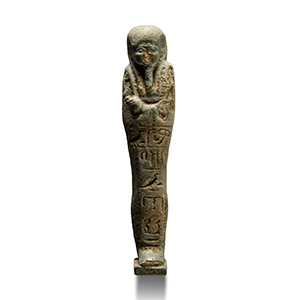
Egyptian Blue Glazed Shabti for Son of Ta-heb
30th Dynasty, 380-343 B.C.Sold for (Inc. bp): £494
Composed as a mummiform figure with tripartite wig and hands crossed at the chest, holding a pick, hoe, and seed bag; a T-shaped panel of hieroglyphic text reading: sḥḏ wsỉr tꜢ.... ms.n tꜢ ḥb mꜢʾ ḫrw, ‘The illuminated, the Osiris, Ta…. born to Ta-heb true of voice’. 36 grams, 10.7 cm
Acquired in Egypt in 1933. Ex Alexander Cameron (1897-1994) collection.
