
Loading, please wait...
LOT 0441
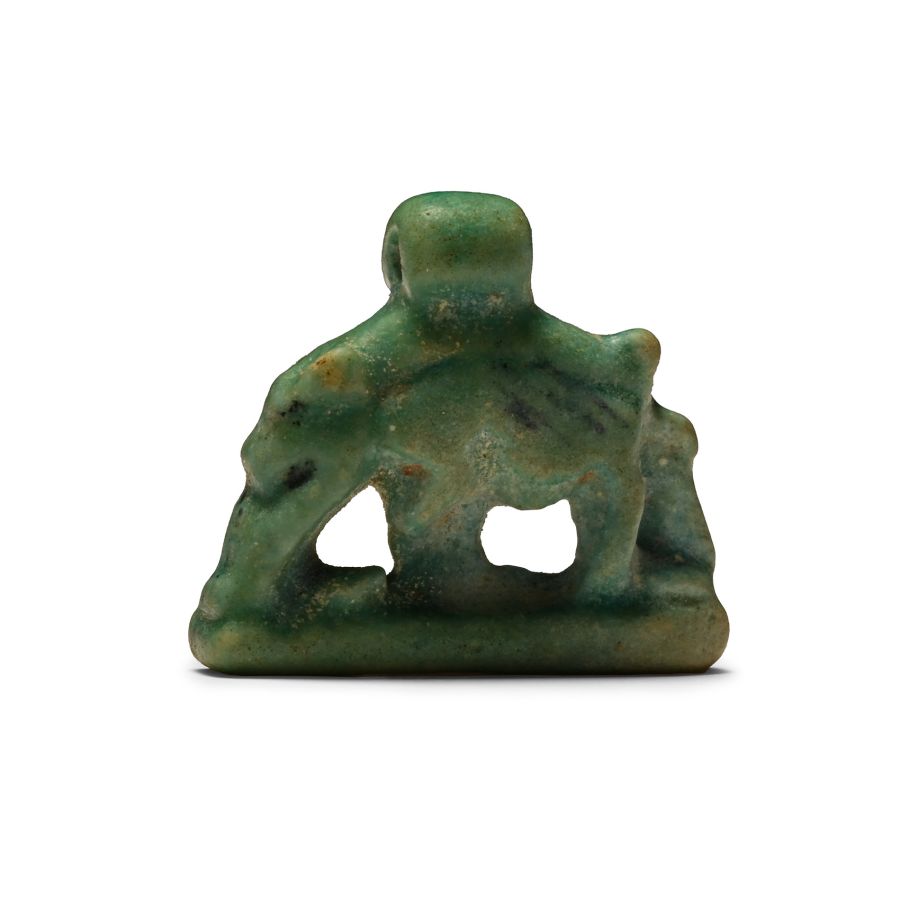
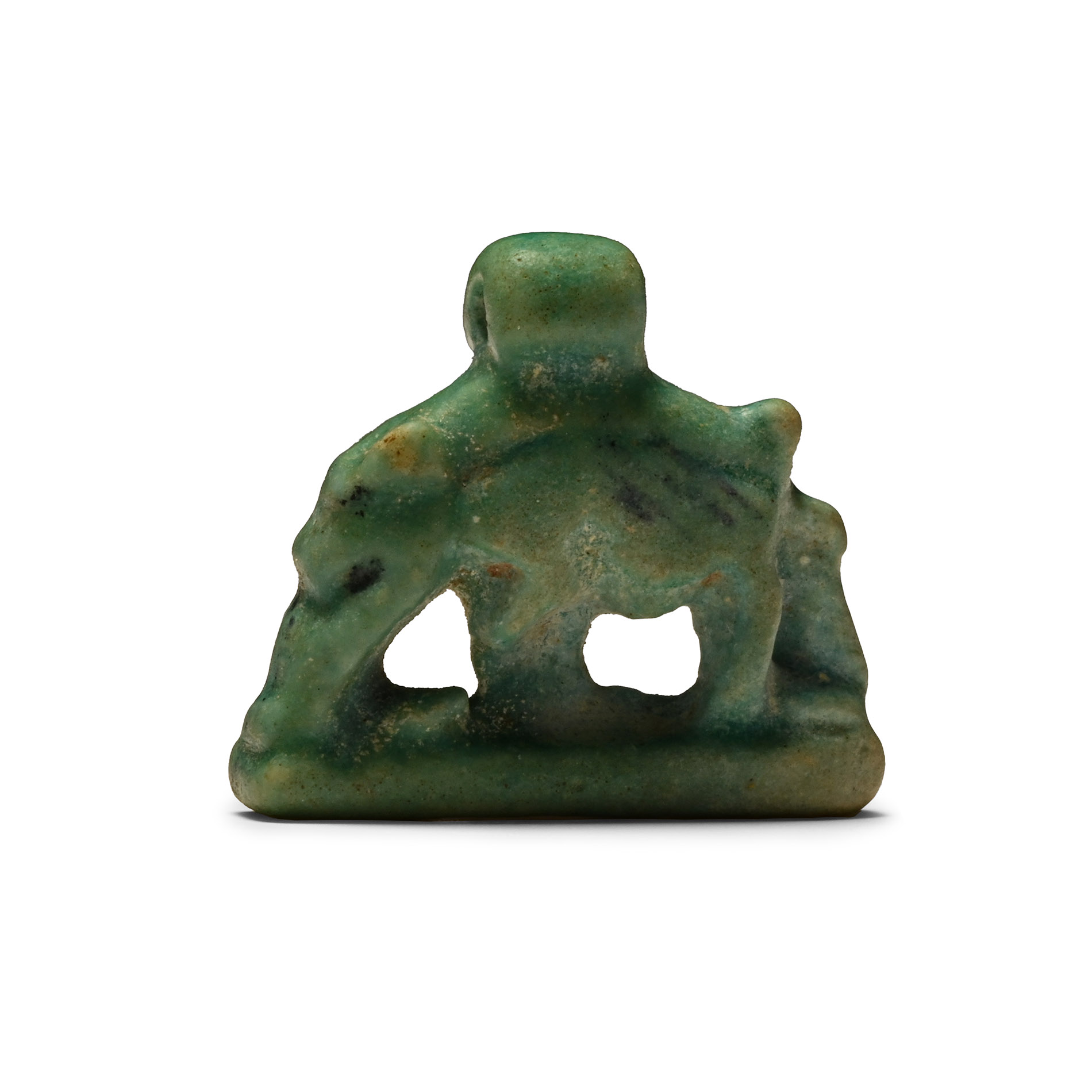
Egyptian Faience Amulet of Nut
LATE PERIOD, 664-332 B.C.
1 in. (2.63 grams, 24 mm).
Amulet of a sow representing the goddess Nut; suspension loop on top. [No Reserve]
ProvenanceFrom the Florence Rosetti collection, UK, circa 1950s.
Property of a Cambridgeshire, UK, gentleman.
Cf. Tinius, I., Altägypten in Braunschweig. Die Sammlungen des Herzog Anton Ulrich-Museums und des Städtischen Museums, Wiesbaden, 2011, p.157, no. 294, for similar.
FootnotesThis miniature sow pendant features a loop at the top and was worn as an amulet. The sow is often associated with the sky goddess Nut, who was believed to give birth to the stars every night, and then consume them at dawn. Despite the sow's reputation for devouring its offspring, Nut, in this form, was revered as a nurturing and safeguarding deity. A sow-shaped amulet was likely intended to offer protection to its wearer.
CONDITIONTimeLine Auctions follows a vetting process to ensure the authenticity and legality of all items, reinforcing our commitment to integrity and responsible trading. Each antiquity, antique, and coin lot undergoes thorough examination by a vetting committee of at least ten external specialists, professional trade association members, scientists, and archaeologists: Our Vetting Process
AUCTIONS:
TimeLine is a leading auction house specialising in antiquities, ancient art, collectables, natural history, coins, medals, and books. Our auctions offer museums, collectors, historians, and enthusiasts the opportunity to acquire unique and historically significant pieces.
-
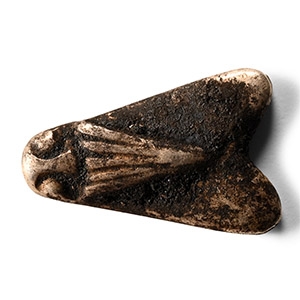
Egyptian Silver Fly Amulet
Late Period, 664-332 B.C.Sold for (Inc. bp): £338
Pendant formed as a fly with domed eyes. 1.13 grams, 16 mm
From an early 20th century collection.
Considering Egyptian artists often depicted fly whisks in the hands of pharaohs and high officials, one might assume that flies were simply a nuisance. However, the Egyptians held flies in high regard due to their quick speed, reactions, and persistence. Small fly amulets were made from various materials, including gold, silver, lapis lazuli, carnelian, amethyst, faience, and bone. They were believed to protect against insect bites and ward off flying creatures through apotropaic magic. Additionally, the pharaoh would give gold fly-shaped pendants as military awards to recognise the bravery and persistence of soldiers in battle. -
.jpg)
Phoenician Green Jasper Scarab with Heads of Horus
6th-5th century B.C.Sold for (Inc. bp): £2,860
Scarab with detailed anatomical features, ellipsoid plaque with incuse inset motif topped at each end by the head of Horus; supplied with a museum-quality impression. 4.4 grams, 20 mm
Ex private collection of Mrs J.H., London, UK, early 1990s. -
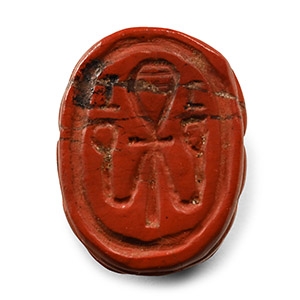
Egyptian Orange Jasper Scarab
New Kingdom, 1550-1069 B.C.Sold for (Inc. bp): £286
Carved with design to the underside of a central ankh symbol flanked by stylised rearing cobras. 1.52 grams, 13 mm
From an early 20th century collection.
