
Loading, please wait...


LOT 0464
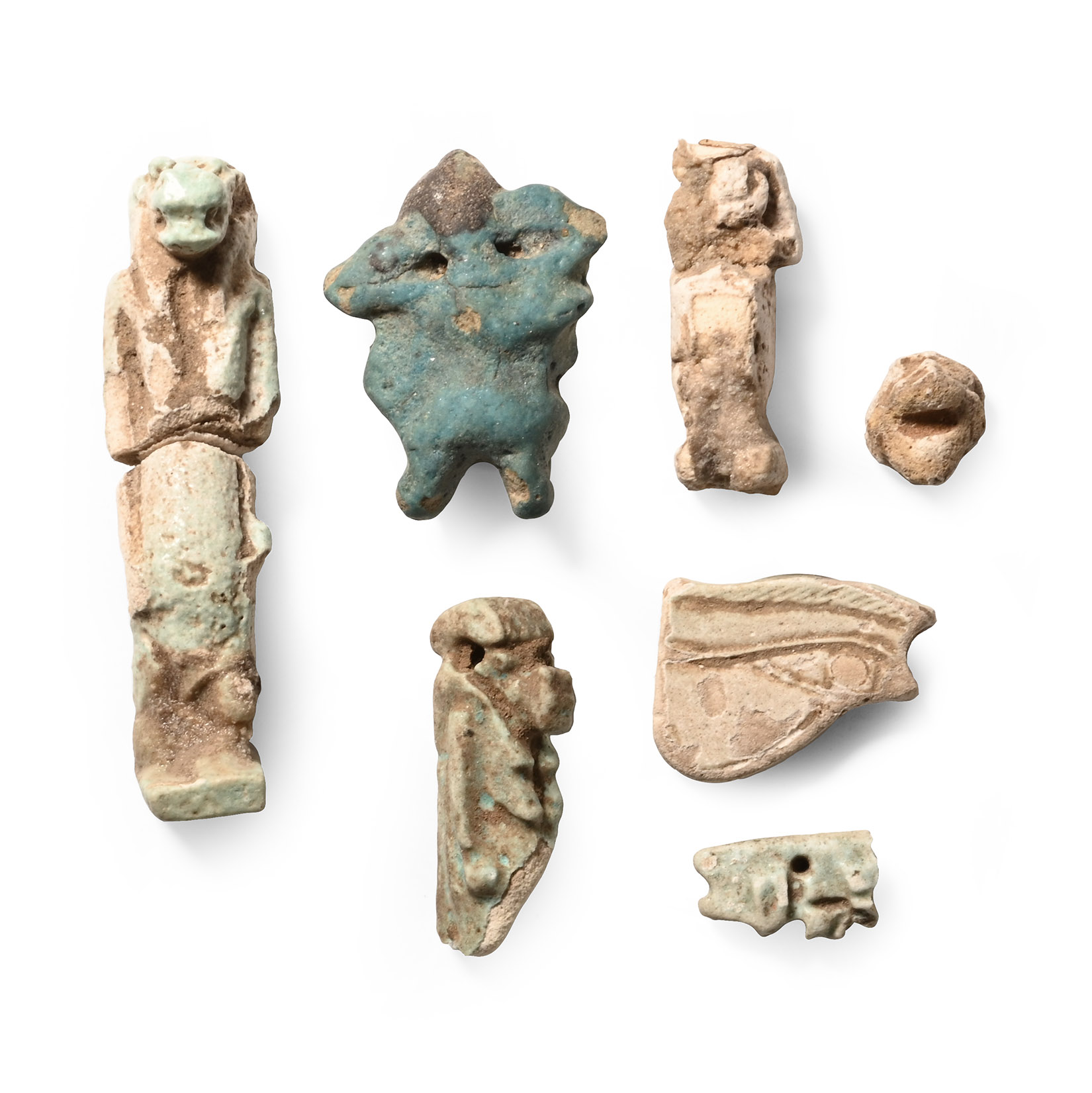
Egyptian Faience Amulet Group
MAINLY LATE PERIOD, 664-332 B.C.
1/2 - 1 1/4 in. (27 grams total, 11-31 mm).
Comprising fragmentary amulets including, a wedjat-eye of Horus, Tawaret, a seated Isis, a Tawaret in two parts, and Bes. [7, No Reserve]
ProvenanceFrom an early 20th century Home Counties, UK, collection.
CONDITIONTimeLine Auctions follows a vetting process to ensure the authenticity and legality of all items, reinforcing our commitment to integrity and responsible trading. Each antiquity, antique, and coin lot undergoes thorough examination by a vetting committee of at least ten external specialists, professional trade association members, scientists, and archaeologists: Our Vetting Process
AUCTIONS:
TimeLine is a leading auction house specialising in antiquities, ancient art, collectables, natural history, coins, medals, and books. Our auctions offer museums, collectors, historians, and enthusiasts the opportunity to acquire unique and historically significant pieces.
-
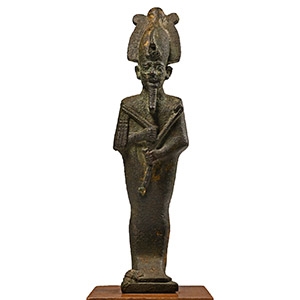
Egyptian Bronze Figure of Osiris
Late Period, 664-332 B.C.Sold for (Inc. bp): £5,980
Solid cast mummiform figure standing on an integral plinth; the god cloaked in a tight-fitting shroud, sporting the ostrich-plumed atef crown with uraeus, divine beard, and holding the characteristic crook and flail regalia; traces of gilding remain; mounted on a custom-made display stand. 811 grams total, 21 cm including stand
Private collection, 19th century, thence by descent. Private collection, Neuchâtel. This lot has been checked against the Interpol Database of stolen works of art and is accompanied by search certificate number no.12195-222135.
Osiris is a deity who represents death and fertility and is commonly regarded as the quintessential god of rebirth. Though he was once a mortal ruler, as a deceased entity, his domain was the Underworld. Abydos was the primary centre of Osiris’s cult, where a renowned yearly celebration of the god was held. -
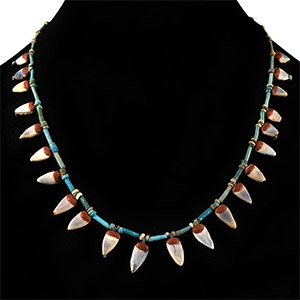
Egyptian Amarna Period Beaded Fruit Necklace
18th Dynasty, 1332-1346 B.C.Sold for (Inc. bp): £598
Restrung necklace of annular and tabular beads with fructiform amulets. 13.1 grams, 44 cm
Ex London, UK, collection, 1990s.
Petal-shaped beads of faience and glass were widely used in jewellery during the Amarna Period. During this era, advanced production methods enabled the creation of bi-chrome and polychrome designs, which often included newly developed colours. This resulted in vibrant necklaces that resembled festive collars made of natural floral elements. -
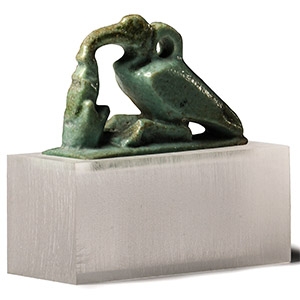
Egyptian Faience Amulet with Thoth as Ibis and Maat
Ptolemaic Period, 332-30 B.C.Estimate: £1,200 - 1,700 (‡+bp*)
Opening Bid: £667
On a wedge-shaped base and decorated in turquoise glaze; the ibis's beak resting on a diminutive figure of the goddess Maat; suspension loop on the neck of the bird; collector's inventory number E509' on the underside; accompanied by a custom-made display base. 22 grams total, 43 mm wide including stand
Ex Reine Margot, 1973. Ex R. Liechti (1934-2010) Geneva, Switzerland, collection between 1950-1990s.
In the judgment of the dead (Book of the Dead saying 125), Thoth, who is often represented in ibis form, records the result of weighing the heart of the deceased. The god is therefore mostly depicted in connection with the goddess Maat, whose feather was used as a counterbalance to the purity of the heart; such amulets were thus aimed at protecting the deceased from failing in the decision of the court of the dead.
