
Loading, please wait...
LOT 0508
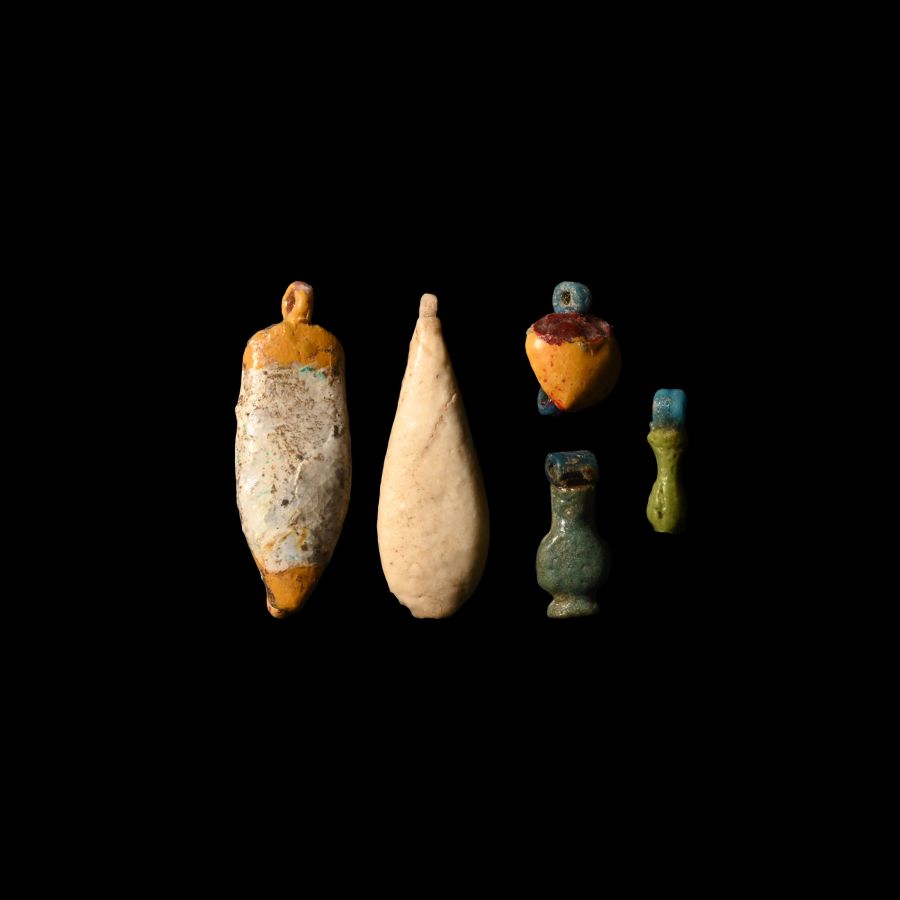
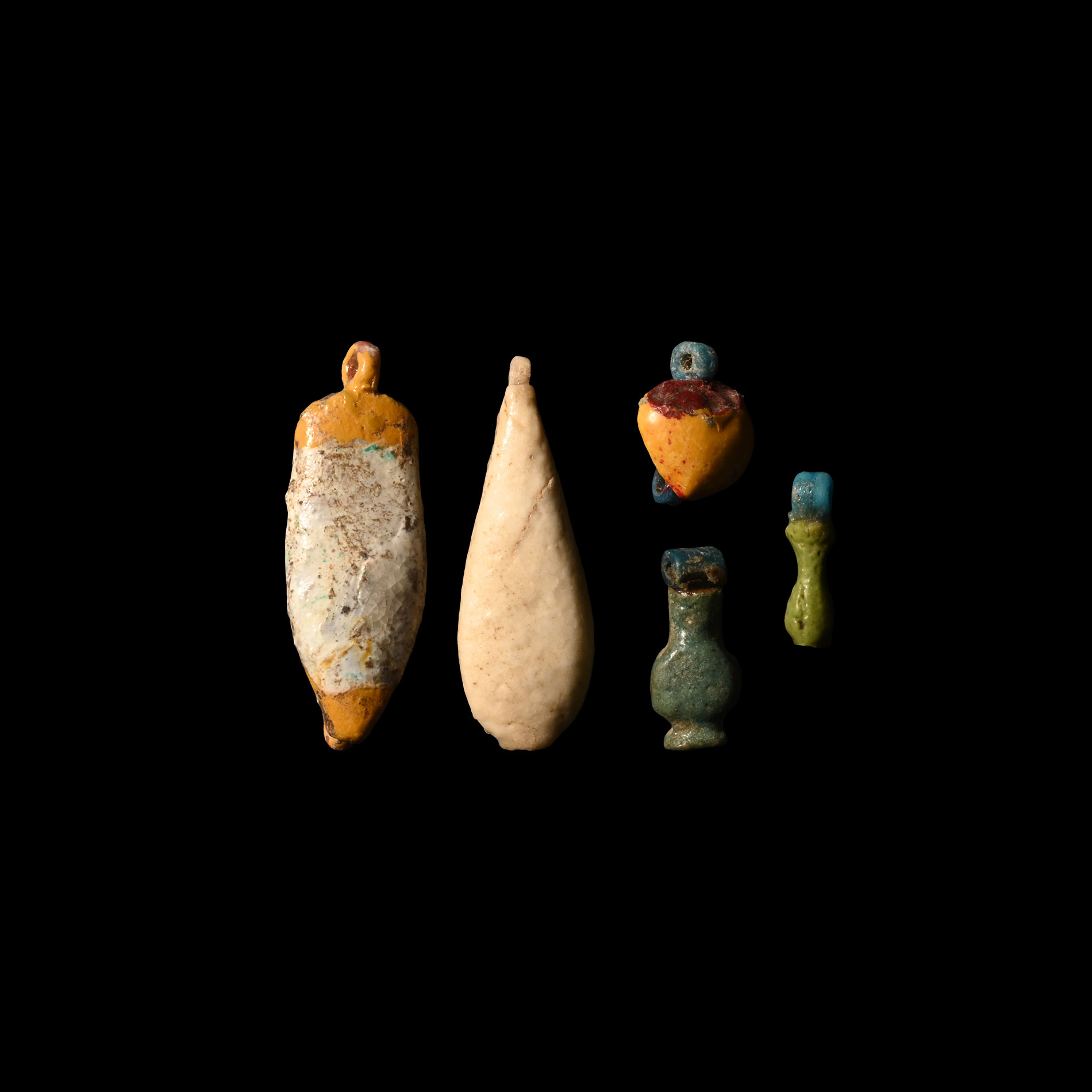
Egyptian Faience Amulet Group
NEW KINGDOM, AMARNA PERIOD, 1353-1336 B.C.
3/8 - 7/8 in. (1.53 grams total, 9-22 mm).
Composed of polychrome amulets of various types, with suspension loops. [5]
ProvenanceFrom an early 20th century collection, Surrey, UK.
CONDITIONTimeLine Auctions follows a vetting process to ensure the authenticity and legality of all items, reinforcing our commitment to integrity and responsible trading. Each antiquity, antique, and coin lot undergoes thorough examination by a vetting committee of at least ten external specialists, professional trade association members, scientists, and archaeologists: Our Vetting Process
AUCTIONS:
TimeLine is a leading auction house specialising in antiquities, ancient art, collectables, natural history, coins, medals, and books. Our auctions offer museums, collectors, historians, and enthusiasts the opportunity to acquire unique and historically significant pieces.
-
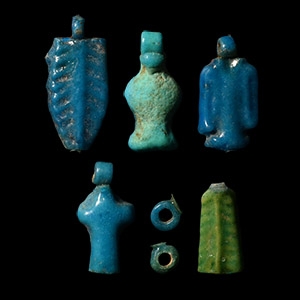
Egyptian Faience Amulet Group
New Kingdom, Amarna Period, 1353-1336 B.C.Sold for (Inc. bp): £169
Composed of polychrome amulets of various types, with suspension loops, including fruits and a feathered plume. 0.78 grams total, 3-13 mm
From an early 20th century collection, Surrey, UK. -
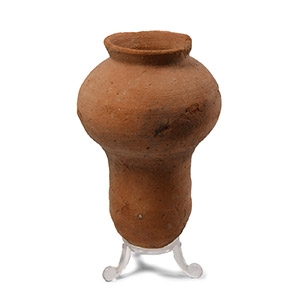
Egyptian Round-Bottomed Terracotta Vessel
Middle Kingdom, 2040-1782 B.C. or laterSold for (Inc. bp): £65
With a bulbous shoulder, everted rim and U-shaped foot; accompanied by an acrylic display base. 173 grams, 11.8 cm high
Ex North Yorkshire deceased estate, 1990s. -
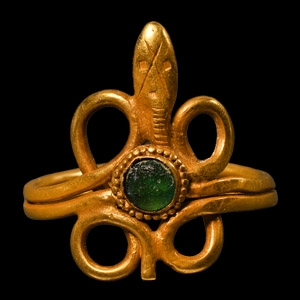
Romano-Egyptian Gold Serpent Ring
Roman Period, 30 B.C.-323 A.D. or laterSold for (Inc. bp): £4,160
The hoop a double-coil with lateral loops, lentoid head, applied cell with beaded wire collar and inset green glass cabochon. 4.32 grams, 21.57 mm overall, 17.47 mm internal diameter (approximate size British M, USA 6, Europe 12.46, Japan 12)
From the Gustave Mustaki collection, Alexandria, Egypt. Acquired early to mid 20th century and exported under Egyptian government license. with Charles Ede 1990s.
