
Loading, please wait...
LOT 0500
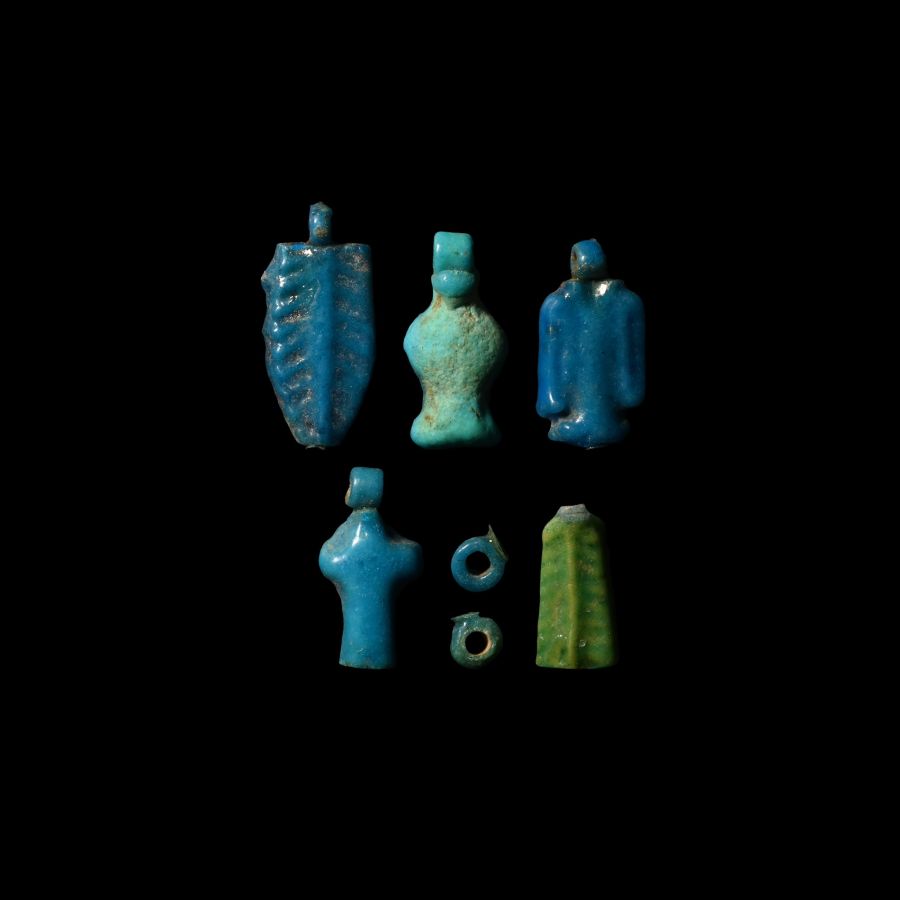
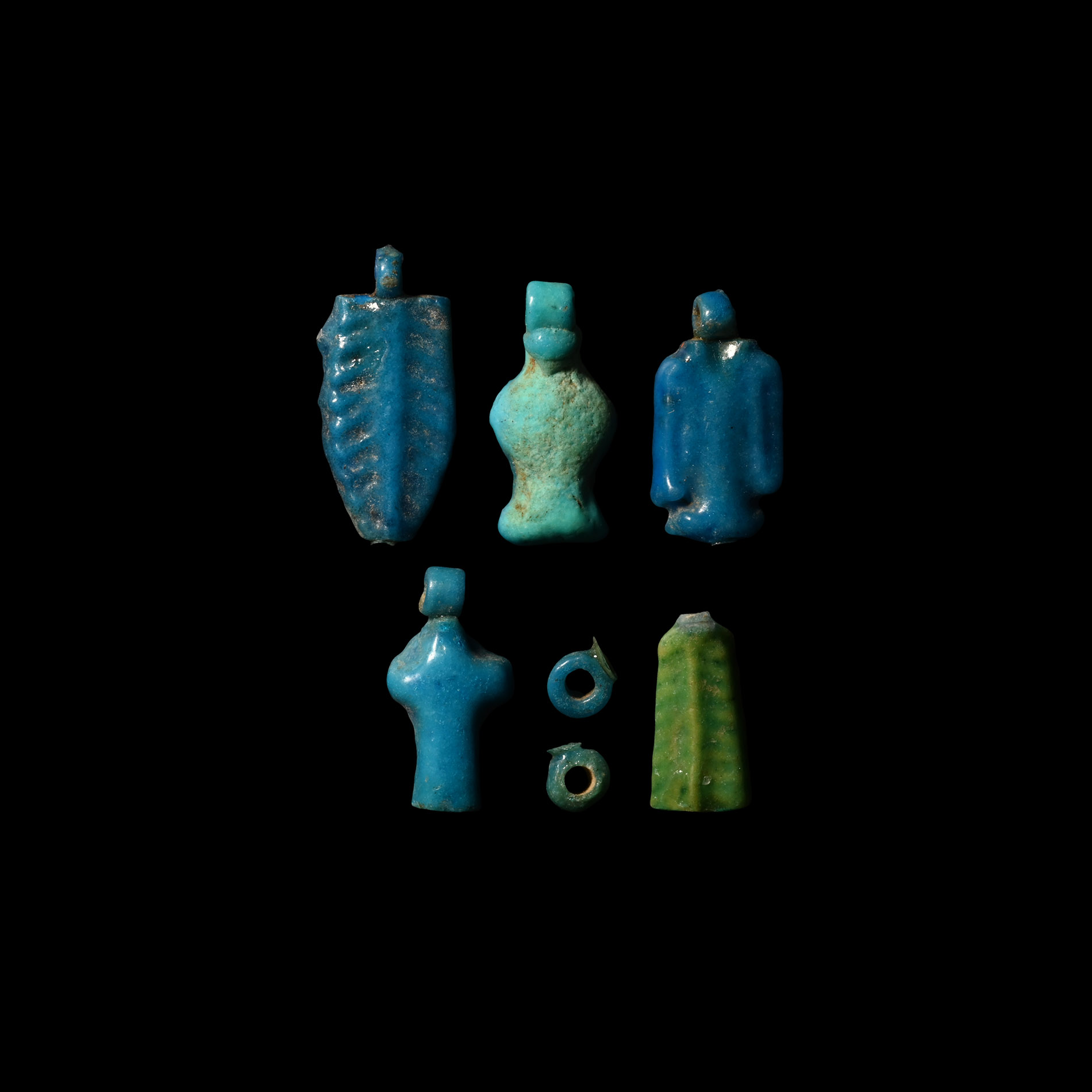
Egyptian Faience Amulet Group
NEW KINGDOM, AMARNA PERIOD, 1353-1336 B.C.
1/8 - 1/2 in. (0.78 grams total, 3-13 mm).
Composed of polychrome amulets of various types, with suspension loops, including fruits and a feathered plume. [7]
ProvenanceFrom an early 20th century collection, Surrey, UK.
CONDITIONTimeLine Auctions follows a vetting process to ensure the authenticity and legality of all items, reinforcing our commitment to integrity and responsible trading. Each antiquity, antique, and coin lot undergoes thorough examination by a vetting committee of at least ten external specialists, professional trade association members, scientists, and archaeologists: Our Vetting Process
AUCTIONS:
TimeLine is a leading auction house specialising in antiquities, ancient art, collectables, natural history, coins, medals, and books. Our auctions offer museums, collectors, historians, and enthusiasts the opportunity to acquire unique and historically significant pieces.
-
.jpg)
Egyptian Hardstone Scarab with Horus
1st millennium B.C.Estimate: £600 - 800 (+bp*)
Opening Bid: £300
Carved with naturalistic anatomical detailing, the base with incused sun-disk and Horus falcon holding a flail, above neb hieroglyph; drilled for suspension. 2.51 grams, 17 mm
From an early 20th century Home Counties, UK, collection.
The sign group reads: 'Lord Ra-Horakhty'. -
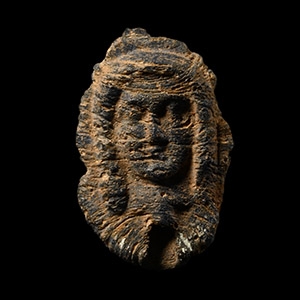
Phoenician Blue Glass Bifacial 'Lady in the Window' Type Pierced Disc
7th-6th century B.C.Sold for (Inc. bp): £124
Composed of a bifacial oval plaque showing a female face in relief to both sides, stylised facial detailing and shoulder-length hair; mounting socket to one end. 2.49 grams, 26 mm
From the private collection of the late Mr S.M., London, UK, thence by descent. -
.jpg)
Large Egyptian Faience Cartouche Amulet for the Pharaoh Apries
26th Dynasty, 664-525 B.C.Sold for (Inc. bp): £208
Displaying Wahibre, the birth name of the 26th Dynasty pharaoh Apries on one face; his throne name, Haaibre (rendered 'Apries' in Hellenistic times) on the other; repaired. 7.7 grams, 41 mm
Fine condition, repaired.
Acquired 1980s-1990s. Private collection of H. N., Milton Keynes, Berkshire, UK.
This plaque was almost certainly once part of a foundation deposit of a temple built in the reign of this pharaoh. A similar, albeit slightly thicker, double-sided cartouche-shaped plaque of this king is in the Metropolitan Museum of Art (accession number 02.4.105b).
