
Loading, please wait...

LOT 0523
Egyptian Faience Amulet Collection
1ST MILLENNIUM B.C.
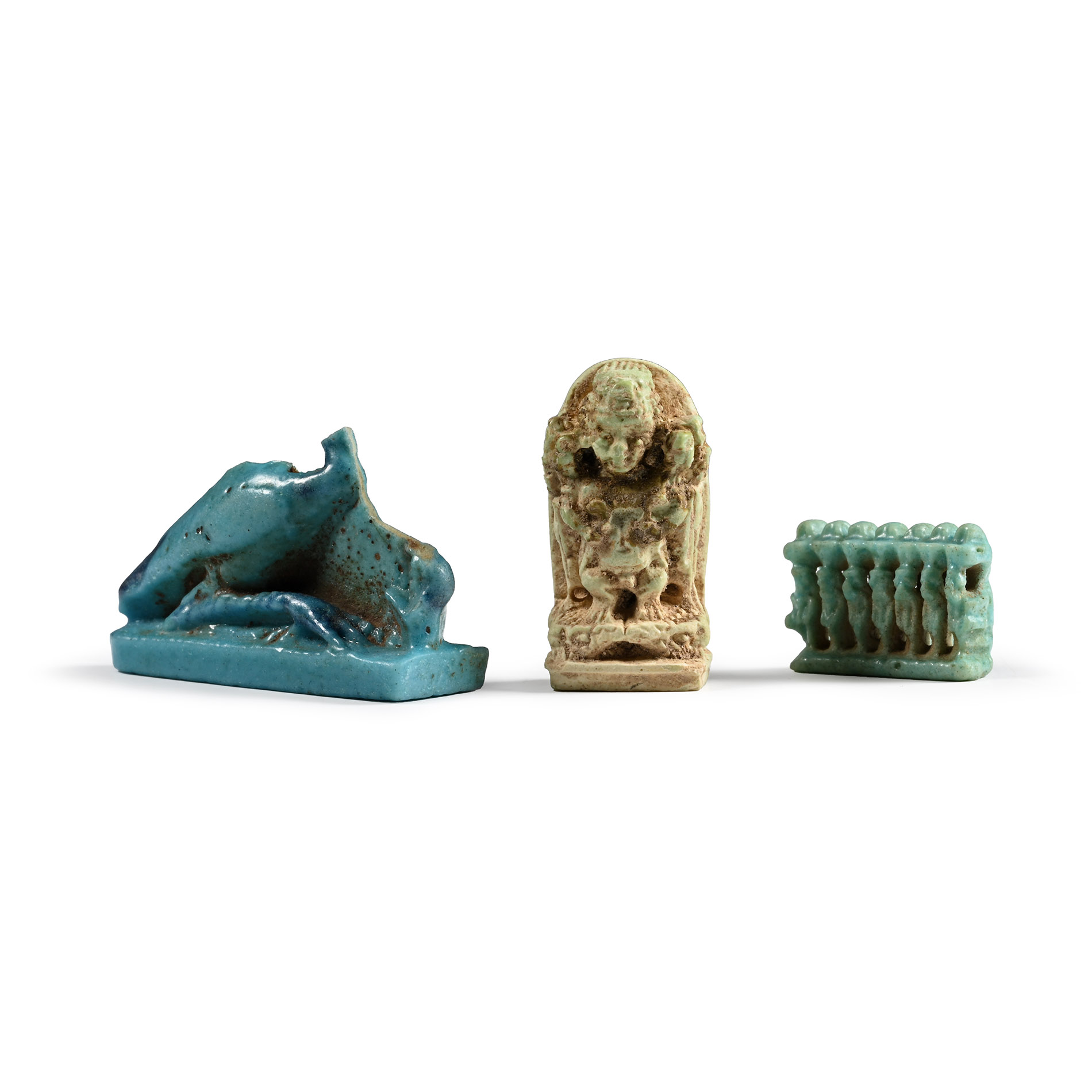
5/8 - 1 1/4 in. (6.5 grams total, 16-30 mm).
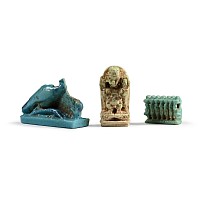
Comprising: a row of Tawaret figures on a rectangular base; ibis on a tongue-shaped base; Pataikos flanked by two figures wearing a red crown with uraeus. [3]
ProvenanceAcquired in the mid 1980s-1990s.
Private collection, Switzerland, thence by descent.
Private collection, since the late 1990s.
TimeLine Auctions follows a vetting process to ensure the authenticity and legality of all items, reinforcing our commitment to integrity and responsible trading. Each antiquity, antique, and coin lot undergoes thorough examination by a vetting committee of at least ten external specialists, professional trade association members, scientists, and archaeologists: Our Vetting Process
AUCTIONS:
TimeLine is a leading auction house specialising in antiquities, ancient art, collectables, natural history, coins, medals, and books. Our auctions offer museums, collectors, historians, and enthusiasts the opportunity to acquire unique and historically significant pieces.
LOT 0523
Egyptian Faience Amulet Collection
Estimate £700 - 900€810 - 1,040 (for guidance only)$950 - 1,220 (for guidance only)
-
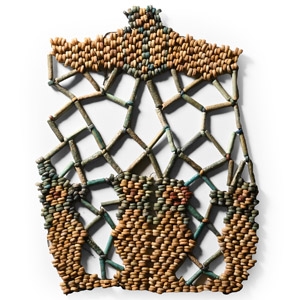
Egyptian Faience Mummy Bead Panel with Four Sons of Horus
Ptolemaic Period, 332-30 B.C.Sold for (Inc. bp): £117
Restrung as an openwork panel with a winged scarab above and the Four Sons of Horus below as two opposing pairs; restrung with some later beads. 34.6 grams, 15 cm
From an early 20th century Home Counties, UK, collection.
These elements would have been placed on the chest and body below a beadwork mummy mask. Winged scarabs were often used as funerary amulets and believed to symbolise the deceased's rebirth and regeneration. The Four Sons of Horus protected the deceased's internal organs. Here, on the left, is the erect-eared jackal-headed Duamutef who protects the stomach, followed by the falcon-headed Qebehsenuef, who protects the intestines, then the human-headed Imsety, protector of the liver and, finally, the baboon-headed Hapy on the right, protector of the lungs. -
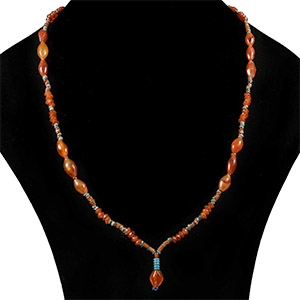
Egyptian Hardstone and Faience Necklace
Late Period, 664-332 B.C.Estimate: £600 - 800 (+bp*)
Opening Bid: £300
Comprising groups of three oval carnelian beads with interstitial biconvex and annular beads, a turquoise faience ribbed tubular bead and an irregular polyhedral carnelian centrepiece. 35 grams, 70 cm
From the private collection of the late Mrs Belinda Ellison, long time member of the Egyptian Exploration Society, c.1940-2020. -
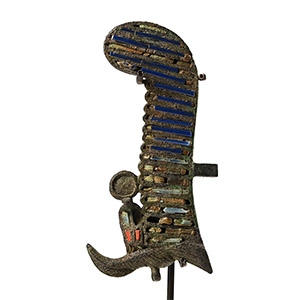
Egyptian Bronze and Glass Inlaid Ostrich Feather from an Atef Crown
Late Period-Ptolemaic Period, circa 664-30 B.C.Sold for (Inc. bp): £650
Stylised ostrich plume surmounting a ram's horn, uraeus with sun disk to one side; side tang and loop on the underside for attachment; the plume decorated with a series of narrow horizontal recesses to accept inlays, with some original remaining as well as later replacements in blue glass. 244 grams total, 18.5 cm
UK private collection of Werner Forman (1921-2010), formed between 1950-1980.
The atef crown consists of a central element similar to the hedjet or White Crown, flanked by two ostrich feathers, often with a pair of ram's horns beneath and uraei on either side. The meaning of atef is uncertain, but it may mean either 'his might' or 'his terror'. The crown first appeared in the 5th Dynasty and is particularly associated with the underworld god Osiris.
