
Loading, please wait...
LOT 0515
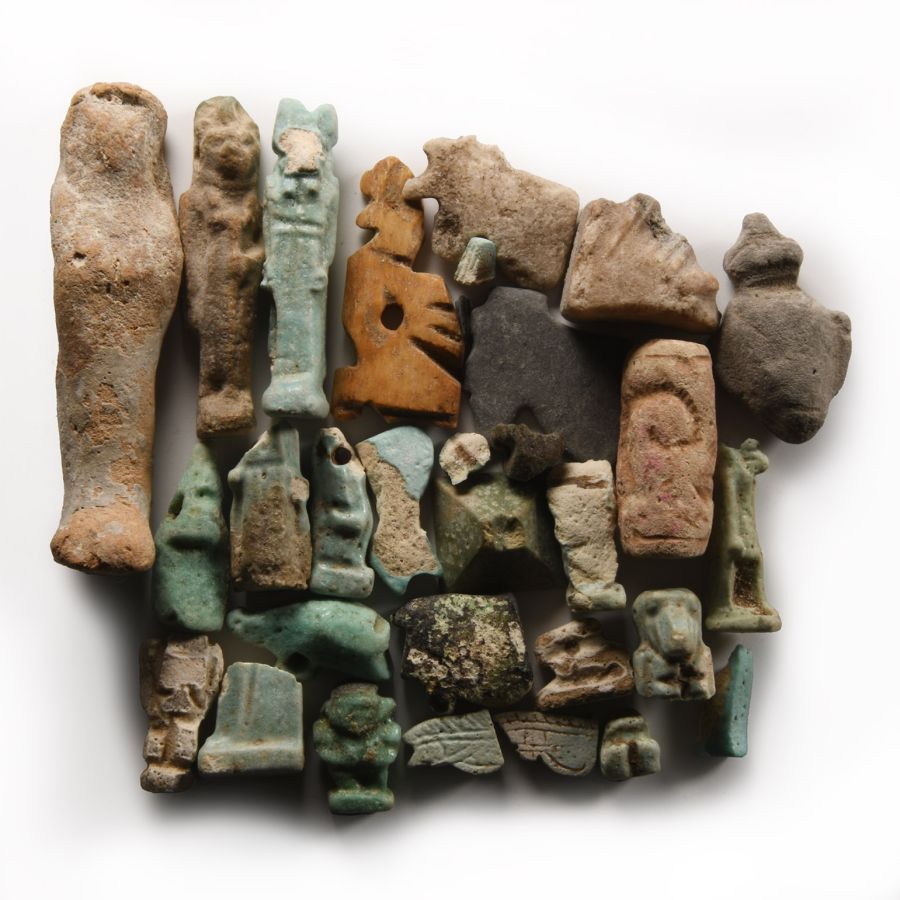
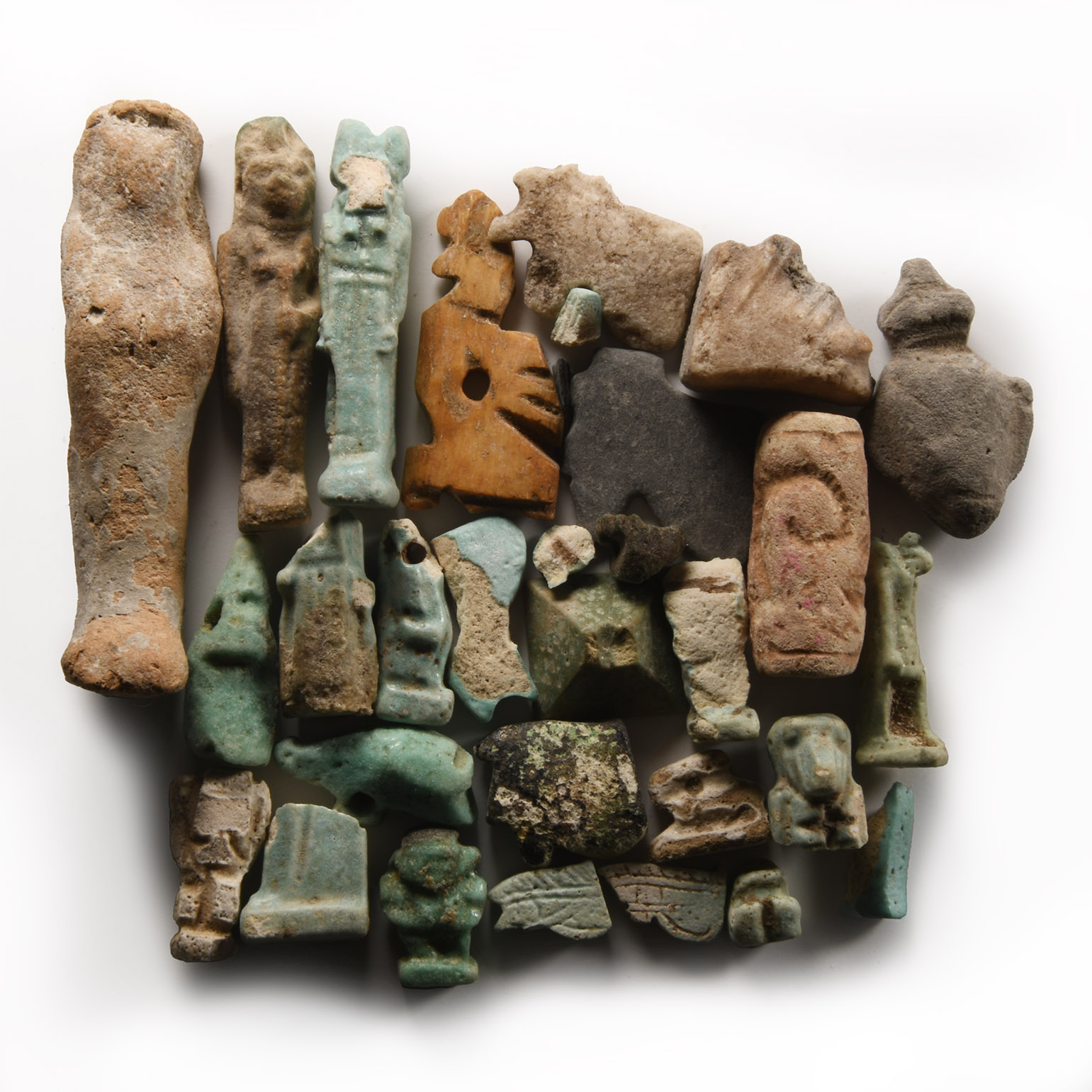
Egyptian Faience Amulet and Fragment Group
MAINLY LATE PERIOD, 664-332 B.C.
1/8 - 2 1/4 in. (42 grams total, 6-56 mm).
Including standing Bastet figure, wedjat amulets, shabtis and other types. [30, No Reserve]
ProvenanceEx North London gentleman, 1990s.
CONDITIONTimeLine Auctions follows a vetting process to ensure the authenticity and legality of all items, reinforcing our commitment to integrity and responsible trading. Each antiquity, antique, and coin lot undergoes thorough examination by a vetting committee of at least ten external specialists, professional trade association members, scientists, and archaeologists: Our Vetting Process
AUCTIONS:
TimeLine is a leading auction house specialising in antiquities, ancient art, collectables, natural history, coins, medals, and books. Our auctions offer museums, collectors, historians, and enthusiasts the opportunity to acquire unique and historically significant pieces.
-
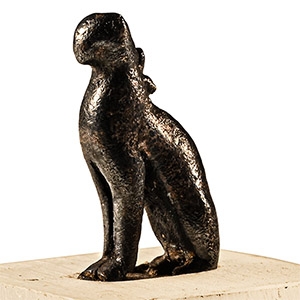
Egyptian Silver Bastet Cat Goddess
Late Period, 664-332 B.C.Estimate: £800 - 1,000 (‡+bp*)
Opening Bid: £400
Modelled seated on an oblong base; accompanied by a custom-made display base. 1.27 grams, 13 mm high (6.02 grams total, 33 mm including stand)
Ex Mrs Zimmermann Koutoulakis, December 1977. Ex R. Liechti (1934-2010) Geneva, Switzerland, collection between 1950-1990s.
Bastet was primarily a goddess of fertility, but she also represented festivities and intoxication, which formed part of the temple celebrations of her cult. -
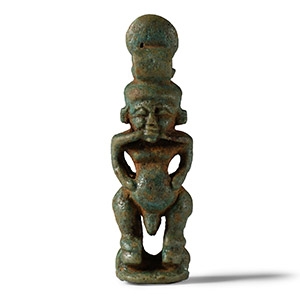
Egyptian Janiform Pataikos and Ra-Horakhty Faience Amulet
Late Period-Ptolemaic Period, 664-30 B.C.Estimate: £1,500 - 2,000 (+bp*)
Opening Bid: £800
Modelled in the round, Pataikos depicted nude with his arms resting on his rounded belly, large genitals and a suspension loop on his head; the nude Ra-Horakhty depicted falcon-headed, wearing a sun disc and a tripartite wig, his hand resting on his waist; each standing on stylised crocodiles(?) on a rounded base. 13.4 grams, 60.5 mm
Ex AH collection, London, UK, 1980s. Accompanied by a previous catalogue information slip.
Pataikos amulets were used for protection against negative forces and dangerous animals such as snakes, crocodiles, and scorpions. These amulets also symbolised rejuvenation and were often embellished with solar imagery, as seen in this example which features the sun disc headgear and Ra-Horakhty. -
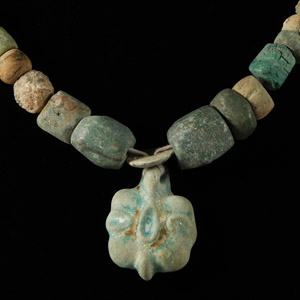
Egyptian Blue Faience Bead Necklace
Roman Period, 30 B.C.-323 AD.Sold for (Inc. bp): £117
Restrung group of graduated beads, mainly tubular and oblate types, centrepiece a rosette pendant. 49 grams, 70 cm long
Acquired 1980-2015. Ex Abelita family collection.
