
Loading, please wait...
LOT 0519
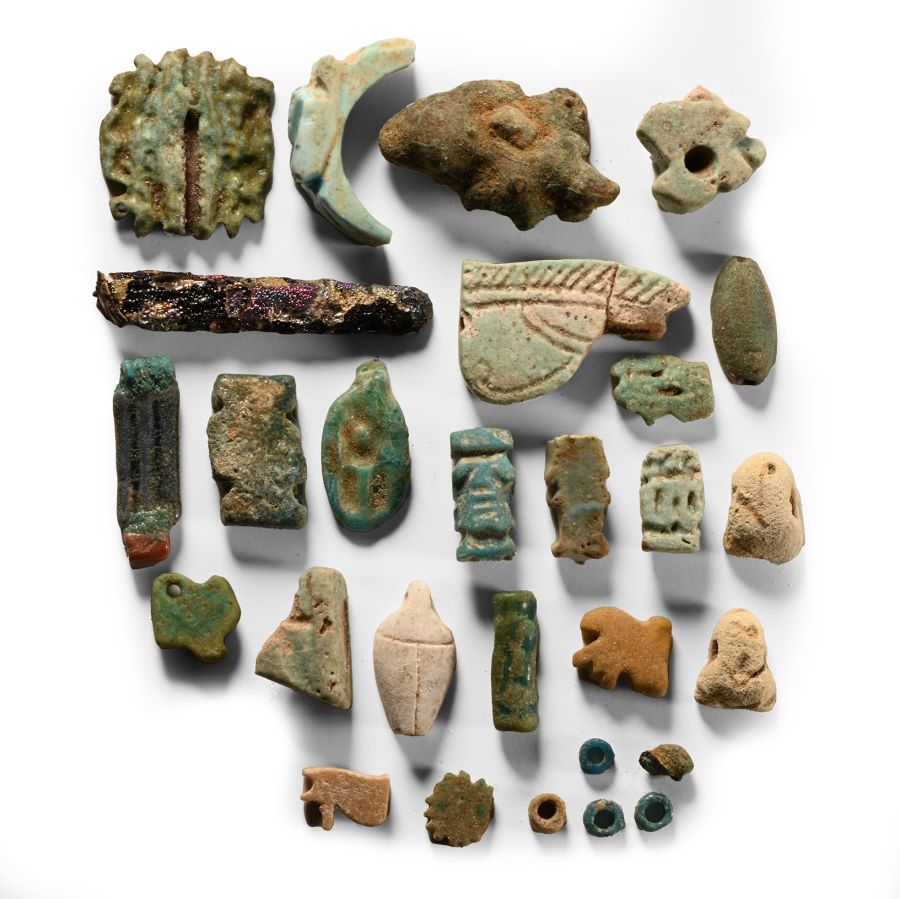
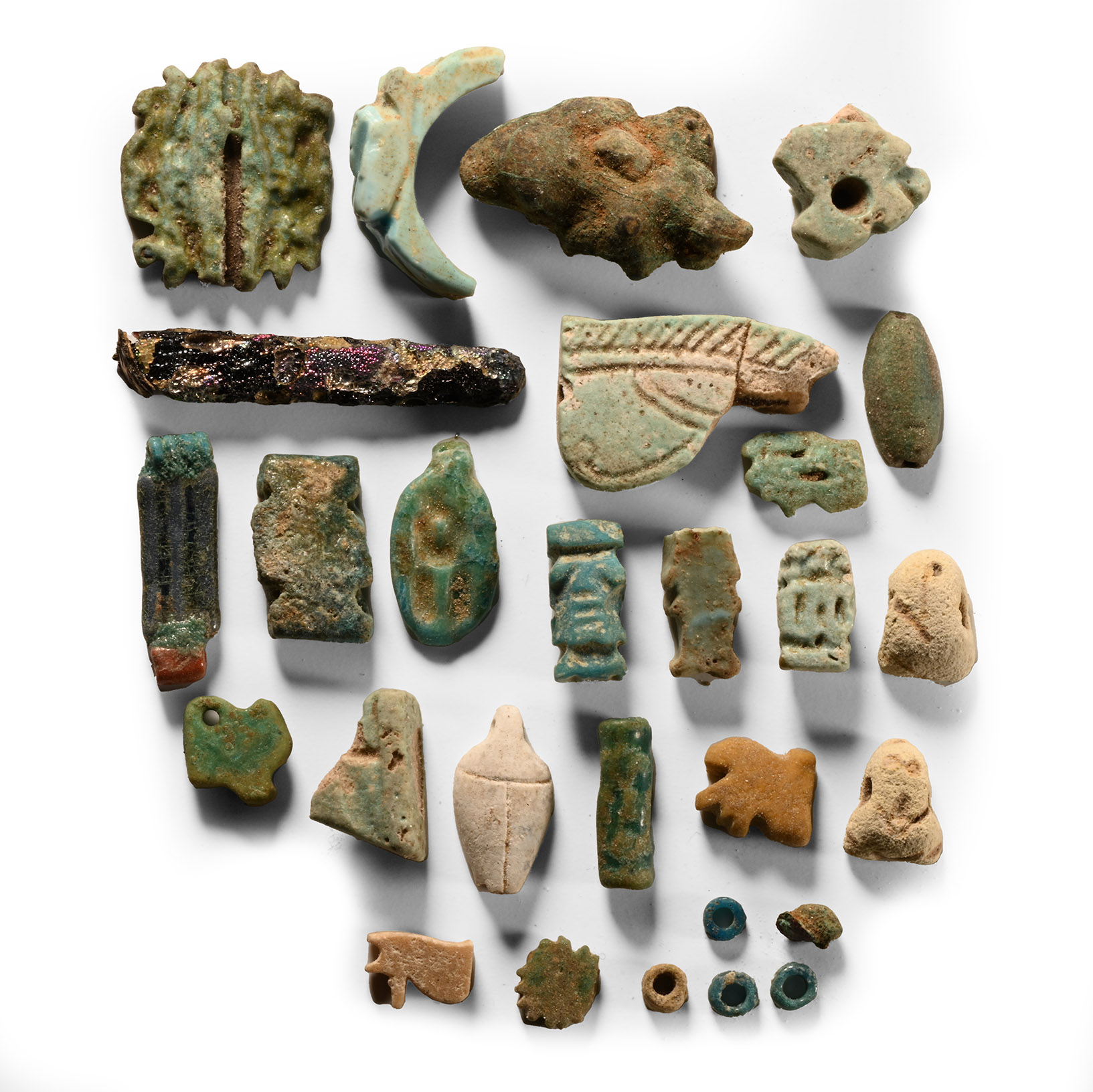
Egyptian Faience Amulet and Bead Collection
LATE PERIOD, 664-332 B.C.
1/8 - 1 1/4 in. (18 grams total, 3 - 33 mm).
Mixed group including eye of Horus, flower, standing figure and other types. [29, No Reserve]
ProvenanceFrom a collection acquired on the UK art market from various auction houses and collections mostly before 2000.
From an important Cambridgeshire estate; thence by descent.
TimeLine Auctions follows a vetting process to ensure the authenticity and legality of all items, reinforcing our commitment to integrity and responsible trading. Each antiquity, antique, and coin lot undergoes thorough examination by a vetting committee of at least ten external specialists, professional trade association members, scientists, and archaeologists: Our Vetting Process
AUCTIONS:
TimeLine is a leading auction house specialising in antiquities, ancient art, collectables, natural history, coins, medals, and books. Our auctions offer museums, collectors, historians, and enthusiasts the opportunity to acquire unique and historically significant pieces.
-
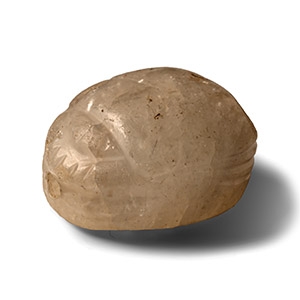
Egyptian Rock Crystal Scarab
Late Period, 664-332 B.C.Estimate: £250 - 350 (+bp*)
Opening Bid: £125
With segmented carapace, plain underside. 4.45 grams, 18 mm
From the property of the late Mr SM, London, UK, 1969-1999. -
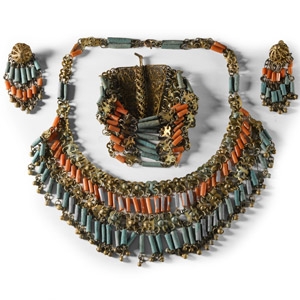
Egyptian Faience and Carnelian Beads in Victorian Necklace Set
Late Period, 664-332 B.C. and laterSold for (Inc. bp): £247
Comprising: a tiered choker-length necklace with ancient tubular carnelian and faience beads, 19th century base metal rosettes and jingles; cantanille bracelet with similar beads; two cantanille drop earrings. 101 grams total, 6-37 cm
From a collection acquired on the UK art market from various auction houses and collections mostly before 2000. From an important Cambridgeshire estate; thence by descent. -
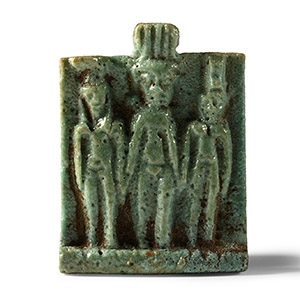
Egyptian Memphis Triad Amulet
Late Period, 664-332 B.C.Estimate: £500 - 700 (+bp*)
Opening Bid: £250
Rectangular plaque with ledge to the lower edge, ribbed loop above, the half-round figures of the goddesses Nephthys and Isis wearing their characteristic headdresses flank the figure of the young Horus wearing the sidelock of youth. 9.1 grams, 37 mm high
From an early Home Counties, UK, collection, 1930-1940. Ex London, UK, collection.
The deities of this triad are the protagonists associated with the myth of Osiris.
