
Loading, please wait...
LOT 0425
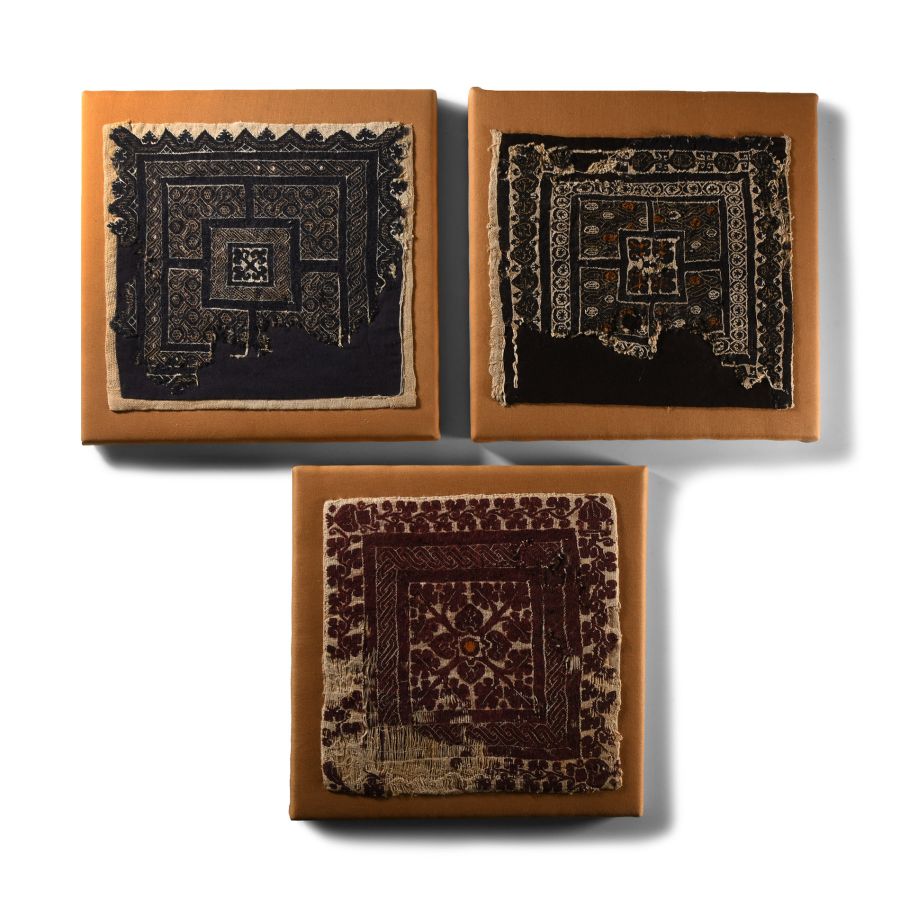
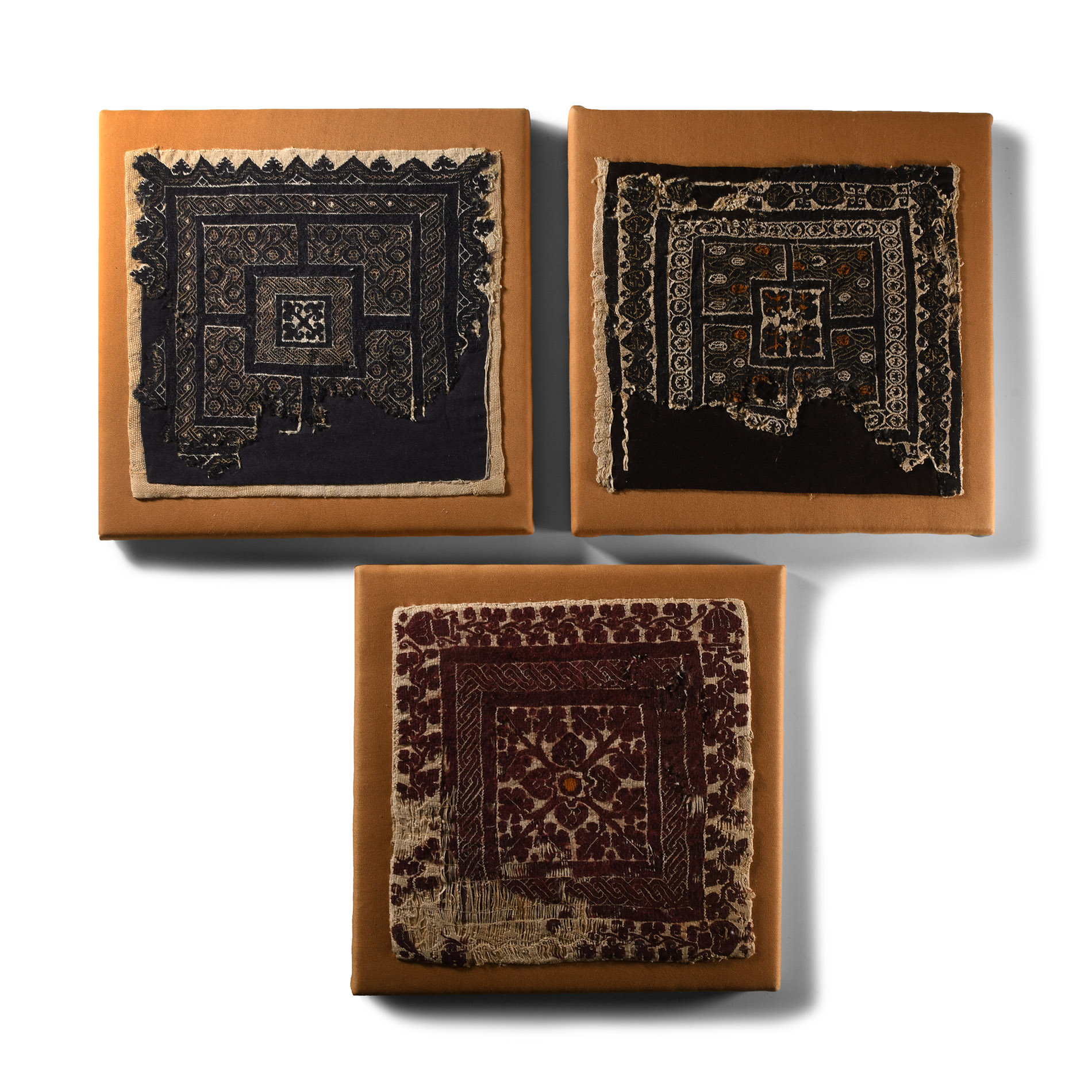
Egyptian Fabric Panel Group
COPTIC, 4TH CENTURY A.D.
10 x 10 in. (1.08 kg total, 25.3 x 25.5 cm each).
Comprising: square panel with border of repeated motif of an amphora and vine issuing from the top, guilloche, radiating foliage; similar with guilloche enclosing repeating ring motifs, knotwork band and central radiating fleur-de-lys motifs; similar with concentric bands of roundels and central floret; each mounted on a wooden-framed fabric backing. [3, No Reserve]
ProvenanceAcquired from Esther Fitzgerald Rare Textiles, London, UK.
Property of a North American gallery.
TimeLine Auctions follows a vetting process to ensure the authenticity and legality of all items, reinforcing our commitment to integrity and responsible trading. Each antiquity, antique, and coin lot undergoes thorough examination by a vetting committee of at least ten external specialists, professional trade association members, scientists, and archaeologists: Our Vetting Process
AUCTIONS:
TimeLine is a leading auction house specialising in antiquities, ancient art, collectables, natural history, coins, medals, and books. Our auctions offer museums, collectors, historians, and enthusiasts the opportunity to acquire unique and historically significant pieces.
-
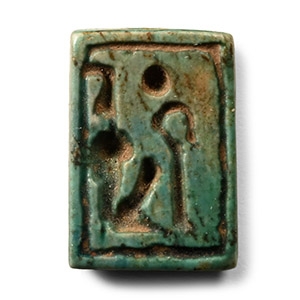
Egyptian Faience Block Bead of Ramesses IV
New Kingdom, 20th Dynasty, 1166-1160 B.C.Sold for (Inc. bp): £416
Rectangular block with hieroglyphs on both faces; one side gives the throne name of Ramesses IV (Heka-Maat-Re), the other side gives the name of the god Amun-Re. 1.45 grams, 14 mm
Ex Emile Bouillon Bey, c. 1880. From the Gaston Maspero Archaeological Fund. with Hotel des Ventes du Perigord, Bergerac, 24 June 2007. Property of a French collector. -
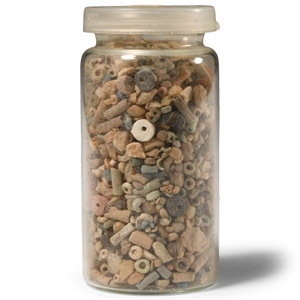
Egyptian Faience Bead Collection
New Kingdom-Late Period, circa 1550-332 B.C.Sold for (Inc. bp): £52
Mainly tubular, annular and oblate types in various colours. 61 grams total, 64 mm
Acquired from Ancient & Oriental, circa 1987. Ian Wilkinson collection, Nottinghamshire, UK, formed since 1985.
The faience of the New Kingdom period is frequently decorated with an expanded palette of red, black, and yellow. This polychrome decoration was often accomplished by inlaying one colour of paste onto another. -
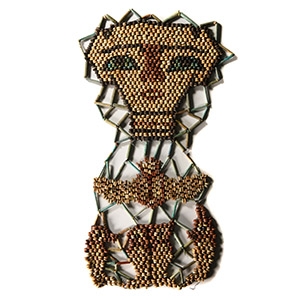
Large Egyptian Faience Beaded Mummy Mask with Sons of Horus
Ptolemaic Period, 332-30 B.C.Sold for (Inc. bp): £351
Restrung netted beadwork panel of annular and tubular glazed composition beads in blues, greens, black, cream and red-brown colours, depicting a mummy face mask with false beard, a scarab with extended wings below, the 'Four Sons of Horus’ beneath the scarab, joined together with areas of open netting of tubular beads; restrung with some later beads. 123 grams, 30 cm
Ex Mariaud de Serres, Paris, France, 1980-1990s. From a London, UK, collection.
The Four Sons of Horus were deities responsible for protecting the internal organs of the deceased. The human-headed Imsety protected the liver, the baboon-headed Hapy protected the lungs, the jackal-headed Duamutef protected the stomach, and the falcon-headed Qebehsenuef protected the intestines.
