
Loading, please wait...
LOT 0401
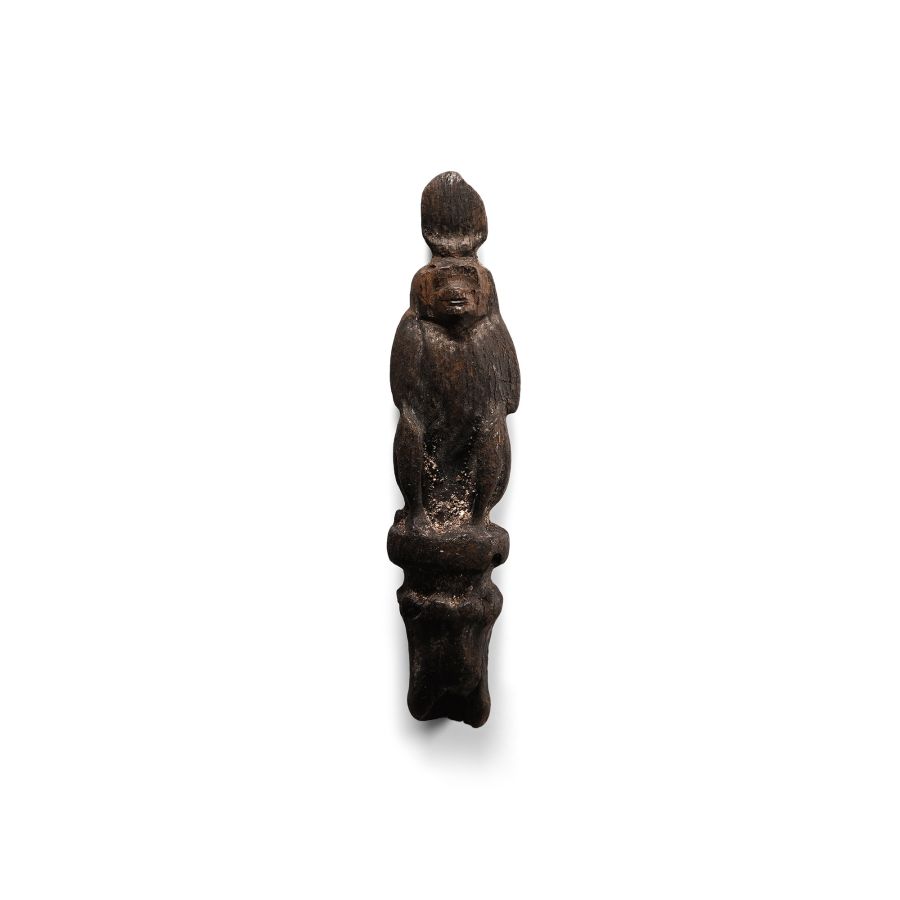
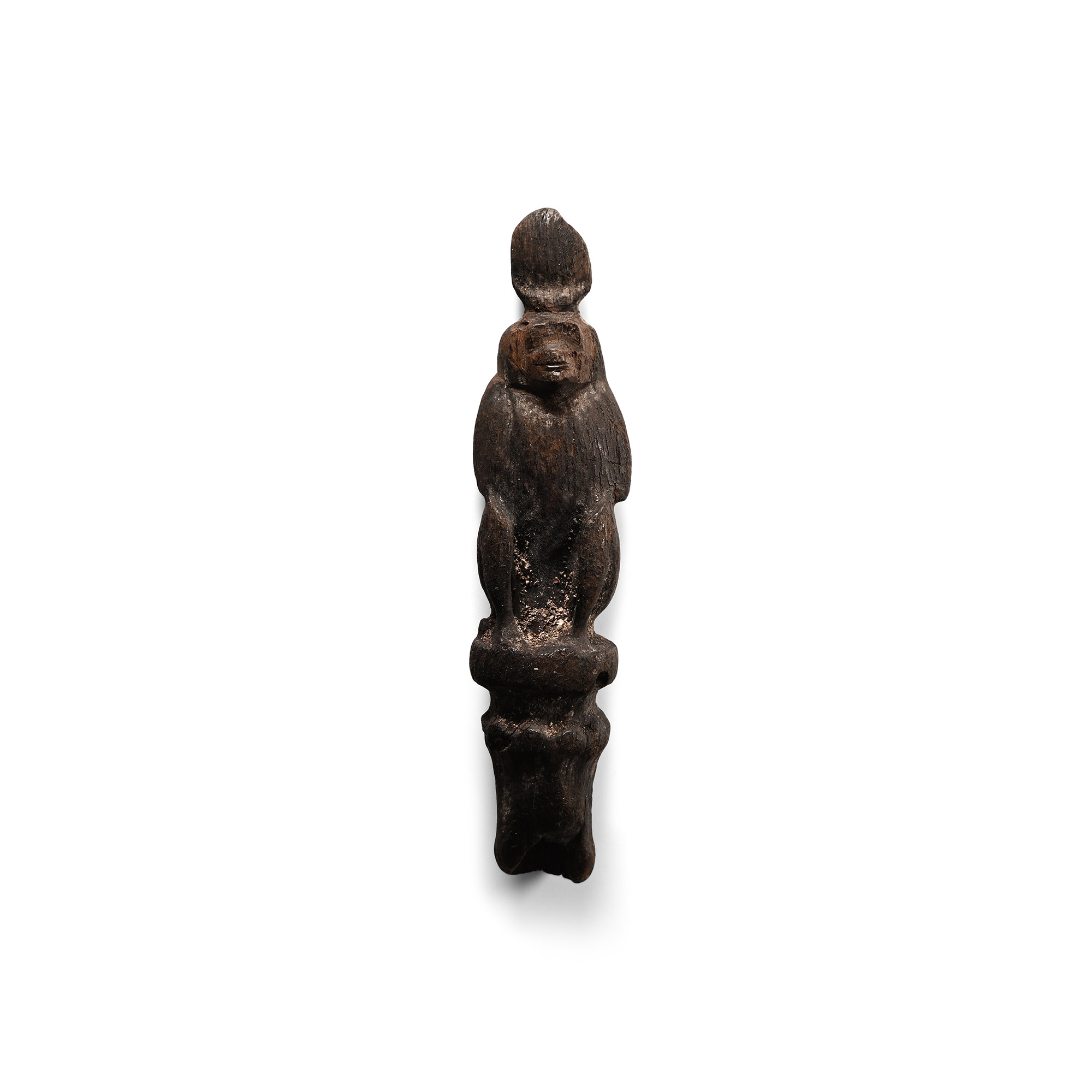
Egyptian Ebony Thoth Figure
1ST MILLENNIUM B.C.
3 in. (6.87 grams,74 mm).
Carved in the round figure of a baboon with horned sun-disc headgear, crouching on a balustered tubular shaft.
ProvenanceAcquired on the German art market, 1989-1995.
with The Museum Gallery, 19 Bury Place, London, WC1, UK, 1998-2003.
Property of a London based academic, 2003-present.
This lot is accompanied by an illustrated lot declaration signed by the Head of the Antiquities Department, Dr Raffaele D'Amato.
The baboon represented an animal manifestation of the god Thoth. This deity was revered for his associations with knowledge, writing, and healing. The popularity of Thoth was also likely tied to his role as the recorder of the final judgment, which determined whether the deceased had led a virtuous life.
CONDITIONTimeLine Auctions follows a vetting process to ensure the authenticity and legality of all items, reinforcing our commitment to integrity and responsible trading. Each antiquity, antique, and coin lot undergoes thorough examination by a vetting committee of at least ten external specialists, professional trade association members, scientists, and archaeologists: Our Vetting Process
AUCTIONS:
TimeLine is a leading auction house specialising in antiquities, ancient art, collectables, natural history, coins, medals, and books. Our auctions offer museums, collectors, historians, and enthusiasts the opportunity to acquire unique and historically significant pieces.
LOT 0401
Egyptian Ebony Thoth Figure
Estimate £200 - 300€230 - 350 (for guidance only)$270 - 410 (for guidance only)
-
.jpg)
Egyptian Steatite Harpocrates Statuette
Late Period, 664-332 B.C.Estimate: £1,500 - 2,000 (+bp*)
Opening Bid: £750
Carved in the round, the nude standing figure of the god sporting a solar disc and uraeus headdress, wearing a sidelock, and holding a lotus flower, accompanied by an integral dorsal pillar and base; one arm missing. 15.26 grams, 78 mm
Ex Thomas collection, UK, 1980s-1990s. This lot has been cleared against the Art Loss Register database, and is accompanied by an illustrated lot declaration signed by the Head of the Antiquities Department, Dr Raffaele D'Amato.
Harpocrates is the Greek rendering of the Egyptian Hor-pa-khered, which translates as ‘Horus the Child’. This designation refers to Horus as the divine infant of Isis and Osiris. His nudity represents youth and purity. The sun disc and lotus flower symbolises divine rebirth and solar renewal. The sun disc connects him to Ra and the daily cycle of rebirth, while the lotus—opening with the sunrise—emphasises creation and emergence from chaos. Together, these elements express triumph over death and the promise of eternal life. -
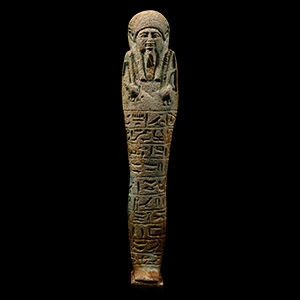
Egyptian Blue Glazed Hieroglyphic Shabti for Ta-Amun
Saite Period, 26th Dynasty, 664-525 B.C. or laterEstimate: £1,200 - 1,700 (+bp*)
Opening Bid: £600
Slender columnar shabti featuring a dorsal pillar, with ten rows of hieroglyphic text on the lower body beginning with the dedication 'The illuminated one, the Osiris priest Ta-Amun born of Ta-seh-nebty' ( sḥḏ wsỉr ḥm nṯr TꜢ-I͗mn ms (n) TꜢ-sḥ-nbty); the features of the small face are finely modelled, including a long, plaited false beard and a heavy lappet wig; the arms are crossed, with hands holding a pick and a hoe, along with a cord for a seed bag. 137 grams, 17.8 cm
Acquired on the German art market, 1989-1995. with The Museum Gallery, 19 Bury Place, London, WC1, UK, 1998-2003. Property of a London based academic, 2003-present. This lot is accompanied by an illustrated lot declaration signed by the Head of the Antiquities Department, Dr Raffaele D'Amato. -
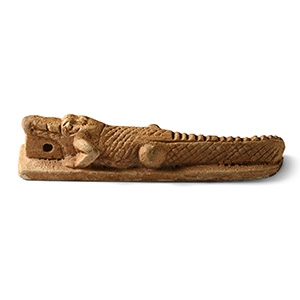
Egyptian Faience Crocodile Amulet
Late-Ptolemaic Period, 664-30 B.C.Sold for (Inc. bp): £2,600
Representing the god Sobek; detailed face and scales; standing on a rectangular plinth; pierced to the front for suspension. 13.4 grams, 74 mm
From the estate of the late Professor Dr E. Bernardo Streiff, Geneva; a distinguished collection of antiquities formed during the 1950s-1970s. with Galerie Rhéa, Zurich, Switzerland. This lot has been checked against the Interpol Database of stolen works of art and is accompanied by a search certificate number no.12629-236404. This lot has been cleared against the Art Loss Register database, and is accompanied by an illustrated lot declaration signed by the Head of the Antiquities Department, Dr Raffaele D'Amato.
Sobek is one of the most ancient and fascinating deities in the Egyptian pantheon. He is typically depicted as a crocodile or a man with the head of a crocodile, embodying various attributes related to the natural world, power, and protection. Sobek was mainly associated with water, fertility, and the Nile, along with strength and military prowess. His worship extends throughout much of ancient Egyptian history, and he was venerated not only as a force of nature but also as a god of healing, protection, and royal authority. His principal cult centres were situated in the Faiyum region, particularly the city of Crocodilopolis, and also at Kom Ombo in Upper Egypt.
